Zoe Washington’s “Good Trouble”
July 23, 2020 § 1 Comment
 When John Lewis passed away last weekend—ending a 60-plus-year career of social activism and civil rights legislation—I was struck by how many tributes invoked the Congressman’s tweet from 2015, in which he shared a mugshot from his time in prison 54 years earlier, arrested for using a “white” bathroom in Jackson, Mississippi. The photo was captioned: Even though I was arrested, I smiled bc I was on the right side of history. Find a way to get in the way #goodtrouble
Another of his tweets in 2018 further underscores this notion of “good trouble”—a phrase Lewis became known for:
Do not get lost in a sea of despair. Be hopeful, be optimistic. Our struggle is not the struggle of a day, a week, a month, or a year, it is the struggle of a lifetime. Never, ever be afraid to make some noise and get in good trouble, necessary trouble.
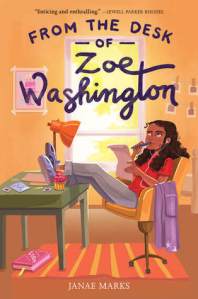
If you’ve asked me for a middle-grade book recommendation in the past two months, you’ve probably heard me go on and on and on about Janae Marks’ debut novel, From the Desk of Zoe Washington (Ages 9-13). If you follow me on Instagram, you may know I chose this title for a summer book club, after my third graders (bless them) begged me to continue hosting Zoom meetings. The book was not only a favorite of the year for most of the kids, nearly every parent emailed me to report that the story was yielding rich, important, anti-racist conversations around the dinner table.
If you are looking for a book to start a conversation about systemic racism, this one’s a gem. It’s not just that it offers awareness about the bias in our criminal justice system—the story features a Black character (Zoe’s father) serving time for a crime he may not have committed—it’s that it offers hope for a more just world. It’s a story about a girl who asks hard questions, who isn’t content to accept things as they are, and who makes some “good trouble” of her own when the adults in her life fail to step up.
Of course, none of these messages would be nearly as effective if the story itself wasn’t fan-freakin-tastic. This is not a heavy-handed “issues” book. It checks every box of a perfect tween story: it’s well-paced; the protagonist is immensely likable; there’s mystery, intrigue, and no shortage of fun and relatable sub-plots (baking! music! friendship drama!). It’s a book nearly impossible to put down, but it’s also a story packed with nuggets ripe for pulling apart and discussing. Read this book to or alongside your tween; you’ll both be better for it. (And may I recommend you encourage your child to make a playlist of the songs Zoe discovers from her father, because isn’t it high time our kids started listening to Stevie Wonder? Also: Fruit Loops cupcakes. Yup, it’s a thing.)
Love, Pride, and Acceptance
June 30, 2020 § 1 Comment
 With Pride parades canceled because of the pandemic, we have to work a little harder to see the rainbows. I didn’t want June to end before I had a chance to raise up one of my favorite recent discoveries (although it came out last year), a book so full of love that when I first got it, I couldn’t stop hugging it to my chest. It’s impossible to read this book without the biggest smile. Not just because the main character is a radiant beam of sunshine in and of himself. Not just because it has some of the most beautiful illustrations I have ever seen (Kaylani Juanita, where have you been all my life?). But because the love these parents shine down on their son is the very best—albeit most difficult—kind of love. It’s a love which sees him, not for who they expect or want him to be, but for who he actually is. It’s a love taught to them by this son—and one echoed in the way he prepares to welcome his new sibling.
It’s a tall order, but the world would be a vastly improved place if we all rose to follow the example of love in this book.
When Aidan Became a Brother (Ages 3-8), written by Kyle Lukoff and illustrated by Kaylani Juanita, is not just another book about welcoming a new sibling. True, in many ways, it’s the “new sibling” book we didn’t realize we were missing. But the book is equally pertinent whether you’re expecting a new family member or not. Aidan doesn’t simply tail his pregnant mom, fantasizing about a new playmate or worrying he’ll suddenly fall to second place. Nope, Aidan’s sets his sights on a larger question: what can he do to ensure his younger sibling feels understood and accepted right out of the gate?
Aidan’s fervent and sometimes nervous desire to become a caring big brother is intimately informed by the struggle he faced in his own first years. “When Aidan was born, everyone thought he was a girl.” The story’s opening spread—a look back into Aidan’s recent past—reveals a pink-decorated room with traditional girl fare: a canopy bed, a dollhouse, and an array of flowery dresses held up by Aidan’s doting mother. Aidan sits before a pink tea set in a pink dress, wearing a look of misery.
Moving Past Color-Blindness
June 25, 2020 § 2 Comments
 I have been drafting this post in my head for two weeks, terrified to put pen to paper for the dozens of ways I will certainly mis-step. Raising children dedicated to equity and justice has always been important to me—if you’ve been following my blog, you’ll recognize it as a frequent theme here—but only lately have I pushed myself to consider the ways my own privilege, upbringing, and anxiety have stood in the way of that. It is clear that I cannot raise my children to be antiracist if I am not prepared to do the work myself.
When my daughter was three, I brought her to the pediatrician’s office for a rash. As we sat in the waiting room, watching and remarking on the colorful fish swimming in the aquarium, my daughter suddenly turned to me. “Mommy, is the nurse going to be black-skinned?”
Embarrassment rose in my cheeks. “Oh honey, I’m sure any nurse here is a good nurse. Let’s not—”
Her interrupting voice rose about ten decimals. “Because I am not taking off my clothes for anyone with black skin!”
Just typing this, my hands are shaking. I am back, seven years ago, in that waiting room, aware of all eyes upon us. Aware of the brown-skinned couple with their newborn baby sitting directly across from us. This can’t be happening, I thought. This can’t be my child. She goes to a preschool with a multicultural curriculum. We read books with racially diverse characters. She plays with children who look different than her. Shock, outrage, and humiliation flooded every inch of my being.
Caught off guard and determined to rid myself of my own shame, I fell into a trap familiar to many white parents. For starters, I came down hard on her. I took my shame and put it squarely onto her. I was going to stop this talk immediately. I was going to prove to everyone listening that this was unacceptable behavior in our family. I was going to make it…all about me.
“Stop it!” I said firmly. “We do not say things like that.” Then, I started rambling about how we shouldn’t judge people by how they look, how underneath skin color we’re all the same, how we’re all one big human family, and so on. You know: the speech. The color-blind speech. The one where white parents tell their children to look past skin tone to the person underneath. The one where we imply that because skin color is something we’re born with, something “accidental,” we shouldn’t draw attention to it. The one where we try and push on our children a version of the world we’d like to inhabit, as opposed to the one we actually do.
My three year old was observing—albeit not kindly or subtly—that not everyone looked the way she did. And she wasn’t sure if that was OK. She was scared. She was uncomfortable. Because we weren’t talking about skin tone or race with her at home, because our conversations (however well-intentioned) steered mainly towards platitudes of kindness and acceptance, she had begun to internalize the racial assumptions around her. She had used the descriptor “black-skinned,” I later realized, whereas if she had simply been observing skin tone, she would have said brown skin or dark skin. The word she chose was a reference to race. A loaded word. Something she had heard. Something she didn’t understand. Something she was beginning to associate with something less than.
We don’t want our children to use race to make judgments about people, so we’d rather them dismiss race completely. Except, in a society where race is embedded into nearly every policy and practice, it is impossible not to see race. So instead, what we are really communicating to our young children is, I know you notice these differences, but I don’t want you to admit it. (Including to yourself). Good white liberal children don’t talk about their black and brown friends as being different from them. Even more problematic, good white liberal children love their black and brown friends in spite of these differences.
Sharing a Love of Travel (A Father’s Day Post)
June 11, 2020 § 1 Comment
 This Father’s Day, my own father will have been gone for twenty-six years. Twenty-six years. One of the most devastating things about losing a parent when you’re eighteen is that you never get to know that parent through an adult lens. I knew my father intimately, from his scratchy mustache to his eye-rolling wisecracks to his endless patience as I described every painstaking detail of my day. But I knew him as a child knows a parent. How I wish I could have known him as an adult.
In times of great upheaval and unrest, I feel my father’s absence most keenly. Every seismic shift in our world puts that much more space between him and me. How would he be participating in this national conversation about race? Would he be marching with a Black Lives Matter sign? What candidate would he have supported in the last Democratic primary? How would social distancing have impacted his life in retirement—or would he still be practicing law? What kinds of things would he enjoy doing with his grandchildren?
I can’t pretend to know the answers to these questions, though I ask them quietly to myself all the time.
What I do know is that there are certain things which always bring him back to me. And one of them is travel. My father’s love of travel was legendary. When I was very young and he would travel internationally for work, he’d always bring me souvenirs—usually dolls—from places like Brazil, Mexico, and Germany. I loved gazing at the tiny porcelain faces or printed fabric clothes and imagining where they had been. Our house was full of black-and-white photographs from before my time: my father on a camel in the Sahara, my father on a motorcycle in Greece. When I decided to spend a gap year in Vietnam after high school, he jumped at the chance to accompany me across the ocean. When, weeks later, it came time for him to return to the States, his parting words were, “It looks like you’ve got the travel bug now, too.” I beamed with pride.
It seems fated that I would fall deeply in love with Jenny Sue Kostecki-Shaw’s new picture book, Papa Brings Me the World (Ages 3-7), in which a young girl describes her affection for a father who travels the world and brings pieces of it back to her. I’ve long been a fan of Kostecki-Shaw’s (my daughter still pulls out Luna & Me), but this book positively transported me. Maybe because it’s inspired by the author-illustrator’s own father; maybe it’s because the theme of found objects lends itself beautifully to mixed-media collage; or maybe it’s because the voice of the little girl reminds me of my young self, brimming with tenderness and curiosity and admiration and longing for my father’s stories of adventure.
What Does It Mean to Be Woke?
June 4, 2020 Comments Off on What Does It Mean to Be Woke?
 In the preface to her scintillating picture book of poems for young readers, Mahogany L. Browne provides this definition of “woke”:
It means to be aware. It means to see your surroundings and challenge how we strengthen our relationship with the government, the community, and nature. To be WOKE is to fight for your civil rights and to fight for the rights of your neighbors…The idea of being aware of your surroundings, especially in a time when we are taught to be quiet and not rock the boat, can be difficult to embrace, but this is where our freedom begins.
The events of the last week are calling us to become woke. They are calling us to listen, especially to Black voices unleashing decades of pain and injustice. They are calling us to expand our bookshelves and our social media feeds to include more voices of color (@hereweeread and @theconsciouskid are a great place to start for parents). They are calling us to talk to our children about difficult topics like race, privilege, and racism and help them revise their summer reading lists to include stories by people of color. They are calling us to begin the uncomfortable and long-overdue work of examining the way our own whiteness makes us complicit in the sickness of systemic racism, because until we change what’s in our hearts, we can’t lead our children to do the same.
Topics like police brutality and racial profiling can be overwhelming and frightening to children of all races, but we can also use these conversations to empower them. “Rocking the boat” starts with finding the words to describe what’s happening and how it makes us feel—and then turning these words into beacons of inspiration, hope, and change.
We are being called to help our children find their voice, and I can think of no better vehicle than Woke: A Young Poet’s Call to Justice (Ages 8-12). Historically, poets have been on the forefront of social movements. Here, Mahogany L. Browne’s poems sit alongside those from Elizabeth Acevedo and Olivia Gatwood, serving as “instruction manuals and anthems,” as “literary heartbeats and blueprints of survival,” for our children to sift through cruelty and injustice and find the words and courage to speak out about them. Several of the poems address racial history and discrimination. Others speak to gender bias, immigration, activism, body image, physical disability, intersectionality, and our relationship with nature. Taken as a whole, the poems celebrate a definition of community that’s richer for its diversity of voices, skin colors, and genders. Double-page illustrations by Theodore Taylor III enhance the vibrancy of the poems. As “Instructions on Listening to the Trees” concludes, “We are all part of someone else’s journey/ That’s the way communities are built/ Each root sprawling toward the edge of an infinite smile.”
Adventures in Siblinghood, Quarantine Edition
May 28, 2020 § 7 Comments
 It was the best of times, it was the worst of times…it was the sibling relationship during quarantine. My daughter spent last Saturday night at her aunt’s house, and while my husband and I enjoyed a peaceful night with our son, it dawned on me: it’s not my children who have been sucking up all the oxygen in our house, it’s their relationship.
I’m grateful my children have each other at a time when they have no one else. But because they have no one else, they’ve pinned all their hopes and dreams and frustrations and jealousies on one another. Everything they’ve always done is now executed with a new level of intensity. They tear into each other over the smallest offenses (“Stop whistling!” “Stop looking at me!” “I can’t sit hit here because your feet smell!”), only it escalates into poking and clawing and just-plain-mean yelling, like they haven’t done since they were much younger. If I separate them (“This house may be small, but there is enough room for you to spread out”), they’re back together again before I can get down the stairs. Only, suddenly, they’re curled up in a teeny tiny fort of their own design, a tangle of limbs impossible to tell where one stops and the other begins, giggling and scheming and reveling in the giant mess they’ve strewn across the upstairs.
Four whole hours before my daughter was scheduled to come home from her sleepover last weekend, my son was already watching for her from the window.
The only thing that could make this current state of affairs any more intense would be an elevator button. If there is one small consolation to not being able to go places right now, it’s that we can at least avoid the universal sibling fight over who gets to push the elevator button. There has never been a harmonious moment of siblinghood that wasn’t ruined by a gosh darn elevator button.
Lest we forget about life with elevator buttons, Minh Lê and Dan Santat have teamed up to create a comics-inspired picture book to remind us. And yet, Lift (Ages 4-8) isn’t about ordinary elevator buttons. Well, at first it is. But then that button becomes something magical. Something illuminating and insightful and spectacularly fun. Something which drives siblings apart—but then brings them back together, united in a common purpose. All without leaving the house.
Summer Reading to Save Us: Massive Middle-Grade Roundup
May 21, 2020 § 1 Comment
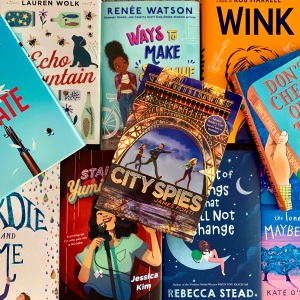 I have a confession. As our summer plans are being ripped away from us—slowly, painfully, like the stickiest of band-aids—I am secretly stockpiling books and puzzles. It’s compulsive. Possibly certifiable. But I can’t help it. In some tiny, naively optimistic part of my brain, I believe if we have stockpiles of books and puzzles, we won’t wake every morning and cry over missed swim meets and sleepaway camps and beach vacations. Even if it’s sweltering. Even if we can’t leave the house. Oh, who am I kidding? We’ll still cry. But at least we’ll have books and puzzles.
It seems I might not be alone. I ran a survey yesterday on Instagram and 85% of you voted for my gargantuan list of favorite new middle-grade books to come out now, as opposed to after Memorial Day. So maybe you’re getting ready, too. And it is a gargantuan list. (A reminder that I recently covered new graphic novels here, as well as three chapter books which we read aloud but could easily be read independently.) Some skew younger and some much older, so I’ve listed age ranges below each title. Here’s the thing: I read a ton over the past six months, and these are what made the cut. There were others I expected to like or wanted to like, but they just didn’t feel like anything I could give a kid and say, with confidence, You’re going to love this. You’re going to forget, for a few minutes, that the world is all kinds of suckiness right now.
But here’s the other thing. I’m not going anywhere, and I’m still reading. Like crazy. So keep tuning in. (You can always track what the kids and I are reading in real time on Instagram.) Summer is coming, and we’ll get through it together. With a little help from the books (and puzzles).
A Light in the Dark: Three New Read-Aloud Chapter Books
May 14, 2020 § 3 Comments
 It has been said that the only two certainties in life are death and taxes, but—at least, while quarantined—I can now add a third. Every morning for the past two months, the same conversation has transpired as soon as the breakfast dishes are cleared, around 8:15am.
Me: “OK, kids, head to the couch for read-aloud time.”
My son: “What? No! I need to get upstairs to get ready for school!” (“Getting ready for school” means opening up his Chromebook, clicking on a Zoom link, and waiting for the administrator to let him into the meeting…45 minutes before said meeting actually starts.)
Me: “Your class doesn’t start until 9am.”
Him: “But sometimes they come on early!”
Me: “You don’t need to stare at a screen any more than is necessary. Park your tush next to your sister.”
Every morning, we have this same exchange. Every single morning. For the record, I always win. I only insist on one tiny little fragment of consistency during corna-time and it’s that the kids and I spend forty minutes every morning reading aloud. It’s how we connect before dispersing into our own “virtual” agendas. It’s how we remind ourselves that the world still exists outside our doors, that it waits patiently for us to return, that it invites us to visit in our imaginations until we can come in person. It’s how we remind ourselves that we don’t have to leave the house to get our minds blown.
Quite simply, reading aloud is the one light in these dark days that we can always count on.
As soon as my fidgety, eager-for-that-screen-fix tween sits down on that couch and tunes into my voice, he doesn’t want to be anywhere else. I know this because he gasps the loudest, laughs the hardest, leans in the closest. Reading aloud to tweens and teens can initially seem like an uphill battle, but it’s almost always worth the struggle. In our family, it’s non-negotiable. And it always, always leaves them begging for more…even if just a few minutes earlier they were all too happy to skip it.
In the upcoming weeks, I’ll be doing a gargantuan middle-grade round up with favorite new books to put in front of your kiddos for independent reading. Today, though, I want to share three new middle-grade novels which lend themselves especially well to reading aloud, as evidenced by our own experience. Their genres—fantasy, comedy, and historical fiction—couldn’t be more different, but their characters, prose, and stories are similarly unforgettable.
Rich in Stories
May 7, 2020 § 4 Comments
 For many of us following stay-at-home orders, social media is a welcome lifeline to the outside world. And yet, its lure can be as powerful as its trapping. If occasionally I used to fall down the rabbit hole of comparing my children’s accomplishments to those paraded out on Facebook, I now find myself in weaker moments comparing houses. We may be leading similar lives—working, schooling, eating at home—but our backdrops are wildly different. Maybe I’d be going less crazy if I looked out my window and saw mountains. Sure would be nice to have a swimming pool in my backyard. Sure would be nice to have any backyard. Oh man, are they at their river house right now? I’m sure I could homeschool better if we had a creek.
Of course, these thoughts are inane. Inanely unproductive. Inanely indulgent. At no time for my generation has it been more of a blessing to have our health and a roof over our heads. Not to mention money for food and ample time to steer our children through these rocky waters.
Still, I would be lying if I said there aren’t cracks in my resolve to be gracious and mindful.
With our recent move, our living space has been significantly downsized. I can’t spit without hitting another person. Heck, I can hardly do anything without being watched or whined at. My husband gave me grief for packing up no fewer than four boxes of books to bring with us to these temporary digs. But you know what? We are rich in stories. We have stories painted with breathtaking backdrops, stories which quicken our pulse or tug at our heart or seduce us with beauty…all from the cozy confines of our couch. Some days, I look at the piles of books haphazardly lying around and I think, Why does no one clean up? Most days, I look at them and think, We are the luckiest.
One need look no further than Aesop’s fables for proof that stories have long been offering hope in turbulent times. Tales like “The Lion and the Mouse” (or my favorite as a parent, “The Boy Who Cried Wolf”) have been told and retold around the world for 2,500 years. Until now, I didn’t realize that the allegedly true story of Aesop himself—a slave in Ancient Greece who earned his freedom through storytelling—also bears telling, lending meaningful context to Aesop’s beguiling fables while offering proof that stories are richer than gold.
Ian Lendler’s 63-page trove, The Fabled Life of Aesop (Ages 5-9), luminously illustrated by Pamela Zagarenski, is not your typical picture book biography. It’s more of an anthology of fables encased in a broader, biographical context. Like an onion, each turn of the page reveals another layer of story and art, the sum of which is one of the most spellbinding books of 2020. It can be read in a single sitting or paged through out of order. If we’re talking about losing ourselves in the sublime for a time, this is just the ticket.
Attention Deficit Corona: Graphic Novels for Tweens and Teens
April 30, 2020 § 1 Comment
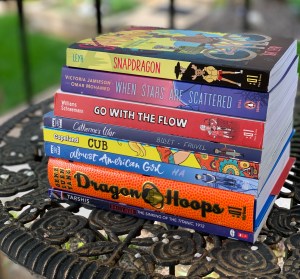 Of all the complaints I’ve heard during Quarantine, one of the most common is an inability to focus. If your former bookworms are having trouble losing themselves in literature (hey, Zoom zombification is real), look no further than these new graphic novels. Take it from me.
We moved last week. Moving is challenging in the best of times much less during a pandemic. So, you can bet I threw a bunch of graphic novels at my kids, and you can bet they were more than happy to stay out of everyone’s way. And the best news? You already know that graphic novels are the type of books your kids like to read again and again, so you can feel good about investing in them and supporting your local Indie bookstore at the same time.
Truly, 2020 is shaping up to be a STELLAR year for graphic novels. This list builds from young to older, with selections all the way up to high schoolers. (If you’re new to my site, you might check out my last graphic novel round-up here.)
Bringing Down the House
April 16, 2020 § 2 Comments
 My kids love hearing stories about when they were babies. They especially love stories that involve crying. Inexplicable crying. Endless crying. Crying that brought down the house.
When our eldest was a newborn, he screamed bloody murder whenever we bathed him. It didn’t matter what we tried. We sang to him. We playfully splashed him. We made funny faces at him. Aren’t babies supposed to love bath time? we asked ourselves. Does he hate water? Does he hate us? Night after night, he’d scream, his face turning purple, his fists tightly clenched, his tiny legs kicking furiously.
A few weeks later, a friend gave us a baby gift. Tied to the top was a yellow rubber ducky. A duck, a duck! Surely a toy would be the golden ticket. That night, after we’d filled the oblong plastic tub from the kitchen tap, we tossed in the duck—and watched with horror as it turned from yellow to fire-engine red. Apparently, the duck had a sensor designed to gauge the proper temperature for itty bitty newborns unaccustomed to bathing outside utero. We thought we were running a nice, soothing, warm bath for our baby boy every night. Instead, we were scalding him. We turned on the cold for a few minutes, slowly lowered JP into the tub, and he smiled like he had never smiled before.
Well, dang.
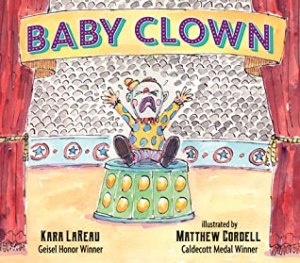
Earlier this week, a delightful picture book was birthed into the world by Kara LaReau and Matthew Cordell. Baby Clown (Ages 3-6) is about a newborn circus clown who wails and wails and wails, despite the attempts of his adults to hush, soothe, distract, or entertain him. It got me thinking: maybe the reason children relish hearing stories about babies crying is because they seem to defy the natural order of things. How is it possible that these tiny, helpless, innocent beings can wield so much power over their wise, capable, fully-grown adults?
Read Alouds Inspired by the Pandemic
April 9, 2020 Comments Off on Read Alouds Inspired by the Pandemic
 You need only consider the two chapter books I’ve just finished reading to my children to glean the wild fluctuations in mood characteristic of Home Life During the Pandemic. The first, Laurie Halse Anderson’s Fever 1793—a historical novel set during the Yellow Fever epidemic in Philadelphia—is dark, gripping, macabre, and mind-blowing. The second, Louis Sachar’s Wayside School: Beneath the Cloud of Doom—thirty interconnected stories about the students at the quirkiest school in literary history—is silly, preposterous, dry-witted, and a rip-roaring good time…while still being a tad apocalyptic, because I can’t resist a theme. If we’re doomed to spend all day, every day, in each other’s presence, while the pendulum of the wider world swings dramatically between fear and hope, heartbreak and grace, serious headlines and funny memes, it seems only appropriate that our read alouds should follow suit.
Bees: To Fear or Not to Fear
April 2, 2020 § 2 Comments
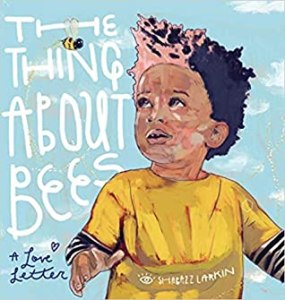 Remember last week when I talked about returning our children to nature during this pandemic vis-á-vis secret gardens and long hikes in the woods? Well, there’s just one teeny tiny problem. While we were hiking a few days ago, my son spotted a bee.
Let me back up.
When JP was almost three, during a family reunion in rural Rhode Island, he climbed a ladder to reach an aged treehouse and stood up into a nest of wasps. He was stung twenty-seven times. I know this because the pediatrician, whom I panic dialed, asked me to count the stings. JP was just shy of the number where the poison level would have necessitated getting into the car and trying to find a hospital. Instead, we sat him on the second step of my uncle’s swimming pool, where, immersed in cold water, the screams and swelling eventually subsided.
Perhaps owing to this traumatic event or perhaps just because of the way he’s wired, JP has moved through the past nine years immensely fearful of stinging insects. His fear doesn’t differentiate between wasps and bees. He has read countless books on the subject; he has taken field trips to bee farms; he can rattle off the statistical improbabilities of being stung. No matter. If he hears buzzing, his body goes rigid; if he spots a bee, he flails and shrieks and spends the rest of his outdoor time willing it to be over. He is a hostage to this fear. While I know that with enough exposure and time, he will someday share the outdoors more easily with these creatures, I also know that right now, even more than being afraid of them, he is afraid he will never stop being afraid.
If I could go back in time, short of stopping JP from climbing that ladder, I would take this 2019 picture book with me. It’s what I wish I had read to him in the wake of the wasp event. It’s what I wish I had read to him a hundred times since. In The Thing About Bees: A Love Letter (Ages 3-7), author-illustrator Shabazz Larkin shares his steadfast love for his two young sons alongside an evolving love for bees (not to be confused with wasps), the great pollinators of everyone’s favorite fruits and vegetables. It’s a refreshingly original treatment of a popular subject—why bees matter—because it acknowledges front and center that bees are not easy to love. Indeed, this deeply personal book grew out of the author’s desire not to pass on his own fear of bees to his children. (Quick shout out to Capitol Choices, the children’s literary group of which I’m a part and where I learned of this book last year. Find other treasures on our 2020 list, published here.)
Moving the Classroom to the Woods
March 27, 2020 § 2 Comments
 (Friends, these are rough times. I feel you all. And I promise to keep showing up for you with book ideas for all ages. In addition to these weekly posts, I have (almost) daily recommendations on Instagram, so follow me there. We’ll get through this pandemic with the help of fictional worlds and gripping history and funny comics. Worst comes to worst, we can always use the pages to wipe our bottoms.)
It was only the second morning of #pandemicparenting, and the kids and I were already on the verge of strangling one another. My husband needed a quiet house for conference calls, so I threw out our daily schedule (just one day old) and drove the kids to the woods…where we stayed for four hours. It was cold and drizzly when we arrived, and I found myself willing it to be over. We walked and walked, saw no one, walked some more, and eventually settled into our own rhythms. My daughter ran off trail to climb on logs and rocks. My son stopped talking about his stress level and moved through the world quietly. We got lost, had to scramble up rocky ledges to find the trail again, discovered deserted outcroppings of beaches. The sun came out. I sat and listened to the water, while the kids skipped stones. Later, my son threw his arms around a tree, and I laughed out loud.
We’ve had our fair share of highs and lows these first two weeks of social distancing, but I am endlessly grateful that the trees still welcome our closeness. If there are silver linings amidst this collective heartbreak, one is an opportunity to return our children to nature. I never wanted to homeschool my kids; I knew I’d be rubbish at it. (I knew my kids would be equally rubbish at it.) Thankfully, they still have their wonderful teachers, even if they can only see them on a screen right now. I figure, for as long as we’re packed in together like sardines, I can give my kids two blessings: I can read them books; and I can gently push them towards the trees.
You know what social distancing is good for? Secret gardens. If your children need convincing to let nature step in as teacher, read them the extraordinary new picture book biography, The Secret Garden of George Washington Carver (Ages 7-10). My kids were riveted. Evocatively written by Gene Barretta and accented with richly expressive oil paintings by Frank Morrison, the story demonstrates how young George Washington Carver’s intimate relationship with nature as a child grew into a passionate career as a botanist, inventor, and activist.
Moving Through Uncertainty (A Book Club Post)
March 20, 2020 Comments Off on Moving Through Uncertainty (A Book Club Post)
 It feels unfathomable that only a single week has passed since I was in my daughter’s Montessori classroom for book club with the third graders. It feels more like a lifetime, so frequently and relentlessly has the rug been pulled out from beneath our Normalcy since then. With schools shuttered and social distancing mandated, we’re all scrambling to find some semblance of routine, to cling to optimism about our loved ones and our community, to keep from sinking into the couch and staying there for good.
Last Thursday concluded seven weeks of discussing Katherine Applegate’s Crenshaw (Ages 9-12), our second pick of the year (click here for my Instagram post on our first book), and we celebrated the way we do: with a party. Only this time the popcorn was complemented with purple jelly beans: a favorite of the oversized, outspoken, outlandish cat named Crenshaw, once Jackson’s imaginary friend, who unexpectedly (and awkwardly) reappears during his fifth-grade year.
When I chose the book, I could not have known how apt it would turn out to be for the ordeal we’re now living through. I had chosen it for three reasons. Firstly, Applegate’s short chapters and direct sentences are accessible to a variety of readers, while the nuance, maturity, and visual acuity she packs into her words create rich fodder for discussion. Secondly, if reading fiction is linked to building empathy, Crenshaw represents a rare opportunity in middle-grade fiction to step into the shoes of someone living in poverty—and to discover he isn’t that different from us. Thirdly, the humor in this story, employed to balance out the sadness, is infectious: it’s unexpected; it’s absurd; it’s cinematic. (A giant cat who enjoys making bubble beards in the bath? Yes, please.) The light in the kids’ eyes as they begged to read aloud favorite passages each week only confirmed this.
But it turns out the most powerful reason to read Crenshaw—and why you may want to read it at home right now—may be its theme of uncertainty. How do we keep going when the world stops making sense?
Friendship is Not Wasted on the Young
March 12, 2020 § 1 Comment
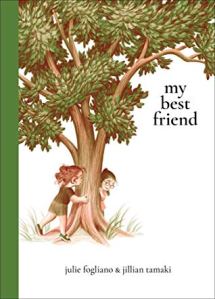 My daughter has had the same best friend for nine years. She met her when she was just beginning to run and climb, when I used to swing by our local playground—what we called the “Tot Lot”—after dropping her brother off at preschool. It was an instant connection, the likes of which I had never experienced with my son, and it stopped me in my tracks. Child development literature would have placed my daughter squarely in the realm of “parallel play.” So how to explain that she never let fall the hand of this other little girl, that they climbed and descended the small slide, crawled through plastic boulders, and scampered up and down artificial hills as one?
After spending nearly every day together for years, the girls don’t see each other as often now; they live about an hour apart. Still, when they get together, they pick up like no time has passed. They disappear into their own world: talking in whispers, inventing elaborate games, often so wrapped in each other’s arms that it’s hard to tell where one stops and the other begins. To witness their togetherness feels like being in the presence of something magical, something almost miraculous.
Julie Fogliano and Jillian Tamaki’s my best friend (Ages 3-7) came out only a week ago, but so enthusiastic has the response been from the kid lit world, I feel like the last person to sing its praises. (Still, wild horses couldn’t keep me from joining in the fun.) An homage to the giddy abandon exhibited in early childhood friendships—particularly those born on the playground—the book has all the makings of a classic. Fogliano’s free verse sings and soars with the stream of consciousness of a child tasting the deliciousness of friendship for the first time. (i have a new friend/ and her hair is black/ and it shines/ and it shines/ and she always laughs at everything) Tamaki’s muted palette of rusty pink and olive green lends the book a timeless, vintage feel, while the figures themselves spill and explode off the page, their excitement literally uncontainable.
A Farewell Ode to Board Books
March 5, 2020 § 5 Comments
 We are packing up our house to move out for a renovation project. Which means I can no longer ignore the board books still on our shelves, even though my kids, at nine and twelve, are long past paging through them. Only the most beloved of our stash are left, with their faded covers and frayed edges (wait, are those bite marks?). I suppose it is finally time to retire them to a box in the attic, where they’ll sit optimistically until a time when little ones might once again grace our home.
And still. Picking up these books takes me right back to the days of spit up and babble and hair pulling and cuddles so delicious I wondered how I’d ever been happy before. To days when I was so exhausted, I feared I wouldn’t rise to get my screaming infant from her crib. Reading these books to my children sometimes felt like my only lifeline to sanity. A time when a squirming child would succumb to my lap; when the call of laundry and dishes would fade; when alongside my child, I could ride on the back of a rhyme or escape into a picturesque barnyard where everything seemed ordered and wonderful.
There were also those times when one child would be playing in the next room, and the sounds of wooden drums and plastic trucks would suddenly stop; and I’d peek in to see a mess of books, with little hands turning pages and the sweetest voice singing out remembered phrases. Like watching my heart beat outside my body.
So, before I pack up these treasures, stamped indelibly on my heart, I thought I’d bid farewell to a few specific titles, in case you haven’t happened upon them in your own quest for sanity.
Concluding Black History Month on the Train
February 27, 2020 Comments Off on Concluding Black History Month on the Train
 Every year, once in the fall and once in the spring, I take each of my children on a mommy-and-me trip to New York City for a long weekend in the city where I grew up. We board the train in Alexandria, Virginia and make stops in Washington, D.C.; Baltimore, Maryland; Newark, Delaware; Philadelphia, Pennsylvania; and, finally, New York City, Penn Station. My kids have come to enjoy the train ride almost as much as the destination itself, glancing up from their books to watch the changing scenery speeding by—there is something innately lolling and contemplative about train travel—and anticipating the stops to come.
These same train stops come to life against an important and fascinating historical backdrop in Overground Railroad (Ages 4-9), a new picture book by superstar husband-and-wife team Lesa Cline-Ransome and James Ransome, whose Before She Was Harriet I praised around this same time last year. “Isn’t it supposed to be “Underground Railroad?” my daughter asked, when I picked up the book to read it to her. Admittedly, I was equally stumped. As the Author’s Note explains, most people are familiar with the covert network known as the Underground Railroad, which assisted runaway slaves on their journey to the North, usually on foot. Lesser known but often equally secretive, the Overground Railroad refers to the train and bus routes traveled by millions of black Americans during the Great Migration, a time when former slaves opted to free themselves from the limitations and injustices of sharecropping to seek out better employment and educational opportunities in the North. Faced with the threat of violence from the owners of these tenant farms, who relied on the exploitation of sharecroppers for their livelihood, those who escaped often had to do so under cover of night.
Curating Memories
February 20, 2020 § 4 Comments
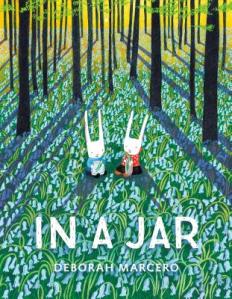 Since losing my grandmother two weeks ago, I haven’t been able to shake my sadness at the realization that my memories with her are now finite. For nearly 45 years, I have been collecting memories with her, savoring them on shelves in my heart. Memories of orange-red sunsets on the beach; of her impossibly large hibiscus plant; of earth-shattering thunder claps which sent me flying out of bed, always to find her calmly watching the electrical show from the screened porch (“Have you ever seen anything so beautiful, Meliss?”). There were jigsaw puzzles which kept us up late into the night, always after vowing she wouldn’t “get involved”; prank calls she encouraged me to make to her friends; Thursday night Bingo games at her golf club, where to be seated next to her felt like basking in the presence of a celebrity. I can still hear her voice like it was yesterday, those giddy eruptions of “Goody goody goody!”
If the right book, read at the right time, can cradle you in its embrace, then Deborah Marcero’s new picture book, In a Jar (Ages 4-8), is doing that for me. (My kids are pretty smitten, too.) It is the most exquisite, childlike, visual depiction of memory-making I’ve encountered, as well as a reminder that the process of collecting memories can be as beautiful as the memories themselves. While it’s not about death, it is a story of loss—the loss of a friend who moves away—and how we re-frame the world in light of departure. It’s affirming and hopeful and the kind of lovely that surrenders you to its pages.
Better Together (Maybe for the Apocalypse, Too?)
February 6, 2020 § 1 Comment
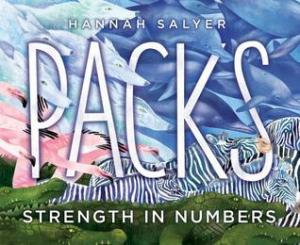 A year or so ago, I was at a summer garden party, all twinkling lights and umbrella drinks, when the conversation took a dark turn. Several folks, none of whom I knew terribly well, began to discuss and debate the provisions they had stored away in the event of an apocalypse. I sat quietly, picturing my own basement with its boxed wedding dress, foosball table, and toys I’d stashed hoping my kids wouldn’t notice so I could gradually move them to the donation bin, and realized how far a cry this was from the scene being described. No crates of non-perishable food, no industrial sized jugs of water, no iodine pills in the event of a nuclear attack, no walkie talkies, no axes, definitely no guns to take down squirrels that could comprise my protein quota.
“Don’t you worry about how you’re going to protect your family?” someone said to me, after I tried to make a joke about my foosball table. I conjured up an image of myself, defending my children against other crazed survivors—all of us presumably reduced to looters or murderers—and I said, only half joking, “In the case of an apocalyptic event, I think it would be best for the future of humanity if my family made a quick exit.” To put it mildly, living off the land in the dark and cold for an extended period of time isn’t really in our wheelhouse.
Last month brought a fresh wave of worry for those of us working hard not to picture End of the World scenarios. We were on the brink of a war with the Middle East. The continent of Australia was burning. A mysterious and deadly virus was (is) rapidly spreading out of China. If we believe apocalyptic-themed fiction, it’s not long until we will be wandering alone in the dark and cold, assuming we are unlucky enough to survive.
And yet, at a time when the news threatens to send us into an ethos of fear and anxiety—to fathom ways of constructing safe houses around our loved ones—children’s literature is there, reliably, with a hefty dose of optimism, a welcome respite from the dark and cold. Especially where gems like Hannah Salyer’s debut picture book, Packs: Strength in Numbers (Ages 5-9), are concerned, we would do well to remember that the animal kingdom has always survived when it turns towards, not away, from one another.


