Deepening Our Definition of American
November 16, 2021 § 5 Comments
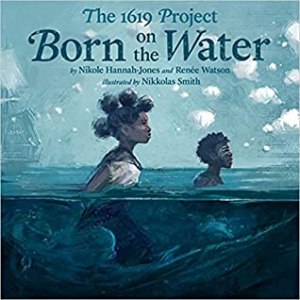
We’ll be back with more installments of my Gift Guide later this week, but I’m hitting pause to talk about a book that released today, one that could be the most important book we share with our kids this month. It also happens to be one of the most gorgeously composed and illustrated long-form picture books I have ever seen. Come for the anti-racist education; stay for the exceptional execution.
A picture book stirringly penned in verse for older children, The 1619 Project: Born on the Water (Ages 7-12) chronicles the consequences of American slavery and the history of Black resistance. Co-written by the Pulitzer-Prize winning creator of The 1619 Project, Nikole Hannah-Jones, and bestselling children’s author, Renée Watson, and exquisitely illustrated by Nikkolas Smith, it’s a book for every kind of American reader. Make no mistake: it’s a book that speaks to the atrocities of our past, but it is not a book that leaves readers in despair. This is a book that educates, inspires, and emboldens.
The social justice protests that swept our country last year quickly gave way to cries for books by Black and other marginalized creators to assume a more prominent place in our homes, libraries, and schools. Parents were DMing me daily, asking for books to introduce conversations about race and racism, even and especially among young children. Seemingly overnight, anti-racist education was valued, if long-overdue.
Now, one year later, conservative backlash has thrown us into a culture war that threatens to undermine anti-racist learning by removing books touching on racial history and discrimination from classrooms, with the alleged accusation that they are “indoctrinating kids to a dangerous ideology.”
Have the folks who seemingly fear the power of these stories actually read them? One of the books on the receiving end of this vitriol is Kelly Yang’s Front Desk series, semi-autobiographical stories about a Chinese immigrant girl who helps her parents manage a motel and, as Yang said Sunday in a social media post about this backlash, is just “trying to get through school without someone making fun of her for her floral pants!” My daughter was recently asked to list her favorite books, and she ranked this series #2 after Harry Potter. Some might say there is no higher praise.
For my daughter, these and other books starring Brown and Black protagonists are “window” stories; what about children for whom they are “mirrors?” Should only some Americans see themselves reflected in literature? America is an indisputably diverse country with an indisputably complicated history. When we gloss over the experience of marginalized people, we are not giving our children—the hope for the future—access to the diversity that underscores our democratic promise.
Books like Front Desk, which reflect individual immigrant experiences, as well as books like Born on the Water, which address the resilience of a people born out of the forced passage from one country to another, do not illicit shame in the white children lucky enough to read them. These are stories of “determination, imagination, faith,” a refrain repeated in the latter book. They are stories about the will to survive and the power of the human spirit, not at the expense of others, but alongside them. They are books that make me proud to be an American, not for the wrongs of the past, but for the opportunities to right those wrongs, to build a nation that strives for justice and equality for all its people. A place where compassion is valued as much as health and prosperity.
If our children do not have the opportunity to engage in nuanced conversations about oppression, when we gloss over key issues in our history that are deeply intertwined with race and racism, then we fail them as parents and educators. When we take away stories with the capacity to ignite their imaginations, we deny them a chance to know their own minds. When we take away stories that give them language to talk about difficult issues, we silence them. When we take away stories rich in truth, beauty, and hope, we make it less likely that they will be emboldened enough to share their own.
With that in mind, I invite you to take a look at the triumphant Born on the Water. As we head into Thanksgiving, did you know that 400 years ago, a whole year before the Mayflower arrived, there was a ship called the White Lion that brought slaves to our shores? This ship isn’t studied in most schools; and yet, it’s as integral to the history of this country as the Europeans who settled here, not to mention the Native peoples who were here before them. I am grateful to have the opportunity to correct this wrong with my own children.
« Read the rest of this entry »2021 Gift Guide: The Picture Books
November 11, 2021 Comments Off on 2021 Gift Guide: The Picture Books
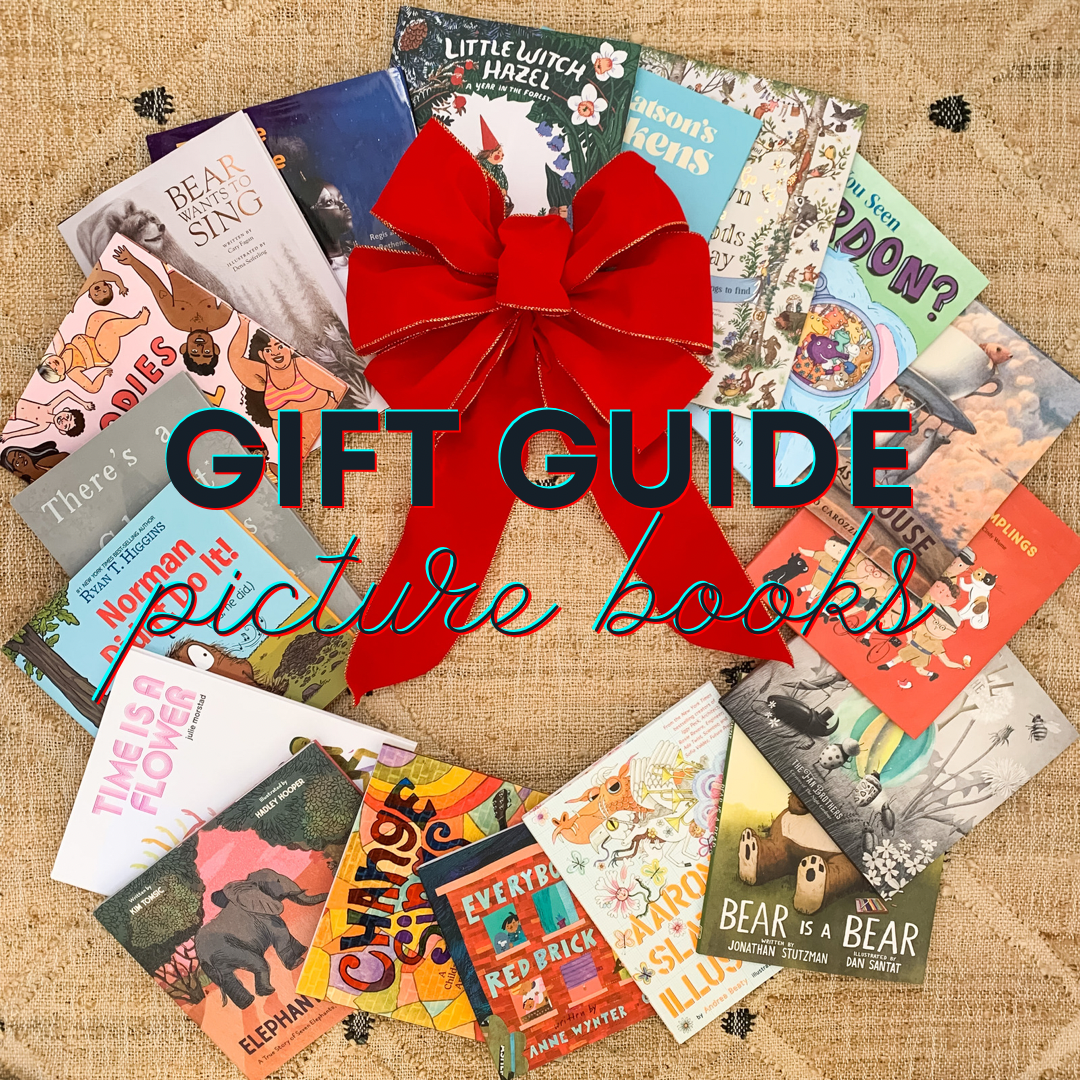
It was another stellar year for picture books! Given the size of the list below (sorry not sorry), you’re going to roll your eyes when I tell you I had a very difficult time narrowing it down. But it’s true, and I already regret leaving some out. (Thankfully, there’s always Instagram.) What I’m focusing on today are those with the giftiest potential. Whether you’re looking for surprise twists, laugh-out-loud humor, exquisite beauty, moving true stories, affirmations of self-love and acceptance, or ridiculously cute animals, you’ll find something novel and memorable here. Most importantly, you’ll gift a book to be relished and revisited for years. Still, I don’t envy you making these decisions, because these books are all so, so good.
« Read the rest of this entry »2021 Gift Guide: A Seek-and-Find Trifecta
November 4, 2021 § 1 Comment
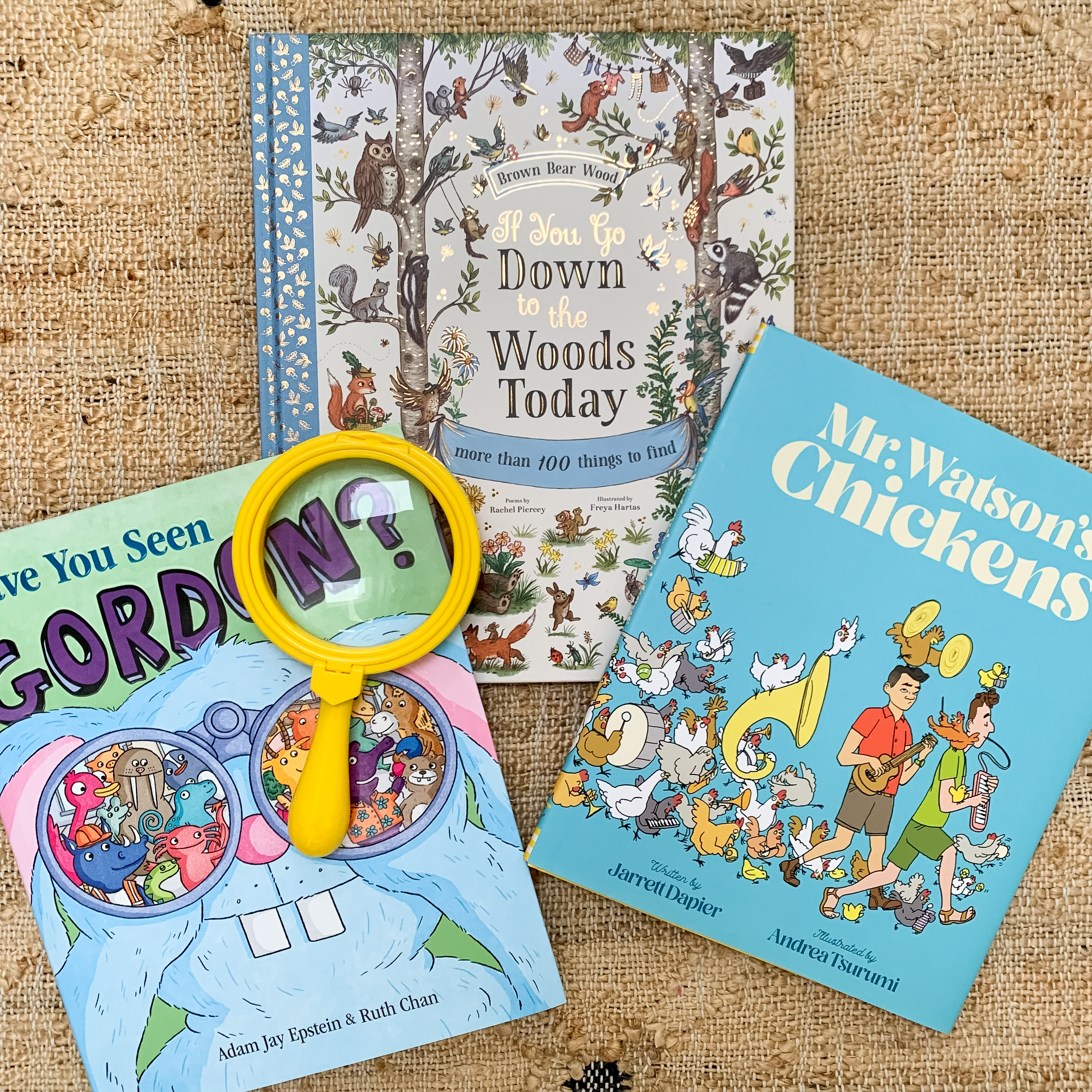
Last week, I launched the Gift Guide with My Favorite Picture Book of the Year. Next week, before moving onto other ages, I’ll do a round-up of a dozen more picture books perfect for gifting. But today, I want to call attention to three 2021 picture books that would make terrific gifts on their own or together. You know I can’t resist a bundling, and each of these treasure troves gives new meaning to the seek-and-find trope, a genre in need of updating before this year came along.
Every parent knows kids love nothing more than treasure hunts. But raise your hand if you’ve ever hidden a Where’s Waldo? book. Or a Richard Scarry book. Or any of those with dizzying pictures that have your child hunched over the page in your lap, scrunching up their eyes to look for a red-striped shirt or a tiny gold bug or any number of things, until it seems possible you’ve missed bedtime all together and it’s now morning again.
What if a child could get their seek-and-find fix in books that were cleverly crafted and delightfully fun to read aloud? What if these books featured art that was easy on our (tired) eyes? Wouldn’t that alone be worth welcoming the Holiday Season with open arms?
« Read the rest of this entry »2021 Gift Guide Kicks Off: Favorite Picture Book of the Year
October 28, 2021 § 2 Comments
It’s getting to be the most wonderful time of year: Gift Guide season! Over the next few weeks, you’ll be treated to round ups of picture books, graphic novels, middle-grade books, young adult books, and specialty books with a gifty flair. This year, I’m especially excited to be partnering with Old Town Books, a fantastic indie here in Alexandria, VA, where I’ll be presenting my full Gift Guide LIVE and IN PERSON at 7pm on November 12 and 13, with a chance to shop with me afterwards (get your tickets here!).
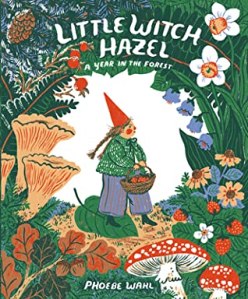
Traditionally, I kick off every Gift Guide with my favorite picture book of the year. (Some past picks are here, here, here, and here.) I recognize that choosing books for loved ones is immensely personal, but sometimes a book comes along that checks all the boxes. It’s beautiful. It’s original. It’s hefty, packed with details that demand repeat readings. It’s got a nostalgic charm that appeals to us oldies doing the gifting. To hold it feels inherently special.
Towering toadstools! All I’m saying is that there aren’t many books you want to clutch to your chest and carry around with you, so when you find one, you just want everyone to have it, OK?
Little Witch Hazel: A Year in the Forest (Ages 4-8), by the extraordinary Phoebe Wahl—I blinked and missed her 2020 picture book for last year’s Gift Guide, and I’ll not make that mistake again—is an anthology of four stories, one for each season. It stars a cheery, capable, caring little witch with a pointed red cap and a fondness for messy braids and fair isle sweaters. Little Witch Hazel lives alone at the base of a tree in the enchanting Mosswood forest, surrounded by trees and waterfalls and a community of gnomes, elves, goblins, trolls, dryads, anthropomorphic amphibians, and tiny talking mammals. He days are spent divided between work and play, between helping others and tending to herself.
It has been a long two years, and I feel like we all deserve to spend some time in a place where tea cakes and twinkling lights are always in fashion, where coziness and cocoa reign supreme, and where the wonders of the wilderness are just an acorn’s throw away. A place where we can dip our tired toes in crystal clear water one minute and ride on an owl’s back the next. A place where creatures watch out for one another, repay favors, and are always happy for an impromptu dance party.
« Read the rest of this entry »A Life Skills Round Up
October 21, 2021 Comments Off on A Life Skills Round Up

On this blog, I have often stressed the importance of intentionality when it comes to sharing books with children. I’ve talked about the value of stocking our bookshelves with stories whose characters and settings and challenges reflect the greater world, not just the tiny slice taking place under our own roof. I’ve discussed the importance of reading stories that push against gender, racial, or religious stereotypes. I’ve hailed the way reading aloud can showcase the richness of language and the nuance of character, encouraging children to see the value of storytelling and expand their own reading choices. I’ve talked about how choosing a book we’ll enjoy reading goes a long way towards making read-aloud time special for our children and sustainable for us.
Children’s books can also be invaluable tools for imparting life skills to our children. The best of these do so by providing us with language for initiating important conversations. How often do we avoid talking to our children about uncomfortable topics because we’re afraid we’ll mess them up? Maybe we don’t realize we should be having these conversations in the first place. I continue to be grateful for the books that are by my side when parenting gets hard and messy.
Today, I discuss three fantastic new picture books that each tackle a different life skill, from taking accountability when we hurt someone, to setting boundaries around our bodies, to recognizing and calling out racism. There was a time when topics like these were relegated to the fringe of the publishing world, so it’s refreshing to see them taken up by innovative, even award-winning creators and supported by mainstream publishers. The result is books that are a joy to read: warm, cheerful, fun, and funny. They aren’t shaming or preachy or even a little bit boring.
I promise you: sharing books like these with our children makes our job as parents a little bit easier.
« Read the rest of this entry »Graphic Novel Round Up: Witches and Ghosts and Vampires (Oh My!)
October 14, 2021 § 4 Comments
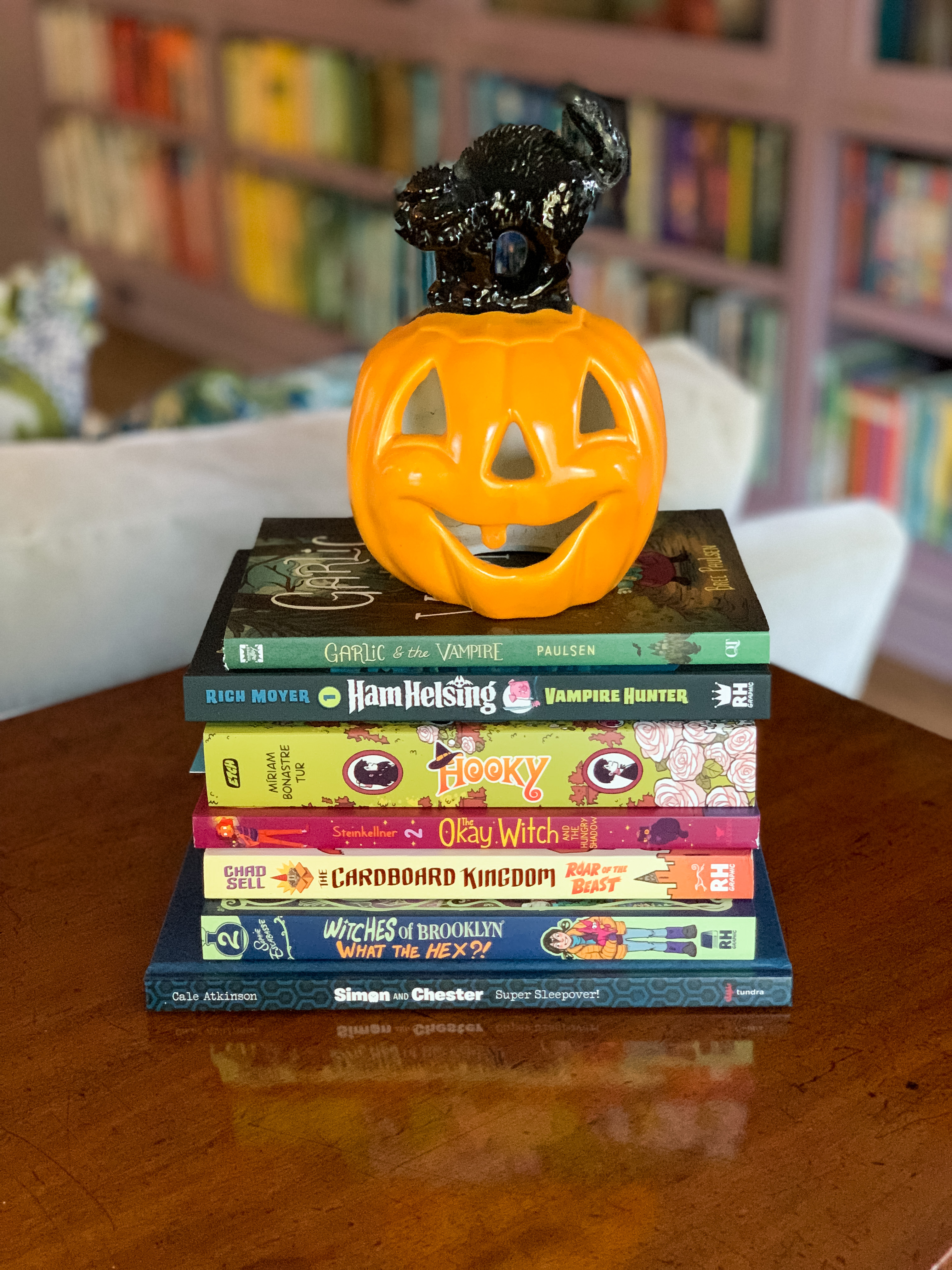
2021 has seen many trends in children’s literature (body positivity and consent will make an appearance in next week’s blog post), but most fun is the onslaught of witches, ghosts and vampires, particularly in graphic novels. I’m not sure how to account for this uptake in supernatural activity on the page, except that maybe the last two years already have us feeling like we’re suspended between real life and an alternate universe. Magic has always been irresistible to kids—long before Harry Potter arrived on the scene, I can recall my own childhood obsession with The Blue-Nosed Witch—but perhaps at no time more than now do we share a collective desire to wield spells that could change the course of things. Of course, as the stories below caution us, magic is infinitely more messy than it seems.
All the graphic novels I recommend here—age ranges are provided in the headers—have come out in the past few months, just ahead of Spooky Season. That said, not a single one of these has anything to do with Halloween itself, so I have no doubt they will be read again and again, regardless of the season. But, with fire pit weather upon us and talk of spooky costumes in the air, I can’t think of a better time to drop a few new witchy reads into your child’s lap. (Amazon affiliate links below, though all of these titles are currently in stock at Old Town Books!)
« Read the rest of this entry »Hiding in Plain Sight: A Halloween Post
October 7, 2021 § 1 Comment
After hitting the snooze button on Halloween last year while in temporary housing, we were extra-enthused to unbox our spooky decorations last weekend—especially our Halloween books! (Do you pack up your Halloween books with the decorations so you can re-discover them every year? Trust me on this.) As my kids have gotten older, we’ve offloaded many seasonal picture books, and those left are the ones we can’t bear to give up. This includes old favorites like Creepy Carrots, Old Black Witch, The Monsters’ Monster, I am a Witch’s Cat, In a Dark, Dark Room…along with more recent favorites, like The Little Ghost Who Was a Quilt and Gustavo the Shy Ghost (for the love of all cuteness, please add this book to your collection…I recently Instagrammed about it here).
Then there are the spooky chapter books we’ve loved reading aloud in past Octobers—by candlelight, of course—like James and Deborah Howe’s classic, Bunnicula, and Adam Gidwitz’s A Tale Dark and Grimm. (I recently did an Instagram video with these and many more, including the books my kids claim are too scary for me to attempt, but darned if we will get to them someday. Also, let’s compare witchy cackles, shall we?)
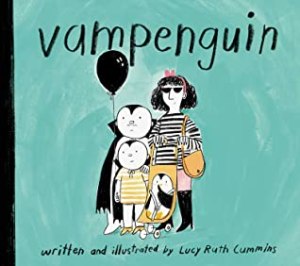
Which brings us to 2021, where I’ve combed through dozens of Halloween-ish new releases to tell you my favorite. The story I’ve chosen is about vampires—of the modern, hip, urban variety—though it has nothing to do with the actual holiday of Halloween. Which means you get to decide whether you pack it up on November 1st or let it stay out all year round. Who am I kidding? There’s not a chance your kiddos are going to let you pack up this one. In Vampenguin (Ages 3-6), Lucy Ruth Cummins—no stranger to the Halloween market ever since she wrote the darling Stumpkin—has created a story that abounds with visual gags and makes perfect use of that irresistible trope of storytelling, where the reader is in on the joke long before the characters themselves are.
Have you ever considered how a baby vampire and a baby penguin could be mistaken for one another? Nope, me neither. That’s where the fun (and the funny) begins. And, lest you think Vampenguin sounds big on antics and short on artistry, I assure you that Cummins’ expressive line work and limited color palette, awash in turquoise, orange, and pink, elevate the story in both whimsy and wonder.
« Read the rest of this entry »Best. Birthday. Book.
September 30, 2021 § 2 Comments
September is many things—the return to school, the start of fall, the gearing up for holidays and sweaters and all things pumpkin—but in our house, it’s also Birthday Month. Both my kids share September birthdays, just two weeks apart. If September didn’t already feel like a sharp re-entry to scheduled life after the dog days of summer, adding in two back-to-back birthday celebrations has always felt like being launched into a marathon we forgot to train for.
Every year, the bleary-eyed exhaustion takes me by surprise. Shouldn’t it be easier now? My kids no longer desire the big backyard birthday parties we threw in the past (remember this post?), with magicians and bouncy houses and mad scientists who blew up stuff and left it all behind. By all accounts, the celebrations my kids want as tweens and teens require little prep on my part and are right up my alley. Ear piercing followed by lunch out with a few fabulous young ladies? Yes, please!
Still, no matter the celebration, there is an emotional charge to the day that radiates throughout the entire month. And, if I’m being honest, it sucks up a good bit of the oxygen in our house. Our children prize their birthdays above all other days of the year. And they aren’t alone. As Mary Lyn Ray puts it in the poetic picture book I’m about to share with you, “Almost anything could happen./ But what’s for sure is that/ your birthday is all yours to unwrap.”
There’s the delicious anticipation that builds over weeks, by some accounts as sweet as the day itself. There are wish lists, made and revised and revised again. There are discussions of favorite breakfasts and requested desserts and memories of things that happened in birthdays past that you wonder if you can re-create. Somewhere along the way, traditions are born.
Every year, my husband breaks out the colored pencils and renders homemade birthday cards, their fronts depicting the birthday kid engaged in a new venture or activity from the previous year (most recently, shooting a bow and arrow and rowing crew). It’s not uncommon for these cards to be drawn close to midnight the evening before, with me furiously wrapping packages beside him. Still, the delight on our kids’ faces when they see everything set out at breakfast the next morning always makes the effort worth it. (But seriously, when did I become the gift wrapper for all the out-of-towners?)
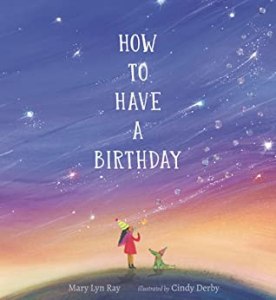
I have never encountered a picture book that more perfectly captures the essence of a child’s birthday than How to Have a Birthday (Ages 3-8), lyrically penned by Mary Lyn Ray and sumptuously illustrated by Cindy Derby. Mary Lyn Ray is a spellbinder with words, conjuring up phrases both playful and poignant; and Cindy Derby’s rich, dreamy art, infused with a touch of sparkle, feels at once intimate and open-ended. The text is delivered in the second person, inviting all readers to consider their own birthday experiences, while the pictures bring to life three specific birthday kids, with different skin tones and different celebration styles.
« Read the rest of this entry »A Road Trip Read Aloud
September 23, 2021 § 1 Comment
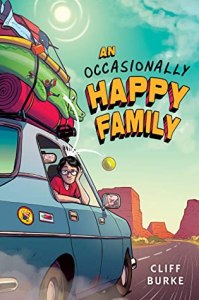
“It’d been a long time since I’d seen [Dad] like this. I wish it hadn’t required an eight-hour road trip, a bird watcher and his dumb son, a bear attack, a nudist French couple, and his now somewhat-but-not-really ex-girlfriend to make him act more like his old self.”
This passage occurs towards the end of Cliff Burke’s An Occasionally Happy Family (Ages 9-13), and I suppose you could fault me for spoiling some plot twists, but doesn’t it also make you want to read it?
My husband and I took turns reading aloud this debut novel last weekend, as we road tripped from Washington DC to Buffalo, NY for my grandmother’s rescheduled memorial service. I had heard it was incredibly funny—indeed, it had all of us in stitches multiple times—and I couldn’t resist the idea of syncing our road trip with a literary one (you know I love a themed reading experience). I figured, if we were going to immerse ourselves in hardcore family togetherness for 72 hours, we might as well learn to laugh at ourselves by watching another family make a total mess of it.
There’s nothing like a vacation gone wrong to make for great storytelling.
What I didn’t expect was to find such tenderness behind the humor. Such authenticity in the narrative voice, such punch in the dialogue, such depth in the relationships. An Occasionally Happy Family may be about camping in 101 degrees, it may be about dorky dads and teenage eye rolls, but it’s also about a family who finds their way back to each other after grief drove them apart.
« Read the rest of this entry »Fauci Fan Club
September 16, 2021 § 2 Comments
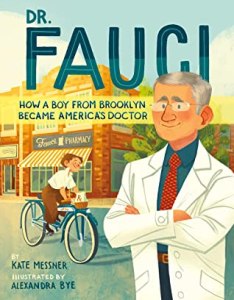
“Do you know who that is?” I asked my daughter, as she was unpacking my recent book purchases. Cue tween eye-roll. “Mommy. Ever since the pandemic started, you’ve been all ‘Fauci said this,’ ‘Fauci said that.’ It would be impossible to live in this house and not know who Dr. Fauci is.”
I guess it’s clear I’m a member of the Fauci Fan Club.
COVID-19 may have made Dr. Anthony Fauci a household name, but the scientist’s work and guidance on behalf of the American people predate the pandemic by over fifty years. As director of the National Institute of Allergy and Infectious Diseases (NIAID), Dr. Fauci has advised seven US presidents on health issues, including those related to AIDS, West Nile, SARS, Ebola, and now COVID-19. In 2008, he was awarded the Presidential Medal of Freedom for his work fighting infectious diseases.
In November 2020, acclaimed children’s writer Kate Messner held a Zoom interview with Dr. Fauci, the contents of which became the basis for Dr. Fauci: How a Boy from Brooklyn Became America’s Doctor (Ages 6-9). Messner hastened—along with illustrator Alexandra Bye and their team at Simon & Schuster—to pull off the impossible. The book was birthed into the world in just seven months, not long after many adults and teens had received their second shots. (The publication timeline for a picture book is typically two-plus years.)
As we now prepare our younger kids to be vaccinated—hopefully sooner rather than later—this book provides an immensely useful place to begin a conversation about the Adult in the Room. Who is Dr. Fauci? How did he become an important voice for science and medicine during some of our country’s most challenging moments? Why can we trust science, and why can we trust him? Finally, what does the doctor have to say to our own aspiring young scientists, to the curious minds of this next generation?
« Read the rest of this entry »An Anthem to the “And”
September 9, 2021 § 5 Comments
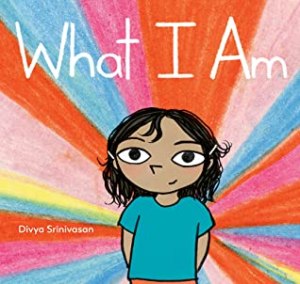
It has taken me a lot of growing up to realize how quickly the world demands that we put labels on ourselves, and how tempting it then becomes as parents to fit our own children into the same tidy little boxes. Even the questions we routinely ask of our children and their peers—Is she shy? Is he artistic? Is she kind?—assume two fixed outcomes: yes or no. Sides are chosen, identities are constructed; and then, inevitably, confusion sets in when the data points don’t consistently match up.
A few years out of college, when I was working in advertising, I attended a retreat designed around improving problem-solving skills. As part of it, we had to take the Myers-Brigg personality test. What was revolutionary to me wasn’t that I received at the end a set of letters to represent my dominant personality traits, but that each of those letters was plotted on a spectrum. I expected, for example, that I would score as extroverted (E)—I’ve always been social, albeit preferring intimate groups—but what surprised me was that I was quite close to the midway mark between extroverted (E) and introverted (I). This seems incredibly obvious to me now, but I had never previously considered that someone could be both things at the same time. That I could derive equal energy from social interactions and from being by myself. That I didn’t have to choose. That my identity might run on a spectrum, rather than conforming to a binary system.
When we fall into the trap of thinking of ourselves as one way or another, it’s not only limiting, it’s fundamentally inaccurate. We, all of us, are walking contradictions. It’s what makes us interesting. It’s what makes us human. Maybe we get nervous walking into a new classroom, but we can belt out a solo on stage. Maybe we can’t draw the likeness of anything, but we love moving paint around on canvas. Maybe we have a hard time sharing crayons at school, but we’ll sit and read to our baby sister at home when she’s sad. What if there was a way to encourage our children to take these “but”s and turn them into an “and”s? What if instead of contradicting one another, they are just two true things?
When I first opened Divya Srinivasan’s triumphant new picture book, What I Am (Ages 3-7), I thought it was going to be a book about a Brown girl responding to a microaggression that’s all too familiar to those whose non-whiteness doesn’t fit the idea of American that some people insist on holding onto, even though all evidence points to the contrary. It’s the “What are you?” question.
And it is a book about that. A beautiful, validating mirror for an Indian American reader.
AND it’s something more. Because, as our young narrator reflects on this question, she realizes that she is a whole lot more than her race or her ethnic heritage. And that many of these things might seem like contradictions—only they aren’t. They’re just her.
What this book is—and why I hope every child gets a chance to read it—is a testament to the complexities, to the nuance, within each and every one of us. It’s a kind of roadmap to how we might think about our own identities—and how we might express them to a world bent on incessantly inquiring.
« Read the rest of this entry »Remembering 9/11 with Five Books for Different Ages
September 2, 2021 § 4 Comments
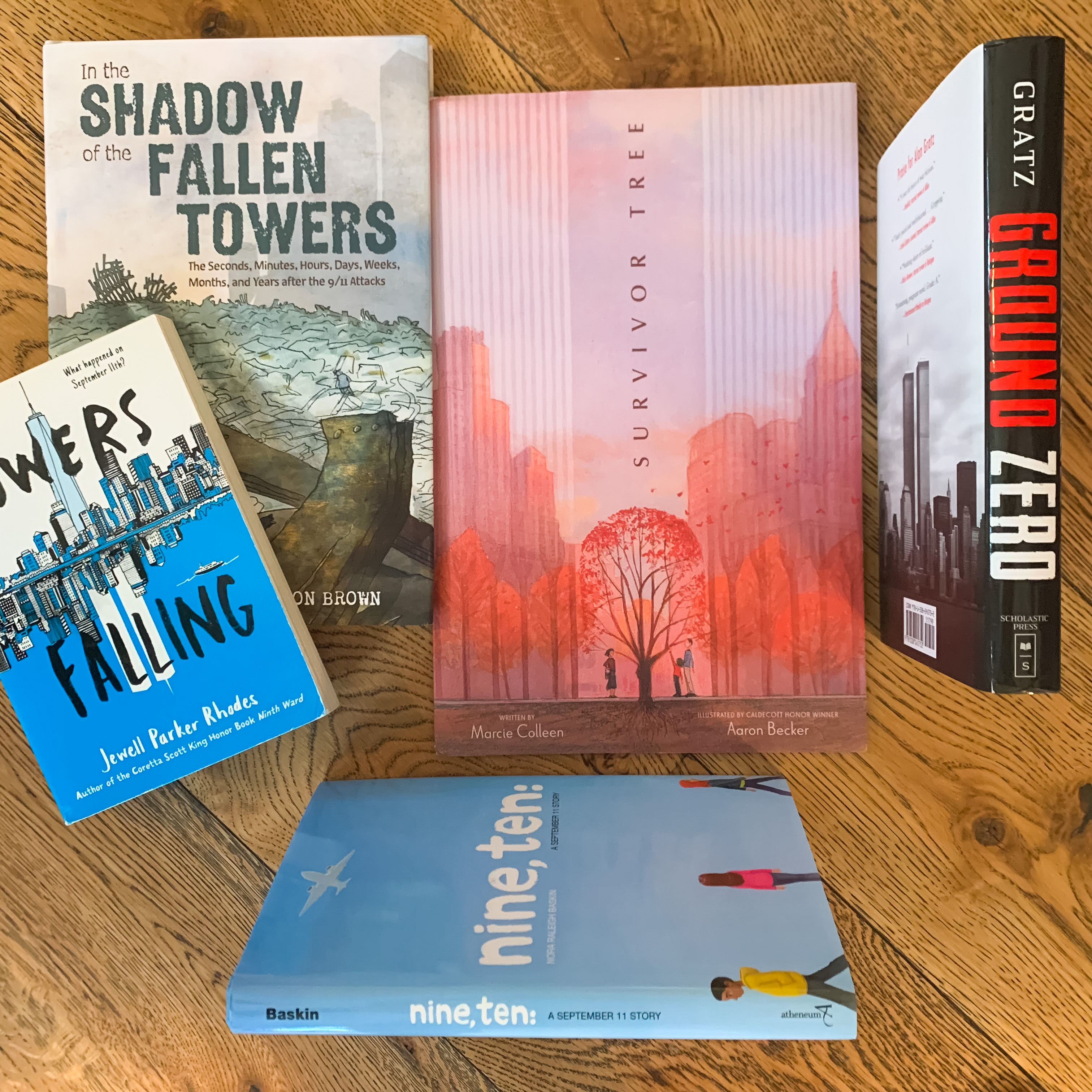
Everyone has a story about where they were on 9/11, and if you tell yours, you’ll almost certainly be interrupted by someone eager to share theirs. And yet, for stories so easily accessed—seemingly lying in wait on the tip of our tongue—we go to great lengths to keep them from leaking out into mainstream conversation, or even into the privacy of our own homes, without explicit invitation. This is especially true with our children.
Twenty years have passed, but talking about 9/11 with children—especially young children—continues to makes many parents and teachers uncomfortable. I cannot begin to appreciate the trauma of those directly impacted by the horrific events of that day, but even those of us physically distanced from the attacks felt a profound terror course through our veins as we attempted to make sense of what we were seeing on our television screens, as we scrambled to contact loved ones in New York or Washington DC, as we passed subsequent days under eerily silent skies. It was a fear unprecedented for many of us, and it represented a before-and-after moment we can never un-see. Many of us would rather avoid the topic altogether, or gloss over the horrifying details, than pass along that fear to our children.
And yet, our children have spent their entire lives in a post-9/11 world—in the “after,” so to speak. The safety precautions that started in its wake are the only ones our kids have ever known. I let my ten-year-old daughter read Alan Gratz’s Ground Zero (discussed below) earlier this year after she begged, and I waited for her to set it down, to tell me it was too scary, that she never wanted to take an elevator or get on a plane again. But that didn’t happen. She absorbed the horrors in those pages as she had those in The War That Saved My Life, a gorgeous but also heavy novel about World War Two. I might say she hungered for it.
I’ve come to see that my children want us to talk about that day. They want to understand what led to our longest war in history, the tragic aftermath of which is playing out right now. They want to understand the terror we felt. They want, as I do each time I visit my mom in Manhattan, to stand in front of the reflecting pools at the 9/11 Memorial and marvel at the names, to contemplate the absence that the rushing water dies into.
I’ve come to see the value in unburdening this history—both for them and for us. We don’t know exactly where 9/11 will land in history, but we do know that our democracy was attacked that day, that our power structures were undermined, and that we were forced to take stock of the values we hold most dear. The events of that day are not only part of our cultural consciousness, they’re a reminder that we must work every day to uphold the freedom that paves the way for a more just and equitable world. (I had my own 9/11 reckoning earlier this year, when I listened to the astounding audio production of Garrett M. Graff’s The Only Plane in the Sky.)
I’ve come to see the value that good, careful literature offers in imparting this history—and in pointing us towards hope. In the face of egregious violence and horror and loss on 9/11, there were countless narratives of resilience. Of coming together. Of helping and sacrificing and supporting. Of courage in the most unlikely places. As author Jewell Parker Rhodes recently said on a Little Brown panel, “Narrative takes pain and chaos and helps us make sense of it in a way that allows us to move toward healing.”
Children’s books have a universally honored obligation to end with hope, no matter the subject. It’s what makes them so sacred. The books I discuss below—some a few years old and some published to commemorate the twentieth anniversary of 9/11—take the trauma of that day and transform it into history with grace and beauty. There’s an immensely moving and uplifting picture book that allows the smallest child to connect with the absence and loss surrounding 9/11—I would not hesitate to read it to a four year old, nor to any age for that matter—and there are chapter books that approach the subject from various angles (and with various levels of violence). There’s an outstanding graphic novel that manages a comprehensive study of the subject in just over 100 pages. As always, I provide age ranges below each title.
« Read the rest of this entry »Reading Aloud with a View
August 12, 2021 Comments Off on Reading Aloud with a View
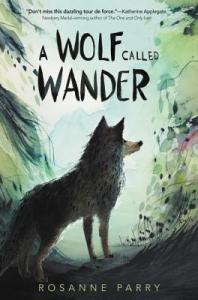
My kids will tell you that leading up to every vacation, I obsess over what book we’re going to bring with us as a read aloud. Well, they aren’t wrong. But neither am I, because matching our reading material to the view outside has always created a kind of magic for all of us.
We definitely got it right earlier this summer when we were in Montana visiting my sister, who lives with her family on a sprawling ranch outside of Bozeman. A Wolf Called Wander (Ages 8-12, younger if reading aloud, though there is some violence), by Rosanne Parry, dropped us into the psyche of a single male wolf, inspired by an actual wolf known to trackers as OR-7. Still alive today, OR-7 made a dangerous and highly unusual lone voyage across Oregon and California after losing his pack, traveling over a thousand miles before ultimately finding a mate and settling down to form his own pack.
In fast-moving, first-person prose, Parry imagines what it might have been like to be OR-7, whom she gives the fictional name Swift. One minute, the young wolf is safe and content with his pack in the mountains; the next minute, a rival pack attacks and sets his life on an extraordinary new course.
We may have been a few states away from Swift’s story, but we knew there were wolves in the mountains around us. We knew they were probably closer than we realized, hiding from view, as we explored Yellowstone National Park. Reading this book together—including marveling over the plentiful grey-and-white illustrations by Mónica Armiño—allowed us to appreciate the biodiversity around us. The unseen lives. The brutal, beautiful struggle for survival. The way our protagonist would strike down an elk without mercy, but stand back in awe as a string of wild horses stood before him. The way he forged partnerships with scavengers, like a black raven, who saved his life numerous times by guiding him to water. They way he hungered for food, thought of it constantly—but was nearly consumed by an even deeper hunger for companionship.
« Read the rest of this entry »Reality Trumps Fiction (Take Two)
August 5, 2021 § 1 Comment
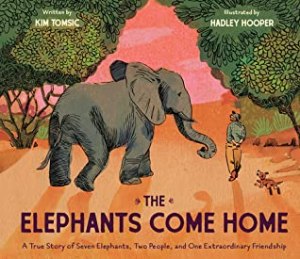
Way back in 2013, when my kids thought all the best stories had to be “made-up,” I wrote a blog post about how, occasionally, reality trumps fiction. That is to say, sometimes a story blows our mind, not only because it’s beautiful and moving and awe-inspiring and original, but also because it happens to be true. Kids today have no shortage of options for picture book biographies, true stories about incredible individuals told with spellbinding art and captivating narratives, but when it comes to the animal world, the emphasis has historically been on information versus story.
Maybe that’s why The Elephants Come Home: A True Story of Seven Elephants, Two People, and One Extraordinary Friendship (Ages 6-9), written by Kim Tomsic and illustrated by Hadley Hooper, feels so special. It tells an amazing story—a story we’d warm to even if it was entirely made-up—but it gives us an added case of the goosies because we know from the start that it really happened. Or maybe it’s because the book straddles the animal and human world, allowing for some of the same storytelling prowess that has made picture book biographies soar in popularity. Or maybe it’s because it is stunningly executed (that paper! those colors! that art! those page turns!). Whatever the case, it’s hands down one of the best examples of narrative non-fiction I’ve ever come across. Even my daughter, age ten, has inhaled its 58 pages again and again. (If you trust me, stop reading to avoid the spoilers below and go get the book!)
« Read the rest of this entry »New Summery Graphic Novels for Ages 7-15
July 29, 2021 § 1 Comment
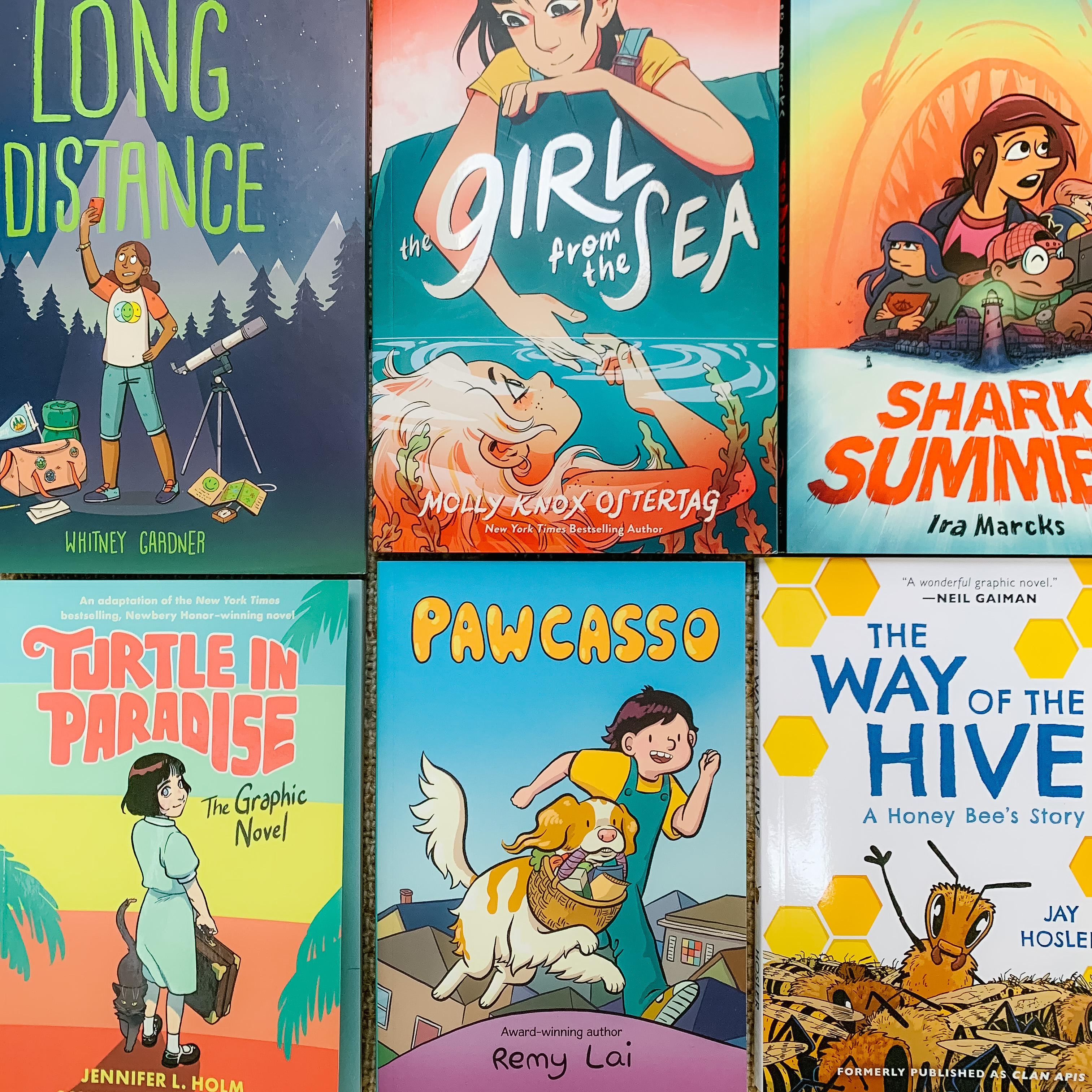
I can hardly keep up with all the graphic novels hitting bookshelves these days, but I’m not complaining, since they continue to make readers out of my kids. (Not convinced they count as real reading? Read what I said here.)
I had initially intended this to be a round-up of new favorites, only I found too many to fit in a single post. So, I’m limiting today’s post to favorite new graphic novels with summer themes. I realize back-to-school season is right around the corner (for some, it’s already here), but in our house, we are in blissful denial. We’ve just wrapped up summer swim team, and my kids are packing their bags for sleepaway camp. We’ve still got time with friends in Maine, time with cousins in Boston, and a family reunion in Rhode Island—fingers and toes and more fingers crossed for good health—and we’re determined to savor these precious days. It seems only right that our reading material should match the view outside. I hope you agree.
(Sadly, this means my Favorite Graphic Novel of the Year so far won’t make the cut, since it’s not set in summer. Those of you on Instagram know what I’m talking about. But the rest of you will have to wait for the ring of the school bell.)
« Read the rest of this entry »Summer’s Sweetness
July 22, 2021 Comments Off on Summer’s Sweetness
I’ve been caught in the hot, sticky, delicious embrace of summer (OK, but a little less heat, please), and it has kept me from showing up here as much as I would like. When I’m silent here, I’m usually still active on Instagram, so you can get lots of book recommendations there, but I do hope to get a few blog posts penned in the next few weeks (I’ve got a big graphic novel round-up planned, so stay tuned!).
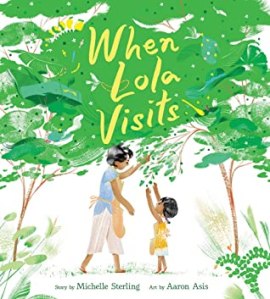
But today, let’s talk about one of my favorite picture books of the year, an especially fitting one for this mid-summer sweet spot we find ourselves in. We’re perfectly poised to reflect on summer’s arc, having traded the tentative newness of June for the wild abandon of July, with a creeping awareness that the final days of August will bring it all to a bittersweet end. When Lola Visits (Ages 4-8), lyrically penned by Michelle Sterling (fellow kid lit reviewer) and evocatively illustrated by Aaron Asis, perfectly expresses this arc by capturing the smells, tastes, and sensations of summer, as experienced by a young girl alongside her visiting Filipino grandmother.
When Lola Visits does something that isn’t easy to do in a picture book. It imparts a culturally specific experience while simultaneously invoking the universal wonder of this special season. It’s a book that asks us to reflect on the way we experience summer, to give language to our own observations, and to honor the richness of our memories from one year to the next.
For my children, at least right now, summer is the smell of chlorine, the tight hug of a swim cap, and the taste of glazed doughnuts, cherry popsicles, and concessions burgers with American cheese. In a few weeks, that will shift to the squish of pine needles beneath flip-flopped feet, the sharp bang of a cabin door, and a Styrofoam cup of steaming hot chocolate on a cool Maine morning where fog sits heavy on the lake.
For me, much like the young protagonist in When Lola Visits, summer will always conjure memories of my grandmothers, both of whom I would visit every year. Summer was the taste of warm popovers with melting pads of butter, enjoyed under an umbrella with my one grandmother, after a morning spent pouring over sawdusty cases of pinned bugs at the science museum, where she volunteered in the entomology department. Summer was make-your-own sundaes before Bingo night with my other grandmother, the excitement of watching the pot of money overflow with American and Canadian dollars outdone only by the anticipation of going to the water slide park the following day. Summer was a sticky tin straight from the fridge with chocolate-peanut-butter-Rice-Krispies cookies. The smoky smoothness of blue beach glass. The experience of hugging an older body, with its faint smell of talcum powder, soft, spidery-veined skin, and the security of a love that knows no bounds.
« Read the rest of this entry »Taking Our Cue from Them
June 17, 2021 Comments Off on Taking Our Cue from Them

Is that a naked boy on the cover? Why, yes. Are you mostly just posting about books with neon pink themes this year? Um, maybe.
For me, the biggest challenge of parenting continues to be taking the lead from my kids—and not the other way around. It’s seems simple enough—to guide, not instruct; to support, not push; to listen more and talk less—but it becomes intensely complicated when my own biases, fears, and failures get in the way of seeing my kids for who they are in the moment. Labels are comforting; they help us feel like we’re making sense of the chaos and uncertainty that is our children’s becoming. Look, he’s good at swimming—yes, swimming is his sport! He’s got brains, but she’s got compassion. He’ll never agree to that—he hated it last year. Wait, you want to wear a dress? I thought you hated dresses!
Being a parent can feel a lot like being tied to the end of a yo-yo that someone else is operating, and the whiplash isn’t always pleasant. But when we manage to extricate ourselves from that emotional tether, when we take a step back and observe the messy evolution unfold, we make space for wonder, joy, and acceptance—on both sides.
Upholding traditional gender roles is a trap most of us parents fall into at one time or another (regardless of how many feminist classes we took in college). It starts when our babes are in utero, as we fantasize about the mother-daughter shopping trips or decorate the nursery in a baseball theme, and it continues each time we measure our child against others of the same gender. Shyness in girls is sweet, but shyness in boys might be a sign of weakness. A boy who shows an interest in math confirms what everyone expected, but a girl who shows an interest in math is intriguing—as long as she’s not a dork, because then she’ll struggle socially. It’s OK for her to pick dance as a sport, but he needs a “real” workout. And so the dialogue goes, even if we never utter the words aloud.
And a boy who likes pink? Who wears make-up? What does that imply? What does that signal about the future?
Must it mean anything?
I’m thirteen years into this parenting gig, and the only thing I know for certain is that kids change. They change their minds, their habits, their styles. Sometimes it’s awesome, and sometimes it’s nerve-wracking. Sometimes, it’s along traditional gender lines, and sometimes it’s not. Sometimes it’s a signal of what’s to come, but just as often, it’s not. Most of the time, it has nothing to do with us, though how we react can be everything.
The supremely talented Peter Brown—creator of picture book favorites like Mr. Tiger Goes Wild, My Teacher is a Monster (No, I Am Not), and Creepy Carrots, and author of the equally brilliant chapter series The Wild Robot —has a new picture book out, and it brings the biggest smile to my face every time I read it. It’s also his most personal book to date, based on an incident when Brown was five years old and got into his mother’s make-up drawer. In many ways, it’s a tribute to his mother, whom he credits as being ahead of her time in her ability to validate who he was at every changing moment.
Fred Gets Dressed (Ages 2-6) may be a simple story about self-expression, but its execution is anything but ordinary. Design reigns, characters glow, and nakedness abounds. There’s the supportive mother, joined by a father who plays a small but mighty role. There’s a warm, inviting home, with books, dog, plants, and oversized throw pillows. But at the center of the story, stealing the show, is Fred. Fred is pure exuberance. Fred is that kid whose unbridled enthusiasm you want to bottle. Fred is that kid who prefers to air-dry au naturel (and who doesn’t, really?).
Fred is a boy who, on a whim, dresses up in his mom’s clothes and make-up. And because of his parents’ reaction, there’s no labeling, there’s no foreshadowing, there’s no shame. He’s simply allowed the freedom that comes with non-traditional gender roles. And his beaming smile says it all.
« Read the rest of this entry »Cicada Frenzy (A Father’s Day Post)
June 10, 2021 § 1 Comment

(Past years’ Father’s Day ideas can be found here, here, here, and here.)
The list of things my kids will someday recount to their wide-eyed grandchildren has gotten a lot longer in the past year. First, there was the pandemic. Then, the election (including an insurrection). And now, here in Virginia, we can add the seventeen-year cicada, a rare breed of cicada that hibernates deep underground for seventeen years and then emerges by the billions, filling the air with an incessant, high-pitched siren that could be (if you’re me) initially mistaken for an air raid. These cicadas, living and dead, now line our front steps and cover our shrubs and trees. When they’re not pelting our car windshields or dive-bombing into our hair, their orange-veined wings, protruding red eyes, and undeniable resiliency do inspire something resembling awe.
At least, if you’re my daughter. My teenage son isn’t having any of it. I still shriek every time one lands on me. But my ten-year-old daughter fancies herself something of a Cicada Whisperer. She rescues them from puddles (and my hair). She invites them to crawl on her finger, holds up their two-inch body to her eyes, and examines them closely, reassuring them that she won’t do them harm. As far as I can tell, she spent the last two weeks of the school year setting up hospital wings for cicadas on school grounds and presiding over funerals for the unfortunate ones who didn’t make it.
Not only do I have the perfect new picture book for the budding entomologist in your life, but with Father’s Day around the corner, Ben Brashares and Elizabeth Bergeland’s The Great Whipplethorp Bug Collection (Ages 5-9) does double duty, celebrating a boy, his stay-at-home father, and the globe-trotting grandfathers who came before. It’s a story about summer boredom, the transports of imagination, and the inspiration of backyard bugs. But it’s also a story about a boy questioning his place in a long line of achievers, a boy weighing his own idea of masculinity against that set by traditional gender roles. The writing is pitch perfect, and the art is awesome: quirky and unexpected, a visually enticing combination of tiny pen lines and washes of color that sits somewhere between real life and imagination. Children will love pouring over these pages, and they’ll grow in their understanding of the story’s broader messages with every reading.
« Read the rest of this entry »A Tribute to Those Behind the Scenes
May 20, 2021 § 1 Comment

After thirteen months, tomorrow we will begin the process of moving back into our renovated house. It’s not completely finished—the punch list is long—but we are more than ready to bid goodbye to our temporary digs and move more easily around one another in fresh, open spaces. It feels like we are reuniting with a dear old friend, while at the same time embarking on a new chapter.
Nearly every expectation we had going into the renovation process—the good and the bad—was exceeded. It was more expensive. It was more stressful. It was infinitely more fun.
What we vastly underestimated was how many hands would go into creating our dream home. Our core team of superstars—two architects, two carpenters, a project manager, and an interior designer—will draw most of the well-deserved recognition from our community. But their vision would never have been possible without the hard work of many, many others—some of whom I know by name and many of whom I never will.
We had a crew who showed up the first week for demolition—and returned months later to frame out the addition. We had arborists who took down trees and fought to save others. We had electricians, plumbers, house painters, and heating and cooling teams. A mason and his son poured the foundation, then came back to do the stone work for our patio. We had glass specialists and specialty painters, a shop of carpenters who built our kitchen cabinetry, and another who built bookcases and window seats. We had wizards who carved intricate backsplashes out of marble and others who created a beautiful bar top from a single tree in Maryland. We had a magician of a wallpaper installer and another who installed handmade, irregular tile so seamlessly around a new fireplace that you’d think it had been there all along.
We had graders and drainage trench diggers and even a guy who, according to our contractor, is the most adept person at installing front door hardware that he has ever seen.
And then there were folks we never saw. The ones who went into dilapidated barns and pulled down the hundred-year-old hemlock beams that now grace the ceiling of our family room. The ones who made our gorgeous windows and doors, or worked in the factories that made our appliances, our faucets, our decorative lights. The ones who packed boxes, loaded them onto trucks, and loaded them off.
There was no shortage of things that went wrong. But there were many, many more that went right, including all the creativity channeled into course correction. When new built-in bookcases in the old part of the house didn’t sit flush with the plaster wall, our contractor brought in a plaster expert, who feathered the wall to close the gap seamlessly. When the kitchen cabinets were delivered wrong…and then wrong again…our contractor stopped waiting for a new batch and reconfigured them himself, even though everyone said it couldn’t be done.
As the house nears completion, people stop by to congratulate my husband and me. It feels strange, honestly, and not a little bit disingenuous, to accept praise for something we largely didn’t do. We wrote checks. We worried over people. We made lists and sent emails like it was going to alter the fate of the universe when, in actuality, things would have probably gone along just fine without them. At the end of the day, we are indescribably grateful for the end product. But while we had the initial vision, it wasn’t our sweat equity that built it. The real credit goes to all the folks behind the scenes.
In their new picture book collaboration, Someone Builds the Dream (Ages 3-8), Lisa Wheeler and Loren Long have created an ode to the teams of people who toil behind the scenes to bring about the buildings, bridges, and books that enrich our lives—including and especially folks who are often invisible in the final product. It’s a book that showcases sweat equity. That celebrates trades and crafts. That values hard work and collaboration. It’s a book with perfect read-aloud rhyme, sweeping acrylic paintings, and a whole lotta tools and trucks.
« Read the rest of this entry »The Secret to Picking Read-Aloud Chapter Books
May 13, 2021 Comments Off on The Secret to Picking Read-Aloud Chapter Books
How do you choose the chapter books you read to your kids? Maybe you consider whether the subject matter will appeal to them. Maybe you focus on what kind of characters they’ll identify with. Maybe you know they’ll be more likely to sit still for a funny story than one with long descriptive passages. Maybe you reach for a book because it’s one your child has asked you to read, or one you think you should read, or one by an author your child loves.
Whatever your criteria, it’s likely you’re thinking more about the audience than about yourself.
What if I told you your audience doesn’t matter?
OK, that’s not entirely true. Of course, your audience matters. Especially with younger children, there will always be ages and maturity levels to consider. But do you know what matters more than all the things I listed above? What matters the most?
The secret to picking a chapter book your kids will want to hear night after night is to pick one you will enjoy reading.
Your enthusiasm for what you’re reading influences your children’s enjoyment more than anything else. When you’re into a story, your eyes light up. Your voice is more dynamic. You are infinitely more likely to make that story enticing. Suddenly, the dishes in the sink or your buzzing phone fade into the background. Suddenly, there is nothing more important, nothing more exciting, than the mutual experience of immersing yourselves in a fictional world.
It’s tremendously liberating. Don’t enjoy fantasy? Don’t read it. Bored to tears by the likes of Magic Tree House? Save ‘em for your kids to read on their own. By reading aloud to your children, especially after they are reading on their own, you are giving them a precious gift. You’re choosing to prioritize reading in the home. I’m giving you permission to enjoy it as much as your kids do. Heck, I’m telling you your enjoyment will nearly guarantee their enjoyment—and, consequently, all the benefits that come with it.
For me, it always, always comes back to the writing. I’m a sucker for good writing. I love the way beautiful language rolls off the tongue. I love the drama of a perfectly placed sentence. I love smart, funny dialogue. Most of all, I love writing that’s tight. (Ironic, I know, since succinctness is clearly not my own specialty.) If a paragraph starts to drift or ramble, if the pacing of a story wanes, then my attention breaks. I’m no longer present. My heart’s not in it. The magic is broken…for a spell.
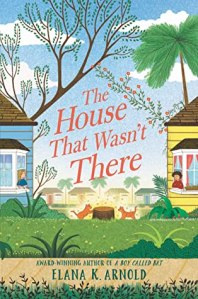
In that vein, I enjoyed every moment of Elana K. Arnold’s The House That Wasn’t There (Ages 8-12, younger if reading aloud), which I just finished reading to my ten-year-old daughter. Yes, the story itself has plenty to recommend it—who wouldn’t love middle-school realism with a few teleporting cats thrown in for good measure? But what struck me the entire time I was reading it was how good the writing is. Every sentence is an absolute pleasure to read out loud. It’s tight. It flows beautifully. It filled us with that same warm fuzzies as previous favorites like this, this, and this.
« Read the rest of this entry »


 What to Read to Your Kids