Cicada Frenzy (A Father’s Day Post)
June 10, 2021 § 1 Comment

(Past years’ Father’s Day ideas can be found here, here, here, and here.)
The list of things my kids will someday recount to their wide-eyed grandchildren has gotten a lot longer in the past year. First, there was the pandemic. Then, the election (including an insurrection). And now, here in Virginia, we can add the seventeen-year cicada, a rare breed of cicada that hibernates deep underground for seventeen years and then emerges by the billions, filling the air with an incessant, high-pitched siren that could be (if you’re me) initially mistaken for an air raid. These cicadas, living and dead, now line our front steps and cover our shrubs and trees. When they’re not pelting our car windshields or dive-bombing into our hair, their orange-veined wings, protruding red eyes, and undeniable resiliency do inspire something resembling awe.
At least, if you’re my daughter. My teenage son isn’t having any of it. I still shriek every time one lands on me. But my ten-year-old daughter fancies herself something of a Cicada Whisperer. She rescues them from puddles (and my hair). She invites them to crawl on her finger, holds up their two-inch body to her eyes, and examines them closely, reassuring them that she won’t do them harm. As far as I can tell, she spent the last two weeks of the school year setting up hospital wings for cicadas on school grounds and presiding over funerals for the unfortunate ones who didn’t make it.
Not only do I have the perfect new picture book for the budding entomologist in your life, but with Father’s Day around the corner, Ben Brashares and Elizabeth Bergeland’s The Great Whipplethorp Bug Collection (Ages 5-9) does double duty, celebrating a boy, his stay-at-home father, and the globe-trotting grandfathers who came before. It’s a story about summer boredom, the transports of imagination, and the inspiration of backyard bugs. But it’s also a story about a boy questioning his place in a long line of achievers, a boy weighing his own idea of masculinity against that set by traditional gender roles. The writing is pitch perfect, and the art is awesome: quirky and unexpected, a visually enticing combination of tiny pen lines and washes of color that sits somewhere between real life and imagination. Children will love pouring over these pages, and they’ll grow in their understanding of the story’s broader messages with every reading.
« Read the rest of this entry »A Tribute to Those Behind the Scenes
May 20, 2021 § 1 Comment

After thirteen months, tomorrow we will begin the process of moving back into our renovated house. It’s not completely finished—the punch list is long—but we are more than ready to bid goodbye to our temporary digs and move more easily around one another in fresh, open spaces. It feels like we are reuniting with a dear old friend, while at the same time embarking on a new chapter.
Nearly every expectation we had going into the renovation process—the good and the bad—was exceeded. It was more expensive. It was more stressful. It was infinitely more fun.
What we vastly underestimated was how many hands would go into creating our dream home. Our core team of superstars—two architects, two carpenters, a project manager, and an interior designer—will draw most of the well-deserved recognition from our community. But their vision would never have been possible without the hard work of many, many others—some of whom I know by name and many of whom I never will.
We had a crew who showed up the first week for demolition—and returned months later to frame out the addition. We had arborists who took down trees and fought to save others. We had electricians, plumbers, house painters, and heating and cooling teams. A mason and his son poured the foundation, then came back to do the stone work for our patio. We had glass specialists and specialty painters, a shop of carpenters who built our kitchen cabinetry, and another who built bookcases and window seats. We had wizards who carved intricate backsplashes out of marble and others who created a beautiful bar top from a single tree in Maryland. We had a magician of a wallpaper installer and another who installed handmade, irregular tile so seamlessly around a new fireplace that you’d think it had been there all along.
We had graders and drainage trench diggers and even a guy who, according to our contractor, is the most adept person at installing front door hardware that he has ever seen.
And then there were folks we never saw. The ones who went into dilapidated barns and pulled down the hundred-year-old hemlock beams that now grace the ceiling of our family room. The ones who made our gorgeous windows and doors, or worked in the factories that made our appliances, our faucets, our decorative lights. The ones who packed boxes, loaded them onto trucks, and loaded them off.
There was no shortage of things that went wrong. But there were many, many more that went right, including all the creativity channeled into course correction. When new built-in bookcases in the old part of the house didn’t sit flush with the plaster wall, our contractor brought in a plaster expert, who feathered the wall to close the gap seamlessly. When the kitchen cabinets were delivered wrong…and then wrong again…our contractor stopped waiting for a new batch and reconfigured them himself, even though everyone said it couldn’t be done.
As the house nears completion, people stop by to congratulate my husband and me. It feels strange, honestly, and not a little bit disingenuous, to accept praise for something we largely didn’t do. We wrote checks. We worried over people. We made lists and sent emails like it was going to alter the fate of the universe when, in actuality, things would have probably gone along just fine without them. At the end of the day, we are indescribably grateful for the end product. But while we had the initial vision, it wasn’t our sweat equity that built it. The real credit goes to all the folks behind the scenes.
In their new picture book collaboration, Someone Builds the Dream (Ages 3-8), Lisa Wheeler and Loren Long have created an ode to the teams of people who toil behind the scenes to bring about the buildings, bridges, and books that enrich our lives—including and especially folks who are often invisible in the final product. It’s a book that showcases sweat equity. That celebrates trades and crafts. That values hard work and collaboration. It’s a book with perfect read-aloud rhyme, sweeping acrylic paintings, and a whole lotta tools and trucks.
« Read the rest of this entry »Have You Ever Seen a Flower? (Part One)
May 4, 2021 Comments Off on Have You Ever Seen a Flower? (Part One)
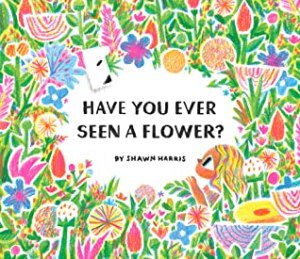
It’s another special week here on the blog, with a two-part post featuring one of my favorite picture books of the year, destined to become a read-aloud favorite. Award-winning illustrator, Shawn Harris, is making his authorial debut with Have You Ever Seen a Flower? (Ages 3-6), an imaginative, sensory-filled, hue-tastic journey inside flowers, starring an ebullient, neon-haired child. Today, I’m sharing why I love this energetic romp, which celebrates the connection between childhood and nature. Then, on Thursday, I’ll be back with my interview with the mastermind behind it, mister Shawn Harris himself. (I’ll also be running a giveaway on Instagram, so make sure you’re following me!)
As you may remember from previous posts, we are big fans of Shawn Harris, who created the delightfully unique cut-paper illustrations for Mac Barnett’s A Polar Bear in the Snow and, before that, Dave Eggers’ Her Right Foot, a speculative non-fiction picture book about the Statue of Liberty that’s still a favorite of my son. With Have You Ever Seen a Flower?, Shawn not only tries his hand at writing, but he trades cut-paper collage for stencils and colored pencils (seven-in-one colored pencils, to be precise). He’ll talk more about his inspiration and process in our interview, but suffice it to say that this departure makes him quite the creative chameleon, a true force to be reckoned with in picture book creation.
Have You Ever Seen a Flower? also proves that the best picture books are often a little trippy. (Think about greats like Maurice Sendak, Ruth Krauss, and James Marshall.) With a psychedelic intensity, Shawn plays with perspective, color, and language to blur the line between reality and fantasy, fusing his character with the vibrant nature around her and reminding us how much fun it is to see the world through the eyes of a child brimming with wonder and possibility.
« Read the rest of this entry »Seasonal Poems with a Twist (National Poetry Month)
April 15, 2021 Comments Off on Seasonal Poems with a Twist (National Poetry Month)
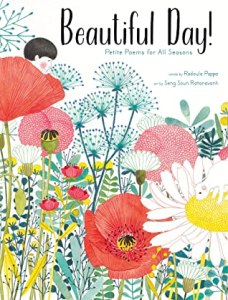
I have a soft spot for picture books with poetry organized by season. I’m not sure whether I’m particularly drawn to nature poetry, or whether these types of poems just tend to dominate picture book publishing. All I know is that back when my children were smaller, when there were at least twelve extra hours in every day, it made me happy to track the changing world outside our window with delightful little nuggets of word play.
Consequently, no shortage of wonderful poetry picture books has appeared in these pages. I’ve sung the praises of When Green Becomes Tomatoes: Poems for All Seasons, Firefly July: A Year of Very Short Poems, A Child’s Calendar, and Winter Bees & Other Poems of the Cold. And, of course, we can’t forget the meaty anthology, Sing a Song of Seasons: A Nature Poem for Each Day of the Year, which, given how many of you have reached out to me, remains one of the most popular books I’ve recommended (just wait until you see its follow-up, coming next fall).
With so many good titles, you might think there would be little need for more. But you haven’t seen the treasure 2021 has dropped in our laps. Beautiful Day! Petite Poems for All Seasons (Ages 4-8) features Haiku-inspired poems by Rodoula Pappa, alongside art by favorite French illustrator, Seng Soun Ratanavanh. It turns out we were missing something. In those earlier anthologies, the visuals accompanying the poems are largely literal. By contrast, Beautiful Day! infuses seasonal poems, still lovely and lyrical, with a touch of the fantastical. The abstract. The fanciful. There’s a playfulness in these pages, where a child paints rainbows in the sky, butterflies become lanterns, and origami birds take flight. The line between reality and imagination becomes deliciously blurred, as we see the natural world through a child’s eyes, up close and personal.
« Read the rest of this entry »The Stories We Need to Ask For
April 8, 2021 § 1 Comment

Occasionally, a book comes along that is so extraordinary, I’m daunted at the prospect of reviewing it. I worry I could never do it justice. I wish I could just say, This is hands down the most moving picture book I’ve read so far this year, and I want you to get it without knowing anything about it. Maybe, if you’ve been hanging around here for awhile, you’ll do just that. But I will try and find something eloquent to say for the rest of you.
Years ago, my husband helped his grandparents—first generation Italian-Americans—pack up their house to move into a retirement community. In the crawlspace, he uncovered boxes of mementos, all of which his grandmother had at one point tied up using the elastics from her husband’s old underwear. This discovery became one the family would chuckle about for years (Who salvages underwear elastic?!). But it was also a window into the past, a resourcefulness triggered by the Great Depression sixty years earlier, a self-reliance that perhaps belied pain, worry, wanting, loss. Only now does my husband express regret at not probing for the stories underscoring something he accepted as mere frugality.
All of us grow up surrounded by family history, including the cultural heritage this history often represents. Yet, as children, we often take this history for granted. At best, we’re blinded by our own fixation on the present; at worst, we’re embarrassed by the quirks of our elders, by their old-fashioned ways, by their insistence in holding fast to ideas or customs from their past.
Especially where immigrants are concerned, this silencing is further accentuated by the systemic racism underlying American society. Asian Americans, for example, are expected to fulfill the Model Minority Myth, to work hard towards prosperity, while keeping quiet about their struggles, past or present. The recent media attention on the massive spike in hate crimes against Asian Americans—up 1,900% since the start of the pandemic—has begun to open our eyes to an experience far from new, one we should have been talking about ages ago.
In the spirit of lifting up voices of Asian descent—and because this poignant story is at its heart about the value of listening to stories of the past—I urge you to purchase Watercress (Ages 5-9), Andrea Wang’s powerful autobiographical picture book, evocatively illustrated by Caldecott Honoree Jason Chin, who studied traditional Chinese landscape painting to infuse the story with added authenticity. (If Jason Chin doesn’t get his long-overdue Caldecott Medal for this, you will hear me screaming.) Against a backdrop of 1970s rural Ohio, a girl and her brother help their parents, immigrants from China, pick watercress on the side of a ditch to be served that evening. The immediate humiliation of the act later transforms into an opportunity for the girl to connect with her mother’s past life in China—and the grief she still carries in her heart.
« Read the rest of this entry »The Tree in Me: An Interview with Corinna Luyken
March 18, 2021 § 5 Comments

I am thrilled to welcome picture book creator, Corinna Luyken, to the blog today! I have long dreamed of hosting authors and illustrators in these pages, but I want to do it in a way that ties into my mission of creating lifelong readers by nurturing a culture of reading aloud in the home—even after kids are reading by themselves. Corinna isn’t just one of our family’s favorite author-illustrators; as a mother, she’s also deeply invested in reading to her tween daughter. What I hope will feel different and inspiring about this interview is that, in addition to talking about her creative process and her newest book, I ask about the ways in which she has nurtured her own daughter’s reading journey—and even what some of their favorite read alouds have been. (As a result, I now have an even bigger #tbr pile.)
Earlier this week, I did a deep dive into Corinna’s exquisite new picture book, The Tree in Me (you can find my post here), and that’s what we’ll predominantly be talking about today. But I wanted to mention some of our previous favorites as well. I believe Corinna has the distinct honor of appearing on this blog more than any other creator! Her debut picture book, The Book of Mistakes, is still one of my children’s all-time favorites. It gave us language for framing our mistakes as beginnings, not endings. She followed that up by illustrating Adrian Simcox Does Not Have a Horse, written by Marcy Campbell, which I chose for my Favorite Picture Book of the Year post in 2018, and I still tear up every time I read it. My Heart was the next book she both wrote and illustrated, and for its metaphorical musing on empathy and connection, it is a kind of companion book to The Tree in Me.
My children have always been drawn to Corinna’s art—in particular, her bold, expressive use of color. (I especially love what she says about color in our interview—specifically, her answer to a question my daughter wanted me to ask: “What is your favorite color?”) But, increasingly, I also find myself appreciating her touch with the written word. She doesn’t simply choose her words carefully, she gives them a rhythm that translates beautifully into reading aloud. In sum, she does what many strive to do and few succeed: she invites reflection. In a fresh, unexpected, and pared-back way, her books speak to something essential about the human experience; we can’t help but be a tiny little bit changed when we come to the last page.
« Read the rest of this entry »The Tree in Me: Part One
March 16, 2021 § 3 Comments
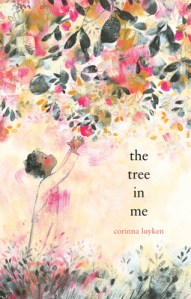
(This is an extra-special week on the blog, so you’re getting not one but TWO posts! First, on the day it officially releases, I’m talking about Corinna Luyken’s exquisite new picture book, The Tree in Me. Then, on Thursday, I’ll be featuring an interview I did with Corinna herself, in which we talk about her inspiration for the book, her writing process, and her favorite books to read aloud with her tween daughter. It’s the first interview I’ve done for the blog, and I’m hoping you’ll let me know if you’re excited for me to do more!)
We have been sleeping with the windows open of late. Here in Virginia, as winter takes its exit, it’s only the briefest of spells before the pollen seeps through the screens, followed by the aggressive rise in humidity, and we must shutter the windows and crank up the central air. But, right now, it’s perfection. Cocooned in blankets, with breezes dancing around my head, I embrace the fluidity between inside and outside. It awakens something within me—not unlike standing on a mountain top or in a grove of wildflowers—and puts me in mind of being a child again.
At no time more than childhood do we exhibit such a primal connection to the natural world. When I think of my own children in their early years, I think of them running barefoot in summer and catching snowflakes on their tongues in winter. I think of the sticks that never left their hands, the fairy houses they constructed from moss, the leaf piles they jumped in. I think about how picking apples off branches felt magical to them, biting into them moments later even more so. I think about how my daughter used to climb trees without reservation, even while we looked on with our hearts in our throats.
In her newest picture book, The Tree in Me (Ages 3-8), Corinna Luyken captures this childlike exuberance for the natural world with the careful intent, originality, and dazzling use of color we’ve come to adore from her. [More on previous favorites in Thursday’s interview with Corinna.] Through sparse, poetic text—each word carefully chosen and perfectly placed—and dynamic, gorgeously-saturated gouache illustrations—helllloooo, neon pink—The Tree in Me invokes the metaphor of a tree to celebrate the strength, resilience, and bounty inside all of us. It reminds us that, as part of the living world, we move and breathe and give and take in a way that binds us together. We can shutter our windows, but the natural world lives on inside us.
« Read the rest of this entry »Losing a Dog
February 18, 2021 § 2 Comments
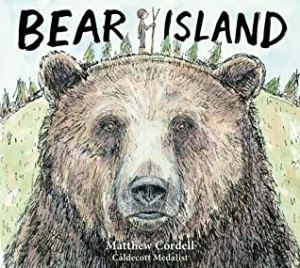
When my son was four and our dog died, I checked out a pile of themed picture books from the library and we read them over and over for two weeks. Every time I asked my son how he was feeling, or whether he wanted to talk about what had happened, he walked over to the pile, grabbed a book off the top, and climbed into my lap. It shouldn’t have surprised me—after all, I have always turned to books to process life experiences—but it did. Before my eyes, I watched this small boy silently work out stuff right there on the page.
One of the most common requests I get from parents is for books about losing a dog or cat. There is no lack of picture books on the subject, but most of them are only OK. Some are beautiful, even profound, acknowledgments of loss—like this and this—and even though I love them, they tend towards the abstract. Others fall into the same trap that we parents do when our children are in pain: they are quick to reassure, to provide distraction, to provide replacement (The dog is happy in heaven! Let’s go pick out a new puppy!). Many pay lip service to the emotional upheaval that is grief, but few model what it means to make space for it.
In my personal experience, grief does not abate without time. Time can’t work alone, it won’t solve all things, but it creates distance, and with distance comes perspective and growth and opportunity. But in the wake of pain, time is at best uncomfortable; at worst it is infuriating, terrifying, and unfathomable. It’s no wonder we don’t like to acknowledge it, much less encourage our children to sit in it.
And yet, here’s a new picture book that does just that—and does it brilliantly. In Matthew Cordell’s Bear Island (Ages 4-8), a full year passes from the moment a girl loses her dog to the time her family welcomes a new one. In Cordell’s expert hands, this year unfolds slowly across every page turn. It unfolds while a girl spends her days on an island with a stick and a bear for company. It unfolds in the physical and mental space of the girl’s anger, sadness, boredom, regret, and fear.
« Read the rest of this entry »A Baby Unicorn for Valentine’s Day
February 11, 2021 § 4 Comments
Valentine’s Day approaches, so consider this your annual reminder that the only acceptable Valentine is a new book. You may recall I’m not a traditionalist when it comes to recommending books for Valentine’s Day. If a heart on a cover is what you’re after, you won’t do better than this. But I like a timeless story about friendship that can be read any time of year, which is why in past Valentine’s posts I’ve been about this, this, this, and this. This year, you’re in for an added treat if you head over to Instagram, where I’ve been running a mini gift guide all week, with selects from babies to teens.
Sometimes a book comes along, and even though it’s not breaking any ground, even though it won’t win any awards, it’s so insanely adorable you want to give it to everyone you know.
Let’s be clear. My daughter cannot abide the unicorn craze. She has never tolerated it for one minute. What did unicorns ever do to her? I don’t know. But I’ll tell you this: one year for her birthday, I bought her a pair of horse pajamas, only when she opened them, her eyes immediately locked onto a detail I had failed to notice; each of the horses had, in fact, teeny tiny silvery horns on their forehead. I watched her attempt to disguise her horror and choke out a thank you, but she never wears those PJs.
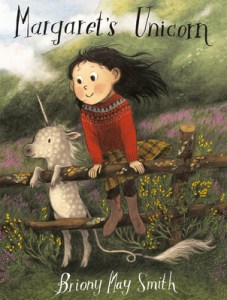
Now imagine that this same daughter should fall in love with Briony May Smith’s Margaret’s Unicorn (Ages 3-7), about a girl, recently relocated to the wild English countryside, who keeps watch over the CUTEST baby unicorn for two seasons until his mother returns for him. Imagine that this daughter was so taken by the book that she begged me to purchase our own copy, despite being well outside the target age. And then you’ll understand why it would be impossible for a book to receive a higher endorsement.
There is so much joy, so much heart, so much good will in this story that it’s destined to put the biggest smile on children’s faces. If that doesn’t make it perfect for Valentine’s Day, perhaps you ought to collect some moonlit water for your baby unicorn and then come back and we’ll talk.
« Read the rest of this entry »For the Youngest Polar Bear Lovers
January 14, 2021 § 4 Comments

My children are as different as siblings can be, but one thing they have always shared is a love of polar bears. In his first grade Montessori classroom, my son spent months researching polar bears for a year-end presentation with a classmate, an endeavor that had us adding numerous non-fiction picture books (gorgeous ones, like this, this, and this) to our permanent collection. Years later, my daughter would do the same. In fact, her adoration of polar bears is now so legendary that on her last birthday, nearly every email, card, or voicemail mentioned polar bears. She even has a polar bear jacket. Two, actually.
I think we can assume, if for no other reason than their prevalence in kid lit, that polar bears have a special residence in the hearts of many children. Who can blame them? Polar bears are undeniably adorable (that black nose! those big paws!). They inhabit an Arctic wonderland that rivals any snow day. And their endangerment has only lent them more mystique.
There’s also something in the polar bear’s personality that invites a certain kinship with the young. Despite being some of the animal kingdom’s most ferocious predators, despite facing down harsh temperatures and bleak landscapes, polar bears are surprisingly playful. They tumble in the snow, they somersault in the water, and they fall asleep right where they are when they can’t keep their eyes open. They are kindred spirits.
It might seem rather mean of me to wait until after the holidays to tell you about one of my favorite picture books of 2020, but if there is a month to talk polar bears, it’s January (even if, here in Virginia, the weather forecast is disappointingly lacking in white stuff). In A Polar Bear in the Snow (Ages 2-6), beloved picture book creator Mac Barnett teams up with paper artist Shawn Harris to spark the imagination of the youngest polar bear lovers. The language is clever, wry, repetitive, and—as Barnett is fond of doing—asks direct questions of its reader. But it’s Harris’ stunning cut-paper collages, invoking countless shades of white alongside a piercing, crystalline blue, that make this a stand-out title, lending its subject matter the very awe it deserves.
« Read the rest of this entry »The Promise of Calm After the Storm
January 8, 2021 § 2 Comments
In the wake of Wednesday’s egregious attack on the US Capitol, I decided to postpone the post I’d initially planned for this week (cute polar bears can wait) and talk instead about a new picture book brimming with reassurance. Technically, it’s about weathering a literal storm—a tornado, a blizzard, a hurricane, and a wildfire—but its message feels deeply relevant to the place of uncertainty and fear in which we increasingly find ourselves: that in times of crises, we pull through with the help of family and community, with hope and heart and hard work. That Nature is powerful, but so are we. That, following every storm, there is always a return to calm.
Compared to most families, we spend a disproportionate amount of time obsessing about discussing the weather, owing to a fear of storms my eldest has had since he was two and a half and watched a microburst uproot a tree and send it spiraling down onto a power line, where it ignited. Previously, I’ve blogged about You’re Safe With Me, an animal-themed, folktale-like story offering a mother’s embrace as a panacea for stormy winds. Today’s book is more literal and larger in scope, showcasing scenarios that will feel familiar to children growing up at a time when weather events are larger, louder, and more frequent. It is about fear, but it’s also about a myriad of possibilities—some of them surprisingly wonderful—that can accompany that fear and pave the way for resilience.
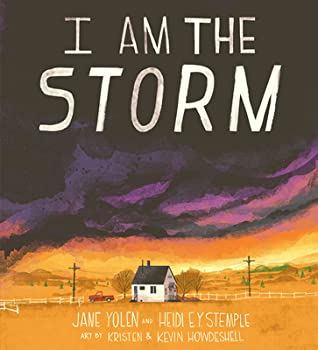
Co-authored by mother-daughter team, Jane Yolen and Heidi E. Y. Stemple, with glorious spreads by husband-and-wife team, Kristen and Kevin Howdeshell, I am the Storm (Ages 3-7) is about the moments when Nature rears its ugly head and threatens to overpower us—and what happens next. With equal parts candor and lyricism, four different children describe their family’s response to an incidence of extreme weather and the unexpected ways they find empowerment.
« Read the rest of this entry »An Inclusive Take on a Christmas Classic
December 17, 2020 § 1 Comment

Traditionally on Christmas Eve, I channel my father and do a stirring rendition of Clement C. Moore’s poem “The Night Before Christmas,” before the kids head up to bed and pretend to sleep. First published in 1823, Moore’s description of St. Nicholas and his eight flying reindeer, landing on rooftops and sliding down chimneys, has shaped our Western portrait of Santa Claus for the past 200 years. And yet, in almost every case, Moore’s words have been illustrated to center a white, upper middle-class family in a small New England town.
When we first moved to Virginia, we didn’t have a fireplace. A preschool classmate asked my son how Santa would get into our home to deliver presents. My son was dumbstruck; nothing I said assuaged his anxiety. When, a few weeks later, I took my kids on our local “Santa Train” (thank you, Virginia Railway Express) to spend an afternoon with the Big Man, my son queued up to ask that most important question: “What if someone doesn’t have a chimney?” To which the white-bearded man pointed to an oversized silver key hanging from his belt. “This magical key opens every door in the world, so if I can’t enter by chimney, I simply go through the front door.” And that was that.
There is a myriad of ways that adults have revised (or eschewed completely) the Santa myth to suit diverse living situations. Addressing economic disparity is tougher. There were years when my son would ask, as we shopped for our local toy drive, “But won’t Santa bring toys to these children?” Those of us who talk to our children of Santa Claus find ourselves perpetuating a myth as privileged and problematic as it is enticing.
Children’s illustrator Loren Long—already beloved in our house for his picture books starring Otis the tractor—has breathed new life into Clement C. Moore’s The Night Before Christmas (Ages 3-10), setting the original poem to illustrations featuring four diverse families. As we page through the book, the warm, atmospheric, cleverly detailed paintings tell their own stories about what Santa’s arrival looks like for a family on a rural farm, in a mobile home, a city apartment, and an island bungalow. (Even before the poem starts, the endpapers show the different children engaged in Christmassy pursuits, like cookie making and letter writing.) The result is a fresh, if idealized, take on a Christmas classic—which, even as it doesn’t address all the paradoxes of the Santa myth, suggests that the magic of the holiday touches everyone who believes.
« Read the rest of this entry »When a House Becomes a Home
December 3, 2020 § 6 Comments

It has only been a week since I finished my 2020 Gift Guide and already I need a do over! I started this year’s guide earlier than usual, which meant I was still digging myself out of a hefty “to read” pile, and I’ve since discovered a few gems that positively beg to be included. Like Phoebe Wahl’s The Blue House (Ages 3-8). Honestly, this book is so good I might have chosen it as My Favorite Picture Book of the Year (although no disrespect to the two I did choose, because they’re perfection). For sure, it feels like nothing I’ve read this year. It’s raw and tender and gorgeous and loud. It features a single father who reads aloud during bath time, shreds on the electric guitar, and holds space for his son’s feelings, the bad along with the good. And while the story is centered around a modest little old house, it reinforces what it really means for a house to be a home.
My mom has an expression she employs each time I’m preparing to moving into a new space, from dorm rooms, to my first apartment, to the temporary digs we moved into at the start of this pandemic, after breaking ground on renovating what I hope will be our forever home. Whenever I start to worry—That dorm is a 1960s disaster! This apartment hardly has any windows!—she always says with confidence, “You have to make it cute.” Those seven words have become a kind of mantra for me, because there’s inherent optimism in them. It’s the idea that hanging a few pictures, puffing up a few pillows, and putting down a plush rug can transform the spirit of any place. It’s working with what you have. It’s simple. It’s doable.
And it’s true: when we put effort into brightening up our house, we can relax into it. When we make our four walls a tiny extension of ourselves, we can live a little freer, a little louder, a little more boldly. And then there’s the emotional decorating. Because making a house “cute” comes as much from the life we lead inside it: the love we foster, the heartbreak we overcome, the laughs that surprise us, the memories we make. What we give to a house comes back to us as a home.
« Read the rest of this entry »2020 Gift Guide: Picture Book Round-Up
October 29, 2020 Comments Off on 2020 Gift Guide: Picture Book Round-Up
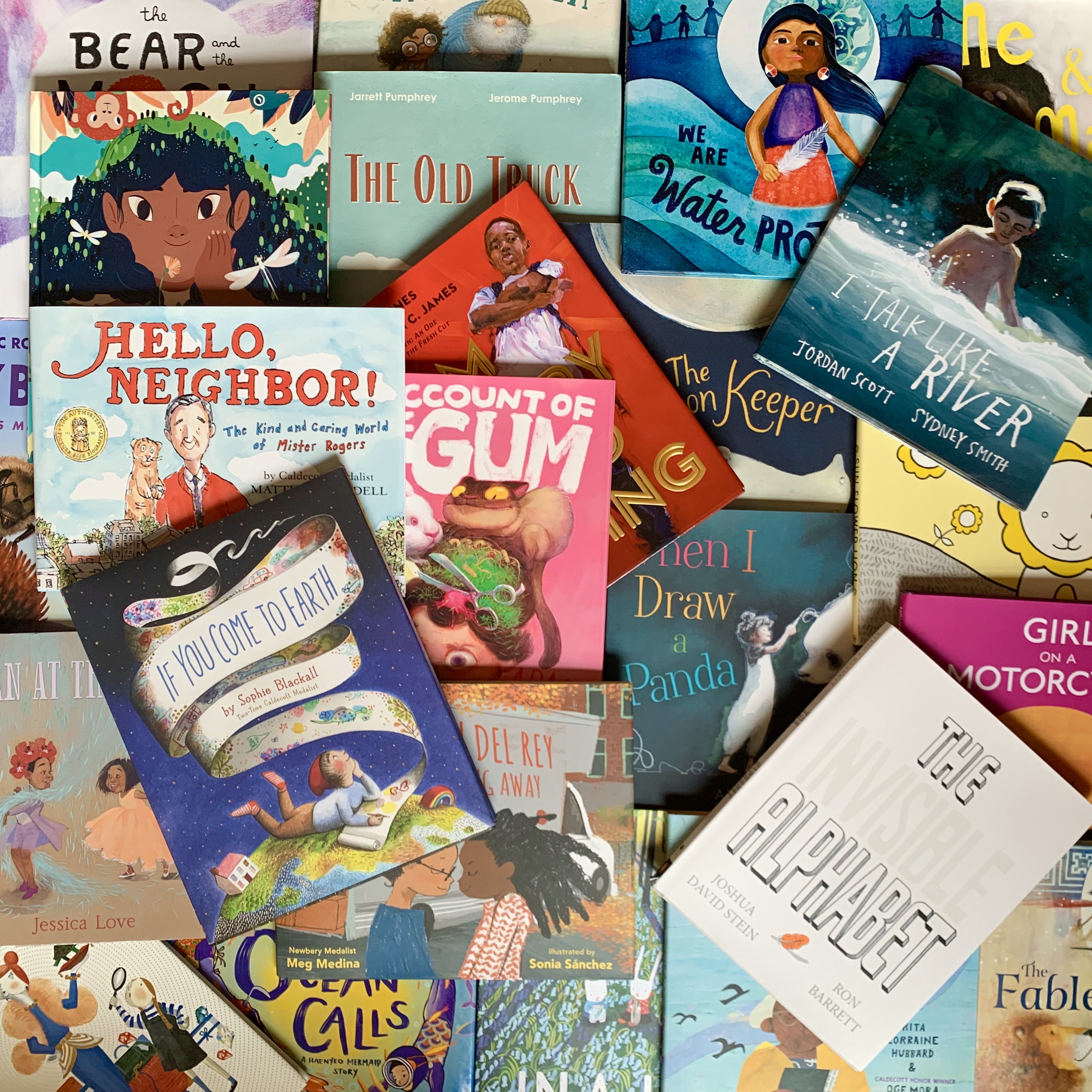
Last week, I told you about my two verrrrry favorite picture books of the year: The Bear and the Moon (Ages 2-6) and Girl on a Motorcycle (Ages 5-9). Today, I’m telling you about others I like a whole heck of a lot. I’ve selected titles, both fiction and non-fiction, for a range of ages, from two to ten years old. Some of them are jaw-droppingly beautiful; others elicit laughter; many invite wonder and compassion. All of them are deserving of a permanent home, where they can be enjoyed again and again and again.
Before we start, there are several I’ve already blogged about this year. Rather than repeating myself, I’m going to link to my original posts. The ones with mega gift potential from earlier in the year are Me and Mama (Ages 2-6), The Ocean Calls (Ages 4-8), Madame Bedobedah (Ages 5-9), Swashby and the Sea (Ages 3-7), The Fabled Life of Aesop (Ages 5-9), In a Jar (Ages 4-8), and The Oldest Student (Ages 6-10).
And now, here are ones new to these pages:
« Read the rest of this entry »2020 Gift Guide: My Favorite Picture Book for Preschoolers
October 20, 2020 § 5 Comments
Similar to last year (when I picked this and this), I find myself unable to choose between two picture books for my very favorite of 2020. Still, the two I’ve chosen play to slightly different audiences, so I’m using that as an excuse to bring you two picture book posts this week. I’ll begin with my favorite for the littles.
It seems to me that what we should really gift our youngest children this year is what we wish for ourselves: the literary equivalent of a giant bear hug. In a year dominated by disconnection and uncertainty, we have had to work harder to love both one another and ourselves. If we are to fill the void that 2020 has left on our hearts, it will be through care and compassion, including and especially self-compassion. And that’s where The Bear and the Moon delivers beautifully.
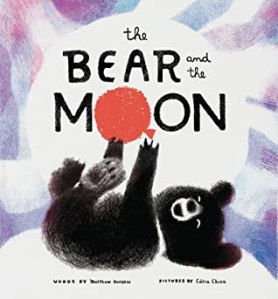
Written by Matthew Burgess and illustrated by Cátia Chien, The Bear and the Moon (Ages 2-6) is a playful, poetic story about a bear and a balloon. But it’s also a visceral meditation on life’s impermanence—and on the forgiveness and self-love required to weather these moments of loneliness and sorrow. I’ve always believed that the best picture books should offer a little something to the adults called upon to read them again and again, and The Bear and the Moon provides comfort and reassurance to both reader and listener alike.
And then, of course, there are the mixed-media illustrations, which are in a class by themselves. Smudgy and sublime, they wash over us with a gorgeous palette of purples and blues, accented by the velvety black of the bear and the clean paper cut-out of the red balloon. And that expressive bear face? A thousand times yes.
« Read the rest of this entry »Channeling Our Inner Ghost
October 8, 2020 Comments Off on Channeling Our Inner Ghost

In the past seven months, many of us have learned to move with a new heaviness in our body. It’s the extra weight of uncertainty and anxiety, of mask wearing and hyper-vigilance. We may not be able to see it, but it’s there. We find evidence of it in the new depression in our sofa cushions. We find evidence of it in our interrupted sleep patterns, our bizarre dreams, or the way we take an extra day or ten to return emails.
Our kids feel it, too, even when they’re not slogging through school on screens. How many of us have struggled to push our kids out the door—Go ride your bike!—only to be met with resistance: I’m too tired! These babes of yore, previously so quick to bound out the door, to reach for their friends’ hands, to tear down a soccer field, are grappling with their own heaviness from a life disrupted.
Perhaps this is why it’s easy to feel a kinship with the star of the new picture book, The Little Ghost Who Was a Quilt, by Canadian team Riel Nason and Byron Eggenschwiler, about a young ghost who envies the weightlessness of ghosts who float easily through the world like the sheets they are. Our ghost is a quilt, and quilts are infinitely heavier than sheets. And when you’re supposed to do ghost-like things but you’re born a quilt—well, it’s easy to feel a little down and out.
It has been a long time since I’ve been excited about a new Halloween book. Let’s be honest: it’s hard to compete with the likes of Creepy Carrots, The Monsters’ Monster, or Ten Orange Pumpkins—and don’t even get me started on my love for the early reader, In a Dark, Dark Room, or my dog-eared, cherished-above-all copy of The Blue-Nosed Witch. But from the moment I opened The Little Ghost Who Was a Quilt, with its moody pencil illustrations rendered in a limited palette, I had another favorite. That it feels more than perfect for this particular Halloween is just a bonus.
« Read the rest of this entry »When You Don’t Have a Mute Button
October 1, 2020 § 2 Comments
 If Tuesday’s presidential debate has taught us anything, it’s that 2020 should have come with a mute button. Because meditation alone isn’t going to cut it. Ditto to stocking our freezers with double-chocolate brownie ice cream. Adulting is hard enough right now without adding parenting (and schooling) to the mix. And yet, our children are bystanders to this hot mess unfolding around them. With our own blood pressure camped out at dangerously high levels, how do we offer some semblance of sanity for our precious little ones?
Back in July, I came across a blog post written by a practicing psychotherapist out of Colorado named Sara Waters. She was addressing the stress parents were feeling while waiting for schools to announce their reopening plans (HA, remember when we thought that was worth losing sleep over?). Like many parents at the time, I was spending way too much time crawling along the bottom of the Internet, desperate for someone to reassure me that my children would be safe this fall. Waters surfaced with the reassuring reminder that, while we might not be in control of what happens outside our front door, we can control what happens inside:
The number one most determining factor of your child’s 2020 experience is YOUR ability to manage your OWN discomfort. Mirror neurons are real and even children who haven’t yet learned to understand or speak language will pick up on the quantum vibrational frequencies of distress that you emit. Your children hear you talk, even when you aren’t talking to them. They hear you complain. They hear you vent. They watch your facial expressions when you are on a phone call or responding to an email or social media post on your computer. They can feel whether you are relaxed or whether you are in a state of stress when you wake them up in the morning, sit down for a family meal, or tuck them into bed at night. […] Whether you like it or are aware of it or not, they will feel what you feel.
I’ve thought about this reminder many times since that last week in July, including and especially when I picked up Cozbi A. Cabrera’s joyous new picture book, Me & Mama (Ages 2-6), a lyrical celebration of the bond between one daughter and her mother. Reading this story is like wrapping yourself in a cocoon of domestic love. Reminiscent of one of last year’s favorites—Oga More’s Saturday—this book speaks directly to the power we hold as parents to set tone, to cue young children’s feelings about the world and their place in it.
We sometimes forget that motherhood comes with its own special set of superpowers. We can smile at our children; we can dance in their presence; we can light up when they walk in the room. None of the stressors in the world can compete with that.
Overnights with Grandma
September 10, 2020 § 9 Comments
 This Sunday is Grandparents’ Day, a holiday I’ve never given much thought to until this year, when I am without any living grandparents. Losing both my grandmothers in the past year hasn’t just been about mourning these loving, larger-than-life figures. With their passing, I have lost physical places as well.
My mother’s mother died in her Buffalo home, where she lived for over forty years, and where I traveled every summer from the time I was eight and my parents put me on an airplane by myself. Gockamama, as I called her, lived on the top floor of an historic building, with a grand lobby, an old-fashioned elevator, and its own name to boot. Walking into that apartment was like walking into a musty, magical era, from the antique grandfather clock which tolled every thirty minutes, to the oil painting of Napoleon which hung in the dining room. With no other buildings between her and Lake Erie, you could stand at the window, curling your toes into the plush carpet, and see all the way to Canada. It was like being wrapped in a cozy cocoon, suspended above the world.
We’d spend mornings watering her dozens of plants lining every window, then evenings watching Murder, She Wrote (I pretended to watch, while sneaking peeks at my book). I’d take bubble baths in her bathroom, with its avocado-green tile and pink fluffy towels. At breakfast, she’d sprinkle sugar on my grapefruit; for dinner, I’d request her Spaghetti Bolognese. She kept a closet shelf stocked with old toys and a cookie tin filled with my favorites: misshapen wonders made with chocolate, peanut butter, and Rice Crispies. Photos in frames covered every horizontal surface, and as I became more interested in travel myself, she would pull down photo albums and show me pictures of the Great Wall of China or Ephesus in Turkey, places I immediately longed to visit.
Walking out of that apartment for the last time, on the heels of my grandmother’s funeral, felt like leaving behind a part of me. Inside those walls, during our cherished visits, I had been my grandmother’s entire world. I had taken up space in the way only a grandchild can, each treasure of that apartment intermingled with the love she felt for me. My mother couldn’t believe the sofa cushions had become so threadbare, but when I sank into them, it felt like I was exactly where I was supposed to be.
Sara O’Leary’s endearing new picture book, Maud and Grand-Maud (Ages 3-7), about the overnight visits a young girl has with her namesake grandmother, perfectly captures, not just the singular intimacy of the grandparent-grandchild relationship, but the special rituals and strong sense of place often intertwined with it. This feat is in large part owing to Kenard Pak’s delicate illustrations, whose muted tones conjure a hint of mustiness and whose washes of color exude wistfulness. It’s the kind of book you want to hold to your heart. It’s no wonder I spilled tears onto its pages the first time I shared it with my daughter.
At Home in the Ocean
September 3, 2020 § 3 Comments
 My son’s favorite sport is swimming, but it wasn’t always this way. For five years after he was born, he refused to put his head under water. He was delighted to be held in water, or to float with a floatie, but none of us—not me, not his dad, not his grandfather, not his aunt—could convince him to submerge his face.
Eventually, I got the name of a private swim instructor who was supposed to have a magic touch. I phoned her but she was fully booked. A few weeks later, she phoned back. She had a cancellation on an upcoming Thursday at 7pm. JP’s bedtime was 7pm, so this seemed like poor parenting at best, but I was a mother on a mission, with a zeal often reserved for firstborns. I told her we’d see her Thursday.
What happened next is a story our family loves to tell. While I watched from deck, the instructor, clad in a black wet suit, took JP’s hand and led him down the ramp of the zero-entry pool. When the water hit JP’s waist, she stopped. “So, JP,” she said, “do you go under water?”
“No,” my son replied.
“Would you like to try?” she asked.
Barely a pause. “OK,” he said. And then, right before my eyes, this child with a stubbornness to match mine, threw himself face down into the water.
He threw himself face down into the water. Part of me was overjoyed. And part of me had to keep from screaming, ARE YOU KIDDING ME?!
My husbands like to joke that this was when we realized that our son has no interest in learning from his family. Our teaching is inherently suspect, probably flawed, because what do we know? This instructor—who went on to teach him very fine strokes for the next five years—was an expert in his eyes, and so he instantly trusted her. (We consider it a major triumph that we did not have to hire a professional to teach him to ride a bicycle.)
Still, I don’t think the swim teacher’s trust was won just because JP regarded her as an expert (whereas we were just flailing novices). Truth be told, she exuded calm. You had only to spend ten seconds with her to understand that she was more at home in the water than out of it. She loved the water, she trusted herself in the water, and when she directed her full attention onto my son, he felt like he’d come home, too.
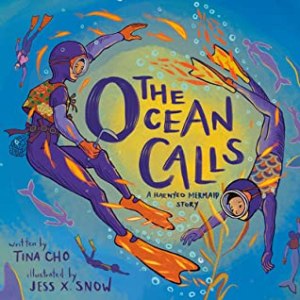
“The ocean is calling me today,” says the grandmother at the beginning of Tina Cho’s new picture book, The Ocean Calls: A Haenyeo Mermaid Story (Ages 4-8), one of the most fascinating and exquisite examples of a symbiotic relationship with water that I have ever seen. Set on the shores of Jeju Island in South Korea and luminously illustrated in jewel tones by Jess X. Snow, the story is about the relationship between a girl, struggling with her fear of the ocean, and her grandmother, a haenyeo mermaid, who holds her breath for two minutes at a time and dives up to thirty meters to bring back armfuls of shellfish for eating and selling. Here’s the coolest thing: the haenyeo tradition is real! It goes back centuries among indigenous Pacific islanders, remains alive today, and plays a vital role in ocean ecology.
All in a Name: A Back-to-School Post
August 20, 2020 Comments Off on All in a Name: A Back-to-School Post
 When our kids return to school this fall, whether in person with a mask or at home over a computer, there will be unusual circumstances to navigate. But for many children, pandemic or not, the start of school is already fraught with potential landmines. Will I make a friend? Will I like my teacher? Will I understand the rules?
Will my name be mispronounced?
Those of us with Anglo-Saxon names may have never considered this last question, but those with African, Asian, Black-American, Latinx, and Middle Eastern names know how commonly, if unintentionally, their names are mispronounced. What does it feel like to be on the receiving end of a teacher or classmate stumbling through your name? What does it feel like to be expressly teased for your name? What does it feel like to be asked to shorten or alter your name to make it easier for classmates to say?
For many, personal names play a central role in cultural identity and identification. If we don’t put in the work to pronounce a name correctly, we’re not allowing that person—in this case, that young child—to be seen. At best, we are belittling them; at worst, we are erasing them.
One of my daughter’s dearest school friends has a name whose South Asian pronunciation is different than English phonetics would suggest. The difference is subtle, but my daughter will correct anyone—especially me—who doesn’t say it with the right cadence. I’ve been touched by this gesture of loyalty over the years, and I know it’s owing to the care the girls’ teachers have taken to create a space where students are actively working to understand and appreciate one another.
What I’ve also frequently noted is how musical my daughter’s voice sounds when she speaks her friend’s name. The idea that all names can be celebrated for their musicality is the inspiration behind Jamilah Thompkins-Bigelow’s new picture book, Your Name is a Song (Ages 4-8), a fast favorite with my daughter. Tenderly illustrated by Luisa Uribe, the story centers a Black American Muslim girl, who leaves her first day of school dejected and angry because “No one could say my name.” As her mother works to rebuild the girl’s confidence, she creatively and thoughtfully debunks many of the negative stereotypes associated with non-Anglo names, especially those with African or Middle Eastern origins: they’re hard to pronounce; they’re cacophonous; they signal danger; they’re made-up nonsense.
 What to Read to Your Kids