When the Sea Works its Magic
August 6, 2020 § 3 Comments
 The value of a change of scenery during this pandemic cannot be overstated. Last week, we spent five nights in a rental on the Chesapeake Bay, our front door just steps to a tiny slice of sand, a bank of beautiful rocks, two kayaks, and a half mile of clear shallow water for wading, before dropping off to deeper water and stunning sunrises beyond.
The entire trip felt like a brief return to normalcy (look, we’re a family who vacations!). It was also a gift which arrived at precisely the right time. In the weeks leading up to our departure, I felt a heaviness descend on our family, the sum total of weariness from the past five months and the grinding uncertainty of the new school year.
The sea knew what we needed. For a few magical days, it drew us out of our heads and into our bodies, then engulfed us in a delicious weightlessness. It gave us expanses of space—so much space—at which to marvel, after staring at the inside of four walls for too long.
The sea didn’t get everything right (we didn’t need the jellyfish), but it reminded us that there is beauty in the world, that it hasn’t gone anywhere, and that in connecting to this beauty we can connect to the best in ourselves. We can be a little looser. A little messier. Smile a little more.
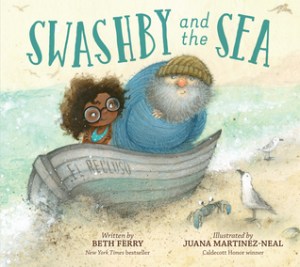
As it turns out, one of my favorite picture books of the year also features some welcome meddling by the sea. It has been awhile since I hailed a beachy picture book (last were here and here), and this one proves well worth the wait. Swashby and the Sea (Ages 3-7), written by Beth Ferry and illustrated by Juana Martinez-Neal (quickly becoming one of my favorite contemporary illustrators), reminds us that sometimes the sea knows what we need even before we do.
Love, Pride, and Acceptance
June 30, 2020 § 1 Comment
 With Pride parades canceled because of the pandemic, we have to work a little harder to see the rainbows. I didn’t want June to end before I had a chance to raise up one of my favorite recent discoveries (although it came out last year), a book so full of love that when I first got it, I couldn’t stop hugging it to my chest. It’s impossible to read this book without the biggest smile. Not just because the main character is a radiant beam of sunshine in and of himself. Not just because it has some of the most beautiful illustrations I have ever seen (Kaylani Juanita, where have you been all my life?). But because the love these parents shine down on their son is the very best—albeit most difficult—kind of love. It’s a love which sees him, not for who they expect or want him to be, but for who he actually is. It’s a love taught to them by this son—and one echoed in the way he prepares to welcome his new sibling.
It’s a tall order, but the world would be a vastly improved place if we all rose to follow the example of love in this book.
When Aidan Became a Brother (Ages 3-8), written by Kyle Lukoff and illustrated by Kaylani Juanita, is not just another book about welcoming a new sibling. True, in many ways, it’s the “new sibling” book we didn’t realize we were missing. But the book is equally pertinent whether you’re expecting a new family member or not. Aidan doesn’t simply tail his pregnant mom, fantasizing about a new playmate or worrying he’ll suddenly fall to second place. Nope, Aidan’s sets his sights on a larger question: what can he do to ensure his younger sibling feels understood and accepted right out of the gate?
Aidan’s fervent and sometimes nervous desire to become a caring big brother is intimately informed by the struggle he faced in his own first years. “When Aidan was born, everyone thought he was a girl.” The story’s opening spread—a look back into Aidan’s recent past—reveals a pink-decorated room with traditional girl fare: a canopy bed, a dollhouse, and an array of flowery dresses held up by Aidan’s doting mother. Aidan sits before a pink tea set in a pink dress, wearing a look of misery.
Sharing a Love of Travel (A Father’s Day Post)
June 11, 2020 § 1 Comment
 This Father’s Day, my own father will have been gone for twenty-six years. Twenty-six years. One of the most devastating things about losing a parent when you’re eighteen is that you never get to know that parent through an adult lens. I knew my father intimately, from his scratchy mustache to his eye-rolling wisecracks to his endless patience as I described every painstaking detail of my day. But I knew him as a child knows a parent. How I wish I could have known him as an adult.
In times of great upheaval and unrest, I feel my father’s absence most keenly. Every seismic shift in our world puts that much more space between him and me. How would he be participating in this national conversation about race? Would he be marching with a Black Lives Matter sign? What candidate would he have supported in the last Democratic primary? How would social distancing have impacted his life in retirement—or would he still be practicing law? What kinds of things would he enjoy doing with his grandchildren?
I can’t pretend to know the answers to these questions, though I ask them quietly to myself all the time.
What I do know is that there are certain things which always bring him back to me. And one of them is travel. My father’s love of travel was legendary. When I was very young and he would travel internationally for work, he’d always bring me souvenirs—usually dolls—from places like Brazil, Mexico, and Germany. I loved gazing at the tiny porcelain faces or printed fabric clothes and imagining where they had been. Our house was full of black-and-white photographs from before my time: my father on a camel in the Sahara, my father on a motorcycle in Greece. When I decided to spend a gap year in Vietnam after high school, he jumped at the chance to accompany me across the ocean. When, weeks later, it came time for him to return to the States, his parting words were, “It looks like you’ve got the travel bug now, too.” I beamed with pride.
It seems fated that I would fall deeply in love with Jenny Sue Kostecki-Shaw’s new picture book, Papa Brings Me the World (Ages 3-7), in which a young girl describes her affection for a father who travels the world and brings pieces of it back to her. I’ve long been a fan of Kostecki-Shaw’s (my daughter still pulls out Luna & Me), but this book positively transported me. Maybe because it’s inspired by the author-illustrator’s own father; maybe it’s because the theme of found objects lends itself beautifully to mixed-media collage; or maybe it’s because the voice of the little girl reminds me of my young self, brimming with tenderness and curiosity and admiration and longing for my father’s stories of adventure.
Adventures in Siblinghood, Quarantine Edition
May 28, 2020 § 7 Comments
 It was the best of times, it was the worst of times…it was the sibling relationship during quarantine. My daughter spent last Saturday night at her aunt’s house, and while my husband and I enjoyed a peaceful night with our son, it dawned on me: it’s not my children who have been sucking up all the oxygen in our house, it’s their relationship.
I’m grateful my children have each other at a time when they have no one else. But because they have no one else, they’ve pinned all their hopes and dreams and frustrations and jealousies on one another. Everything they’ve always done is now executed with a new level of intensity. They tear into each other over the smallest offenses (“Stop whistling!” “Stop looking at me!” “I can’t sit hit here because your feet smell!”), only it escalates into poking and clawing and just-plain-mean yelling, like they haven’t done since they were much younger. If I separate them (“This house may be small, but there is enough room for you to spread out”), they’re back together again before I can get down the stairs. Only, suddenly, they’re curled up in a teeny tiny fort of their own design, a tangle of limbs impossible to tell where one stops and the other begins, giggling and scheming and reveling in the giant mess they’ve strewn across the upstairs.
Four whole hours before my daughter was scheduled to come home from her sleepover last weekend, my son was already watching for her from the window.
The only thing that could make this current state of affairs any more intense would be an elevator button. If there is one small consolation to not being able to go places right now, it’s that we can at least avoid the universal sibling fight over who gets to push the elevator button. There has never been a harmonious moment of siblinghood that wasn’t ruined by a gosh darn elevator button.
Lest we forget about life with elevator buttons, Minh Lê and Dan Santat have teamed up to create a comics-inspired picture book to remind us. And yet, Lift (Ages 4-8) isn’t about ordinary elevator buttons. Well, at first it is. But then that button becomes something magical. Something illuminating and insightful and spectacularly fun. Something which drives siblings apart—but then brings them back together, united in a common purpose. All without leaving the house.
Rich in Stories
May 7, 2020 § 4 Comments
 For many of us following stay-at-home orders, social media is a welcome lifeline to the outside world. And yet, its lure can be as powerful as its trapping. If occasionally I used to fall down the rabbit hole of comparing my children’s accomplishments to those paraded out on Facebook, I now find myself in weaker moments comparing houses. We may be leading similar lives—working, schooling, eating at home—but our backdrops are wildly different. Maybe I’d be going less crazy if I looked out my window and saw mountains. Sure would be nice to have a swimming pool in my backyard. Sure would be nice to have any backyard. Oh man, are they at their river house right now? I’m sure I could homeschool better if we had a creek.
Of course, these thoughts are inane. Inanely unproductive. Inanely indulgent. At no time for my generation has it been more of a blessing to have our health and a roof over our heads. Not to mention money for food and ample time to steer our children through these rocky waters.
Still, I would be lying if I said there aren’t cracks in my resolve to be gracious and mindful.
With our recent move, our living space has been significantly downsized. I can’t spit without hitting another person. Heck, I can hardly do anything without being watched or whined at. My husband gave me grief for packing up no fewer than four boxes of books to bring with us to these temporary digs. But you know what? We are rich in stories. We have stories painted with breathtaking backdrops, stories which quicken our pulse or tug at our heart or seduce us with beauty…all from the cozy confines of our couch. Some days, I look at the piles of books haphazardly lying around and I think, Why does no one clean up? Most days, I look at them and think, We are the luckiest.
One need look no further than Aesop’s fables for proof that stories have long been offering hope in turbulent times. Tales like “The Lion and the Mouse” (or my favorite as a parent, “The Boy Who Cried Wolf”) have been told and retold around the world for 2,500 years. Until now, I didn’t realize that the allegedly true story of Aesop himself—a slave in Ancient Greece who earned his freedom through storytelling—also bears telling, lending meaningful context to Aesop’s beguiling fables while offering proof that stories are richer than gold.
Ian Lendler’s 63-page trove, The Fabled Life of Aesop (Ages 5-9), luminously illustrated by Pamela Zagarenski, is not your typical picture book biography. It’s more of an anthology of fables encased in a broader, biographical context. Like an onion, each turn of the page reveals another layer of story and art, the sum of which is one of the most spellbinding books of 2020. It can be read in a single sitting or paged through out of order. If we’re talking about losing ourselves in the sublime for a time, this is just the ticket.
Friendship is Not Wasted on the Young
March 12, 2020 § 1 Comment
 My daughter has had the same best friend for nine years. She met her when she was just beginning to run and climb, when I used to swing by our local playground—what we called the “Tot Lot”—after dropping her brother off at preschool. It was an instant connection, the likes of which I had never experienced with my son, and it stopped me in my tracks. Child development literature would have placed my daughter squarely in the realm of “parallel play.” So how to explain that she never let fall the hand of this other little girl, that they climbed and descended the small slide, crawled through plastic boulders, and scampered up and down artificial hills as one?
After spending nearly every day together for years, the girls don’t see each other as often now; they live about an hour apart. Still, when they get together, they pick up like no time has passed. They disappear into their own world: talking in whispers, inventing elaborate games, often so wrapped in each other’s arms that it’s hard to tell where one stops and the other begins. To witness their togetherness feels like being in the presence of something magical, something almost miraculous.
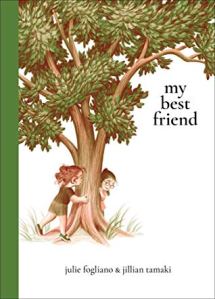
Julie Fogliano and Jillian Tamaki’s my best friend (Ages 3-7) came out only a week ago, but so enthusiastic has the response been from the kid lit world, I feel like the last person to sing its praises. (Still, wild horses couldn’t keep me from joining in the fun.) An homage to the giddy abandon exhibited in early childhood friendships—particularly those born on the playground—the book has all the makings of a classic. Fogliano’s free verse sings and soars with the stream of consciousness of a child tasting the deliciousness of friendship for the first time. (i have a new friend/ and her hair is black/ and it shines/ and it shines/ and she always laughs at everything) Tamaki’s muted palette of rusty pink and olive green lends the book a timeless, vintage feel, while the figures themselves spill and explode off the page, their excitement literally uncontainable.
Concluding Black History Month on the Train
February 27, 2020 Comments Off on Concluding Black History Month on the Train
 Every year, once in the fall and once in the spring, I take each of my children on a mommy-and-me trip to New York City for a long weekend in the city where I grew up. We board the train in Alexandria, Virginia and make stops in Washington, D.C.; Baltimore, Maryland; Newark, Delaware; Philadelphia, Pennsylvania; and, finally, New York City, Penn Station. My kids have come to enjoy the train ride almost as much as the destination itself, glancing up from their books to watch the changing scenery speeding by—there is something innately lolling and contemplative about train travel—and anticipating the stops to come.
These same train stops come to life against an important and fascinating historical backdrop in Overground Railroad (Ages 4-9), a new picture book by superstar husband-and-wife team Lesa Cline-Ransome and James Ransome, whose Before She Was Harriet I praised around this same time last year. “Isn’t it supposed to be “Underground Railroad?” my daughter asked, when I picked up the book to read it to her. Admittedly, I was equally stumped. As the Author’s Note explains, most people are familiar with the covert network known as the Underground Railroad, which assisted runaway slaves on their journey to the North, usually on foot. Lesser known but often equally secretive, the Overground Railroad refers to the train and bus routes traveled by millions of black Americans during the Great Migration, a time when former slaves opted to free themselves from the limitations and injustices of sharecropping to seek out better employment and educational opportunities in the North. Faced with the threat of violence from the owners of these tenant farms, who relied on the exploitation of sharecroppers for their livelihood, those who escaped often had to do so under cover of night.
Curating Memories
February 20, 2020 § 4 Comments
 Since losing my grandmother two weeks ago, I haven’t been able to shake my sadness at the realization that my memories with her are now finite. For nearly 45 years, I have been collecting memories with her, savoring them on shelves in my heart. Memories of orange-red sunsets on the beach; of her impossibly large hibiscus plant; of earth-shattering thunder claps which sent me flying out of bed, always to find her calmly watching the electrical show from the screened porch (“Have you ever seen anything so beautiful, Meliss?”). There were jigsaw puzzles which kept us up late into the night, always after vowing she wouldn’t “get involved”; prank calls she encouraged me to make to her friends; Thursday night Bingo games at her golf club, where to be seated next to her felt like basking in the presence of a celebrity. I can still hear her voice like it was yesterday, those giddy eruptions of “Goody goody goody!”
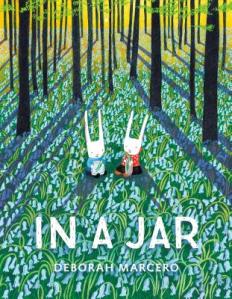
If the right book, read at the right time, can cradle you in its embrace, then Deborah Marcero’s new picture book, In a Jar (Ages 4-8), is doing that for me. (My kids are pretty smitten, too.) It is the most exquisite, childlike, visual depiction of memory-making I’ve encountered, as well as a reminder that the process of collecting memories can be as beautiful as the memories themselves. While it’s not about death, it is a story of loss—the loss of a friend who moves away—and how we re-frame the world in light of departure. It’s affirming and hopeful and the kind of lovely that surrenders you to its pages.
2019 Gift Guide: My Favorite Read-Aloud of the Year (Finding Your Own Rhythm)
November 27, 2019 § 3 Comments
 Last week, I told you about My Favorite Picture Book of the Year. I also told that you that, this year, I had two favorites. In fact, this second may be one of my favorite read-alouds ever. Seriously. Want me to swing by right now and read this to your kids? I’m in. Though I think they’d probably have more fun if you did it.
On the surface, Matthew Forsythe’s Pokko and the Drum (Ages 3-7) has a straightforward premise: girl gets drum; girl finds a way of expressing herself; girl wins over her skeptical parents. The originality lies entirely in Forsythe’s execution: a color palette at once earthy and whimsical; strategic use of white space to control pacing; expressive animal figures; subversive humor; and page turns perfectly timed for dramatic impact.
Forsythe’s dry humor kicks off in the story’s opening sentence: “The biggest mistake Pokko’s parents ever made was giving her a drum.” Proving that her parents know a thing or two about mistakes, we get a quick visual look at some of their previous ill-conceived gifts: “the slingshot” (launches Pokko), “the balloon” (up, up, and away), and—my personal favorite—“the llama” (destroys the house). « Read the rest of this entry »
2019 Gift Guide: Favorite Picture Book of the Year (and How Family Should Be)
November 21, 2019 § 6 Comments
 How it’s almost Thanksgiving I’ll never know, but the season of giving will soon be upon us. Seeing as I’ve read more this year than any other, I think it’s fair to say my 2019 Gift Guide won’t disappoint. I’m aiming to include something for every child and teen on your list. As has become tradition on this blog, I begin with my favorite picture book of the year (although spoiler: this year I have TWO, so stay tuned). Past years have seen this, this, and this. It has been hard keeping this one a secret…although timing for today’s reveal feels especially fitting.
Growing up, I always preferred Thanksgiving to Christmas. I would never have admitted this; it seemed odd as a child to prefer a holiday of sitting around, eating off formal china, and making conversation with grown-ups—over one with presents and candy and caroling. But there was something about the warmth and coziness of Thanksgiving which seduced me: returning home frozen after the Macy’s Thanksgiving Day Parade to an apartment abounding with hissing radiators and the smell of roasting turkey. There was the comfort of looking around the room and seeing the people I loved and not having the distraction of which gifts might be under the tree and which, disappointingly, might not.
It’s not lost on me that the timing of Thanksgiving plays a role in its appeal. After all, Thanksgiving kicks off the Holiday Season. It’s a time of anticipation, and there’s nothing more alluring to a young child than possibility. It may not be the holiday of presents, but it’s a road sign pointing towards the presents. Pointing towards the twinkling lights and crackling fires and colorful wrappings.
Still, there can be a kind of magic in and of itself created by family—and, if we’re lucky, it becomes almost tangible on Thanksgiving Day. For a few short hours, the world outside falls away, and the inside jokes and knowing glances and lingering hugs take center stage. Dishes are prepared with love and displayed in beautiful ways, and we relish the bounty of this precious togetherness.
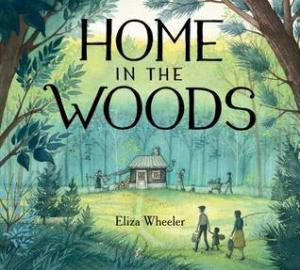
In her exquisite new picture book, Home in the Woods (Ages 4-8)—one of the finest examples of bookmaking I’ve ever encountered—Eliza Wheeler invokes her grandmother’s childhood to tell the story of a family who manages to make magic for themselves, even in the toughest of times. (You might remember Wheeler from this long ago favorite. Since then, she has mostly illustrated others’ texts. So happy to see her back in the seat of author and illustrator, because her writing is every bit as evocative as her art.)
The Push-Pull of October
October 3, 2019 § 1 Comment
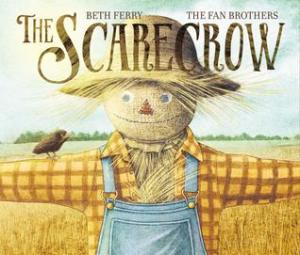 “I’m so glad I live in a world where there are Octobers,” said Anne of Green Gables. And so am I. No month is more bountiful. It smells fresh. It crunches beneath your feet. It’s resplendent with a beauty so striking it almost hurts.
But, even with all its treasures, October is a time of loss. Loss of light. Loss of color. Loss of those long, lazy days of summer which (thank you, September) suddenly seem like a lifetime ago. Right now in our family, this October feels riper than usual with loss, as I prepare to say goodbye to my grandmother, a woman I have loved since she first touched her nose to mine.
So, while I love books whose pages celebrate fall’s wonders (like this, this, this, and this), I also have a soft spot for books that speak to the shadows cast by fall. Beth Ferry’s quiet new picture book, The Scarecrow, gorgeously illustrated by The Fan Brothers (we would expect nothing less after this), plants the reader squarely in the push-pull of fall. Although, in fact, fall plays only a small role in the story.
When is a Stone a Story?
September 12, 2019 § 5 Comments
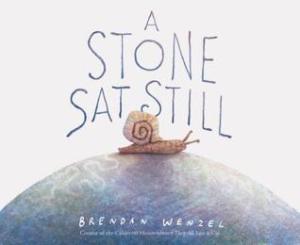 If we want our children to entertain different perspectives when they get to middle or high school—to become critical thinkers and contributors—then they should have opportunities from an early age to consider that there is more than one way to see the world.
Picture book author-illustrator Brendan Wenzel is making something of a name for himself when it comes to creating books for young children about perspective and perception (his groundbreaking debut, They All Saw a Cat, received a Caldecott honor). His newest, A Stone Sat Still (Ages 4-7), similarly rendered with richly textured, mixed-media art and spare, poetic language, stole my heart from the moment I opened it (do yourself a favor and remove the jacket cover, because WOW). Even my children, well outside the target age, were captivated. This is visual storytelling at its best, where every page asks the reader to engage: to wonder, question, and understand. « Read the rest of this entry »
When They Want the Truth
September 5, 2019 § 2 Comments
 When I was eight, I led my father into our coat closet, pushed aside the coats to make a small opening, closed the door, and sat him opposite me on the floor. As we both hunched uncomfortably, I handed him a piece of torn notebook paper and a pencil. On the paper was a list of every swear word I had ever heard. “I want you to write down what each of these words mean,” I said. “Please,” I added, so as not to sound bossy.
I’ll never forget the way my dad didn’t miss a beat. As if this was a natural ask from a firstborn. He didn’t speak, just wrote down a word or two beside each of mine. When he was finished, he handed me the list, and that was that. We stood up, opened the door, and went our separate ways.
In the safety of my bedroom, I got up the nerve to look at what my father had written. It may have been the most anticlimactic moment of my life to date. Female dog. Human feces. I’m sure there were others, but I can’t remember the complete list. I stared in disbelief. I wasn’t entirely sure what all of them meant (what the heck was feces?), but I did know they didn’t sound particularly harmful, certainly not worth the drama which ensued each time someone used one of them at school.
In that moment, I also knew I wasn’t getting the whole truth. I thought the answer was in my father’s pencil strokes, but what I failed to realize was that I actually craved a conversation with him. I wanted to understand what was so terrible about these words. I wanted to understand why they were used the way they were. Looking back, I even wish he had explained some of the gender politics behind them. But I didn’t know how to make any of that happen.
In an effort to demystify these words for me, my father stood in the way of my more fully understanding the world I was sharing with him. « Read the rest of this entry »
What’s Left When Summer Ends
August 29, 2019 § 9 Comments
 At no time more than summer do our children grow up. Camps, camping, gloriously long stretches of daylight, ample opportunities at exploration and courage and boredom…all of this combines to ensure that the children we send back to school in the fall are not quite the ones we ushered in summer with.
I was ill prepared for the onslaught of emotions I would feel upon picking up my oldest from his first sleepaway camp experience in Maine. As we slowed along the gravel road though the camp entrance, my excitement of the past 24 hours turned to butterflies. How would he seem? Would he look different? Would he have made friends? Would he burst into angry tears and declare he was never coming back?
We didn’t have to wait long: he was standing alone not far from the entrance. I waved frantically, shouting at my husband to stop the car so I could jump out. JP smiled broadly as I threw my arms around him, but something was immediately apparent. He was quiet. More upright than I’d remembered. More reserved than I’d expected. « Read the rest of this entry »
A Master Class in Mischief Making
April 25, 2019 § 2 Comments

My daughter delights in mischief. The mischief of others, that is. She, herself, may be intent to uphold a “good as gold” persona, but she wastes no time in reporting on the transgressions of others—classmates, the new puppy across the street, her big brother—with a certain giddy fascination. As I’ve mentioned in previous posts, Emily devotes large stretches of her imaginary life to contemplating the mischief made by her stuffed sheep and my stuffed bear when we’re not looking. Together, these two plush characters could be Emily’s alter ego. They subsist on a diet of gummy worms and chocolate cake. They jump out of the window in skydiving suits when they’re supposed to be sleeping. While Emily and I were in New York City last week, she claimed to spot them high tailing it down the block with a bunch of stolen balloons, on their way to throw themselves a party for their “fake birthday.”
After beating me to Mordicai Gerstein’s latest graphic novel-picture book hybrid, I am Hermes! (Ages 7-10), Emily was delighted to inform me that there exists no greater Mischief Maker in the History of the World than Hermes, Messenger of the Gods. Judging by the profusion of energy and humor in his 67 pages of comic panels, Gerstein is every bit as entranced with Hermes’ master class in mischief making as is my Emily.
« Read the rest of this entry »In the Eye of the Beholder
April 11, 2019 Comments Off on In the Eye of the Beholder
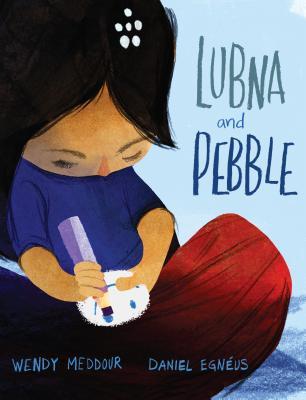
One of the superpowers young children possess is the ability to transfer human qualities onto inanimate objects. My Emily might be eight years old—well versed in the impossibility of stuffed animals coming to life—but she still likes to tell me about the skydiving adventures her plush lamb has at home while she’s off at school (apparently in cohorts with my stuffed bear). When I tuck her in at night, it’s not uncommon for Emily to inform me that Baba will be keeping watch for bad dreams. Whenever her pride is bruised or her tears are flowing, Emily predictably runs to her room, snatches up Baba, and presses the soft frayed body to her cheek. (Baba has also been known to “peck at” prime offenders, otherwise known as Older Brothers.)
It’s remarkable, this ability of children to draw entertainment, companionship, and comfort from non-living things. It certainly plays a part in why children are naturally resilient, even or especially when the humans around them fall short. After all, an object can be whatever a child wants or needs it to be. It can be a kind of “stand in,” or a bridge to a time when that child might reliably find that entertainment, companionship, or comfort in another living being.
Lubna and Pebble (Ages 4-8), an impossibly gorgeous and profoundly moving new picture book about the refugee experience, takes at its center the conceit of a young girl’s redemptive friendship with a pebble, which she finds on the momentous night she arrives with her father at the “World of Tents.”
« Read the rest of this entry »Balancing the Me and the We
March 1, 2019 Comments Off on Balancing the Me and the We
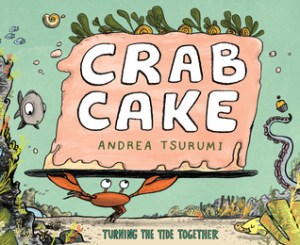 How do we celebrate our individualism without turning our backs on our community? How do we lift up those around us without sacrificing our sense of self? Teaching our children to walk this fine line as they grow into adults may be one of the most important things we as parents do.
Bonus if it involves a little sugar along the way. « Read the rest of this entry »
Taking Up Space (A Black History Month Post)
February 21, 2019 § 2 Comments
 In her modern dance classes, my daughter cherishes above all the few minutes devoted to “sparkle jumps.” One by one, the dancers crisscross the studio at a run. As each one reaches the middle, she explodes into a leap, arms reaching up and out, head tall, like the points of a star. For one perfect moment, my daughter takes up as much space as her little body will allow.
“I love watching you take up space,” I tell her. « Read the rest of this entry »
Hello, Awards Time!
January 31, 2019 § 1 Comment
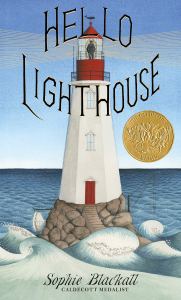 This past Monday, I watched and cheered at my computer as the American Library Association’s Youth Media Awards were announced (more fun than the Oscars for #kidlit crazies like me). Most parents are familiar with the Caldecott and Newbery medals, but there are quite a few other awards distributed, many to recognize racial, cultural, and gender diversity. Overall, I was pleased to see many of my 2018 favorites come away with shiny gold and silver stickers. At the end of today’s post, I’ll include some of these titles, along with links to what I’ve written about them.
Today, I want to devote some space to Sophie Blackall’s Hello Lighthouse, which came away with the Randolph Caldecott Medal, for the “most distinguished American picture book for children.” (It’s actually the second Caldecott for Blackall, who won three years ago for this gem). Hello Lighthouse (Ages 6-9) is one of my very favorites from last year; and yet, I haven’t talked about it until now. Why is that? Perhaps because the art in this book is so endlessly fascinating, my observations continue to evolve with every read. I suppose I’ve been at a loss for words. « Read the rest of this entry »
What Our Heart Needs, Today and Everyday
January 24, 2019 § 4 Comments
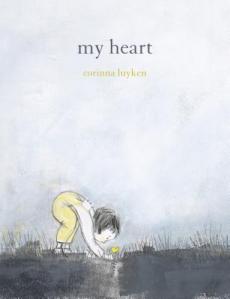 On the morning of Christmas Eve, I drove down to the river to watch the sun rise. I hadn’t been able to sleep, my heart bruised from the words of a loved one the night before. As an adult, I have found the holidays to be such an intermingling of joy and sadness: a time of excitement and celebration, but also a time when the losses in my life assert themselves and leave me vulnerable.
I stood alone in the brisk-but-not-intolerable air, at the same spot along the Potomac where my son had taken me this past summer. A place he had picnicked with his sailing camp. A place he told me, while we were walking there, had “a bench perfect for you to sit on.” I wanted a place where I would feel love. « Read the rest of this entry »
 What to Read to Your Kids