The Right to Vote
February 11, 2016 § 6 Comments
 With such a heated presidential election upon us, voting has been a popular topic of conversation in our house. My eight year old is trying to make sense of the candidate names he has heard; and he repeatedly asks my husband and I who we “want to win” this November, convinced with that blind, beautiful eight-year-old innocence that his parents’ choice must be the right one. (I’m tempted to blow his mind by telling him that his dad and I might each want someone different.)
The right to vote may be one that many of us Americans take for granted today (much like trying on shoes at a store—see last year’s post for Black History Month); and yet, it also seems to inspire a certain awe in our children. Or at least it did in me when I was young. My mother would take me along when she voted in major elections. We’d wait in line, hand in hand, and then part of me would cringe in betrayal when at last it was her turn and she would pull the curtain closed around the voting booth, leaving her on one side and me on the other. I would strain to see her shadow beneath the curtain, trying to make heads or tails of what she was doing in there. “Can’t I come in with you?” I’d lament. “Isn’t it unsafe to leave me out here all alone?” I’d try. But her answer was always the same: “Voting is private. What I do in here is nobody’s business but my own.” That night, I’d try harassing my father: “But you did vote for who you said you were going to, right?” “That’s for me to know,” my dad would reply, the corners of his mouth turning up slightly. « Read the rest of this entry »
For the Romantic (A Valentine’s Post)
February 4, 2016 § 5 Comments
 If you’ve been following my blog for awhile now (thank you!), it’s no secret that I like non-traditional recommendations for Valentine’s Day. In past years, I’ve typically favored off-beat stories about friendship bonds, as opposed to the saccharine hearts and hugs that publishers seem to push this time of year. I’m referring to gems such as this and these and this; and if I was going to continue my friendship trend this year, I would be singing the praises of Salina Yoon’s new lovely and understated Be a Friend.
Instead, I’ve decided that this February calls for a bit of high romance, inspired by a fairy tale that has been exquisitely re-imagined by Angela Barrett and Vivian French. I had initially intended to feature The Most Wonderful Thing in the World (Ages 5-10) in my December holiday gift guide, but I never found the right spot for it. Now, it occurs to me that I was subconsciously waiting until the Holiday of Love to tell you about a story that sings of universal love at its most transcendent. « Read the rest of this entry »
Long Live the Polar Bear
January 30, 2016 § 1 Comment
 If there was ever a time to turn our children sympathetic to the plight of the endangered polar bear, it is on the heels of this recent Snowpocalypse, which dumped more than two feet of the white stuff on us (snow novices) here in Northern Virginia. As my kids and I gazed wide-eyed out our window, the snow fell for two days, swirling and collecting and mounting into perfect waves of whiteness, occasionally drifting into piles almost as high as the stop sign at the end of our block (the stop sign being my son’s unofficial measuring tool of a blizzard, ever since we read John Rocco’s Blizzard last winter). Long before the sun came out and the wind died down, my children were out shoveling trenches down the middle of the street and crawling into hand-dug snow tunnels.
But after just a few days, the sledding hills became slushy. The snow banks started to recede from the edges of our sidewalks, betraying the brownish-green grass beneath. Our once crisp white snow in the backyard has overnight become freckled with twigs and dirt and those (abhorrent) spiky balls from our sweet gum trees. The other morning at breakfast, JP buried his head in his hands and pronounced, “I can’t look. I just wanted it to stay the way it was.” « Read the rest of this entry »
Toys as Neurotic as Us
January 20, 2016 § 3 Comments
 If my children are playing nicely together (sound the trumpets!), chances are high that they’re in the company of stuffed animals. Once a stuffed animal enters our house and is given a name, it assumes an infallible place in JP and Emily’s communal imagination, albeit in an ever-changing litany of roles, from pet to circus performer. My kids crochet leashes for their animals; they bury them in boxes of peanuts and push them around the house; they string them from ceiling fans. They emerge from their respective bedrooms on weekend mornings, eyes partly open, with half a dozen animals tucked under their arms, ready for action.
Two tigers (Hobbies and Hobbies Jr.), a giant panda in a bellman uniform (Cookie), two doughnuts (Sprinkles and Sprinkles 2), and a monogrammed pillow (named, for whatever nonsensical reason when JP was two, Bag of Worms) are just a few of the soft friends that make frequent appearances in my children’s play. Still, as JP and Emily are quick to remind me, the life of a stuffed animal doesn’t begin and end at the hands of a child. The more exciting question is: what shenanigans do these toys get up to when their children are asleep or away? « Read the rest of this entry »
2015 Gift Guide (No. 2): For the Lunar Lover
December 8, 2015 § 3 Comments
 In my 2013 Holiday Gift Guide, I ran a post dedicated to parents desperate for a break from incessant nightly rounds of Goodnight, Gorilla. It strikes me that the two books that I’m discussing today (Ages 2-5) would line up beautifully alongside those others. They are perfect bedtime stories. They are perfect for reading every single night (because, trust me, that’s what you’ll be doing). They are quintessentially sweet, dear, and innocent. And if, after reading them, you want to clutch them to your own chest, I promise not to tell.
We begin with Ida Pearle’s stunning The Moon Is Going to Addy’s House (Ages 2-5). Shhhh, I know I’m not supposed to pick favorites, but if I were to call out the illustrations of only one book this year, it would be this. Brooklyn-based Ida Pearle has got to be one of the most evocative children’s artists today, using her talents in figurative drawing and cut-paper collage (her choice of papers, many of them Italian or Japanese-designed, is sheer eye candy) to produce something at once charmingly old-fashioned and refreshingly modern. In my old store in Chicago, we used to display and sell Pearle’s wall prints. I’m positively giddy that her art is finding a more accessible expression now in picture books (Caldecott Committee, are you listening?).
For the Child Who Will Re-Write the Rules (2015 Holiday Gift Guide Kicks Off!)
December 6, 2015 § 3 Comments
 I realize I’m late to the game with my Holiday Gift Guide, and I apologize. Lest you think I was taking a few weeks off from children’s books, I assure you that is rarely the case. Rather, I was drafting book lists for many of the parents in my children’s school, in preparation for our annual Book Fair (my favorite fundraising event of the year!). In other words, I’ve been reading even MORE than usual. And now, all of you will benefit! Over the next ten days, I will be posting several installments of my annual Gift Guide, with recommendations of picture books, chapter books, and non-fiction for all the young book lovers in your life. I’ve saved singing the praises of many of my 2015 favorites until now, because they have undeniable Gift Power. It has been hard to stay quiet all these weeks and months, when I’ve wanted to scream, GET YOUR CHILDREN’S HANDS ON THESE BOOKS RIGHT NOW!
I’m going to begin today by telling you about two of the most gorgeous picture books published this year. And I mean, Holy-Moley-Mind-Blowing Material. These are books whose pages invite endless study; books whose paintings draw us in so completely that we forget everything that’s happening around us. They are books that challenge the traditional relationship between author and reader, between artist and spectator. They invite us to participate fully in what we are seeing and to make our own meaning out of what we find.
The Real Winnie the Pooh
November 19, 2015 § 8 Comments
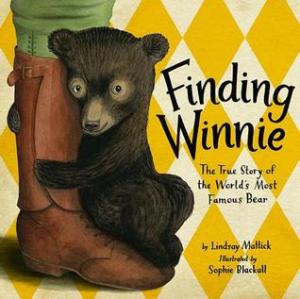 A. A. Milne’s iconic classic, Winnie the Pooh, the collected tales of a stuffed-bear-come-to-life and his friends, was one of those books I was most excited as a new parent to read to my children. I still have the copy that once belonged to my own mother and her brothers: a water-stained hardback with their own handwritten improvisations along the way.
While I vaguely recollect reading and enjoying this classic as a child myself, I’ll admit that my more prominent memories are of decorating friends’ yearbooks with A.A. Milne quotations (“We’ll be friends forever, won’t we, Pooh?” said Piglet. “Even longer,” Pooh answered.) Pooh and his friends, it seems, have an enduring resonance.
When it came to cracking the spine on this treasure for my firstborn, I didn’t anticipate how surprisingly sophisticated A.A. Milne’s writing is. I first tried to read Winnie the Pooh to JP when he was only three and a half. Big mistake. The dry humor was over his head (it’s hard to find Owl’s misspellings funny when you don’t know how to spell yourself); and the sudden jumps in narration were jarring (one minute we’re in the 100 Acre Wood, the next we’re in Christopher Robin’s bedroom hearing about the 100 Acre Wood). I would be erupting in giggles, while JP would be eyeing me as if to say, This is funny why?
We tried again when JP was six, with much greater success, although I think the beauty of Pooh (in the vein of other classics, like The Little Prince) is that it can be re-read at almost every age from here on out for different gain. The 100 Acre Wood is like a microcosm for the world. In it, we encounter the same personalities that we do on the outside. Look at bossy pants over there, hopping around like ‘ol Rabbit. Cool it with the Kanga-like cheerleading, kay? I need a lunch date with my Piglet.
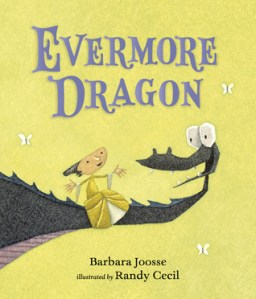
Talking Out the Scary
October 22, 2015 § 2 Comments
 My daughter loves to tell us that she isn’t afraid of anything (Me thinks thou doth protest too much!). While JP is cowering under a pile of stuffed animals during a thunderstorm, Emily will announce, “I’m not a bit scared of thunder.” Last Halloween, when JP screamed bloody murder as a suspended bloody hand lunged towards him in a haunted house, Emily was quick to point out, “That’s not even real.”
But ask her to go upstairs to get something in the evening, when the lights haven’t been turned on yet, and she will rattle off every excuse in the book as to why she can’t. “I’m super busy helping my baby use the potty right now.” Not surprisingly, JP can’t resist taunting her: “Are you scared of the dark, Emily?” “I’m not scared, JP. I just don’t like it. Also, sometimes you jump out at me.”
In case you missed my list of favorite Halloweeny-but-not-Halloween-specific books, which was featured last week on local blog DIY Del Ray, you can find it here. But before we wrap up one of the best holidays for reading aloud, I want to tell you about one other new picture book. It features ghosts and witches, but it also introduces a broader conversation about what children find scary—and how talking can sometimes be the best cure for what lurks in the dark.
Less Creepy, More Crawly
October 8, 2015 § 2 Comments
 At a time of year when people (ahem, my husband) seem to think it’s funny to leave plastic rats lying casually around the house, I thought there might be some value in remembering that even the creepiest and crawliest of creatures have some pretty awe-inspiring merits. Or, at least, maybe we don’t need to run screaming all the time.
Recently, I’ve been noticing that there seems to be a new kind of science picture book afoot—a refreshing companion to the National Geographic-types, which pair a myriad of facts with in-your-face photography. Don’t get me wrong: my son loves himself a fat, meaty information-packed book. My daughter, on the other hand, won’t touch one with a ten foot pole. Maybe it’s that she’s only five; maybe it’s a gender thing; or maybe it’s just that she’s wired differently. But I tend to think she craves the same kind of information—just in a different format.
Allow me to introduce two books in this new genre, which for lack of a more official term I am calling Conversational Non-Fiction. These are picture books with disarming first-person narrators, whimsical illustrations, a hefty dose of humor, and loads of true and fascinating facts slipped casually between the pages. These books—at least the two I’m about to discuss—are also the first informational picture books that my daughter has ever requested to hear again and again.
The Richard Scarry Book You Don’t Own (Yet)
September 17, 2015 § 3 Comments
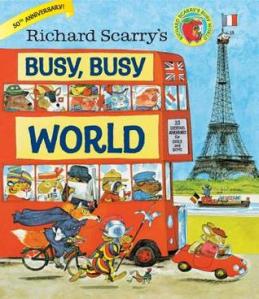 The Greatest Thing has happened. The Richard Scarry book that I most loved as a child is BACK IN PRINT! That’s right, I no longer have to lie awake at night, debating whether to drop $100 on eBay so that my kids can share in my childhood nostalgia. There I was, casually browsing the aisles of my neighborhood bookstore, when I caught sight of a double decker London bus, packed with a menagerie of dressed-up animals. I let out an audible squeal, snatched up every copy on the shelf, and ran directly to the counter to buy them all. (Yes, I have a problem, but there are worse addictions to have…right?)
You might think you already have enough Richard Scarry in your life. Sure, I get it. You might have read Cars and Trucks and Things That Go so many times (like I did, when my son was two and waking up at 5:15am every single day), that you have had to “misplace” it on occasion. Or, you might feel like you have already lost years of your life talking about a certain worm who lives in a Busy, Busy Town and walks upright wearing a single shoe.
But you might also remember that, sometimes, the only reason you can answer your child’s 700 daily questions stems from your proficient readings of What Do People Do All Day? (After all, when you became a parent, you didn’t know you would need a working knowledge of how streets are paved and houses are built and paper is made and a mailed letter gets from one place to another.) You might also take a moment to reflect how, when your children were younger and people commented on their impressive vocabulary, you might owe more than you think to the hours you spent—at their request, of course—pointing at items on supermarket shelves in the Best Word Book Ever.
In the spirit of outing my children’s addiction within my addiction, I am here to confess to you that we own TWENTY NINE different Richard Scarry books (calm down, I’ve only listed my favorites at the end of this post). For the past eight years, Richard Scarry has topped our “most often read” lists more than any other books. I trip over them more than any Lego or baby doll. Yes, I have sometimes buried my face in my hands and lamented to my children that I just don’t have it in me to read another 72-page book that’s heavy on words and light on plot. But, most of the time, I oblige. Because it makes them so darn happy.
And because I remember how much I adored these books as a child.
Which brings me to the recent republication (in honor of its 50th anniversary) of Busy, Busy World (Ages 4-8), one more Richard Scarry title that you ABSOLUTELY WILL NEED TO ADD TO YOUR COLLECTION. As I’ve said, my love affair with this anthology of 33 internationally-themed two-page stories—think of it as Busy, Busy Town goes global—began as a child myself. « Read the rest of this entry »
When Big Sis Starts School
September 3, 2015 § 1 Comment
 Seconds before I heard the door to his room slam shut, I heard my son bellowing these words to his little sister: “Emily, sometimes you are the best of all people, and sometimes you are THE WORST!”
Have truer words ever been uttered about one’s sibling?
Perhaps at no other time than summer is the sibling relationship so poked, prodded, and pushed. There have been long stretches this summer when the only kids at my children’s disposal have been each other. Having so much unstructured time together requires more than a little adjustment. As a parent, witnessing my children re-connect, re-establish boundaries, and re-attune their imaginations with one another, is equal parts mesmerizing and maddening.
Still, take away the bossing and the tattling and the unprovoked hitting (WHY DO THEY DO THIS?), and I am still smiling about the dinosaur dance party I walked in on…or the day my daughter appeared for lunch dragging her big brother on all fours by a dog collar…or the time I eavesdropped on them whispering conspiratorially under the bed. Nor will I forget the tears that welled up in my eyes when, after what seemed like hours of yelling and bickering, I came down from a shower to find the two of them sprawled on the living room floor, telling made-up stories to each another.
I would argue that, in recent years, no picture book artist has captured the young sibling relationship more astutely and adorably than Lori Nichols. Tracking the relationship between two sisters, Nichols first gave us Maple, where Maple (named for the tree her parents planted when pregnant) learns that her parents are expecting a second child. Then came Maple and Willow Together, where the storming and norming of sibling play reaches full fantastic force. Now, in this fall’s latest installment, Maple and Willow Apart (Ages 2-6), Maple’s departure for kindergarten throws both girls for a loop. This new angst is hardly surprising, given that the two sibs have just spent the entire summer playing together (in and around trees and while speaking in their secret nonsensical language—two favorite themes that run through all the books). « Read the rest of this entry »
Seduced by Engineering
July 23, 2015 § 1 Comment
 One of the Great Surprises of my life came on a hot, clear summer day last August. My sister in law was visiting, and she and I decided to take the kids over to National Harbor in Maryland. “You know, Mommy, I heard they built a Ferris wheel there. I think we should ride it,” offers my eldest.
SAY WHAT? Now, I’ve read the parenting books, and I know we’re not supposed to label our children. So, in lieu of describing my seven year old as cautious, I’ll just say that he prefers to apply the road sign, PROCEED WITH CAUTION, to as much of his life as possible. If JP determines something to be of physical risk, he’ll likely avoid it all together—or spend weeks (ahem, years) ruminating on it, observing others doing it, until he’s absolutely sure he can proceed safely and confidently and without anyone’s assistance (see: bike riding). Heck, there are slides in our neighborhood that he still deems too tall to slide down.
So, I’m suddenly supposed to believe that my son is going to leave the safety of the ground aboard a giant rotating wheel that he has never actually laid eyes on? Don’t get me wrong, I was positively giddy at the prospect (wait, do you think we can start going to theme parks and rock walls?!), although I was careful to do my best nonchalant impersonation when I answered him, “Yeah, sure, we can do that, maybe, whatevs.” No need to jinx things with my shock and excitement.
On the ferry ride over, as we caught first sight of the Metal Monstrosity, hanging precariously out over the pier, I once again thought, NOT A CHANCE. And I once again was floored. “Wow, it’s a lot bigger than I thought, Mommy. But we are definitely riding it.”
As we got in line and paid a mere fortune (honestly, I would have forked over any amount to reward this burst of spontaneity), I watched with trepidation as the color began to drain from JP’s face. I realized he was listening to the attendant, who was loading people into what turned out to be giant glass-enclosed cars and then pointing out the large red “panic” buttons located in each interior. “Why do they need those buttons?” JP asked me.
“Um, in case someone feels sick and they want to come down and get out. I’m sure they hardly ever get used,” I quickly responded. Although I was beginning to wonder the same thing.
And then we were bolted in, quickly rising higher and higher, until we were suspended over the water on one side and the itty bitty figures of people waiting in line on the other. And then—as is the custom with every Ferris wheel I’ve ever been on—we were paused, dangling, SWAYING, for what seemed like an eternity, as a new round of people boarded at the bottom. And we still had four more laps to go.

I looked at JP. “How are you feeling, buddy?”
He shot me a look like, don’t you dare talk to me right now or I’m going to start screaming like a banshee. Or maybe I’m just projecting how I was feeling. That panic button was calling to me. My sister in law looked equally frozen. (My three year old, on the other hand, seemed completely unfazed.)
But we did it. All of us. All five laps. We oooed and we ahhhed, and then we ventured that we might, we might, do it again someday. As we stepped off, I turned and asked the attendant (out of earshot of JP), “How often do people use that panic button?” She rolled her eyes. “You have no idea,” she said. But I did.
Weeks later, I asked JP what made him decide to ride the Ferris wheel. He started rambling about metal and motors and making grand gestures with his hands—and, suddenly, it dawned on me that it was sheer engineering that had seduced him. Even before he saw it in real life—when it was just something he had seen in pictures—the lure was magnificently romantic.
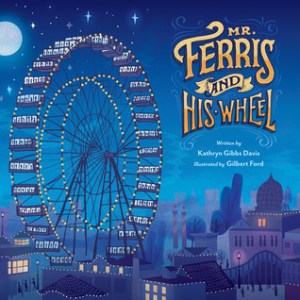
As if right on cue, Kathryn Gibbs Davis’ Mr. Ferris and His Wheel (Ages 5-10), a fascinating picture book biography of the man who invented the Ferris wheel, was soon published and quickly became a favorite in our house (along with the other engineering-themed picture books listed at the end of this post).
Once again, as with the best non-fiction children’s books, I was learning alongside my children. « Read the rest of this entry »
Dancing Outside the Comfort Zone
July 9, 2015 § 1 Comment
 Somewhere along the way, in our frenzy to make sure our children are anything but ordinary, we’ve stopped letting them be bad at things. So fervently do we want them to feel the taste of success from an early age (as if this guarantees them achievement later in life), that we steer them almost immediately in the direction of things at which we believe they’ll excel.
With so many of today’s children starting instructive activities at younger and younger ages, joining in a few years down the road can feel to a child like everyone else is light years ahead of him or her—a daunting prospect at best. And we parents get squirmy around daunting. We fear the fallout of failure, despite contemporary psychologists berating us, Failure is good! Failure is critical! It’s through failure that children learn how to stand firmer on their own two feet!
What’s stopping us from all holding hands and letting our children outside their comfort zone?
Cue the power of summer camp. For ten summers, I attended the same sleep-away camp in the Green Mountains of Vermont. The camp was the opposite of fancy (“It’s homey,” my New York City mother announced dubiously the first time we pulled in.). But I adored how laid back and accepting it was. As a camper, you could wander into any activity. As a counselor, you could teach virtually any activity (skill secondary to enthusiasm). Fortunately, my parents weren’t sending me there to master tennis or horseback riding or to emerge at the end of the summer with perfectly glazed pots that might justify the hundreds of dollars they were spending.
That camp became a haven for me. A place to experiment. To discover and be embraced for who I was. And I failed constantly. I failed to advance to the next swimming level. I failed at fighting off homesickness. I failed at having the right frayed jean shorts. I failed at friendships. There were no parents around to lecture or moralize or pick me back up or interfere on my behalf. And, boy, did I love it.
There are still moments in my life where I would give anything to run out my problems in bare feet across that giant archery field, flanked by the beauty of the mountains.
In addition to its nostalgic camp setting, Tallulah’s Tap Shoes, the newest in the charming picture book series by Marilyn Singer and Alexandra Boiger—and my personal favorite to date—does a magnificent job of exploring a girl’s growing pains at starting (and not necessarily succeeding at) something new. « Read the rest of this entry »
Quality Time with Dad
June 18, 2015 § 2 Comments
 Last June, on the 20th anniversary of my father’s death, I wrote a post about a picture book titled Following Papa’s Song, a beautiful metaphor for the delicate dance that we perform with our children, of when and how to let go (and pull back, and let go again), so that our children might grow up to be their own persons. This year, I was all set to write about David Ezra Stein’s Tad and Dad, which brings a more rambunctious and funny treatment to a similar discussion of boundaries: a toddler frog is so enamored with his Dad—the very best swimmer and hopper and burpper in THE WORLD—that, naturally, he wants to sleep in the same bed as said Dad every night.
Then yesterday, when I arrived home, I found on my doorstep Ask Me (Ages 3-6), an upcoming new picture book by the late Bernard Waber (sadly, not coming out until next month, so think of it as an all-year-round read and not as a Father’s Day gift, per se). Everything changed when I read that book. There was no going back. It’s not just because I grew up with and adore Waber’s classics (in fact, our Lyle, Lyle, Crocodile treasury happens to be my son’s go-to reading material when he’s trying to distract himself during a thunderstorm). It’s not just because the pencil illustrations are by the amazing Suzy Lee, who blends her South Korean sensibility with English training (and we know how I swoon over British and Asian illustrators). And it’s not just that the cover features a little girl skipping alongside her father, her hand clasped firmly in his, a smile on both of their faces, as if there is no other place they’d rather be.
What really hit home about this simple, poetic, and stunning picture book is that it speaks to the greatest gift my Dad gave me when he was alive. He listened. He listened to everything I told him—and I told him A LOT. As a child, I would save up everything that happened to me during the day (including the plot of whatever book I was reading); and then, when Dad got home, I would relay it all to him, including every single mind-numbing detail (I add the “mind-numbing” part all these years later, since as a parent myself, I have SEEN THE LIGHT). I would sit on the window ledge on our second floor landing, overlooking the driveway, and strain to see his car lights. All the while, the words would be collecting in my mouth, burning on my tongue, jittery with excitement at the prospect of spilling out. « Read the rest of this entry »
The Bravest Kind of Kindness
June 11, 2015 § 2 Comments
 “Kindness” has become a buzz word across parenting literature of late. Are we teaching our children to be kind? How do we go about raising kind children? How can we prevent “bullying” on the playground or “mean girls” at play dates?
And yet, for all the lip service we keep giving to the importance of kindness, a recent study found that as many as 80% of youth reported that their parents seemed “more concerned with their achievement or happiness than whether they cared for others.”
I find reports like this deeply unsettling, although they’re not entirely unsurprising. After all, kindness can be really hard stuff. It’s one thing to remember a relative’s birthday; to hold the door open for a stranger; to put an arm around a friend who is crying. Undeniably, these are all kind gestures. But it is quite a different thing to put someone’s deepest needs before our own; to step outside our comfort zone; to imagine ourselves in another’s shoes and, in the process, open up our hearts to the potential for understanding, connection, and forgiveness. Stretching the limits of kindness—this is when the real magic happens.
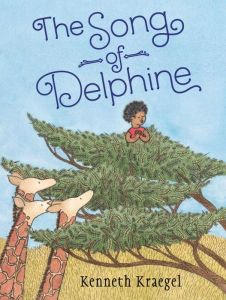
In his gorgeously illustrated and deeply feeling new picture book, The Song of Delphine (Ages 4-8), Kenneth Kraegel tells an unforgettable story of a child’s courageous act of kindness in the face of adversity. It’s an act that not only dramatically changes the course of the two lives in the book, but has the power to transform the reader as well. « Read the rest of this entry »
Weird and Wonderful Hospitality (Courtesy of Ben Hatke)
May 21, 2015 § 8 Comments
 I’d like to be the kind of mom who has the house where all the kids want to hang out. I’d like to be the kind of mom who throws back her head and exclaims breezily, “The more the merrier!” Who pulls out a sheet of warm chocolate chip cookies from the oven and, after grubby little fists have snatched them up, goes on to say, “You know, why don’t you all stay for dinner? I have something delicious bubbling away in the crock pot!” I’d like to be the kind of mom who turns the other cheek at dirty footprints, blots of ink, trails of sand, and piles of crumbs; who sighs and thinks, “All that matters is that they are here and they are happy.”
I am not that kind of mom. Two years ago, I participated in a Spring Break Swap with a group of close friends, where we each took turns at our respective houses watching nine kids for a day. My kids have lovely friends. Kind, intelligent, creative friends. But that did little to quell the feeling that I was UNDER SIEGE. So many little mouths telling me they were hungry! So many eager eyes imploring me to admire their drawings! So many children running up and down stairs, squealing and shouting and scrabbling!
Nope, I am not that kind of mom. It turns out that becoming a parent didn’t transform my Type A personality. I’m often still as inflexible as my daughter is when she’s presiding over her tea parties. Still, the idea of having an open-door policy, of creating a space where everyone feels welcomed and accepted, holds great romantic appeal. On paper.
This promise of hospitality is just one of the many reasons that I continue to be taken with Ben Hatke’s 2014 picture book, Julia’s House for Lost Creatures (Ages 3-6). The only reason I didn’t write sooner about one of my favorite books of last year is that it was initially such a runaway hit, the Indie publisher couldn’t print them fast enough! « Read the rest of this entry »
A Mother’s Greatest Gifts to Her Children
May 7, 2015 § 4 Comments
 In this age, where our self-worth seems increasingly defined by how busy we are, I find that one of my greatest challenges as a mother is quieting the “to do” list in my head when I am around my children. I’m not talking about simply spending time with them. I’m talking about being in the moment with them. I might be on the floor playing Candy Land, but I’m secretly fretting over when I should start dinner. I might be throwing a ball in the backyard, but I’m all the while thinking about the mountain of weeding that needs to get done.
My children know I love them. But how often do they feel the gift of my time?
This winter, I fell in love with a picture book by the lovely Scottish author-illustrator, Debi Gliori, titled Dragon’s Extraordinary Egg (Ages 4-8). It’s about dragons, yes, but it’s also about penguins and a landscape of ice and snow, so by all accounts, I should have shared it with you in the height of snow days and sub-zero temperatures. Except that it’s also one of the most beautiful portraits of motherhood that I’ve ever come across in a children’s book (it’s right up there with this one). So, I’ve been saving telling you about it until Mother’s Day, a time for celebrating those who are trying so hard every day to do right by the little ones we love. « Read the rest of this entry »
The “Help” They Can Do Without
April 30, 2015 § 1 Comment
 Sometimes I think there has never been a more distractible child than my Emily. Ask her to go upstairs for a hair bow, and she’ll come down ten minutes later with a baby doll. Ask her to take a bite of her food, and she’ll break into song before the fork gets halfway to her month. There are days when I think she was put on this earth to teach me patience (and, Holy Saints in Heaven, I am failing).
The temptation to sweep in and finish the job is often too great for me. If I just shove her feet into these shoes, we can leave the house! If I just usher these last few bites into her mouth, this dinner can actually end! Although, if I’m being honest with myself, it’s more than mere efficiency that I seek. It’s more than a desire to control the chaos around me. Doing something for my daughter is as much about the sheer pleasure of my feeling needed. (Remember this?)
As parents, we know we’re supposed to nurture a drive for independence in our children, to prepare them for the day when they won’t need us anymore. At the same time, parenting has become this Super Important Identity that we’ve assumed—at times it feels like it has obliterated all other identities!—and it’s natural to feel validated, encouraged, and protected each time our little ones seem to need our help. Even though our head reminds us that we’re supposed to get out of their way, our heart just can’t keep from meddling.
Introducing my daughter’s new favorite book: Little Red Henry (Ages 3-6), by author Linda Urban and illustrator Madeline Valentine. I challenge you to find a preschooler who won’t instantly relate to this tale of a little boy, the youngest of three, whose well-intentioned but incessantly doting family never lets him do anything himself. (The title is a nod to the moralistic fable, The Little Red Hen, about the bread-making hen whom no one will help—only here, it’s the opposite.) « Read the rest of this entry »
No More Sitting Pretty
April 16, 2015 § 3 Comments
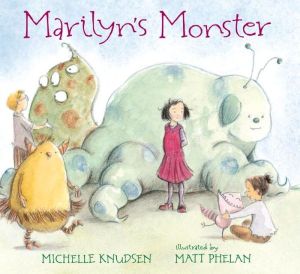 After spring break ate up my last two weeks, I’ve found my way back to writing, and I’m especially glad to be back, because I have a very special new book to tell you about. It’s a book that can be enjoyed simply for the fun, quirky, heartwarming story that it is. Or, it’s a book that can be read as a metaphor for one of the most important examples we can provide our children: that when life doesn’t give us what we want, we possess the power to stand up and change it.
It’s a book that boys and girls will enjoy equally, as my two already do. But, it’s also a book that must be shared with our girls. In fact, Marilyn has quickly become one of my favorite picture book heroines OF ALL TIME.
If that hasn’t piqued your interest, consider this: Marilyn’s Monster (Ages 4-8) is written by Michelle Knudsen, the same author who gave us Library Lion (need I say more?!). Marilyn’s Monster showcases the same beautiful fluidity of narration, the same perfectly orchestrated dramatic arc, and engenders the same depth of empathy for its central character. « Read the rest of this entry »
 What to Read to Your Kids