Bees: To Fear or Not to Fear
April 2, 2020 § 2 Comments
 Remember last week when I talked about returning our children to nature during this pandemic vis-á-vis secret gardens and long hikes in the woods? Well, there’s just one teeny tiny problem. While we were hiking a few days ago, my son spotted a bee.
Let me back up.
When JP was almost three, during a family reunion in rural Rhode Island, he climbed a ladder to reach an aged treehouse and stood up into a nest of wasps. He was stung twenty-seven times. I know this because the pediatrician, whom I panic dialed, asked me to count the stings. JP was just shy of the number where the poison level would have necessitated getting into the car and trying to find a hospital. Instead, we sat him on the second step of my uncle’s swimming pool, where, immersed in cold water, the screams and swelling eventually subsided.
Perhaps owing to this traumatic event or perhaps just because of the way he’s wired, JP has moved through the past nine years immensely fearful of stinging insects. His fear doesn’t differentiate between wasps and bees. He has read countless books on the subject; he has taken field trips to bee farms; he can rattle off the statistical improbabilities of being stung. No matter. If he hears buzzing, his body goes rigid; if he spots a bee, he flails and shrieks and spends the rest of his outdoor time willing it to be over. He is a hostage to this fear. While I know that with enough exposure and time, he will someday share the outdoors more easily with these creatures, I also know that right now, even more than being afraid of them, he is afraid he will never stop being afraid.
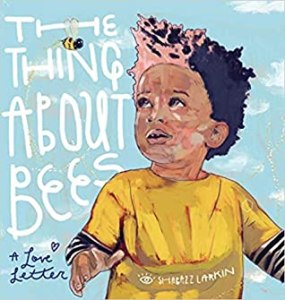
If I could go back in time, short of stopping JP from climbing that ladder, I would take this 2019 picture book with me. It’s what I wish I had read to him in the wake of the wasp event. It’s what I wish I had read to him a hundred times since. In The Thing About Bees: A Love Letter (Ages 3-7), author-illustrator Shabazz Larkin shares his steadfast love for his two young sons alongside an evolving love for bees (not to be confused with wasps), the great pollinators of everyone’s favorite fruits and vegetables. It’s a refreshingly original treatment of a popular subject—why bees matter—because it acknowledges front and center that bees are not easy to love. Indeed, this deeply personal book grew out of the author’s desire not to pass on his own fear of bees to his children. (Quick shout out to Capitol Choices, the children’s literary group of which I’m a part and where I learned of this book last year. Find other treasures on our 2020 list, published here.)
Moving the Classroom to the Woods
March 27, 2020 § 2 Comments
 (Friends, these are rough times. I feel you all. And I promise to keep showing up for you with book ideas for all ages. In addition to these weekly posts, I have (almost) daily recommendations on Instagram, so follow me there. We’ll get through this pandemic with the help of fictional worlds and gripping history and funny comics. Worst comes to worst, we can always use the pages to wipe our bottoms.)
It was only the second morning of #pandemicparenting, and the kids and I were already on the verge of strangling one another. My husband needed a quiet house for conference calls, so I threw out our daily schedule (just one day old) and drove the kids to the woods…where we stayed for four hours. It was cold and drizzly when we arrived, and I found myself willing it to be over. We walked and walked, saw no one, walked some more, and eventually settled into our own rhythms. My daughter ran off trail to climb on logs and rocks. My son stopped talking about his stress level and moved through the world quietly. We got lost, had to scramble up rocky ledges to find the trail again, discovered deserted outcroppings of beaches. The sun came out. I sat and listened to the water, while the kids skipped stones. Later, my son threw his arms around a tree, and I laughed out loud.
We’ve had our fair share of highs and lows these first two weeks of social distancing, but I am endlessly grateful that the trees still welcome our closeness. If there are silver linings amidst this collective heartbreak, one is an opportunity to return our children to nature. I never wanted to homeschool my kids; I knew I’d be rubbish at it. (I knew my kids would be equally rubbish at it.) Thankfully, they still have their wonderful teachers, even if they can only see them on a screen right now. I figure, for as long as we’re packed in together like sardines, I can give my kids two blessings: I can read them books; and I can gently push them towards the trees.
You know what social distancing is good for? Secret gardens. If your children need convincing to let nature step in as teacher, read them the extraordinary new picture book biography, The Secret Garden of George Washington Carver (Ages 7-10). My kids were riveted. Evocatively written by Gene Barretta and accented with richly expressive oil paintings by Frank Morrison, the story demonstrates how young George Washington Carver’s intimate relationship with nature as a child grew into a passionate career as a botanist, inventor, and activist.
Curating Memories
February 20, 2020 § 4 Comments
 Since losing my grandmother two weeks ago, I haven’t been able to shake my sadness at the realization that my memories with her are now finite. For nearly 45 years, I have been collecting memories with her, savoring them on shelves in my heart. Memories of orange-red sunsets on the beach; of her impossibly large hibiscus plant; of earth-shattering thunder claps which sent me flying out of bed, always to find her calmly watching the electrical show from the screened porch (“Have you ever seen anything so beautiful, Meliss?”). There were jigsaw puzzles which kept us up late into the night, always after vowing she wouldn’t “get involved”; prank calls she encouraged me to make to her friends; Thursday night Bingo games at her golf club, where to be seated next to her felt like basking in the presence of a celebrity. I can still hear her voice like it was yesterday, those giddy eruptions of “Goody goody goody!”
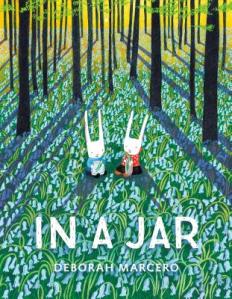
If the right book, read at the right time, can cradle you in its embrace, then Deborah Marcero’s new picture book, In a Jar (Ages 4-8), is doing that for me. (My kids are pretty smitten, too.) It is the most exquisite, childlike, visual depiction of memory-making I’ve encountered, as well as a reminder that the process of collecting memories can be as beautiful as the memories themselves. While it’s not about death, it is a story of loss—the loss of a friend who moves away—and how we re-frame the world in light of departure. It’s affirming and hopeful and the kind of lovely that surrenders you to its pages.
Better Together (Maybe for the Apocalypse, Too?)
February 6, 2020 § 1 Comment
 A year or so ago, I was at a summer garden party, all twinkling lights and umbrella drinks, when the conversation took a dark turn. Several folks, none of whom I knew terribly well, began to discuss and debate the provisions they had stored away in the event of an apocalypse. I sat quietly, picturing my own basement with its boxed wedding dress, foosball table, and toys I’d stashed hoping my kids wouldn’t notice so I could gradually move them to the donation bin, and realized how far a cry this was from the scene being described. No crates of non-perishable food, no industrial sized jugs of water, no iodine pills in the event of a nuclear attack, no walkie talkies, no axes, definitely no guns to take down squirrels that could comprise my protein quota.
“Don’t you worry about how you’re going to protect your family?” someone said to me, after I tried to make a joke about my foosball table. I conjured up an image of myself, defending my children against other crazed survivors—all of us presumably reduced to looters or murderers—and I said, only half joking, “In the case of an apocalyptic event, I think it would be best for the future of humanity if my family made a quick exit.” To put it mildly, living off the land in the dark and cold for an extended period of time isn’t really in our wheelhouse.
Last month brought a fresh wave of worry for those of us working hard not to picture End of the World scenarios. We were on the brink of a war with the Middle East. The continent of Australia was burning. A mysterious and deadly virus was (is) rapidly spreading out of China. If we believe apocalyptic-themed fiction, it’s not long until we will be wandering alone in the dark and cold, assuming we are unlucky enough to survive.
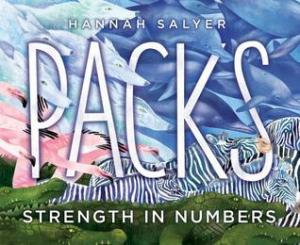
And yet, at a time when the news threatens to send us into an ethos of fear and anxiety—to fathom ways of constructing safe houses around our loved ones—children’s literature is there, reliably, with a hefty dose of optimism, a welcome respite from the dark and cold. Especially where gems like Hannah Salyer’s debut picture book, Packs: Strength in Numbers (Ages 5-9), are concerned, we would do well to remember that the animal kingdom has always survived when it turns towards, not away, from one another.
And Now, We Wait
January 16, 2020 § 4 Comments
 Happy New Year! Has anyone else noticed that the New Year always brings a mounting, restless anticipation about things to come? Maybe it’s because January is so much slower-paced than December (thank goodness); our minds naturally begin to leap ahead, craving that next fun event, that next milestone, even when we know we’d do better to slow down and allow ourselves to sink into the calm (dark mornings and grey afternoons included).
In any case, we’ve been doing our fair share of waiting lately. Waiting for snow days. Waiting to get braces off. Waiting for renovations to begin on our house. Waiting for our trip to Disney. Waiting for long summer days. And I’m feeling it as much as my kids. Waiting is hard.
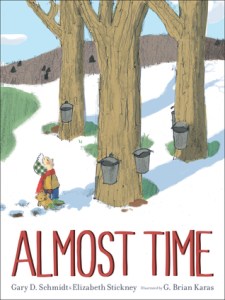
Fortunately, we don’t have to wait any longer for Almost Time (Ages 4-7), a new picture book by Gary D. Schmidt and his late wife, Elizabeth Stickney (pseudonym), with art by G. Brian Karas. I don’t think the sensation of waiting has ever been so astutely served up for young children as in this sweet winter story about a boy eagerly anticipating, not one, but two exciting events.
2019 Gift Guide: Graphic Novels to Rock Their World (Ages 8-16)
December 11, 2019 § 1 Comment
 It’s what I hear most often from parents: “I can’t get my kid to read anything but graphic novels.” The assumption is one of concern: perhaps said kiddo is dabbling in literature less worthy than the meaty prose novels many of us devoured in our own childhoods. The question of whether to purchase graphic novels also stumps parents: is it worth buying books our kids will tear through so quickly? After all, a graphic novel that takes an entire year to create can often be finished by an avid young reader in a single sitting.
AND YET. I would argue that graphic novels are some of the greatest (material) gifts we can bestow on our children. Today’s kids are growing up in a more visual culture than we ever did. Couple that with the exploding innovation coming out of the comics market right now, and is it any wonder these books are so alluring to young readers? I’ve watched my own children fall in love with reading through these books. I’ve watched them return to favorite comics in times of stress or change. I’ve watched them bend over graphic novels in the backseat during carpool, with friends on either side leaning in.
Good graphic novels are clever and layered and poignant and often shockingly beautiful. Their vocabulary is rich. To read them is never a passive experience; rather, kids need to work to extract the complete narrative, to find the innuendos and deeper meanings hidden in the cross-section between picture and text. Herein lies the best case for owning graphic novels: the reason your kids return to them again and again isn’t just because they enjoy them; it’s because they get more out of every reading.
Best of all, today’s graphic novels are tackling a range of subjects and genres, including science, history, biography, and immensely valuable socio-emotional learning. 2019 was a banner year for graphic novels. Below are some of the stand-outs (including what my own kids are getting for the holidays!).
2019 Gift Guide: Nonfiction Favs for Ages 4-14
December 5, 2019 § 8 Comments
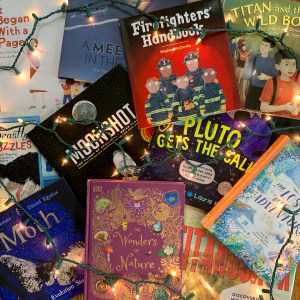 Our children are blessed to be growing up at a time when kids’ nonfiction is being published almost as rapidly as fiction—and with as much originality! On this comprehensive list you’ll find new books for a range of ages on a range of subjects, including geology, biology, astronomy, art, World War Two, American History, survival, current events…and even firefighting. (Psst, I’m saving nonfiction graphic novels for the next post, just to give you something to look forward to.) Hooray for a fantastic year for nonfiction!
2019 Gift Guide: Favorite Picture Book of the Year (and How Family Should Be)
November 21, 2019 § 6 Comments
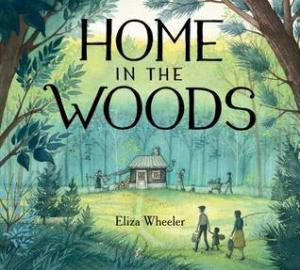 How it’s almost Thanksgiving I’ll never know, but the season of giving will soon be upon us. Seeing as I’ve read more this year than any other, I think it’s fair to say my 2019 Gift Guide won’t disappoint. I’m aiming to include something for every child and teen on your list. As has become tradition on this blog, I begin with my favorite picture book of the year (although spoiler: this year I have TWO, so stay tuned). Past years have seen this, this, and this. It has been hard keeping this one a secret…although timing for today’s reveal feels especially fitting.
Growing up, I always preferred Thanksgiving to Christmas. I would never have admitted this; it seemed odd as a child to prefer a holiday of sitting around, eating off formal china, and making conversation with grown-ups—over one with presents and candy and caroling. But there was something about the warmth and coziness of Thanksgiving which seduced me: returning home frozen after the Macy’s Thanksgiving Day Parade to an apartment abounding with hissing radiators and the smell of roasting turkey. There was the comfort of looking around the room and seeing the people I loved and not having the distraction of which gifts might be under the tree and which, disappointingly, might not.
It’s not lost on me that the timing of Thanksgiving plays a role in its appeal. After all, Thanksgiving kicks off the Holiday Season. It’s a time of anticipation, and there’s nothing more alluring to a young child than possibility. It may not be the holiday of presents, but it’s a road sign pointing towards the presents. Pointing towards the twinkling lights and crackling fires and colorful wrappings.
Still, there can be a kind of magic in and of itself created by family—and, if we’re lucky, it becomes almost tangible on Thanksgiving Day. For a few short hours, the world outside falls away, and the inside jokes and knowing glances and lingering hugs take center stage. Dishes are prepared with love and displayed in beautiful ways, and we relish the bounty of this precious togetherness.
In her exquisite new picture book, Home in the Woods (Ages 4-8)—one of the finest examples of bookmaking I’ve ever encountered—Eliza Wheeler invokes her grandmother’s childhood to tell the story of a family who manages to make magic for themselves, even in the toughest of times. (You might remember Wheeler from this long ago favorite. Since then, she has mostly illustrated others’ texts. So happy to see her back in the seat of author and illustrator, because her writing is every bit as evocative as her art.)
Mindfulness: Start ‘Em Young
October 17, 2019 § 2 Comments
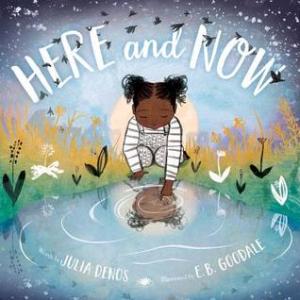 “A well-known teacher was asked to describe the modern world. He answered: Lost in thought.” I’m currently taking a 30-day online mindfulness course from Jack Kornfield and Tara Brach—a series of short guided meditations—and this was how the third session began. Lost in thought: a modern epidemic. I’ve thought about this observation multiple times since, always with sadness and identification. How much of my daily life is spent worrying, planning, remembering, regretting, being somewhere other than where I am?
When we’re lost in thought, Kornfield notes, we’re missing out on what’s in front of us, perhaps on the very parts of life we cherish most. He quotes from the great poet Khalil Gibran: “…and forget not that the earth delights to feel your bare feet and the winds long to play with your hair.”
This is my third attempt in the last eighteen months at developing a regular mindfulness practice. I’ve never lasted more than ten consecutive days. This month has been a mixed bag, too. October has thrown me a number of curve balls, and the pull to become lost in thought—mourning, stewing, deliberating—often eschews the discipline of sitting for a guided meditation.
I want to be better at this. To be more present in my senses, to more fully embrace the adventure of life. To feel the warm sun on the back of my neck, the hard earth beneath my feet. To smell the crispness in the air. To notice my daughter singing in the bathroom.
I want to be better at this for my kids. The ones watching me model being lost in thought as if my life depends on it. When my son experiences an emotion, I wish for him to notice how it manifests in his body, instead of ruminating on it or wishing it away. When my daughter walks home from her violin lesson, I wish for her to notice the shifting beauty around her, even while she plans which games she’s going to play with her waiting friend.
Author Julia Denos has teamed up with illustrator E.B. Goodale to produce another beautiful picture book (I regret not making time on this blog for their first, Windows) which is itself a kind of guided meditation for kids. Here and Now (Ages 4-8) gently and effectively brings children’s attention to the present moment. It grounds the reader in her own bodily sensations, while also connecting her to the wider world. It prompts parent and child alike to think about what might happen if we turn towards, instead of away from, the present moment, with all its beauty and mystery and wonder.
When is a Stone a Story?
September 12, 2019 § 5 Comments
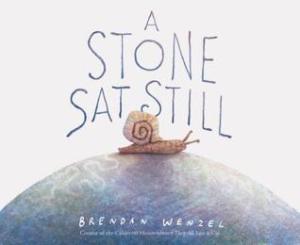 If we want our children to entertain different perspectives when they get to middle or high school—to become critical thinkers and contributors—then they should have opportunities from an early age to consider that there is more than one way to see the world.
Picture book author-illustrator Brendan Wenzel is making something of a name for himself when it comes to creating books for young children about perspective and perception (his groundbreaking debut, They All Saw a Cat, received a Caldecott honor). His newest, A Stone Sat Still (Ages 4-7), similarly rendered with richly textured, mixed-media art and spare, poetic language, stole my heart from the moment I opened it (do yourself a favor and remove the jacket cover, because WOW). Even my children, well outside the target age, were captivated. This is visual storytelling at its best, where every page asks the reader to engage: to wonder, question, and understand. « Read the rest of this entry »
What’s Left When Summer Ends
August 29, 2019 § 9 Comments
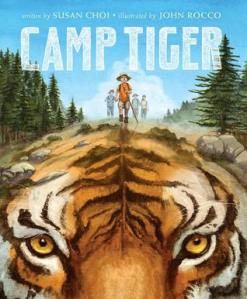 At no time more than summer do our children grow up. Camps, camping, gloriously long stretches of daylight, ample opportunities at exploration and courage and boredom…all of this combines to ensure that the children we send back to school in the fall are not quite the ones we ushered in summer with.
I was ill prepared for the onslaught of emotions I would feel upon picking up my oldest from his first sleepaway camp experience in Maine. As we slowed along the gravel road though the camp entrance, my excitement of the past 24 hours turned to butterflies. How would he seem? Would he look different? Would he have made friends? Would he burst into angry tears and declare he was never coming back?
We didn’t have to wait long: he was standing alone not far from the entrance. I waved frantically, shouting at my husband to stop the car so I could jump out. JP smiled broadly as I threw my arms around him, but something was immediately apparent. He was quiet. More upright than I’d remembered. More reserved than I’d expected. « Read the rest of this entry »
Finding Hope on the Ocean Floor
March 21, 2019 Comments Off on Finding Hope on the Ocean Floor
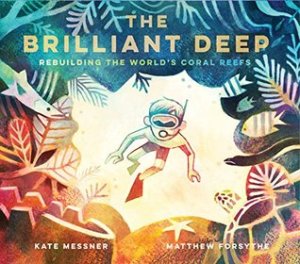 With no tropical destination in my near future, I am making do with reminiscing about our spectacular trip to Belize for last year’s Spring Break. I also find myself thinking about a book which was perfectly timed with our return home. Whether you are heading to or coming home from a trip to the bottom of the sea, I hope you will join me in singing the praises of this illuminating and inspiring book about saving our coral reefs. « Read the rest of this entry »
Gift Guide 2018: To Believe…or Not
December 8, 2018 Comments Off on Gift Guide 2018: To Believe…or Not
 To believe or not to believe. That’s a question many elementary children struggle with—at least, if mine are any indication—especially around this time of year. Which is why Marc Tyler Nobleman’s Fairy Spell: How Two Girls Convinced the World That Fairies Are Real (Ages 7-10), charmingly illustrated by Eliza Wheeler, is astutely targeted toward these ages. My eight year old, having mostly outgrown her belief in, if not her affection for, fairies, hung on every word of this book the first time we read it together. She has since gone back and re-read it on her own and even asked that I purchase a copy for her classroom. It’s a book which tests your belief in magic on nearly every page. Just when you decide nope, I know this can’t be true, it introduces doubt all over again. « Read the rest of this entry »
Gift Guide 2018: Behold the Magnificent Elephant
November 30, 2018 § 2 Comments
 Ever since I hailed the stunning achievement of British author-illustrator Jenni Desmond’s The Polar Bear in my 2016 Gift Guide, I have eagerly anticipated the third installment in her narrative non-fiction series starring endangered animals. It has been well worth the two-year wait, because The Elephant (Ages 6-9), a tribute to the world’s largest living land mammal, is magnificent. « Read the rest of this entry »
Gift Guide 2018: Give a Year of Poetry
November 29, 2018 § 2 Comments
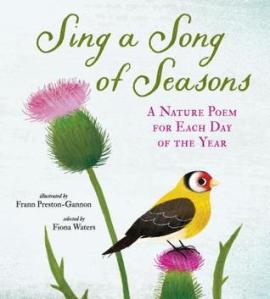 Raise your hand if you’re still reading poetry to your kids over breakfast. (Don’t know what I’m talking about? Read this.) We had a good run of it, but like most of my inspired parenting ideas, I eventually forgot about it. Turns out, I have just the book to resurrect this ritual. (Goodness knows we could use a return to Zen in our mornings.)
Sing a Song of Seasons: A Nature Poem for Each Day of the Year (Ages 6-12) is a gorgeous and hefty anthology, perfectly designed for Poetry Breakfasts (or the daily mindfulness of your choice). Each of the 365 poems has been astutely selected by Fiona Waters for a different day of the year, then evocatively illustrated in watery brush strokes and mixed media by Frann Preston-Gannon. « Read the rest of this entry »
The Book to Soothe the Storm
September 13, 2018 § 6 Comments
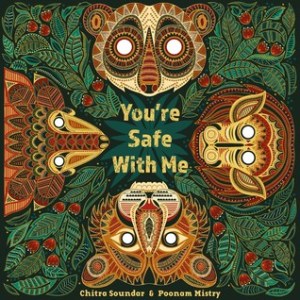 My eldest is a walking barometer: his mood reflects the very movement of the clouds, the atmospheric pressure, the veil of precipitation. Such a fine membrane seems to exist between the surface of his skin and the world beyond, that it’s often difficult to tell where he ends and the weather begins. A grey day brings with it fatigue at best and dejection at worst. The threat of storm clouds yields a heightened, agitated alertness. A clear blue sky produces bottomless joy, coupled with a wide-eyed innocence like he is seeing the world for the first time. « Read the rest of this entry »
Summertime Magic
June 28, 2018 Comments Off on Summertime Magic
 On our first full day of summer break, I was stopped at a red light when I heard what could only be described as vigorous huffing and puffing from the backseat. My son headed off my own curiosity, turning to his sister in the seat next to him. “What in the WORLD, Emily?”
“I am blowing the red light,” she replied matter-of-factly, between huffs. “To get it to turn green.”
Her brother, never one to pass up an opportunity for correction, pounced on this. “That is NOT what it means to ‘blow a red light,’” JP said. “It means to drive through the light when it’s red.”
There were exactly two beats of silence, as my seven-year-old daughter presumably took in this information. Finally, she spoke, her voice quiet but firm.
“I choose to live in a world with magic, JP.” « Read the rest of this entry »
What STEM Looked Like 100 Years Ago
April 12, 2018 Comments Off on What STEM Looked Like 100 Years Ago
 While my children were on a school camping trip earlier this week, I ducked up to New York City to visit my mom. On Tuesday, we went to the “Public Parks, Private Gardens” exhibit at The Met, a stunning collection of mostly Impressionist works featuring French flora, from the bountiful irises of Monet’s Giverny to the lush riverbanks of Renoir’s Seine. Against many of the backdrops were sitting figures, largely women, wearing floor-length muslin with empire waists and elaborate straw hats secured with ribbons. “We’ve lost so much of the beauty and elegance that was part of everyday life back then,” my mom mused aloud, understandably seduced by the romanticism infused in the soft lines, the twinkling light, the sheer profusion of color. « Read the rest of this entry »
Into the Woods
January 12, 2018 § 2 Comments
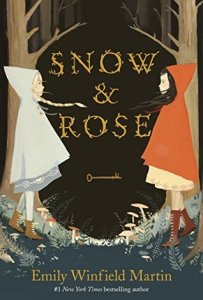 After the holiday dishes were done, after the last of our guests flew home, our family did what we do best on winter breaks: we hunkered down and read.
In a somewhat bittersweet turn of events, JP was less interested in listening to me read than he was in reading his own book (Five, Six, Seven, Nate!, the sequel to Tim Federle’s fabulous Better Nate Than Ever, which I can at least take credit for introducing to him last fall, on our trip to New York City to catch his first Broadway musical). Emily, however, was game to join me each day on the couch and insisted we read Emily Winfield Martin’s newly-published and ohhhh-so-lovely Snow and Rose (Ages 8-12, slightly younger if reading aloud).
When the winter doldrums threaten to take over, we fantasize about escape. But who needs a tropical beach vacation when you have the mysterious, enchanted, dangerous woods of our imagination? (Um, still me. But that’s a different post.) « Read the rest of this entry »
A Christmas Love Story
December 11, 2017 § 4 Comments
 I’m pressing pause on my Gift Guide to tell you about something you shouldn’t wait until the 25th to give. There has been a disappointing dry spell in stand-out Christmas picture books in the past few years. Every December, fresh from cutting down our tree, my children squeal with delight when they unpack old favorites tucked around ornament boxes—treasured stories like Mr. Willowby’s Christmas Tree, Little Santa, Fletcher and the Snowflake Christmas, and Shall I Knit You a Hat?. New titles just haven’t brought the same magic.
I’m pleased to report that this year, according to our family, a new classic has been born. Matt Tavares’ Red and Lulu has everything we’re looking for in a Christmas book, beginning with a cover—two bright cardinals soaring through soft snow above the illuminated tree in Rockefeller Center—which is sheer gorgeousness. Is there anything more romantic than New York City in the snow at Christmastime? « Read the rest of this entry »
 What to Read to Your Kids