Valentine’s Day: Self-Love Edition
February 8, 2024 Comments Off on Valentine’s Day: Self-Love Edition

In my opinion, Valentine’s Day greatly improved as a holiday when I started thinking of it as a chance to gift myself and my loves ones a new book (or three). Any great book will do, of course, but I do love something that approaches the idea of love in a clever, non-traditional way. Past favorites have included Viking in Love, All the Beating Hearts, and Brimsby’s Hats. (If you’re following me on Instagram, you’ll be getting a new recommendation every day between now and the 14th). But I think today’s picture book takes the (heart-shaped) cake for Most Unlikely Book to Gift for Valentine’s Day.
Pepper & Me is a story about a scab. You heard me. Well, more accurately, it’s a story about a girl who gets a scab from falling down—and then goes on to name that scab, talk to that scab, and befriend that scab. Is that weird? Yup, it’s super-duper weird. Does it also feel authentic, like could I picture my own children doing something like this when they were younger? Absolutely. (I mean, my son did warm to a restaurant straw wrapper that he kept on his bedside table for months.) Is it all kinds of delightful because the story is written and illustrated by the magnificent Italian storyteller, Beatrice Alemagna, the talent behind one of my forever favorites, On a Magical Do-Nothing Day? You better believe it.
All those points aside, what could Pepper & Me possibly have to do with Valentine’s Day? Well, here’s the thing. Initially, our protagonist is repulsed by this scab on her knee. “Hideous scab,” she calls it. She feels marred by its presence and fearful of its persistence. And yet, as the days go on, she turns her curiosity on the bloody aberration and, in doing so, begins to accept, even embrace, it as part of herself. Ultimately, what makes this story one of love is the way it showcases the girl’s emotional journey from resistance to re-framing. It may be the quirkiest expression of self-love to grace the pages of a picture book, but it’s a marvelous way to introduce the idea of what might happen if we learn to love all our parts, even the ugly ones.
« Read the rest of this entry »Embracing Fall Vibes
September 28, 2023 Comments Off on Embracing Fall Vibes

October is a mere three days away, and I hope you’re welcoming it with a new book…or six. Winter might be the obvious choice for squirreling away with a pile of new reads, but the publishing industry would disagree. September and October are when the biggest bounty of titles release. It’s not just that the winter holidays are right around the corner: the subject of fall itself, both its formidable foliage and its singular spookiness, remains a favorite of authors and illustrators to depict.
You have only to glance at the covers of the two picture books above to remember why fall is such a fan favorite. The colors! The leaves! The mums! The jaunty scarves! The jaunty boots! The scarecrows! Fall is a feast for young and old eyes alike.
In the weeks ahead, I’ll be doing round-ups of spooky-themed picture books and graphic novels. But today is about embracing the season itself, and I’m delighted to share two new favorites. (See past faves here, here, and here.) It’s Fall! (ages 2-6) is arguably the most exuberant, infectious celebration of fall I’ve ever encountered, while Hopefully the Scarecrow (ages 3-6) is a softer, quieter story of a girl’s friendship with a scarecrow, marrying the change in seasons with a love of reading aloud.
« Read the rest of this entry »Back-to-School: Meltdown Edition
September 7, 2023 Comments Off on Back-to-School: Meltdown Edition

After sleeping on different beds, bunks, or floors for most of August, one of my kids was desperate to get back on a routine (barely holding it together, if we’re being honest) and the other would have gladly accepted an invitation to extend her Bohemian lifestyle. Still, regardless of age or temperament, one thing’s for sure: neither will be exempt from the back-to-school meltdowns. I’m talking complaints about the lunch they packed themselves (are we really still talking about mushy grapes?), falling to the floor when they’re reminded (again) to set the table, and accusations that nothing I say or do is right, especially if it relates to getting a good night’s sleep or finding a quiet space to do homework or daring to suggest they reconsider their jeans and hoodie since it’s 98 degrees. As I’m typing this, one is raging about the absence of graph paper and can I order it RIGHT NOW.
You might remember that in our house, thanks to Jory John and Lane Smith, we refer to these gripes as Penguin Problems.
The magical solution to back-to-school meltdowns? There is none, of course. We can delude ourselves that the perfect snack or perfectly-timed bath will stave off implosion, but we’re not fooling our kids. Short of a complete ban on speaking or making eye contact, about the only thing that approximates a balm for a back-to-school meltdown is to pull out a book…or two. Our children want us, but they do not want our questions about their day. Our children’s bodies are depleted, but they do not want suggestions for how to refuel. But nestling into our side (yes, even in 98 degrees) and listening to our voice, knowing they’re getting our full selves in that moment without any demands on them? That they can do. That’s the reset.
Usually. Sometimes.
And if those books can simultaneously validate that our children’s world has just been turned upside down, that instead of running around like feral beings they have to sit their bums in a chair and USE AN ACTUAL PENCIL, even better. Which is why, today, I’m showcasing two picture books with fantastic social-emotional content. One directly addresses school drop-off separation, while the other talks about the woes of nothing, not one single thing, going right across a school day. Both of them aren’t quick to offer fixes; rather, their power lies in the way they normalize and empathize, while also reassuring the listener that these feelings will pass.
As a bonus, both books are illustrated by one of my favorites, Hyewon Yum, whose whimsical, warm-toned pencil drawings never fail to bring a smile to my face, even (and especially) as she nails the different stages of a meltdown.
How does that saying go? If you can’t beat ‘em, you might as well laugh at ‘em? (Something like that.)
« Read the rest of this entry »A (Literal) Train of Thought
May 11, 2023 § 2 Comments
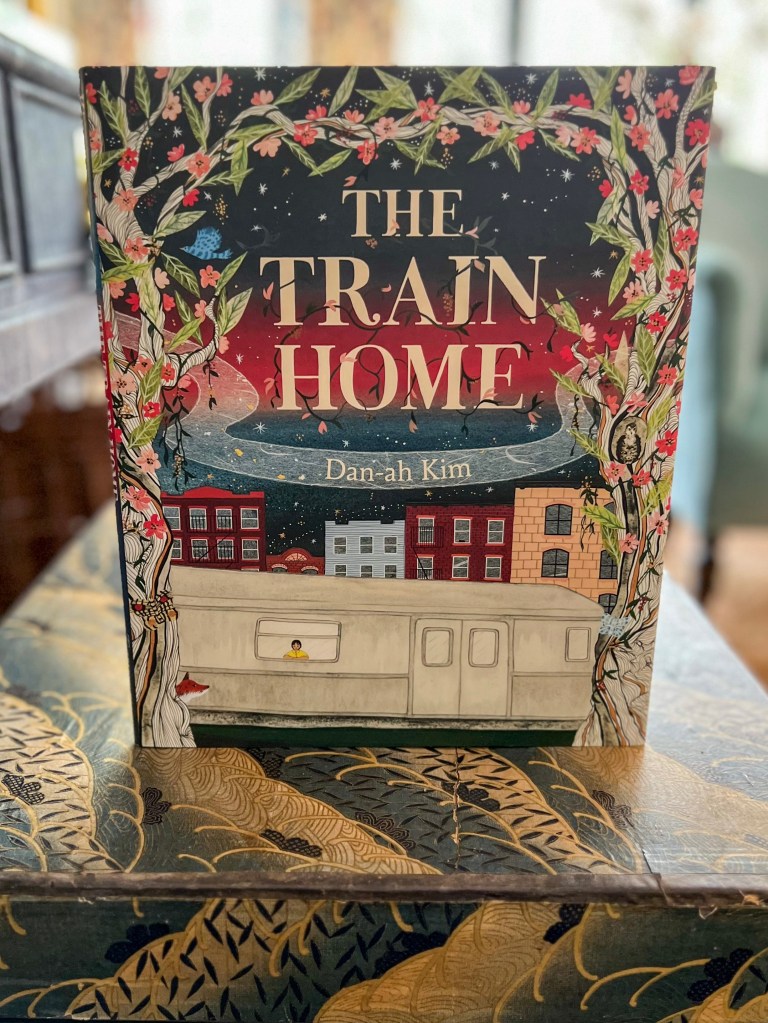
When I was almost ten, our family moved from a large, ramshackle house in the lush green suburbs of Milwaukee, Wisconsin, to the fifteenth floor of an apartment building in Manhattan, and I did not handle it well. My parents adored New York City—they had lived there before having kids and couldn’t wait to return—but all I saw was no backyard, a shared bedroom with my younger sister, and more people and noise in a single day than I’d known in the decade I’d been alive. In a memory that still makes me cringe—though I was a deeply feeling child I prided myself on my poise—I pitched a fit in front of our realtor, yelling to my parents about how dirty and smelly and noisy the city’s streets were, while we rode an elevator to another prospective apartment, from which the sounds of car horns and ambulance sirens and buses pulling away from the curb would only be slightly dampened.
Kids generally underestimate their ability to adapt, and I quickly grew to love the city. But I never entirely shed the feeling that I was an outdoor kid living in an indoor city, and I sought out changes of scenery whenever I could. Sometimes, the escape was literal, like the summers I spent at sleepaway camp in Vermont. Mostly, I escaped through books—or through my imagination, spurred on by the stories I read. A handful of tap water before bed was the icy, life-saving stream water from My Side of the Mountain. The six-block concrete walk to school was an enchanted yellow-brick road, visible only when I looked down at my quickly advancing feet. I was a dreamy child, something I’ve never been sorry about passing along to my daughter, even when her liberal interpretations of reality have been known to try my patience.
With it being Asian American Pacific Islander Heritage Month, the timing seems perfect to share one of the most beautiful picture books of the year, as it is both written and illustrated by Dan-ah Kim, born in Seoul, South Korea and now living in Brooklyn, New York. I dare you not to gasp aloud as you page through these glorious spreads. But I don’t only adore the book for its artwork. Its story speaks directly to that child I once was, the one who never kicked and screamed in an elevator again but definitely felt like it, even as she found love and belonging and wonder in city life. That the book is inspired by real subway stops in New York City doesn’t hurt, either, though its message of creativity and imagination is undoubtedly universal.
The Train Home (ages 4-8) is an inventive story about a girl who conjures up a train for a magical journey away from the noisy reality of her city apartment. Along the way, amidst the alluring, refreshing, fantastical scenery of her imagination, she surprises herself by yearning for the home she has left behind. Ultimately, like the dichotomy that exists in the art—some spreads fancifully populated, others pared way back—the story is a reassuring validation that the desire to escape and the desire to return home are never mutually exclusive. Rather, they exist in a tug-of-war dance alongside our own journeys of growing up.
« Read the rest of this entry »The Seed That Keeps On Giving
February 23, 2023 Comments Off on The Seed That Keeps On Giving
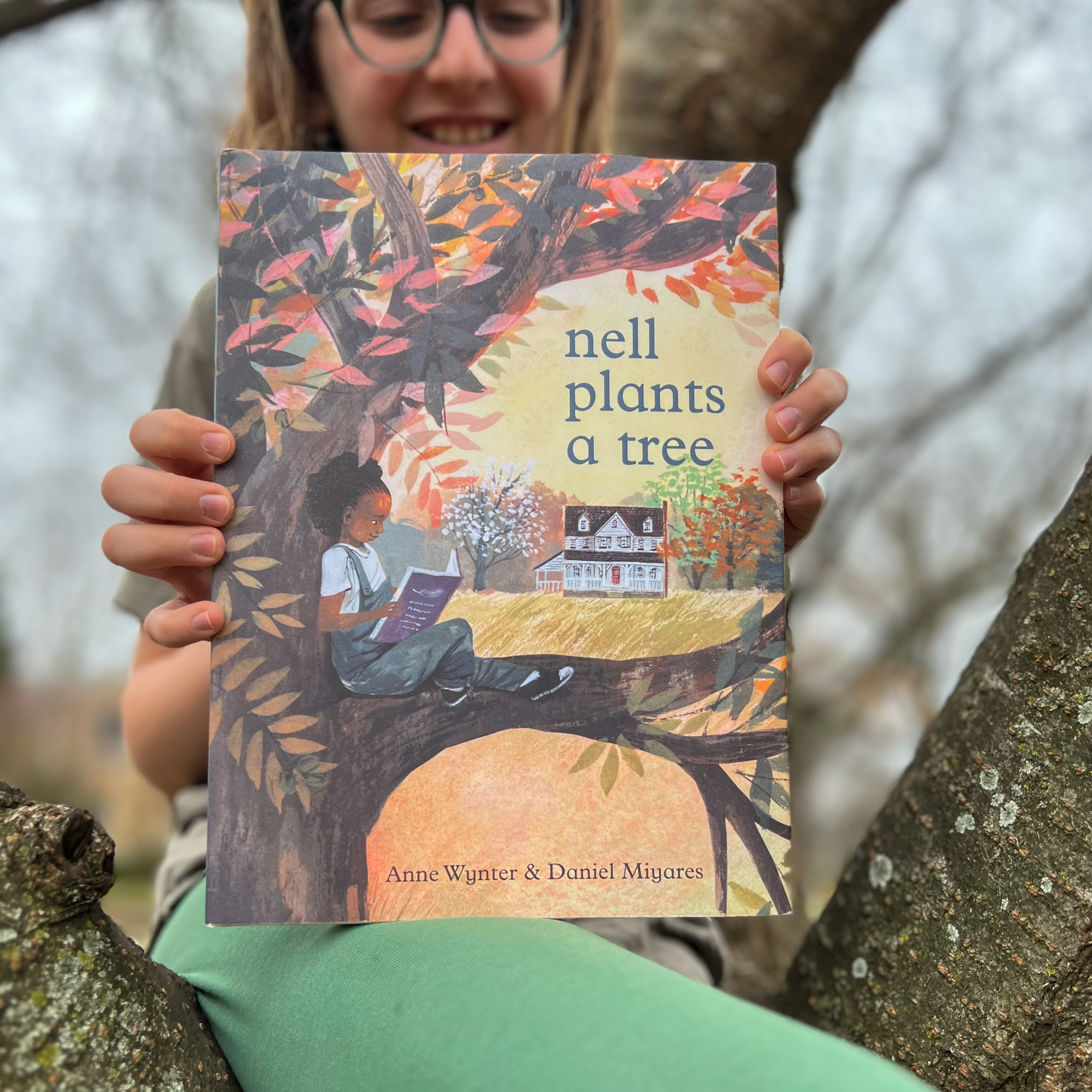
We may have just wrapped up Awards season (if you need a recap on the 2023 Caldecott & Newbery winners, check out my Instagram reel), but it’s never too early to speculate on next year’s winners. If we’re placing bets, my money is on one new picture book in particular, a story so lyrically crafted and gorgeously illustrated that I think it could be a contender for both a Newbery (words) and a Caldecott (illustration). Only time will tell, but the good news is you don’t have to wait until next January’s announcements to begin reaping the rewards of this one. Its depiction of Black Joy makes it perfect for Black History Month. Its emphasis on planting makes it perfect for spring. Its poetic text would be a terrific asset to National Poetry Month. But its child-centric joy will ensure little ones request it all year long—is there a child who hasn’t heeded the call to climb a tree?—and it’s one you’ll never tire of reading for its simple but profound beauty.
If we’re talking awards, it’s also a perfect book. Nary a superfluous word. Nary a picture that doesn’t expand on those words.
And, yes, if you’ve been hanging around for some time, you know I CANNOT RESIST A TREE STORY. (Past examples here, here, here…) My children might disagree, but I don’t think it’s solely a symptom of middle age that I notice trees (and birds, flowers, and strange beetles) more than ever. I think it’s also owing to the wealth of contemporary picture books on the subject! I’m quite certain we didn’t have the literature about the natural world that kids do today. And while we were content with Frog and Toad and magical wardrobes, I can’t help but think we were missing out on stories intended to invite reflection about the very life outside our window. Maybe that’s why, as a parent, I’m especially attracted to sharing these stories with my kids. I have as much to gain as they do.
Nell Plants a Tree (ages 4-8), written by Anne Wynter and illustrated by Daniel Miyares, is a fresh twist on the trees-are-great trope. Inspired by Wynter’s Texas childhood and Miyares’ weekly visits to his grandmother in rural South Carolina, the book explores the plentiful gifts a tree bestows on the generations lucky enough to grow up in its shade—particularly the children, who climb it, read beneath it, and play games around it. It’s a look at how the simple, child-friendly act of planting a tree can impact the world for years to come. It’s a book that invites marveling at the trees in our own backyards and parks, as much as it reminds us that the natural world is ever-changing, that the marks we leave on it today can shape our loved ones tomorrow.
« Read the rest of this entry »Advocating for the Under-Fish
January 12, 2023 § 1 Comment
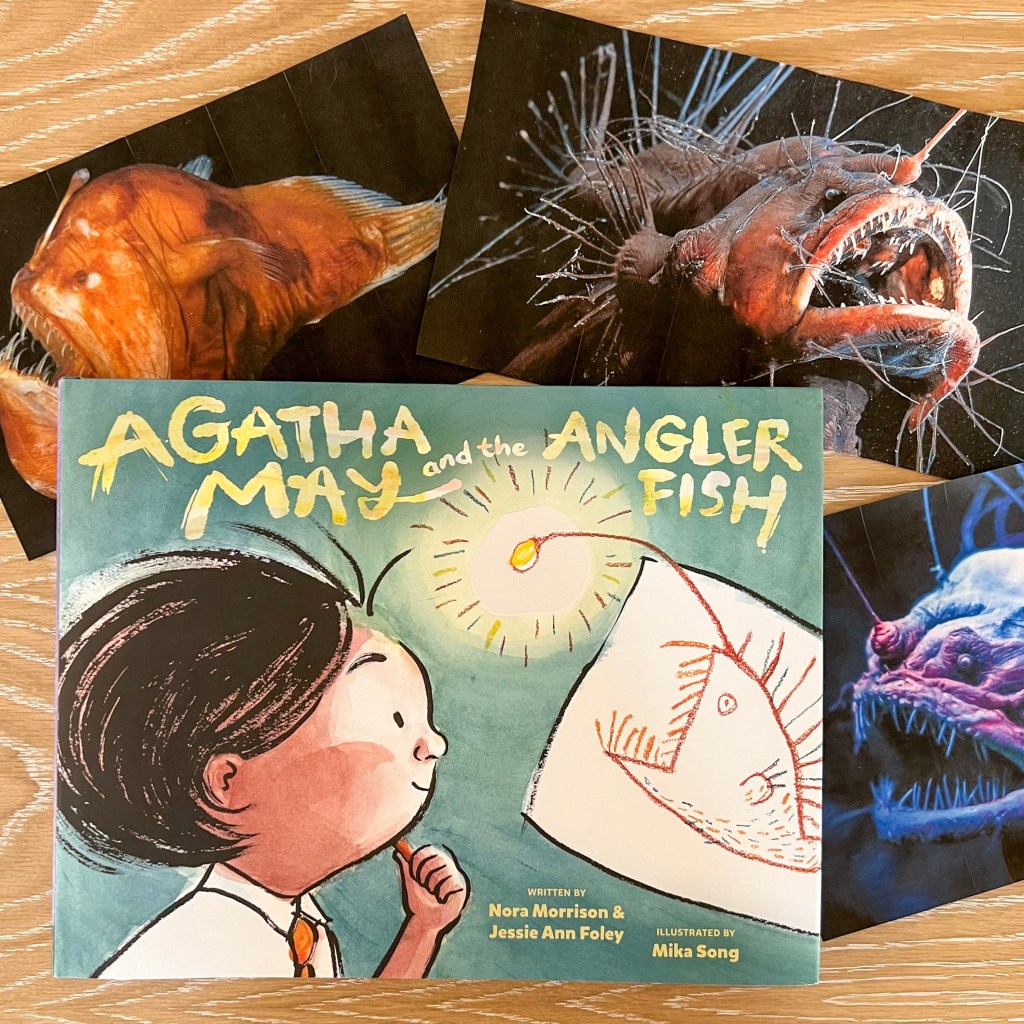
Today, I’m highlighting another 2022 picture book that, had it released earlier, would have made my Gift Guide, because it’s that good. It also boasts one of the most genuine classroom settings I’ve seen in awhile, a story that not only speaks to a love of learning and the benefits of independent research projects, but honors the creative minds that go against the grain, that don’t conform to the traditional norms that the school day demands.
In other words, if you love Andrea Beaty’s “Questioneers” series—and who doesn’t, with favorites like Iggy Peck Architect and Aaron Slater Illustrator—then Agatha May and the Anglerfish (ages 4-8), co-written by Jessie Ann Foley and Nora Morrison, and illustrated by Mika Song, will be a sure-fire hit. Did I mention the story rhymes, too? And that it’s packed with fascinating factoids woven seamlessly into said rhyme?
If you’ve been hanging around here for awhile, you’ll know that I have a soft spot for books with neurodiverse characters. There was a time when I sent a child off to school and steeled myself for the emails to follow: He had a hard day. He wouldn’t participate. He threw his paper across the room. He threw his paper at a classmate. He refused to help during cleanup. My child wasn’t exactly like Agatha May, whose cubby is a mess and whose hands are perennially stained with charcoal, who chews gum when she’s not supposed to and delights in her smelly lunches. But he was judged the same way Agatha May is, with eye rolls from kids and frustrated tones from teachers. Agatha May isn’t given any labels in the book, but it’s fair to say that her brain works a little differently than those of her classmates.
But what an amazing brain it is! Agatha May is a dreamer, yes, but she’s also passionate about her interests—especially those that, like her, aren’t conventional. She’s focused and attentive when allowed to pursue these interests, leaving no stone unturned. Her vocabulary is astounding. She might seem like a loner, but she yearns for connection and lights up when praised.
Curious. Determined. Hardworking. Resourceful. Proud. What we discover over the course of this story is that Agatha May, the girl without any of the “merit points” distributed by her teacher and coveted by her classmates, actually embodies everything we want our children to be. She just doesn’t look the part.
« Read the rest of this entry »New Year, Not-so-New Resolution
January 5, 2023 Comments Off on New Year, Not-so-New Resolution
Happy New Year! I hope your winter break brought you ample time for family and friends, long walks and good food, and quiet moments to read. If you gifted any of my recommendations, I’d love to hear how they went over!
I’m not always one for New Year’s resolutions, but I did something at the beginning of last year, and I liked it so much that I’ve decided to do it again. The idea came out of Ann Patchett’s These Precious Days, which I devoured a few days before 2022 kicked off. These personal essays not only filled up every ounce of my being, but they once again affirmed Patchett as my favorite living writer (and the platonic soulmate who doesn’t know I exist, though that’s a topic for another time). In one of these essays, “My Year of No Shopping,” she talks about how she gave up shopping for the entirety of 2017. Tired of buying things she didn’t really need for a quick endorphin fix, only to begrudge them when they piled up by the door and demanded unpacking, she decided to go cold turkey for an entire year. “The trick of no-shopping wasn’t just to stop buying things. The trick was to stop shopping.” The idea was to free herself, not only of the mental space that shopping, or contemplating acquisitions, took up, but of the way shopping obscured the simple truth that “what I needed was less than what I had.”
The things we buy and buy and buy are like a thick coat of Vaseline smeared on glass: we can see some shapes out there, light and dark, but in our constant craving for what we may still want, we miss too many of life’s details.
I figured if I already looked to Ann Patchett to tell me what I should be reading, it couldn’t hurt to let her run the other parts of my life, too. She made not shopping sound so nice that I decided to try it. For nearly five months into 2022—OK, I did not last the full year, but five months still felt terribly impressive—I followed her same rules. She could buy food and flowers; she could buy toiletries, but only when she’d used up every bottle or tube she’d tucked away; and she could buy books. (That last one was critical: I wanted to spend less money, I didn’t want to go INSANE.) But no clothes or shoes. No home goods. No gadgets. No trinkets. No stuff.
I have never been a huge shopper, but I do have a tendency to linger on the J.Crew website long after I should be in bed with my book. I’ve been known to click through links on social media, only to end up with stuff that doesn’t look half as good in real life as it did on an influencer’s feed. How many times have I fantasized about how much prettier/organized/productive I’d be with [fill in the blank]? May I plead the fifth on that?
Everything Ann promised came true. I started paying closer attention to what I already had. I stopped getting distracted by promotional emails (actually, I unsubscribed to them). I stopped craving the rush that comes from newness, from the promise of re-invention. I didn’t have to worry about buyer’s remorse creeping in to taint my enjoyment. I felt more in control, more at peace. I felt happier.
I almost caved when I had to attend a bar mitzvah. It was my first time seriously dressing up since the pandemic, and my clothes, shoes, and make-up all seemed wanting. I was seconds away from clicking the checkout button on a gorgeous dress I was sure would make my re-entry into society easier, when I walked back into my closet, took a deep breath, and thought, I can do this. I can wear something old, something that doesn’t fit quite how it used to, and it will be OK. I did, and it was better than OK.
I started to fill the holes in my life with less want and more gratitude. It’s an immense privilege to be in a place to contemplate a reduction in shopping as an experiment of self-care, as opposed to an urgent financial necessity. That only underscored the importance of more actively considering my blessings, what really brings me joy, what I actually need to live fully.
The benefits carried over even when I started shopping again. If I thought about buying something, I sat with the decision for a bit. How would I feel when that thing showed up on my doorstep? Would I begrudge all the packing material, the fuel it consumed to get to me, the hit to my wallet? Or would it feel like something to be cherished, something of lasting impact?
And then fall arrived. There’s nothing like the holiday season to convince you that opening your wallet will guarantee merriment. I found myself heeding the call of sales (those pesky emails found their way back in), and every time I set out to buy something for someone, I somehow came home with something for myself as well.
So, when the dust settled on this year’s Christmas wrappings, I thought about the peace I’d felt in the early part of 2022 and decided to try for that again. No shopping (except books!) for at least the first part of the year.
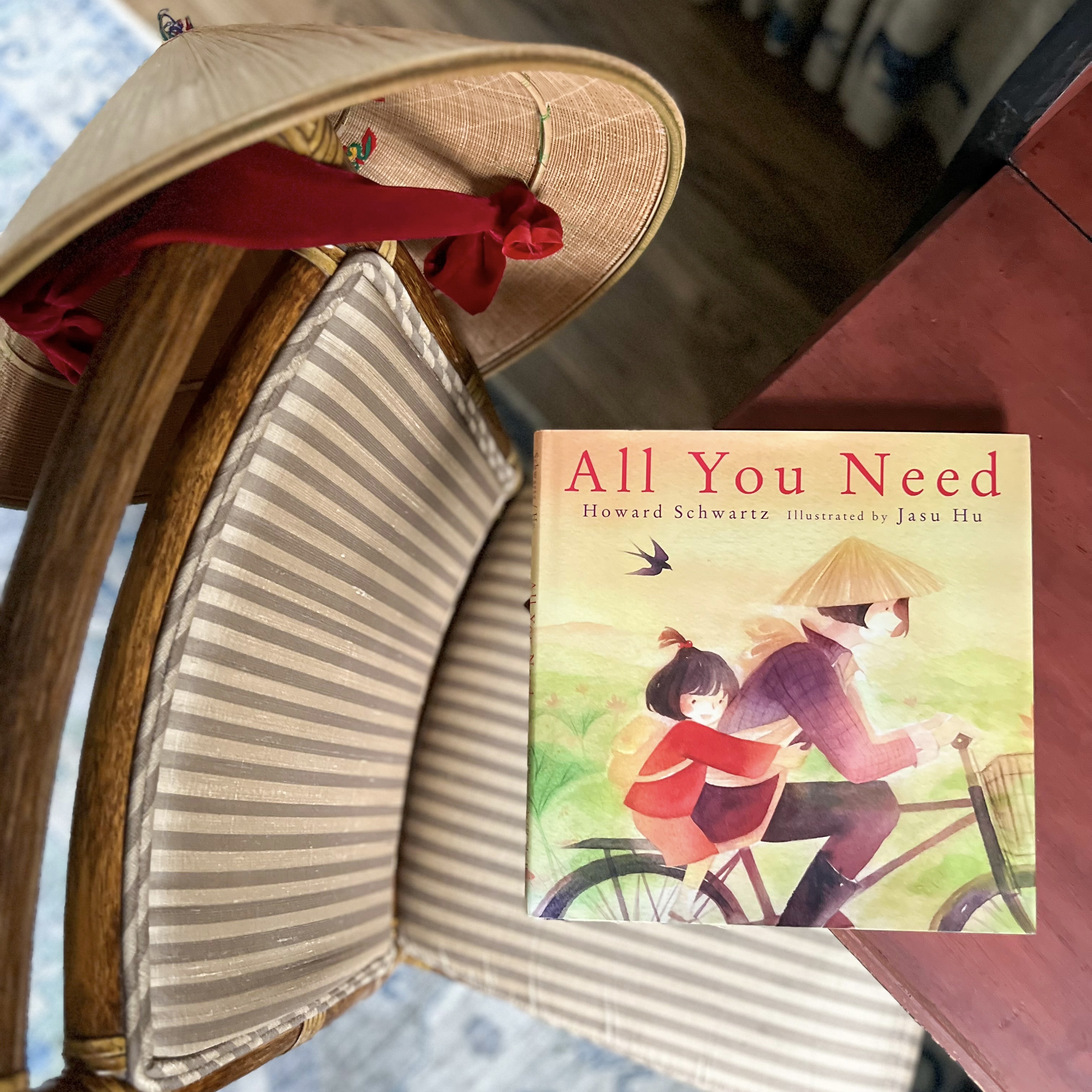
I also thought about Howard Schwartz’s 2022 picture book, All You Need (ages 4-8), a poetic tribute to life’s essentials—and a gorgeous one at that. Illustrated in watercolor by Jasu Hu, who drew inspiration from the countryside of Hunan, China, where she spent her childhood, the artwork is as light and ethereal as the subtle anti-consumerism message of the text. What do we really need for a rich, fulfilling life? It’s an answer that might be as important for us to hear as it is for our kids.
« Read the rest of this entry »2022 Gift Guide: The Picture Books
November 10, 2022 Comments Off on 2022 Gift Guide: The Picture Books
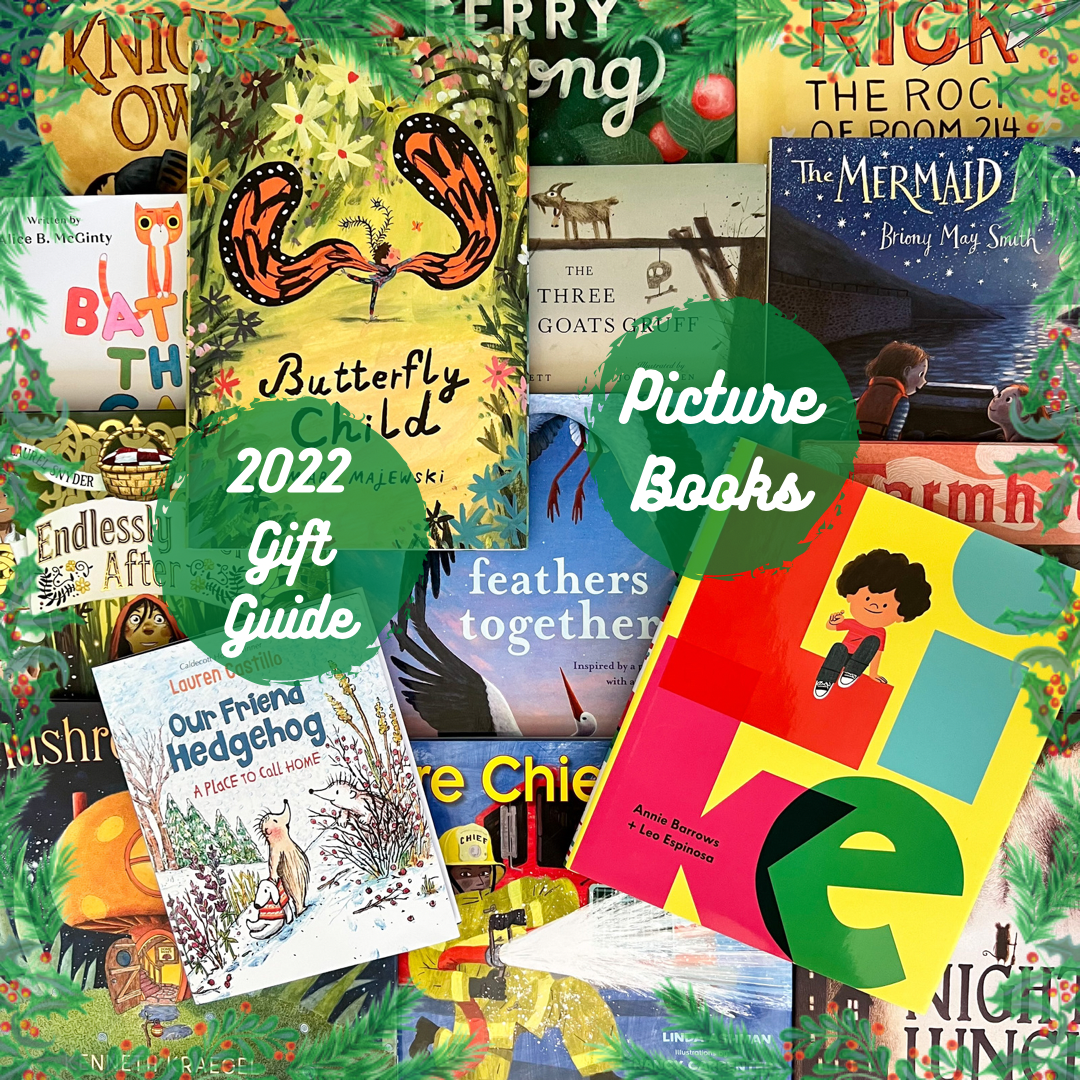
With so many spectacular stories, every year it gets harder to narrow down a list of picture books for my Gift Guide. I’ve weighted this year’s list towards fall releases, hoping to ensure that the titles will be new to you or your gift recipient. But I also made exceptions. There were a few books published in the first half of the year that stand the test of time, and I couldn’t imagine a 2022 favorites list without them (Bathe the Cat, Knight Owl, and Endlessly Ever After).
I’ve also concentrated on books that feel inherently gifty. These are books you could gift to almost any child, regardless of how well you know them, and be confident that they’d be charmed and you’d be heroic. If I was strictly making a “best of” list, I would have added titles like Blue: A History of the Color as Deep as the Sea and as Wide as the Sky.
If space and time permitted, I’d remind you of all the books I’ve already blogged about this year (because I only blog about books I love). As well as others I’ve highlighted on Instagram, like Mina, Does a Bulldozer Have a Butt?, Izzy and the Cloud, and Poopsie Gets Lost.
Finally, before we get started, I’ll remind you that I kicked off the Gift Guide a few weeks ago with My Favorite Picture Book of the Year: Mac Barnett and Jon Klassen’s fresh telling of The Three Billy Goats Gruff. I won’t repeat myself here, but don’t forget that if you really want to wow your audience, that’s the ticket.
But, of course, these others are incredibly special, too. Presented here from youngest to oldest. (As always, links support the lovely indie where I work as the kids’ buyer. We ship!)
« Read the rest of this entry »Beach Combing
July 14, 2022 Comments Off on Beach Combing
We recently returned from a glorious beach week, so it seemed only fitting that I should tell you about my favorite beach-themed picture book of the year. (Psst: don’t forget this fave from 2020.) But first, allow me a minute to wax nostalgic about the art of beach combing. This particular trip was to the ocean—just outside Duck in North Carolina—so there were ample shells to source, especially in the early morning if you beat the crowds. But judging by the quality control practiced by my daughter—or, shall we say, complete lack thereof—it would appear I have failed to impart this skill. “Please save these for me,” I heard over and over, followed by a dumping of shell shards and nondescript pebbles into my hand.
Flash back to my own summers, spent on the shores of Lake Erie at my grandparents’ summer home. There were no shells to be found. Not much in the way of interesting rocks, either. What we did have was seaglass, and my cousins and I fancied ourselves connoisseurs when it came to these specimen of the sea. Any eye could spot a colorful piece of glass among the gray pebbles, but only the most discerning would ensure it was perfectly opaque, its edges worn smooth from years in the water. Anyone could fill their pails with brown glass, even white glass that had once been clear, but a good piece of green was gold, and a piece of blue, especially one bigger than a pencil eraser, was cause for calling out for all to come and see. Each night, we’d comb through our treasure, keeping only the best of the best.
(It’s very important, when beach combing, to examine your treasures once they are dry. The water tends to give even the plainest of finds a gleaning, shimmery mystique. The best treasures are those that sustain their shine all the way to your bedroom shelf, where they can be reborn as art.)
That something as careless as beer bottles thrown over the deck of a ship can transform into jewels that can turn a walk on the beach into something magical never ceases to amaze me. The seaglass of my youth spoke to a mystery I couldn’t see, one I’d never entirely understand. I wondered about the journey of that glass, perhaps as my own children wondered about the bits of shells they recently picked up, certainly as the young protagonist of today’s book tells us she wonders about the creatures who once lived in the shells now washing up on the shore of her grandparents’ house.
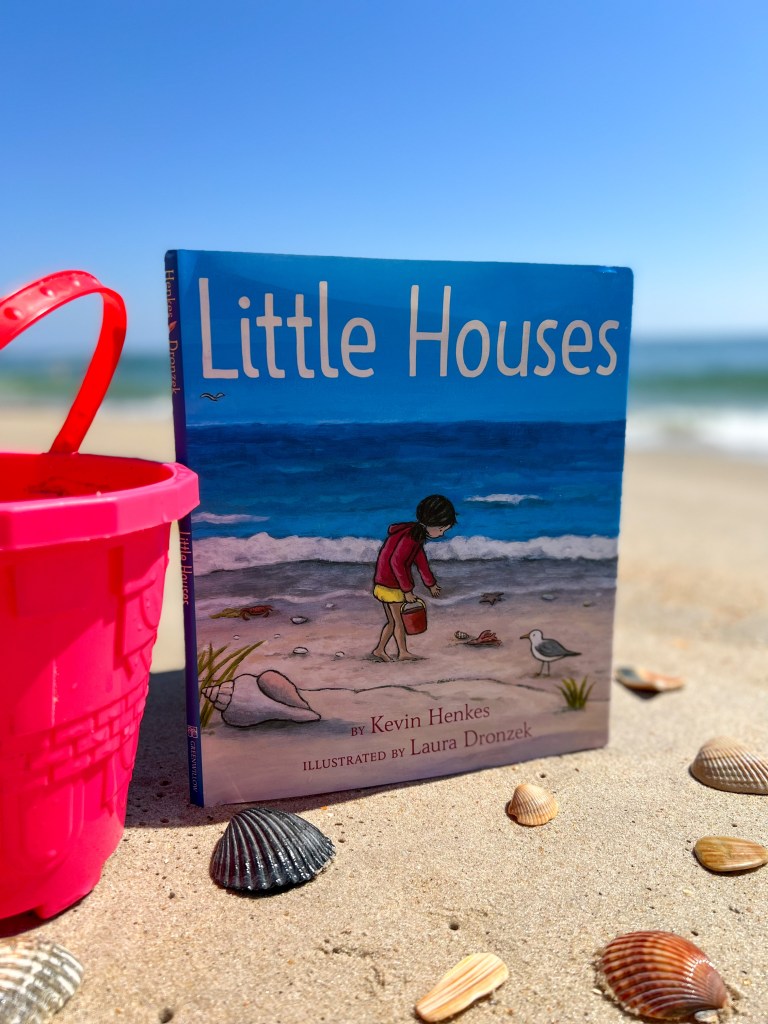
Author Kevin Henkes and illustrator Laura Dronzek are no strangers to collaborations when it comes to picture books about the natural world, but Little Houses (Ages 3-6) might be their finest yet, deftly balancing information with poetry, truth with imagination. We follow as a girl examines her beach finds and wonders about the things she doesn’t know. That she has these experiences during a summer spent with grandparents only sweetens the package, recalling the way my own grandmother would swoop in and out of our beach walks, sometimes pausing to procure her own treasure, often marveling at ours, always happy for the chance to muse about the mysteries of the sea.
« Read the rest of this entry »Summer Reading Guide: For the New Readers
June 23, 2022 Comments Off on Summer Reading Guide: For the New Readers
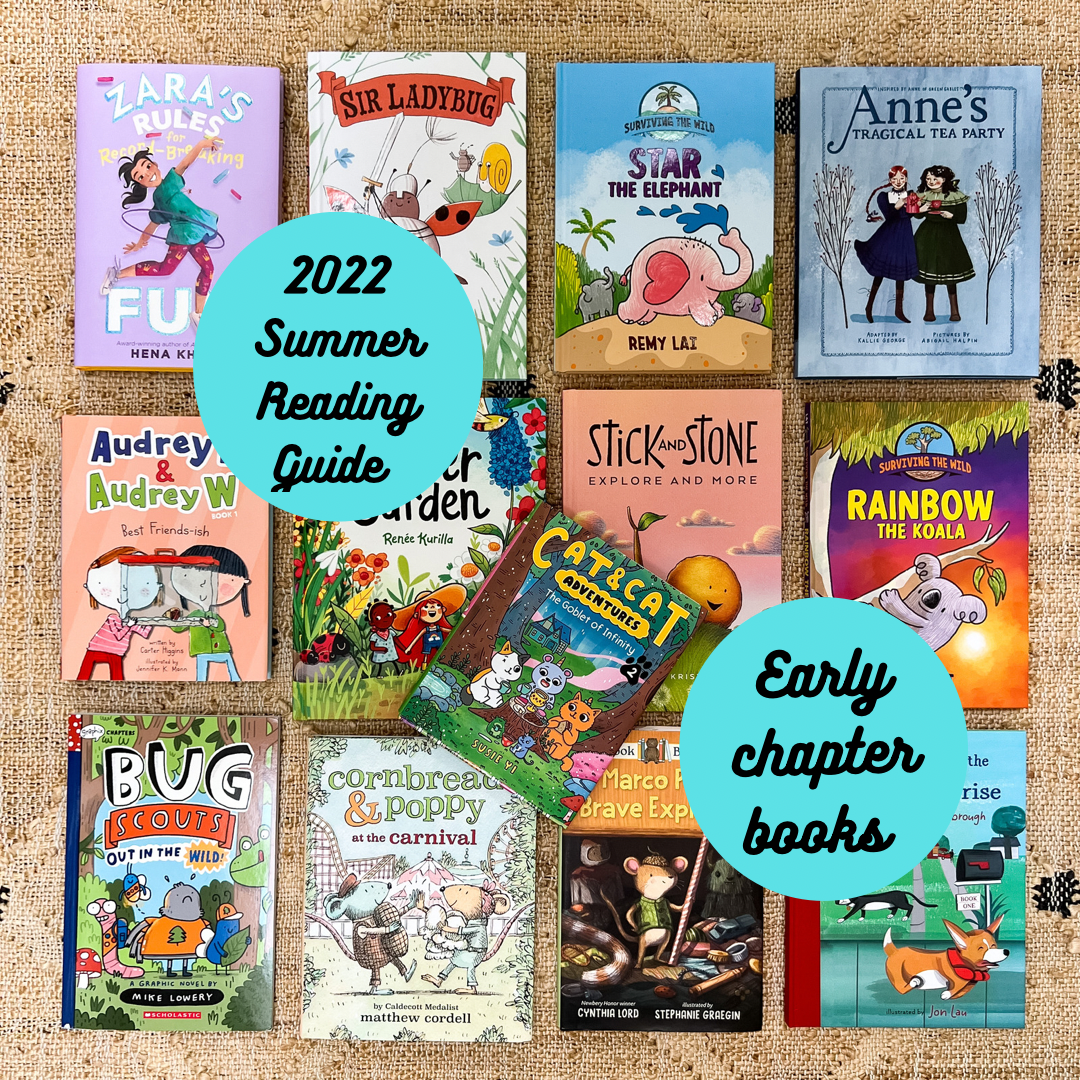
Whooooboy. I’ve said it before, and I’ll say it again: today’s early readers have it GOOD! The wealth of talent being channeled into creating early graphic novels and early chapter books has never been greater than it is right now, and our lucky kiddos get to reap the benefits. Learning to read is all about generating momentum—from there, confidence swells—so it’s vital to have a bottomless array of choices.
Today, I’ve got a comprehensive round up of 2022 releases for newly independent readers at a variety of reading levels. Some of the storylines are sweet, others funny. Some are educational, all are entertaining, and every one is part of a series, which means more to come! (If you need more while you’re waiting, check out previous round ups here and here, many of which have sequels out.)
Of course, many of these make engaging read alouds as well. Just remember at these ages to keep reading those picture books too, for their rich vocabulary, nuanced storytelling, and gorgeous art. It shouldn’t be one or the other. Elementary kids need both to thrive in developing literacy skills and a lifetime love of reading!
The books in this post are arranged according to length and number of words per page. I’ve indicated whether each title is a graphic novel or a traditional chapter book, and I’ve included one interior shot per book to give you an idea of what the layout looks like. (And because they’re so dang cute!)
« Read the rest of this entry »In Defense of Sad Books
May 26, 2022 § 6 Comments
(PSST…before we begin, summer reading is coming! If you’re in the Alexandria area, I’d love to see you at Old Town Books on Thursday, June 2, at 7:00pm, where I’ll be presenting my Summer Reading Guide for ages 6-16, with lots of personal shopping to follow! Tickets can be purchased here.)
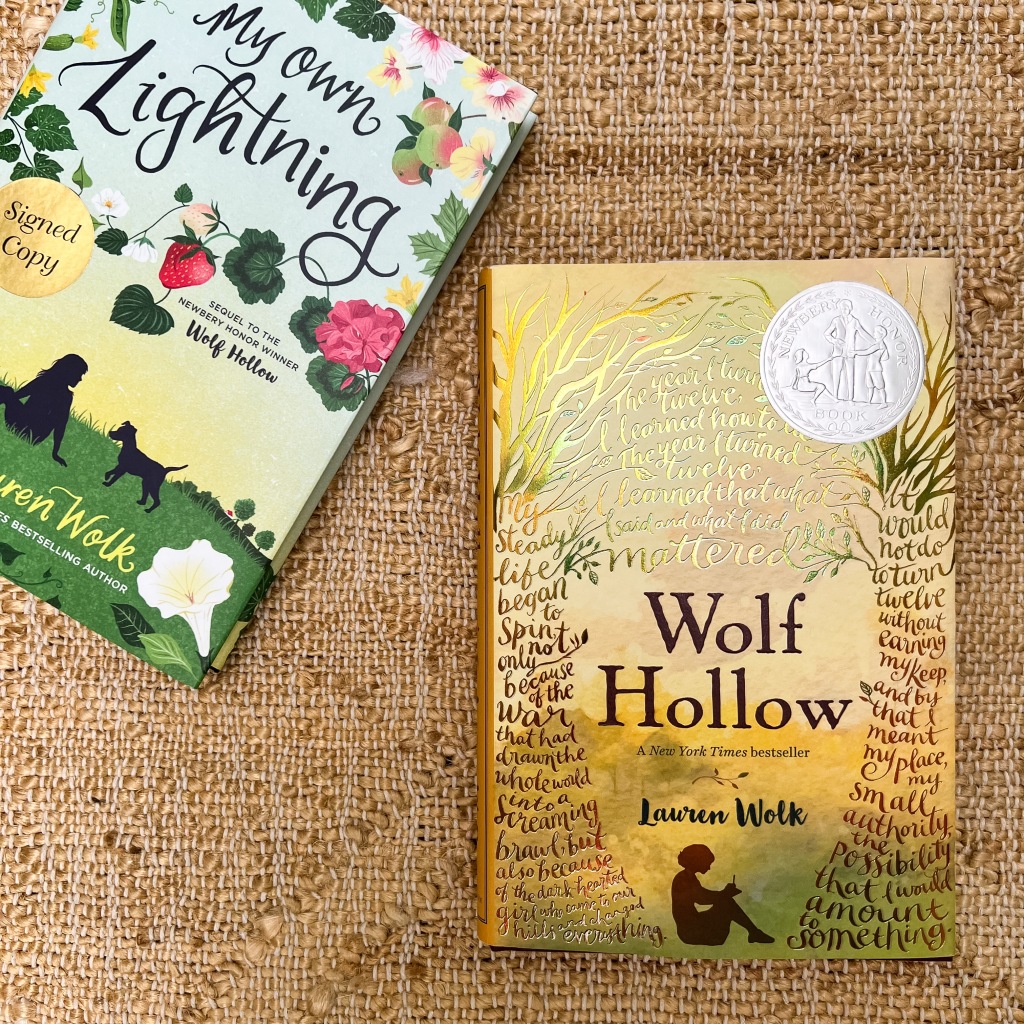
It has been six years since Lauren Wolk penned her Newbery Honor-winning novel, Wolf Hollow (Ages 10-14), one of the single greatest works of literature I have ever read. (Yes, I’m counting adult books.) It’s a book whose comparisons to other great American novels, most commonly To Kill a Mockingbird, are entirely warranted.
Still, over those six years, I’ve grown weary of recommending the book. When I’ve tried to bring it into schools for book clubs, I’ve been told, “It’s a magnificent book, but I’m worried it will upset kids.” When parents ask me to describe the plot, their skepticism radiates off them: Why would I share a story like that with my child? Do they really need to experience such sadness? Won’t it frighten them? Erode their innocence?
Neither of my kids was old enough for the book when it came out, so when the sequel released earlier this spring, My Own Lightning, I decided to revisit the original, this time aloud with my eleven year old. And I’ll admit: I had not remembered how sad it is. Reading it the second time around, this time through the lens of a parent with a child the same age as the protagonist, I did periodically wonder, Is this too much? When our kids have the rest of their lives to discover pain, should storytime be exclusively reserved for funny, fantastical, feel-good themes?
I had also not remembered how extraordinary the writing is. How Lauren Wolk is that rare writer as well versed at writing gorgeous stand-alone sentences as casting these sentences into a tight arc that moves breathlessly towards its conclusion. Not one word is wasted in this novel—not one word—which is a rare, rare gift for a parent reading aloud.
I had also not remembered how extraordinary the protagonist is. How even in the midst of terrible cruelty, terrible sadness, terrible truth telling, Annabelle finds within herself strength, resilience, and unwavering hope. Through the goodness of Annabelle’s actions and the support of her parents, brothers, and teacher, the reader is never without light. That light might be subtle, but it’s undeniably present.
I had also not remembered what an historical novel set between two world wars can reveal about our country, about the men who left for war and came back changed in ways that sometimes bred more misunderstanding and judgment from others than compassion. About the way neighbors of German descent were suddenly regarded with suspicion—or worse. About the way generations of families tightened belts, hunkered under one roof, ate off their own garden plots, and held their breath in a climate of intense uncertainty.
Wolf Hollow is about all of this without really being about any of it. Strictly speaking, it’s about one girl in a tiny Pennsylvania town who is on the receiving end of physical threats and violence from a new classmate—and chooses to stay silent about it for one beat too long. This silence inadvertently casts suspicion on a veteran named Toby, a mysterious outlier in the community, whom many regard as dangerous but whom Annabelle has always seen as gentle and kind. Against mounting odds, Annabelle tries to save Toby and clear his name.
And yet. While the tears streamed from my own eyes in the final chapters, my daughter’s eyes remained dry. To say she loved the book is an understatement: we have rarely moved so quickly though a read aloud and onto its sequel, because she could not get enough. (We’re halfway through the sequel, so keep your eyes on Instagram for that update.) She was captivated, riveted, couldn’t look away. But she was not gutted in the way that I was reading it. Neither was she horrified or haunted. “I like books that tell what life is really like,” she told me. “Not enough books tell the truth.”
« Read the rest of this entry »For the Sensitive Souls (A Post for Mental Health Awareness Month)
May 12, 2022 § 4 Comments
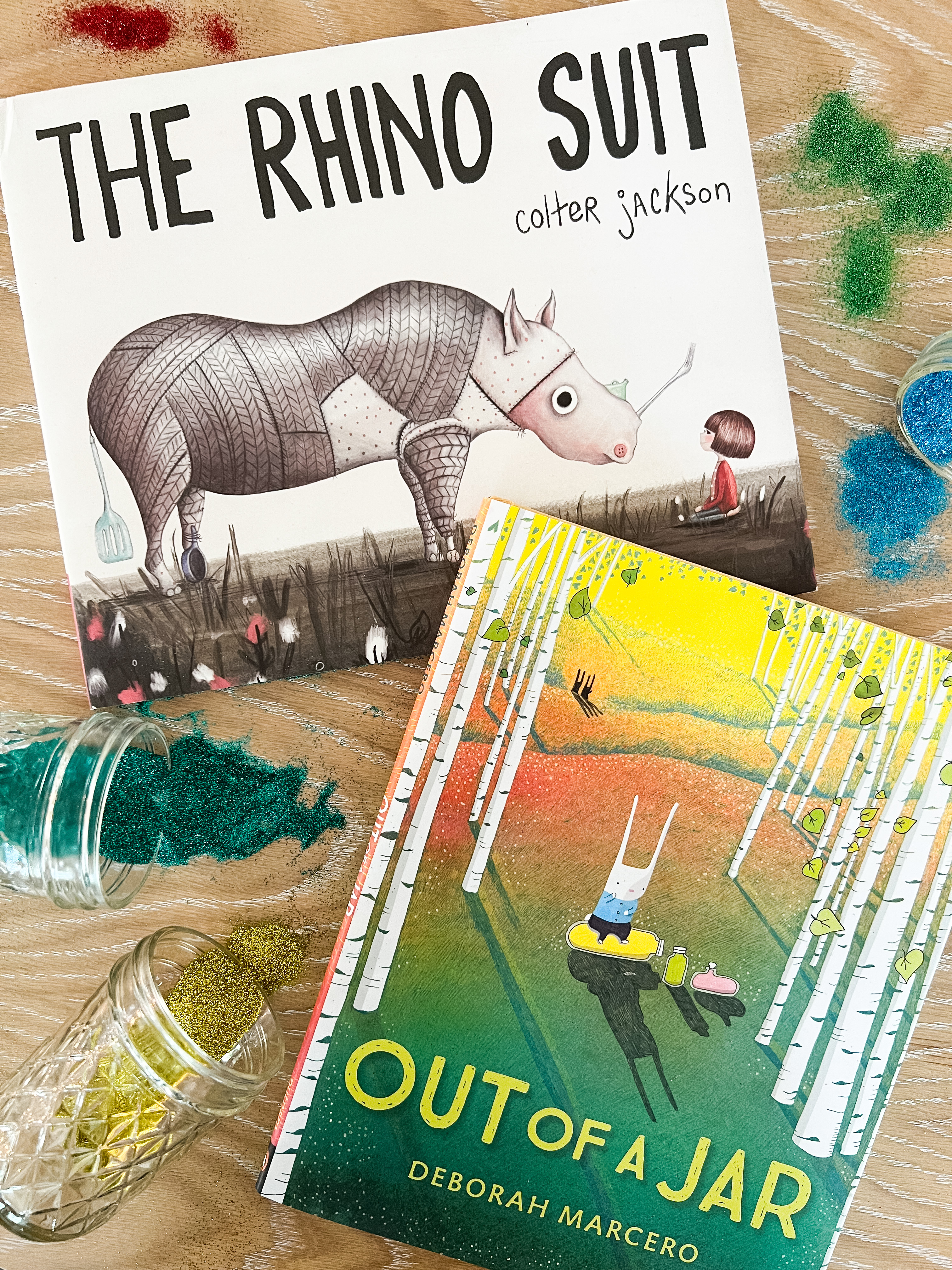
All the time I get asked, What’s a good book for my [insert: nervous, fearful, shy, super sensitive] kid? With everything this crazy world has been dishing out, even kids who aren’t naturally wired towards sensitivity are struggling under the weight of big, heavy, messy emotions. And, as parents, it’s hard to resist the temptation to make the discomfort go away.
My firstborn is an immensely sensitive child. My husband and I joke that he’s a raw nerve walking around on two legs, and the whiplash from highs to lows and back again is not always easy to witness.
Five years ago—I would remember it like it was yesterday, even if I hadn’t journaled about it at the time—my son looked on as garbage workers hauled away our twenty-year-old sofa. We had spent a few weeks trying to donate the sofa, but with a frayed slipcover and sunken cushions, no one seemed to want it.
The hysteria peaked as the garbage truck drove away. The garbage men didn’t treat it well! he wailed. They broke it apart! They tore off the slipcover! It went into the truck in PIECES! They treated it no differently than a container of moldy food! I know it was ripped and didn’t look very good, but it was so comfortable. It made us happy for so long. It should have gone to a good home! It still had life left to give! It could have made people happy! Now, IT’S RUINED!
For a long time, my maternal response to such spectacles was, MAKE. IT. STOP. You’re fine. Here are all the ways that what you’re losing your mind over isn’t actually that bad. Just please stop suffering because my heart cannot take it and also I feel very out of control right now.
But if my son’s extreme responses to everyday life were hard on me, they were a million times harder on him—and often brought with them feelings of shame and loneliness.
I’d like to tell you there was a single turning point for me, but I think it was probably lots of little signs along the way that pointed towards re-framing this sensitivity for both him and me. We began to regard it, not as a condition to overcome, but as a superpower of sorts. You won’t find a more empathetic kid than my son. A more grateful one, too. I could never add up the number of times he has hugged us before bed and said, “Today was the best day of my life.” (Lots more have been the “worst,” of course.)
If, in these turbulent moments, I don’t let his emotions hijack mine—easier said than done, of course—there is usually a nugget of truth telling that can inform my life, our life, for the better. “We did try and donate the sofa,” I reminded him. “Well, maybe someone was afraid to come forward, afraid for us to see their poverty,” he said. “We could have done more, Mommy.” I haven’t forgotten this exchange. Because he’s not wrong. He keeps me honest to the plight of others. He keeps me honest to the plight of himself.
Today, I’m sharing two important new picture books that I wish I’d had when my son was younger. That I wish I’d had for my daughter, too, who sits on the opposite end of the spectrum from her brother, keeping her feelings close to the breast, wary of betraying vulnerability, wary of losing control (can’t imagine who she gets that from). Embedded in their charming, gorgeously illustrated stories, Deborah Marcero’s Out of a Jar (Ages 4-8) and Colter Jackson’s The Rhino Suit (Ages 4-8) employ creative, effective metaphors to explore the temptation to bottle up big, messy emotions and shelve them out of sight. To trap them on the other side of a coat of armor. Both stories ask their young readers to consider the good that might come from leaning into, not away from, uncomfortable emotions. Leaning into sensitivity, rather than fearing or disguising it.
There’s plenty of truth telling in these books for the parents and caregivers of sensitive kids, too.
« Read the rest of this entry »Four New Faves Celebrating Mamas and Grandmas
May 5, 2022 § 6 Comments
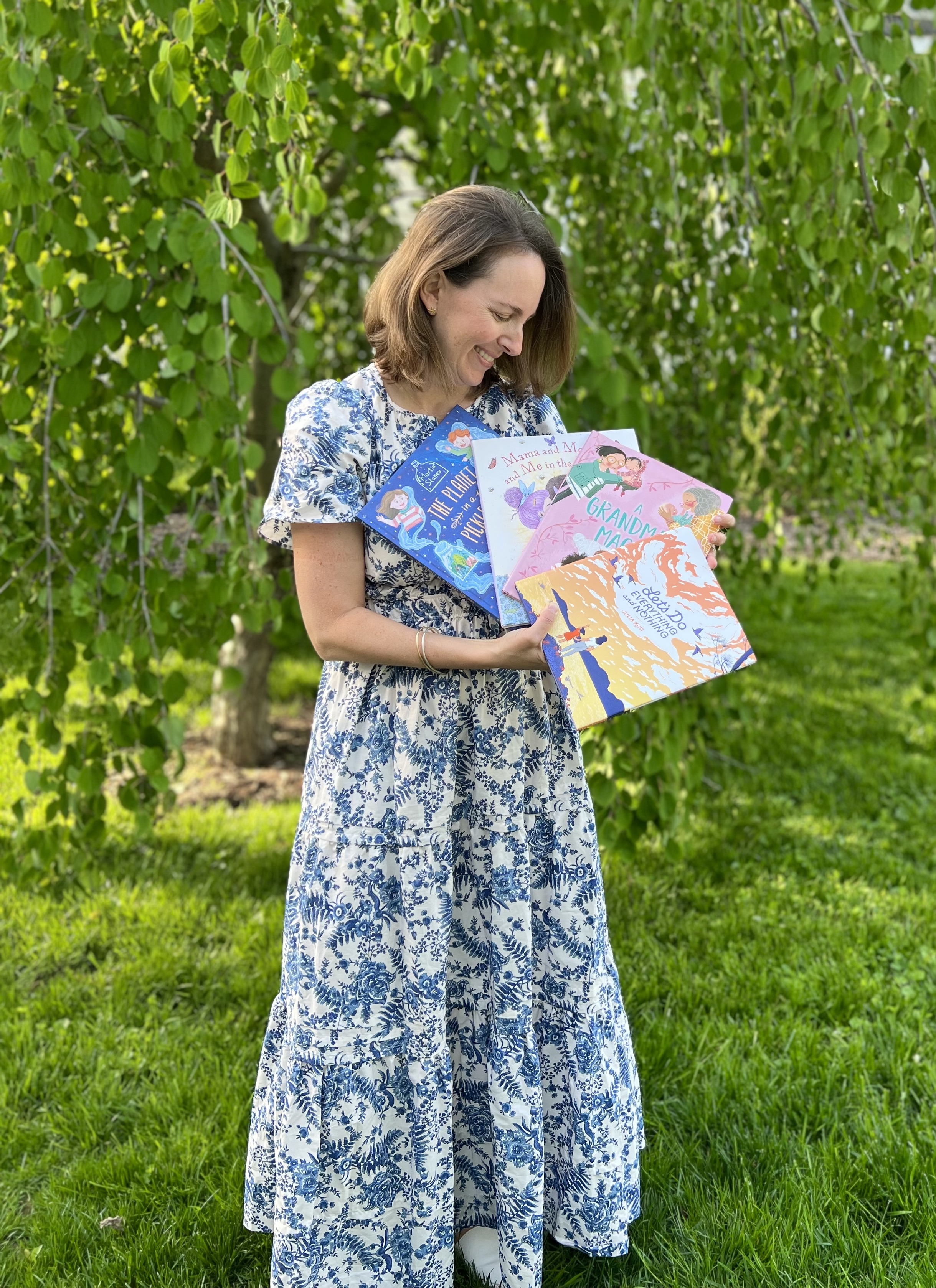
(Warning: I put on my most matronly dress to rage at the patriarchy.) Ouch, it’s a tough week to be a woman in this country. A tough week to contemplate the future for our daughters—and, let’s be honest, our sons, since a woman’s right to exercise autonomy over her body has always been inherently linked to the opposite sex. To say nothing of the repercussions SCOTUS’ decision will have for Black or Indigenous populations, or those living below the poverty line, or the precedent this could set for overturning protections for the LGBTQ+ community. We have only to dig into history to see that progress is never a straight line, but it’s one thing to recognize this and another to live it, to watch the work of generations collapse in a single moment. The list is growing long for horrifying things I never expected to witness in my lifetime.
Now, here we are, staring down Mother’s Day, an already complicated holiday for those mourning mothers, mourning children, mourning dreams of having children—and a day that now feels even more loaded, weighed down with the understanding that a woman’s body can be at once celebrated for its childbearing and stripped of its rights.
This is a cheery post, eh? Don’t worry, I promise we’re going to talk about some beautiful, uplifting, joyful books in just a second.
Yes, it’s a tough moment in history to be a woman. But, let’s not kid ourselves: it has always been a tough time to be a woman. Voting rights, equal pay, maternity leave, working outside the home, the right to wear pants, for crying out loud: the list for what women have been made to suffer is endless.
And still, I love being a woman. I love being a mom. I love following in the legacy of the curious, courageous, complicated women who raised me. When the fear of raising a daughter creeps in during times like this, I remember the strength of my own mother and grandmothers. My mom, who suffered the greatest heartbreak imaginable in the sudden death of my father at 51 and rallied to step into roles and master tasks she’d never imagined for herself, for the sake of her teenage daughters. My one grandmother, who for years endured physical pain without a word of complaint, because she didn’t want to miss out on a single family activity. My other grandmother, who attended science lectures in her 90s where she was the only woman, not because she knew anything about the topic, but because her own children and grandchildren’s involvement in the world had inspired her to expand her mind.
Today, I’m highlighting four new picture books that star formidable mothers and grandmothers—the kind I aspire to be, the kind who remind me that we will not go quietly into the night. Not when we know better, not when we’ve learned from the best. (You can also refer back to some older posts for favorites, like this, this, this, and this.)
« Read the rest of this entry »Our Words Matter
March 17, 2022 § 1 Comment
Surprising as this may sound, my son will tell you that one of his happiest memories is the day we told him he had ADHD. (He has given me his blessing to share this story here.) After years of angry outbursts, struggles to complete assignments, feeling like he didn’t fit in, and an approach to writing defined largely by paralysis, suddenly he had answers. He had clarity. He had a path before him that was not without more struggle but was also well-trodden, ripe with options, ready with support. Plus, he had a community—the Percy Jacksons of the world—who had this in common with him, many of them with inspiring stories of success to share.
All of this relieved a burden he had carried around, often without realizing it, for years. Overnight, he had been given a missing piece to the puzzle of himself.
But when I consider that this moment held so much joy for him, when it just as easily could have spurred fear, shame, or intimidation, I also credit the way we presented the diagnosis. After years of meeting his behavior with exasperation, concern, and (gulp) disappointment, this time we got it right.
On the heels of a neuro-psychological evaluation, my husband and I sat on my son’s bed, on a Saturday morning, and shared a colorful diagram I’d penned the night before. This single piece of paper attempted to capture my son’s learning profile: what his ADHD makes difficult, alongside the litany of strengths his unique wiring offers, like creativity, empathy, an insatiable quest for knowledge, and the superpower of hyper-focus when it comes to things he loves. His neurodiverse brain was all there, in its colorful, complex magnificence.
Bless second chances in parenting, because it was the magnificence piece that came through loud and clear that morning. In many ways, the process of having our son tested was as re-framing for us as it was for him. It helped us to see all of him, instead of just the parts that had monopolized the emotional space in our house in recent years. Somewhere along the way, in our obsession with trying to puzzle him out, we’d lost sight of reminding him, with our words and our actions, how deeply loved he is. How special he is. How miraculous he is.
Progress is rarely a straight line, and I won’t pretend my words don’t sometimes still veer too far in the direction of annoyance over acceptance. But I have become more cognizant of the power my words wield over the way my children see themselves. And that sometimes I need to check my own expectations at the door—my own ideas of what success or bravery or “normal” looks like—to land on the words my kids most need to hear.
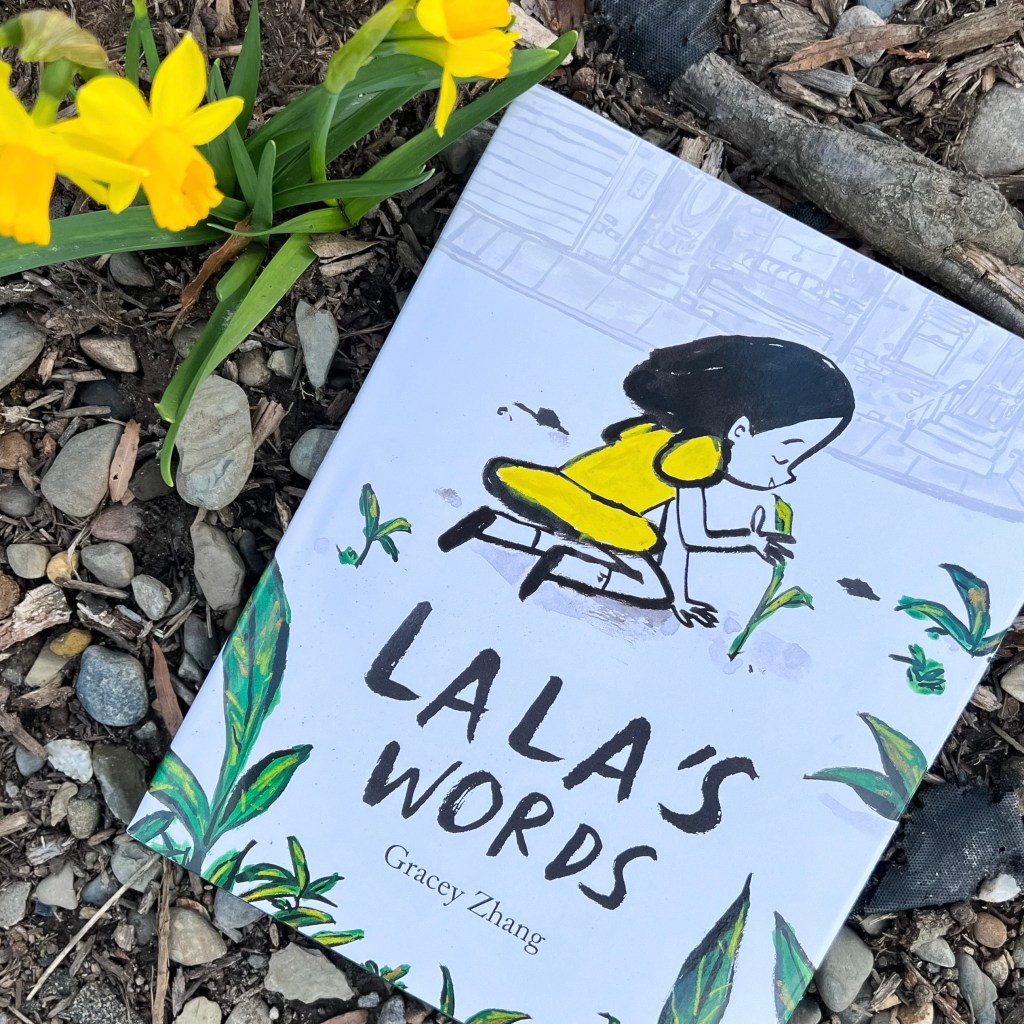
Lala’s Words (Ages 4-8) isn’t about a child with any particular diagnosis. In fact, author-illustrator Gracey Zhang, a rising star just awarded the 2022 Ezra Jack Keats Medal for this brilliant and perceptive debut picture book, dedicates her book to “The Lala in All of Us,” a tribute to the universal desire to be seen, loved, and believed in for who we are. At the same time, it’s a story about a girl who doesn’t fit the model of success that her mother sets out for her. A girl who meets with more exasperation than encouragement. It’s a story that resonates deeply with me, a parent who once nearly lost sight of the magic in her own child.
And it’s a reminder that, if we look closely enough, our children will tell us exactly what they need to hear to blossom and thrive.
« Read the rest of this entry »Making Room for Joy in Black History Month
February 10, 2022 § 4 Comments
During Black History Month, I typically highlight a recent picture book that introduces young readers to an essential part of African American history in a particularly compelling and inventive way. (Last year’s post was on the picture book biography of basketball legend, Elgin Baylor, which apart from being a fascinating story about one Black man also doubles as a mini primer on the Civil Rights Movement.) But since I so recently sung the praises of Born on the Water, one of the most comprehensive and gorgeous picture books to take on the subject of Black history, I thought I’d use today’s post to remind us that, as parents and educators, we must see to it that our children are reading just as many—if not more—stories about Black joy and achievement, as they are about Black pain and oppression.
This means reading When Langston Dances, a joyous new celebration of dance, starring a Black boy who aspires to take ballet. It means reading The Old Truck, a deceptively simple multi-generational story about a family of Black farmers. Or Milo Imagines the World, where a Black boy makes sense of the world in a sketchbook. Or the ebullient picture book biography of writer Zora Neale Hurston, titled Jump at the Sun. Are these books on our shelves alongside those about slavery and segregation? Have we deemed them important in our children’s eyes by giving them a seat at our (literary) table?
It also means reading about the people making Black history as I’m writing this post. The superstars of today. The people pointing us forward.
You’ll rarely see a book by a politician or celebrity plugged here. For one, these books come by publicity naturally; two, they’re usually mediocre at best. They can be dry or heavy-handed, come off like they’re trying too hard, or feel self-aggrandizing. So, while I find Stacey Abrams all kinds of dynamic and inspirational and vital in real life—and though our signed copies at the bookshop have been flying off the shelves—I put off reading her debut picture book. I figured it would be “meh.”
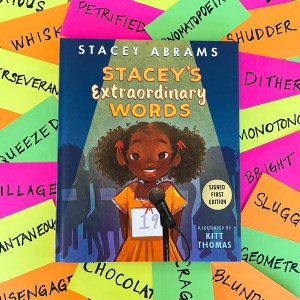
I stand corrected. I’m pleasantly surprised to report that Stacey’s Extraordinary Words (Ages 4-8), written by Abrams and illustrated by Kitt Thomas, is wonderful. In this story drawn from a childhood memory about a spelling bee competition, young Stacey emerges as inquisitive, bright, determined, and sensitive; and the effusively colored illustrations will endear young readers to her. But what would have appealed to me most as a young bookworm is that this is a story about a girl falling in love with the richness of language. A girl learning to wield the power of language to give voice to herself, to secure her seat at the table.
« Read the rest of this entry »Choosing Love: Four Favs for Valentine’s Day
February 3, 2022 § 9 Comments
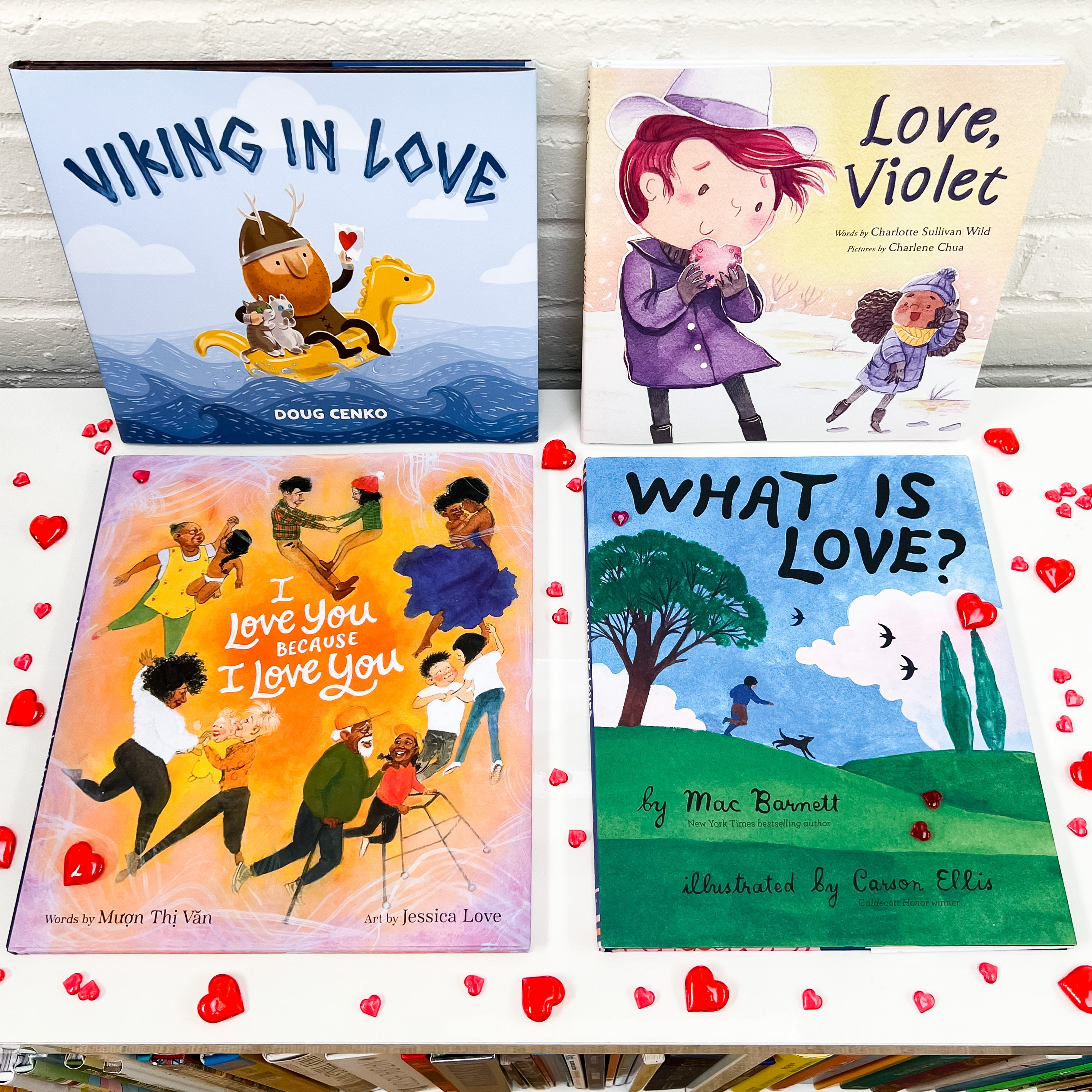
I sat sleep-deprived in the dim winter light of early morning, stealing myself to break it to my children that their dad and I had decided we should return the puppy we’d picked up less than 24 hours earlier.
The previous day, we had driven three hours to pick up an almost five-month-old Goldendoodle. Upon entering the breeder’s house, it became apparent that the dog was nothing like what we’d been promised. Was nothing like our last puppy, either. We had expected a rambunctious, mouthy, high-energy, playful puppy.
What we left with was a dog that had never been socialized. Never seen a man or a child, not to mention a car, leash, crate, or bath. The dog was terrified of us. Of everything. After the car ride home, where we held his trembling body on our laps, he wouldn’t let us near him. We couldn’t pet him. We couldn’t handle him. When my husband tried to pick him up to bring him inside, he got his hand bitten.
The dog wouldn’t eat. He wouldn’t drink. We couldn’t get him outside to use the potty and, if we did, we couldn’t get him back inside. He was terrified of our stairs, so my husband slept next to him on the living room sofa, while I stayed up all night reading everything on the Internet about fearful, traumatized dogs.
What I determined over the course of that long night wasn’t just that this was not the puppy we had envisioned for our family, but that we were in over our heads. A dog who passed the four month mark without being socialized was, the Internet assured me, beyond hope of a normal life, even with professional training.
Earlier that morning, I told my husband that I thought we needed to take him back to the breeder. He reluctantly agreed. So there I sat, waiting for my kids to wake up so we could get it over with.
My son was the first to come down the stairs. His eyes immediately scanned the room, finding the dog—we hadn’t agreed on a name—cowering in the corner. My son stood for a few moments, looking at this terrified ball of fluff, and then he curled up next to me. I braced myself to say the words, but he spoke first, with no suspicion that there was anything amiss.
“Oh, Mommy,” he sighed, his eyes twinkling, a smile breaking across his face like it was Christmas morning. “I’m so happy. I just love him so much.”
This dog, who was nothing like the dog he had wanted, who wouldn’t even let him come near him…he loved him?
I began to speak about what I’d read, about the long road ahead of us. Yes, he said, he had thought as much. He’d start reading things, too. He was excited to help. “I know what it’s like to have anxiety, so I can do this. He’s going to be so happy here. I know it.”
And though part of me wanted to cry, to scream, to run from the loss of control I felt over the entirety of this situation, I thought, What if I chose love? What if we all chose love?
What if we didn’t get the puppy we wanted, but we got the one we needed? Or maybe the one who needed us.
« Read the rest of this entry »My Caldecott Front Runner
January 12, 2022 Comments Off on My Caldecott Front Runner

Awards season is upon us! On Monday, January 24, the American Library Association will award the prestigious Caldecott and Newbery Medals, as well as a host of other coveted honors and awards. It’s like the Oscars for kid lit! I’ll be tuning in with bated breath, ready to celebrate many of the winners and, if history is any indication, scratch my head at a few others. There will probably be some books I haven’t read yet, perhaps even one I haven’t heard of, but I’m hoping many of my favorites will make the list. In any event, I promise to share a recap on Instagram after the announcements!
Let’s talk about the picture book I’d love to see sport a shiny gold Caldecott sticker. (I’m also pulling for Watercress, which I gushed about in April. Born on the Water, of course. Time is a Flower. Probably Unspeakable, if my library hold would ever come in.) Today, though, I’m talking about Wishes (Ages 4-8), written by Múón Thi Vãn and illustrated by Victo Ngai, based on the former’s refugee journey out of Vietnam as a young child in the 1980s. This book sends my jaw to the floor. Every. single. time. (Back in May, my daughter discovered it on our dining table, sat down and read it, and called out, “WHOA, Mommy, I think I just found your favorite book of the year.”)
And yet, I’ve been putting off sharing my thoughts about Wishes. It’s a daunting book to review, because its power lies largely in what is left unsaid. How do I write about a book that manages to tell a sweeping, suspenseful, emotionally pulsating narrative in just twelve short sentences, without my own clunky words compromising the grace of such economical text? (Heck, I’ve greatly exceeded that sentence count already!)
But that’s precisely why Wishes is deserving of a Caldecott, which I’ll remind you is awarded for pictorial interpretation. To be sure, Múón’s sparse text is immensely effective: loaded with lyricism and vital in relaying the story’s central theme of desire—the wishes that frame our periods of loss and uncertainty. But the reason Múón is able to communicate such depth and breadth with her text is owing to Ngai’s luminous illustrations, which carry a great deal of the storytelling weight. (Ngai herself is a migrant, moving from Hong Kong to the United States when she was eighteen.) Wishes is that rare example of a perfect marriage between words and pictures, each working to interpret and augment the other.
Wishes is about more than one journey. Taken literally, it’s the story of a girl who leaves behind her home—including her grandfather, her dog, and nearly all her worldly possessions—to journey by boat to a foreign city of safety and promise. But it’s also an emotional journey: a sequence of wishes that speak to the turbulence within. Ngai underscores this journey with her color palette, beginning the story in dark, somber tones, moving towards super-saturated reds and oranges as the oppressive sun beats down upon the tiny boat, and concluding with a soft palette of greens and pinks for an ending tinged in the hope of fresh starts.
« Read the rest of this entry »The Real Science of Snow
December 30, 2021 Comments Off on The Real Science of Snow
We had a Covid Christmas, and nothing more needs to be said about that. Except it does. Because my daughter spent most of winter break isolated in her room, showing her face only at meals over Facetime, and again at read-aloud time, but otherwise building LEGO creations and making origami and decorating her room with paper snowflakes that her brother made for her. All behind the closed door of her bedroom.
It was awful for us. Except, strangely, it did not seem that awful for her. Her symptoms were fairly mild, thankfully. She smiled the widest smiles at us through the computer screen. “My graphic novels are keeping me company,” she reassured us. One day, she was heard giggling for hours on end. “What’s so funny?” we called through the door. “I’m putting my Babas through the circus.” (That’s what she calls her stuffed sheep.) She missed cuddling with us terribly—she said so multiple times—and she was a bit nervous about how she would open her stocking on Christmas morning (we let her out and all donned masks). But she had the very fine company of her imagination, and that turned out to be a gift better than anything Santa could ever bring.
We can’t know the depth of our children’s resilience until that resilience has been tested. And without question, the past two years have put resilience on display for our children. Somehow, these children have only become more loving, more courageous, more introspective, more imaginative.
Childhood can be a solitary time. We all have memories of feeling awkward or excluded or misunderstood. We have endless memories of waiting—the minutes ticking by in excruciating slowness—for a parent to play a game with us, to do that thing with us, to stop talking on the phone already. We have memories of being sick in bed, of staring endlessly at the ceiling until shadows and cracks turned into scenes of animals to entertain us.
I think children are drawn to stories that speak to solitariness. Stories that don’t diminish the emptiness of that solitariness, or the fear or sadness that can reside inside it, but intentionally dwell on the possibilities embedded there. The wonder. Even, perhaps, the magic. Stories that demonstrate how solitariness can be a beautiful thing, a fortifying thing, so long as we are secure in the knowledge that we are still held in the strong, secure embrace of those who love us.
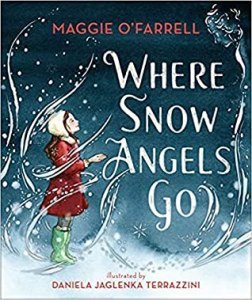
The Irish writer Maggie O’Frarrell, who has penned some of my favorite reads for adults (Hamnet, This Must be the Place), makes a spectacular children’s debut with Where Snow Angels Go (Ages 6-10), a longform picture book, with gorgeous illustrations by Daniela Jaglemka Terrazzini on each of its 67 pages. It’s not, at first glance, a story of solitariness; rather, it hails the companionship of a “snow angel,” born of past snowfalls, who watches quietly and mostly invisibly over a young girl through the seasons. And yet, this girl, our protagonist, is often alone. She’s sick in bed, or staring up at the night sky, or tearing down a hill on her bike. She’s marveling at the universe, she’s working out its questions in her own solitariness. Her parents are close by but rarely pictured; the snow angel maybe a figment of her imagination, maybe not.
« Read the rest of this entry »2021 Gift Guide: The Picture Books
November 11, 2021 Comments Off on 2021 Gift Guide: The Picture Books
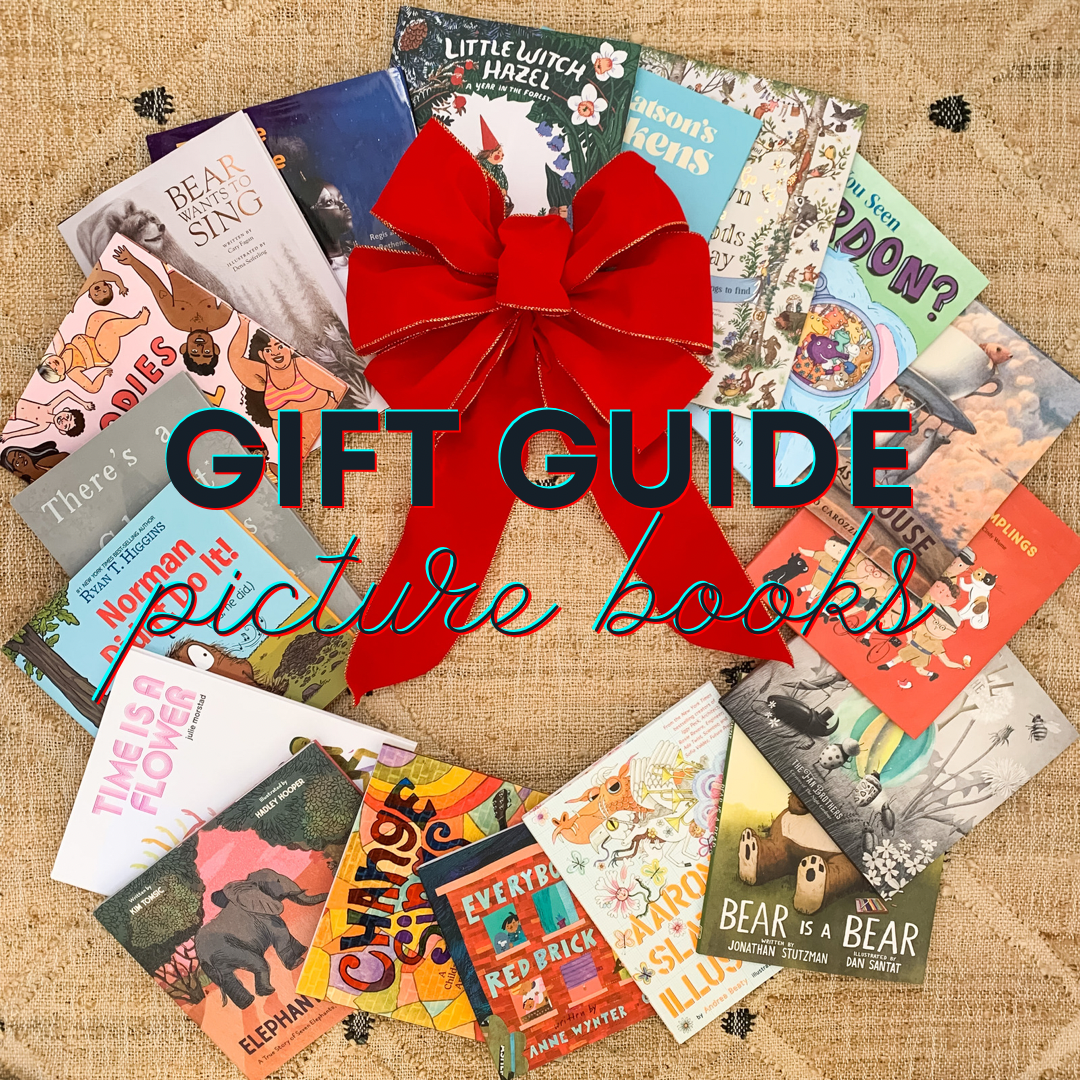
It was another stellar year for picture books! Given the size of the list below (sorry not sorry), you’re going to roll your eyes when I tell you I had a very difficult time narrowing it down. But it’s true, and I already regret leaving some out. (Thankfully, there’s always Instagram.) What I’m focusing on today are those with the giftiest potential. Whether you’re looking for surprise twists, laugh-out-loud humor, exquisite beauty, moving true stories, affirmations of self-love and acceptance, or ridiculously cute animals, you’ll find something novel and memorable here. Most importantly, you’ll gift a book to be relished and revisited for years. Still, I don’t envy you making these decisions, because these books are all so, so good.
« Read the rest of this entry »2021 Gift Guide Kicks Off: Favorite Picture Book of the Year
October 28, 2021 § 2 Comments
It’s getting to be the most wonderful time of year: Gift Guide season! Over the next few weeks, you’ll be treated to round ups of picture books, graphic novels, middle-grade books, young adult books, and specialty books with a gifty flair. This year, I’m especially excited to be partnering with Old Town Books, a fantastic indie here in Alexandria, VA, where I’ll be presenting my full Gift Guide LIVE and IN PERSON at 7pm on November 12 and 13, with a chance to shop with me afterwards (get your tickets here!).
Traditionally, I kick off every Gift Guide with my favorite picture book of the year. (Some past picks are here, here, here, and here.) I recognize that choosing books for loved ones is immensely personal, but sometimes a book comes along that checks all the boxes. It’s beautiful. It’s original. It’s hefty, packed with details that demand repeat readings. It’s got a nostalgic charm that appeals to us oldies doing the gifting. To hold it feels inherently special.
Towering toadstools! All I’m saying is that there aren’t many books you want to clutch to your chest and carry around with you, so when you find one, you just want everyone to have it, OK?
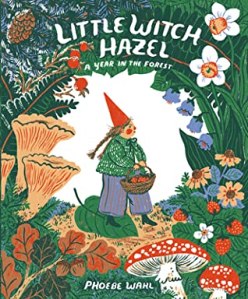
Little Witch Hazel: A Year in the Forest (Ages 4-8), by the extraordinary Phoebe Wahl—I blinked and missed her 2020 picture book for last year’s Gift Guide, and I’ll not make that mistake again—is an anthology of four stories, one for each season. It stars a cheery, capable, caring little witch with a pointed red cap and a fondness for messy braids and fair isle sweaters. Little Witch Hazel lives alone at the base of a tree in the enchanting Mosswood forest, surrounded by trees and waterfalls and a community of gnomes, elves, goblins, trolls, dryads, anthropomorphic amphibians, and tiny talking mammals. He days are spent divided between work and play, between helping others and tending to herself.
It has been a long two years, and I feel like we all deserve to spend some time in a place where tea cakes and twinkling lights are always in fashion, where coziness and cocoa reign supreme, and where the wonders of the wilderness are just an acorn’s throw away. A place where we can dip our tired toes in crystal clear water one minute and ride on an owl’s back the next. A place where creatures watch out for one another, repay favors, and are always happy for an impromptu dance party.
« Read the rest of this entry » What to Read to Your Kids