My Caldecott Front Runner
January 12, 2022 Comments Off on My Caldecott Front Runner

Awards season is upon us! On Monday, January 24, the American Library Association will award the prestigious Caldecott and Newbery Medals, as well as a host of other coveted honors and awards. It’s like the Oscars for kid lit! I’ll be tuning in with bated breath, ready to celebrate many of the winners and, if history is any indication, scratch my head at a few others. There will probably be some books I haven’t read yet, perhaps even one I haven’t heard of, but I’m hoping many of my favorites will make the list. In any event, I promise to share a recap on Instagram after the announcements!
Let’s talk about the picture book I’d love to see sport a shiny gold Caldecott sticker. (I’m also pulling for Watercress, which I gushed about in April. Born on the Water, of course. Time is a Flower. Probably Unspeakable, if my library hold would ever come in.) Today, though, I’m talking about Wishes (Ages 4-8), written by Múón Thi Vãn and illustrated by Victo Ngai, based on the former’s refugee journey out of Vietnam as a young child in the 1980s. This book sends my jaw to the floor. Every. single. time. (Back in May, my daughter discovered it on our dining table, sat down and read it, and called out, “WHOA, Mommy, I think I just found your favorite book of the year.”)
And yet, I’ve been putting off sharing my thoughts about Wishes. It’s a daunting book to review, because its power lies largely in what is left unsaid. How do I write about a book that manages to tell a sweeping, suspenseful, emotionally pulsating narrative in just twelve short sentences, without my own clunky words compromising the grace of such economical text? (Heck, I’ve greatly exceeded that sentence count already!)
But that’s precisely why Wishes is deserving of a Caldecott, which I’ll remind you is awarded for pictorial interpretation. To be sure, Múón’s sparse text is immensely effective: loaded with lyricism and vital in relaying the story’s central theme of desire—the wishes that frame our periods of loss and uncertainty. But the reason Múón is able to communicate such depth and breadth with her text is owing to Ngai’s luminous illustrations, which carry a great deal of the storytelling weight. (Ngai herself is a migrant, moving from Hong Kong to the United States when she was eighteen.) Wishes is that rare example of a perfect marriage between words and pictures, each working to interpret and augment the other.
Wishes is about more than one journey. Taken literally, it’s the story of a girl who leaves behind her home—including her grandfather, her dog, and nearly all her worldly possessions—to journey by boat to a foreign city of safety and promise. But it’s also an emotional journey: a sequence of wishes that speak to the turbulence within. Ngai underscores this journey with her color palette, beginning the story in dark, somber tones, moving towards super-saturated reds and oranges as the oppressive sun beats down upon the tiny boat, and concluding with a soft palette of greens and pinks for an ending tinged in the hope of fresh starts.
« Read the rest of this entry »The Real Science of Snow
December 30, 2021 Comments Off on The Real Science of Snow
We had a Covid Christmas, and nothing more needs to be said about that. Except it does. Because my daughter spent most of winter break isolated in her room, showing her face only at meals over Facetime, and again at read-aloud time, but otherwise building LEGO creations and making origami and decorating her room with paper snowflakes that her brother made for her. All behind the closed door of her bedroom.
It was awful for us. Except, strangely, it did not seem that awful for her. Her symptoms were fairly mild, thankfully. She smiled the widest smiles at us through the computer screen. “My graphic novels are keeping me company,” she reassured us. One day, she was heard giggling for hours on end. “What’s so funny?” we called through the door. “I’m putting my Babas through the circus.” (That’s what she calls her stuffed sheep.) She missed cuddling with us terribly—she said so multiple times—and she was a bit nervous about how she would open her stocking on Christmas morning (we let her out and all donned masks). But she had the very fine company of her imagination, and that turned out to be a gift better than anything Santa could ever bring.
We can’t know the depth of our children’s resilience until that resilience has been tested. And without question, the past two years have put resilience on display for our children. Somehow, these children have only become more loving, more courageous, more introspective, more imaginative.
Childhood can be a solitary time. We all have memories of feeling awkward or excluded or misunderstood. We have endless memories of waiting—the minutes ticking by in excruciating slowness—for a parent to play a game with us, to do that thing with us, to stop talking on the phone already. We have memories of being sick in bed, of staring endlessly at the ceiling until shadows and cracks turned into scenes of animals to entertain us.
I think children are drawn to stories that speak to solitariness. Stories that don’t diminish the emptiness of that solitariness, or the fear or sadness that can reside inside it, but intentionally dwell on the possibilities embedded there. The wonder. Even, perhaps, the magic. Stories that demonstrate how solitariness can be a beautiful thing, a fortifying thing, so long as we are secure in the knowledge that we are still held in the strong, secure embrace of those who love us.
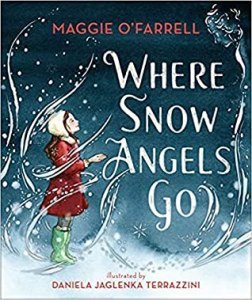
The Irish writer Maggie O’Frarrell, who has penned some of my favorite reads for adults (Hamnet, This Must be the Place), makes a spectacular children’s debut with Where Snow Angels Go (Ages 6-10), a longform picture book, with gorgeous illustrations by Daniela Jaglemka Terrazzini on each of its 67 pages. It’s not, at first glance, a story of solitariness; rather, it hails the companionship of a “snow angel,” born of past snowfalls, who watches quietly and mostly invisibly over a young girl through the seasons. And yet, this girl, our protagonist, is often alone. She’s sick in bed, or staring up at the night sky, or tearing down a hill on her bike. She’s marveling at the universe, she’s working out its questions in her own solitariness. Her parents are close by but rarely pictured; the snow angel maybe a figment of her imagination, maybe not.
« Read the rest of this entry »Gift Guide 2021: Middle-Grade Picks for Ages 7-14
November 30, 2021 § 2 Comments
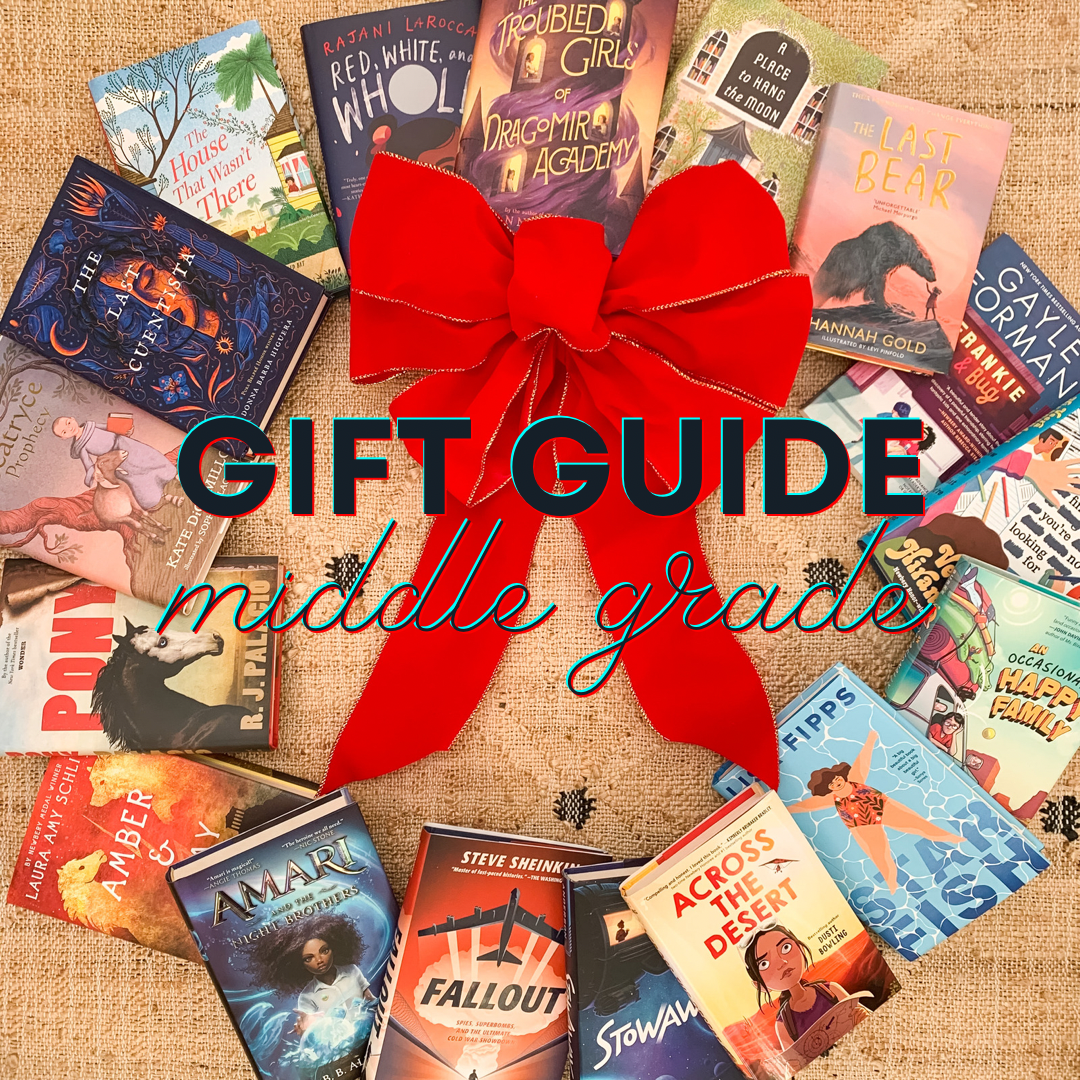
(A reminder that all the books in my Gift Guide are available for purchase at Old Town Books here in Alexandria, VA, or on their website. Put KIDS21 in the Notes to get free gift wrapping and $5 shipping on orders over $25; one order per address, please. Thank you for supporting this wonderful indie bookstore where I assist with the buying!)
Last week, I recapped my favorite graphic novels of the year. This week, I’m talking about middle-grade reads that are so good, your reader won’t even notice they’re not graphic novels. (Wink wink.)
It has been another incredible year for middle-grade fiction and non-fiction, and while I’ve likely missed a few gems, I am thrilled with the ones I’ve discovered. Of the slew I read, these rose to the top and have great gift appeal. The stories have tremendous heart, raise thoughtful questions, and immerse readers in compelling worlds and rich settings. If you’ve been hanging around here, you’ll recognize a few titles from earlier in the year, but a number of these were just published.
I’m not including sequels here—like the newest title in our beloved Vanderbeekers series, or the third in the wonderful Front Desk series—in case the recipient has not read the earlier titles. And, though it’s increasingly difficult given the direction middle-grade stories are trending, I have stayed away from some of the heaviest reads of the year, including the brilliant The Shape of Thunder.
The list runs from younger to older, so please note the age range for each. My age ranges reflect both the sophistication of the writing and the maturity of the subject matter.
« Read the rest of this entry »2021 Gift Guide: Graphic Novels for Ages 7-16
November 23, 2021 § 3 Comments
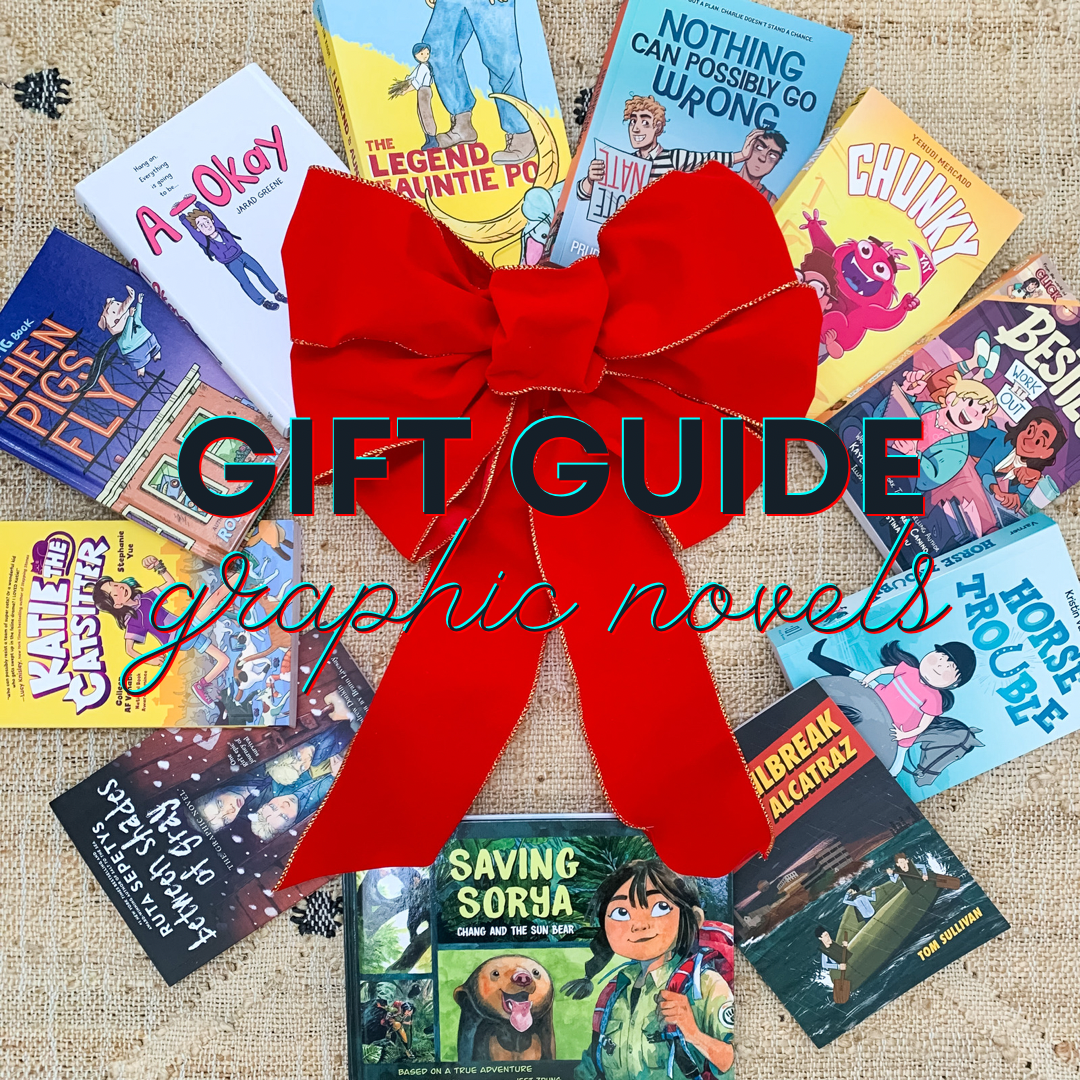
Give the kids, tweens, and teens what they want! It’s the post many of you have been eagerly awaiting: the 2021 graphic novels that will make your gift-giving prowess shine. As today’s readers continue to inhale the graphic format, more and more gems are being published every week. The competition is getting stiff, my eyes are getting tired, and kids are losing their minds with excitement.
If you’re not sold on your kids reading graphic novels, you can find my top ten list of why this obsession is better than OK here. If you’ve seen firsthand the joy it brings to said children, then you’ve come to the right place. Because the graphic novels below are fan-freaking-tastic. And more than deserving of a bow.
Please note the age ranges beneath each title, which reflect the maturity of the subject matter. There are selections for kids, tweens, and teens, in that order. And if you need more, no reason any of these or these shouldn’t be added to this list.
« Read the rest of this entry »2021 Gift Guide: The Picture Books
November 11, 2021 Comments Off on 2021 Gift Guide: The Picture Books
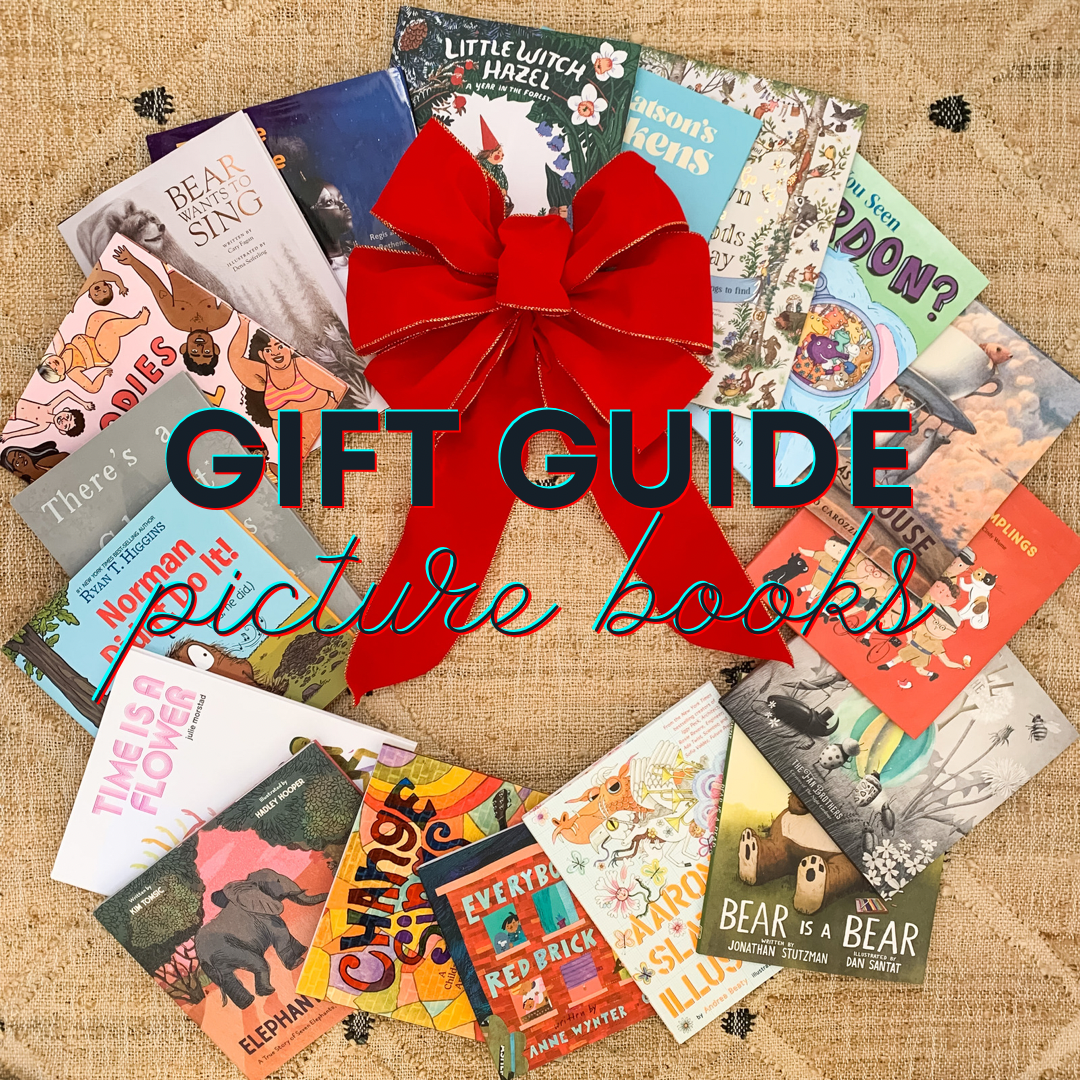
It was another stellar year for picture books! Given the size of the list below (sorry not sorry), you’re going to roll your eyes when I tell you I had a very difficult time narrowing it down. But it’s true, and I already regret leaving some out. (Thankfully, there’s always Instagram.) What I’m focusing on today are those with the giftiest potential. Whether you’re looking for surprise twists, laugh-out-loud humor, exquisite beauty, moving true stories, affirmations of self-love and acceptance, or ridiculously cute animals, you’ll find something novel and memorable here. Most importantly, you’ll gift a book to be relished and revisited for years. Still, I don’t envy you making these decisions, because these books are all so, so good.
« Read the rest of this entry »2021 Gift Guide Kicks Off: Favorite Picture Book of the Year
October 28, 2021 § 2 Comments
It’s getting to be the most wonderful time of year: Gift Guide season! Over the next few weeks, you’ll be treated to round ups of picture books, graphic novels, middle-grade books, young adult books, and specialty books with a gifty flair. This year, I’m especially excited to be partnering with Old Town Books, a fantastic indie here in Alexandria, VA, where I’ll be presenting my full Gift Guide LIVE and IN PERSON at 7pm on November 12 and 13, with a chance to shop with me afterwards (get your tickets here!).
Traditionally, I kick off every Gift Guide with my favorite picture book of the year. (Some past picks are here, here, here, and here.) I recognize that choosing books for loved ones is immensely personal, but sometimes a book comes along that checks all the boxes. It’s beautiful. It’s original. It’s hefty, packed with details that demand repeat readings. It’s got a nostalgic charm that appeals to us oldies doing the gifting. To hold it feels inherently special.
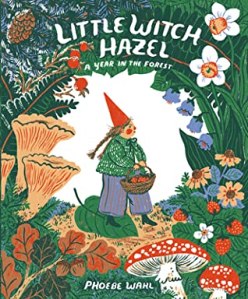
Towering toadstools! All I’m saying is that there aren’t many books you want to clutch to your chest and carry around with you, so when you find one, you just want everyone to have it, OK?
Little Witch Hazel: A Year in the Forest (Ages 4-8), by the extraordinary Phoebe Wahl—I blinked and missed her 2020 picture book for last year’s Gift Guide, and I’ll not make that mistake again—is an anthology of four stories, one for each season. It stars a cheery, capable, caring little witch with a pointed red cap and a fondness for messy braids and fair isle sweaters. Little Witch Hazel lives alone at the base of a tree in the enchanting Mosswood forest, surrounded by trees and waterfalls and a community of gnomes, elves, goblins, trolls, dryads, anthropomorphic amphibians, and tiny talking mammals. He days are spent divided between work and play, between helping others and tending to herself.
It has been a long two years, and I feel like we all deserve to spend some time in a place where tea cakes and twinkling lights are always in fashion, where coziness and cocoa reign supreme, and where the wonders of the wilderness are just an acorn’s throw away. A place where we can dip our tired toes in crystal clear water one minute and ride on an owl’s back the next. A place where creatures watch out for one another, repay favors, and are always happy for an impromptu dance party.
« Read the rest of this entry »An Anthem to the “And”
September 9, 2021 § 5 Comments
It has taken me a lot of growing up to realize how quickly the world demands that we put labels on ourselves, and how tempting it then becomes as parents to fit our own children into the same tidy little boxes. Even the questions we routinely ask of our children and their peers—Is she shy? Is he artistic? Is she kind?—assume two fixed outcomes: yes or no. Sides are chosen, identities are constructed; and then, inevitably, confusion sets in when the data points don’t consistently match up.
A few years out of college, when I was working in advertising, I attended a retreat designed around improving problem-solving skills. As part of it, we had to take the Myers-Brigg personality test. What was revolutionary to me wasn’t that I received at the end a set of letters to represent my dominant personality traits, but that each of those letters was plotted on a spectrum. I expected, for example, that I would score as extroverted (E)—I’ve always been social, albeit preferring intimate groups—but what surprised me was that I was quite close to the midway mark between extroverted (E) and introverted (I). This seems incredibly obvious to me now, but I had never previously considered that someone could be both things at the same time. That I could derive equal energy from social interactions and from being by myself. That I didn’t have to choose. That my identity might run on a spectrum, rather than conforming to a binary system.
When we fall into the trap of thinking of ourselves as one way or another, it’s not only limiting, it’s fundamentally inaccurate. We, all of us, are walking contradictions. It’s what makes us interesting. It’s what makes us human. Maybe we get nervous walking into a new classroom, but we can belt out a solo on stage. Maybe we can’t draw the likeness of anything, but we love moving paint around on canvas. Maybe we have a hard time sharing crayons at school, but we’ll sit and read to our baby sister at home when she’s sad. What if there was a way to encourage our children to take these “but”s and turn them into an “and”s? What if instead of contradicting one another, they are just two true things?
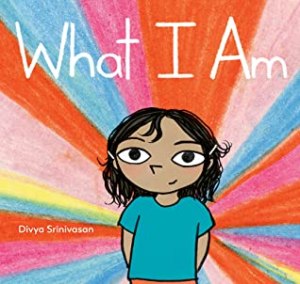
When I first opened Divya Srinivasan’s triumphant new picture book, What I Am (Ages 3-7), I thought it was going to be a book about a Brown girl responding to a microaggression that’s all too familiar to those whose non-whiteness doesn’t fit the idea of American that some people insist on holding onto, even though all evidence points to the contrary. It’s the “What are you?” question.
And it is a book about that. A beautiful, validating mirror for an Indian American reader.
AND it’s something more. Because, as our young narrator reflects on this question, she realizes that she is a whole lot more than her race or her ethnic heritage. And that many of these things might seem like contradictions—only they aren’t. They’re just her.
What this book is—and why I hope every child gets a chance to read it—is a testament to the complexities, to the nuance, within each and every one of us. It’s a kind of roadmap to how we might think about our own identities—and how we might express them to a world bent on incessantly inquiring.
« Read the rest of this entry »New Summery Graphic Novels for Ages 7-15
July 29, 2021 § 1 Comment
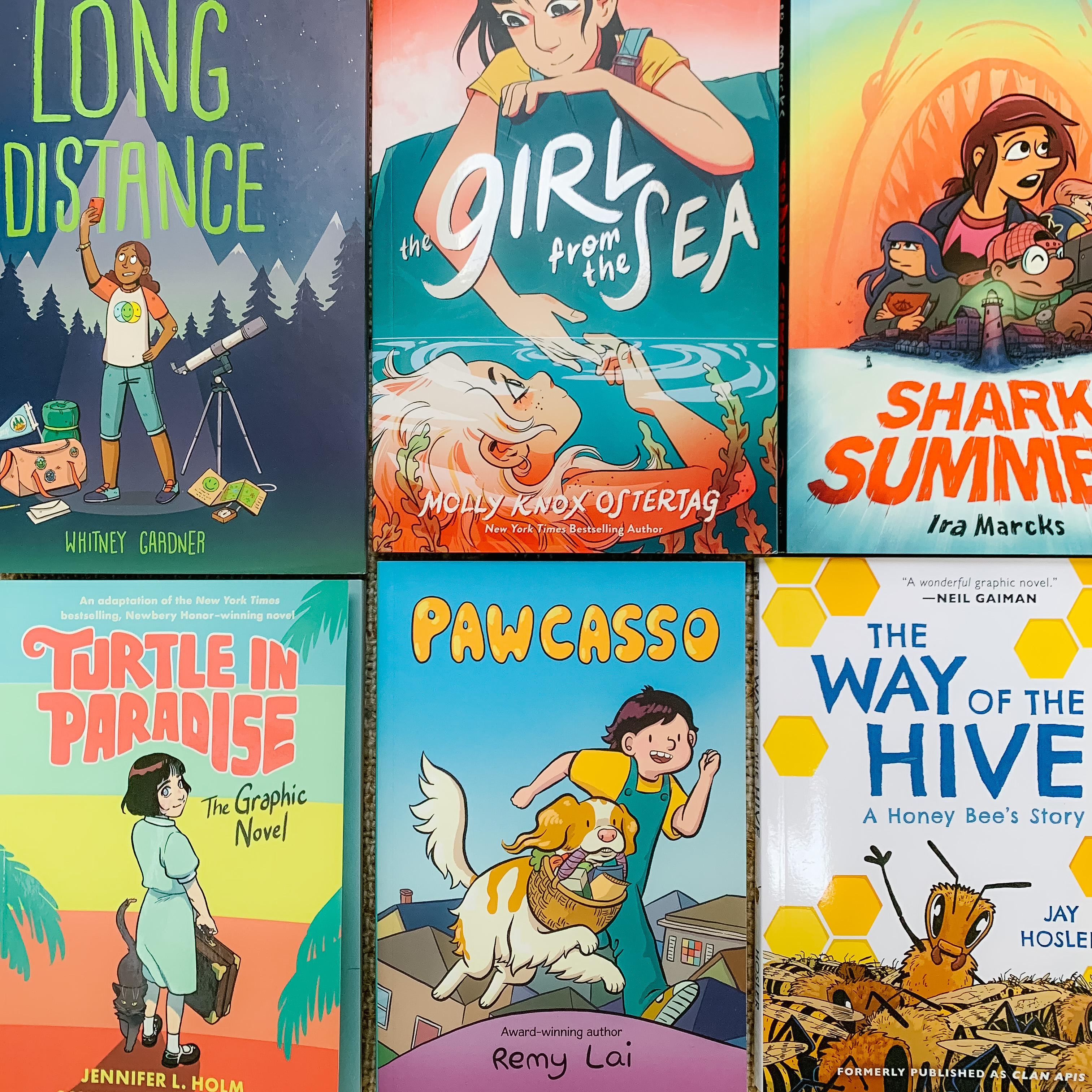
I can hardly keep up with all the graphic novels hitting bookshelves these days, but I’m not complaining, since they continue to make readers out of my kids. (Not convinced they count as real reading? Read what I said here.)
I had initially intended this to be a round-up of new favorites, only I found too many to fit in a single post. So, I’m limiting today’s post to favorite new graphic novels with summer themes. I realize back-to-school season is right around the corner (for some, it’s already here), but in our house, we are in blissful denial. We’ve just wrapped up summer swim team, and my kids are packing their bags for sleepaway camp. We’ve still got time with friends in Maine, time with cousins in Boston, and a family reunion in Rhode Island—fingers and toes and more fingers crossed for good health—and we’re determined to savor these precious days. It seems only right that our reading material should match the view outside. I hope you agree.
(Sadly, this means my Favorite Graphic Novel of the Year so far won’t make the cut, since it’s not set in summer. Those of you on Instagram know what I’m talking about. But the rest of you will have to wait for the ring of the school bell.)
« Read the rest of this entry »Summer’s Sweetness
July 22, 2021 Comments Off on Summer’s Sweetness
I’ve been caught in the hot, sticky, delicious embrace of summer (OK, but a little less heat, please), and it has kept me from showing up here as much as I would like. When I’m silent here, I’m usually still active on Instagram, so you can get lots of book recommendations there, but I do hope to get a few blog posts penned in the next few weeks (I’ve got a big graphic novel round-up planned, so stay tuned!).
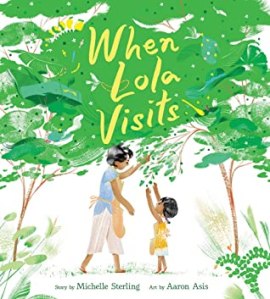
But today, let’s talk about one of my favorite picture books of the year, an especially fitting one for this mid-summer sweet spot we find ourselves in. We’re perfectly poised to reflect on summer’s arc, having traded the tentative newness of June for the wild abandon of July, with a creeping awareness that the final days of August will bring it all to a bittersweet end. When Lola Visits (Ages 4-8), lyrically penned by Michelle Sterling (fellow kid lit reviewer) and evocatively illustrated by Aaron Asis, perfectly expresses this arc by capturing the smells, tastes, and sensations of summer, as experienced by a young girl alongside her visiting Filipino grandmother.
When Lola Visits does something that isn’t easy to do in a picture book. It imparts a culturally specific experience while simultaneously invoking the universal wonder of this special season. It’s a book that asks us to reflect on the way we experience summer, to give language to our own observations, and to honor the richness of our memories from one year to the next.
For my children, at least right now, summer is the smell of chlorine, the tight hug of a swim cap, and the taste of glazed doughnuts, cherry popsicles, and concessions burgers with American cheese. In a few weeks, that will shift to the squish of pine needles beneath flip-flopped feet, the sharp bang of a cabin door, and a Styrofoam cup of steaming hot chocolate on a cool Maine morning where fog sits heavy on the lake.
For me, much like the young protagonist in When Lola Visits, summer will always conjure memories of my grandmothers, both of whom I would visit every year. Summer was the taste of warm popovers with melting pads of butter, enjoyed under an umbrella with my one grandmother, after a morning spent pouring over sawdusty cases of pinned bugs at the science museum, where she volunteered in the entomology department. Summer was make-your-own sundaes before Bingo night with my other grandmother, the excitement of watching the pot of money overflow with American and Canadian dollars outdone only by the anticipation of going to the water slide park the following day. Summer was a sticky tin straight from the fridge with chocolate-peanut-butter-Rice-Krispies cookies. The smoky smoothness of blue beach glass. The experience of hugging an older body, with its faint smell of talcum powder, soft, spidery-veined skin, and the security of a love that knows no bounds.
« Read the rest of this entry »The Secret to Picking Read-Aloud Chapter Books
May 13, 2021 Comments Off on The Secret to Picking Read-Aloud Chapter Books
How do you choose the chapter books you read to your kids? Maybe you consider whether the subject matter will appeal to them. Maybe you focus on what kind of characters they’ll identify with. Maybe you know they’ll be more likely to sit still for a funny story than one with long descriptive passages. Maybe you reach for a book because it’s one your child has asked you to read, or one you think you should read, or one by an author your child loves.
Whatever your criteria, it’s likely you’re thinking more about the audience than about yourself.
What if I told you your audience doesn’t matter?
OK, that’s not entirely true. Of course, your audience matters. Especially with younger children, there will always be ages and maturity levels to consider. But do you know what matters more than all the things I listed above? What matters the most?
The secret to picking a chapter book your kids will want to hear night after night is to pick one you will enjoy reading.
Your enthusiasm for what you’re reading influences your children’s enjoyment more than anything else. When you’re into a story, your eyes light up. Your voice is more dynamic. You are infinitely more likely to make that story enticing. Suddenly, the dishes in the sink or your buzzing phone fade into the background. Suddenly, there is nothing more important, nothing more exciting, than the mutual experience of immersing yourselves in a fictional world.
It’s tremendously liberating. Don’t enjoy fantasy? Don’t read it. Bored to tears by the likes of Magic Tree House? Save ‘em for your kids to read on their own. By reading aloud to your children, especially after they are reading on their own, you are giving them a precious gift. You’re choosing to prioritize reading in the home. I’m giving you permission to enjoy it as much as your kids do. Heck, I’m telling you your enjoyment will nearly guarantee their enjoyment—and, consequently, all the benefits that come with it.
For me, it always, always comes back to the writing. I’m a sucker for good writing. I love the way beautiful language rolls off the tongue. I love the drama of a perfectly placed sentence. I love smart, funny dialogue. Most of all, I love writing that’s tight. (Ironic, I know, since succinctness is clearly not my own specialty.) If a paragraph starts to drift or ramble, if the pacing of a story wanes, then my attention breaks. I’m no longer present. My heart’s not in it. The magic is broken…for a spell.
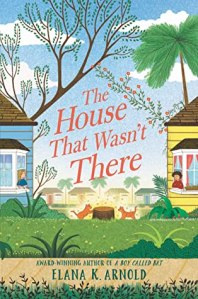
In that vein, I enjoyed every moment of Elana K. Arnold’s The House That Wasn’t There (Ages 8-12, younger if reading aloud), which I just finished reading to my ten-year-old daughter. Yes, the story itself has plenty to recommend it—who wouldn’t love middle-school realism with a few teleporting cats thrown in for good measure? But what struck me the entire time I was reading it was how good the writing is. Every sentence is an absolute pleasure to read out loud. It’s tight. It flows beautifully. It filled us with that same warm fuzzies as previous favorites like this, this, and this.
« Read the rest of this entry »Have You Ever Seen a Flower? (Part One)
May 4, 2021 Comments Off on Have You Ever Seen a Flower? (Part One)
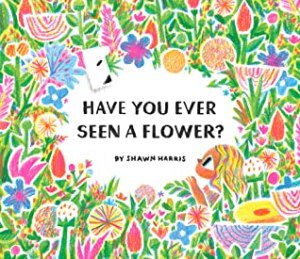
It’s another special week here on the blog, with a two-part post featuring one of my favorite picture books of the year, destined to become a read-aloud favorite. Award-winning illustrator, Shawn Harris, is making his authorial debut with Have You Ever Seen a Flower? (Ages 3-6), an imaginative, sensory-filled, hue-tastic journey inside flowers, starring an ebullient, neon-haired child. Today, I’m sharing why I love this energetic romp, which celebrates the connection between childhood and nature. Then, on Thursday, I’ll be back with my interview with the mastermind behind it, mister Shawn Harris himself. (I’ll also be running a giveaway on Instagram, so make sure you’re following me!)
As you may remember from previous posts, we are big fans of Shawn Harris, who created the delightfully unique cut-paper illustrations for Mac Barnett’s A Polar Bear in the Snow and, before that, Dave Eggers’ Her Right Foot, a speculative non-fiction picture book about the Statue of Liberty that’s still a favorite of my son. With Have You Ever Seen a Flower?, Shawn not only tries his hand at writing, but he trades cut-paper collage for stencils and colored pencils (seven-in-one colored pencils, to be precise). He’ll talk more about his inspiration and process in our interview, but suffice it to say that this departure makes him quite the creative chameleon, a true force to be reckoned with in picture book creation.
Have You Ever Seen a Flower? also proves that the best picture books are often a little trippy. (Think about greats like Maurice Sendak, Ruth Krauss, and James Marshall.) With a psychedelic intensity, Shawn plays with perspective, color, and language to blur the line between reality and fantasy, fusing his character with the vibrant nature around her and reminding us how much fun it is to see the world through the eyes of a child brimming with wonder and possibility.
« Read the rest of this entry »The Stories We Need to Ask For
April 8, 2021 § 1 Comment

Occasionally, a book comes along that is so extraordinary, I’m daunted at the prospect of reviewing it. I worry I could never do it justice. I wish I could just say, This is hands down the most moving picture book I’ve read so far this year, and I want you to get it without knowing anything about it. Maybe, if you’ve been hanging around here for awhile, you’ll do just that. But I will try and find something eloquent to say for the rest of you.
Years ago, my husband helped his grandparents—first generation Italian-Americans—pack up their house to move into a retirement community. In the crawlspace, he uncovered boxes of mementos, all of which his grandmother had at one point tied up using the elastics from her husband’s old underwear. This discovery became one the family would chuckle about for years (Who salvages underwear elastic?!). But it was also a window into the past, a resourcefulness triggered by the Great Depression sixty years earlier, a self-reliance that perhaps belied pain, worry, wanting, loss. Only now does my husband express regret at not probing for the stories underscoring something he accepted as mere frugality.
All of us grow up surrounded by family history, including the cultural heritage this history often represents. Yet, as children, we often take this history for granted. At best, we’re blinded by our own fixation on the present; at worst, we’re embarrassed by the quirks of our elders, by their old-fashioned ways, by their insistence in holding fast to ideas or customs from their past.
Especially where immigrants are concerned, this silencing is further accentuated by the systemic racism underlying American society. Asian Americans, for example, are expected to fulfill the Model Minority Myth, to work hard towards prosperity, while keeping quiet about their struggles, past or present. The recent media attention on the massive spike in hate crimes against Asian Americans—up 1,900% since the start of the pandemic—has begun to open our eyes to an experience far from new, one we should have been talking about ages ago.
In the spirit of lifting up voices of Asian descent—and because this poignant story is at its heart about the value of listening to stories of the past—I urge you to purchase Watercress (Ages 5-9), Andrea Wang’s powerful autobiographical picture book, evocatively illustrated by Caldecott Honoree Jason Chin, who studied traditional Chinese landscape painting to infuse the story with added authenticity. (If Jason Chin doesn’t get his long-overdue Caldecott Medal for this, you will hear me screaming.) Against a backdrop of 1970s rural Ohio, a girl and her brother help their parents, immigrants from China, pick watercress on the side of a ditch to be served that evening. The immediate humiliation of the act later transforms into an opportunity for the girl to connect with her mother’s past life in China—and the grief she still carries in her heart.
« Read the rest of this entry »Spring Break Beckons: Middle-Grade Round Up for Ages 7-14
March 25, 2021 § 3 Comments
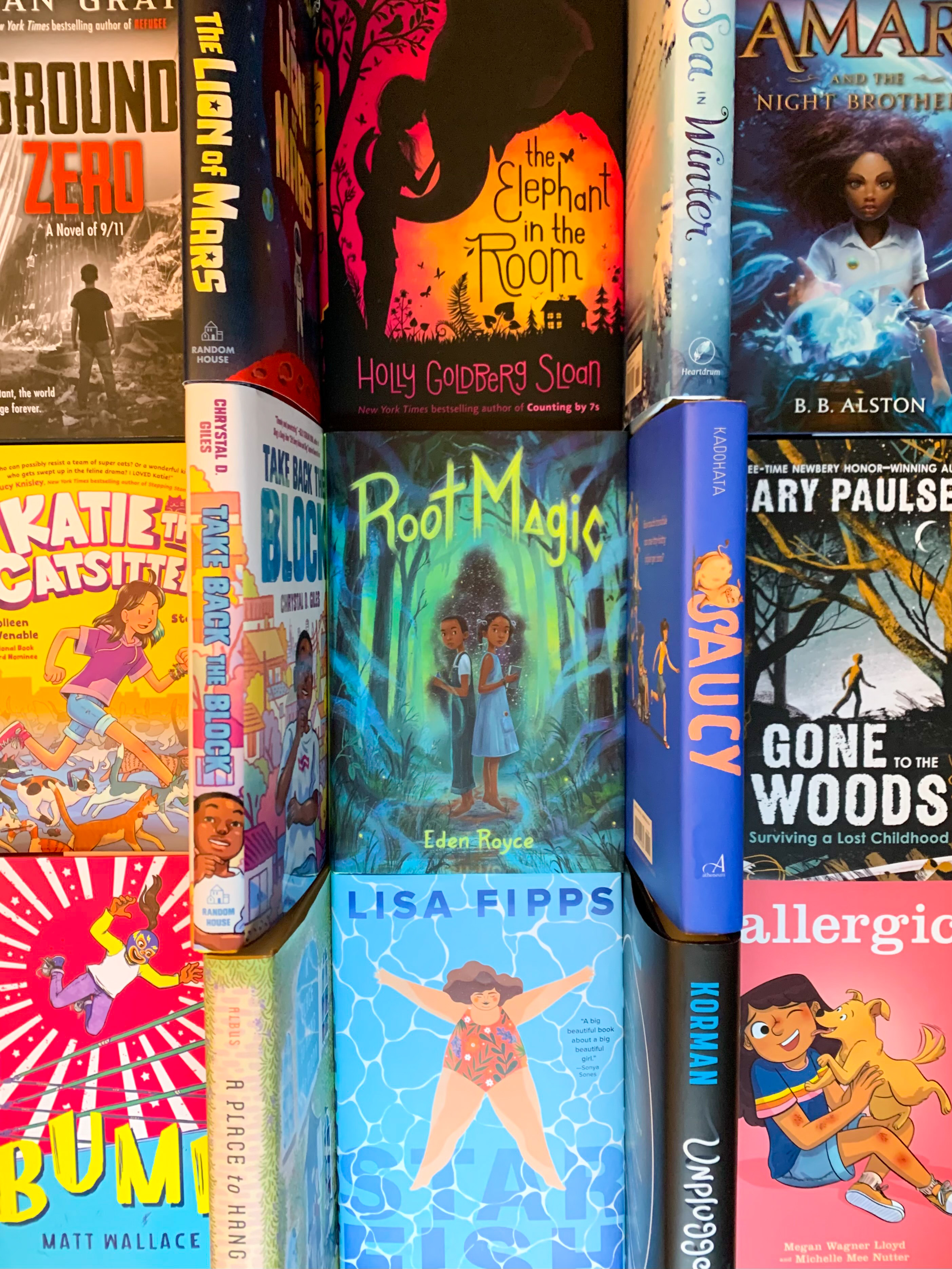
I spent the winter reading. A lot. And that’s good news for your readers, especially those eager to squirrel away with a new story (or three) over Spring Break. All of the recommendations below are books published this year (with the exception of a late 2020 release). Some of them I’ve already talked about on Instagram, but there are surprises, too. Some skew younger and some older, so be sure to consult the age ranges for each. There are graphic novels, novels in verse, mysteries, fantasy, historical fiction, memoirs, and realistic fiction.
As always, report back and tell me what your kids thought!
« Read the rest of this entry »Losing a Dog
February 18, 2021 § 2 Comments
When my son was four and our dog died, I checked out a pile of themed picture books from the library and we read them over and over for two weeks. Every time I asked my son how he was feeling, or whether he wanted to talk about what had happened, he walked over to the pile, grabbed a book off the top, and climbed into my lap. It shouldn’t have surprised me—after all, I have always turned to books to process life experiences—but it did. Before my eyes, I watched this small boy silently work out stuff right there on the page.
One of the most common requests I get from parents is for books about losing a dog or cat. There is no lack of picture books on the subject, but most of them are only OK. Some are beautiful, even profound, acknowledgments of loss—like this and this—and even though I love them, they tend towards the abstract. Others fall into the same trap that we parents do when our children are in pain: they are quick to reassure, to provide distraction, to provide replacement (The dog is happy in heaven! Let’s go pick out a new puppy!). Many pay lip service to the emotional upheaval that is grief, but few model what it means to make space for it.
In my personal experience, grief does not abate without time. Time can’t work alone, it won’t solve all things, but it creates distance, and with distance comes perspective and growth and opportunity. But in the wake of pain, time is at best uncomfortable; at worst it is infuriating, terrifying, and unfathomable. It’s no wonder we don’t like to acknowledge it, much less encourage our children to sit in it.
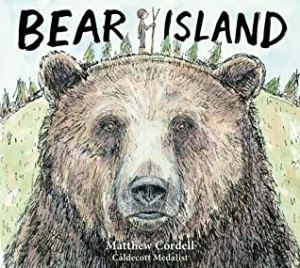
And yet, here’s a new picture book that does just that—and does it brilliantly. In Matthew Cordell’s Bear Island (Ages 4-8), a full year passes from the moment a girl loses her dog to the time her family welcomes a new one. In Cordell’s expert hands, this year unfolds slowly across every page turn. It unfolds while a girl spends her days on an island with a stick and a bear for company. It unfolds in the physical and mental space of the girl’s anger, sadness, boredom, regret, and fear.
« Read the rest of this entry »A Baby Unicorn for Valentine’s Day
February 11, 2021 § 4 Comments
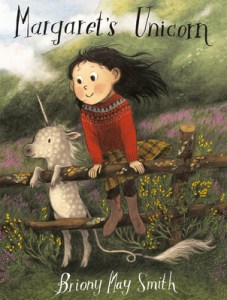
Valentine’s Day approaches, so consider this your annual reminder that the only acceptable Valentine is a new book. You may recall I’m not a traditionalist when it comes to recommending books for Valentine’s Day. If a heart on a cover is what you’re after, you won’t do better than this. But I like a timeless story about friendship that can be read any time of year, which is why in past Valentine’s posts I’ve been about this, this, this, and this. This year, you’re in for an added treat if you head over to Instagram, where I’ve been running a mini gift guide all week, with selects from babies to teens.
Sometimes a book comes along, and even though it’s not breaking any ground, even though it won’t win any awards, it’s so insanely adorable you want to give it to everyone you know.
Let’s be clear. My daughter cannot abide the unicorn craze. She has never tolerated it for one minute. What did unicorns ever do to her? I don’t know. But I’ll tell you this: one year for her birthday, I bought her a pair of horse pajamas, only when she opened them, her eyes immediately locked onto a detail I had failed to notice; each of the horses had, in fact, teeny tiny silvery horns on their forehead. I watched her attempt to disguise her horror and choke out a thank you, but she never wears those PJs.
Now imagine that this same daughter should fall in love with Briony May Smith’s Margaret’s Unicorn (Ages 3-7), about a girl, recently relocated to the wild English countryside, who keeps watch over the CUTEST baby unicorn for two seasons until his mother returns for him. Imagine that this daughter was so taken by the book that she begged me to purchase our own copy, despite being well outside the target age. And then you’ll understand why it would be impossible for a book to receive a higher endorsement.
There is so much joy, so much heart, so much good will in this story that it’s destined to put the biggest smile on children’s faces. If that doesn’t make it perfect for Valentine’s Day, perhaps you ought to collect some moonlit water for your baby unicorn and then come back and we’ll talk.
« Read the rest of this entry »“Having Arms is Totally Overrated”
January 28, 2021 § 2 Comments

A friend once confided in me that she hated reading aloud to her kids; even more, she hated how bad she felt about hating it. Her kids were now reading independently, so she had hoped she’d be off the hook; and yet, they didn’t love reading. She worried she was failing them by not investing in time to read aloud. (Is anyone harder on herself than a mother?)
It’s true that I’m a passionate advocate for reading aloud to kids long after they are reading on their own. The benefits are vast (I’ve listed ten here), with the greatest being that our voice brings literature alive in a way that entices children to continue putting in the work on their own. But I’ve also always pressed parents to choose books they will enjoy as much as their kids, because our enjoyment should be genuine. No one can sniff out a half-hearted effort like a kid, and the last thing we want to convey to our kids is that reading is a chore.
Here’s what I told my friend: park your guilt at the door and do you. You love to read, so read alongside your children. When they’re ready for bed, or whenever you think you should be reading to them, get your own book, have them get their books, and snuggle together while reading quietly. We call these “reading parties” in our house—a term my son coined years ago. I have another friend who calls them “stop, drop, and read” moments, where everyone drops what they are doing, grabs a book, and reads together for at least fifteen minutes. Simply by enjoying your own book, you are modeling for your children the value your family places on reading.
There’s something else I recommend, if you’re looking for ways to connect with your kids around reading but aren’t keen to read to them—or, as happens to the best of us, are having trouble finding the time. Consider reading to yourself a book they’ve recently read and loved. Maybe even something they’re reading right now (my daughter and I are currently doing this with the crazy fun new supernatural thriller Amari and the Night Brothers; she leaves it outside her bedroom door each night and I grab it before I get into bed). What better message can we send than, I value your reading so much that I’m choosing to pick up one of your recommendations?
Before I fell down the rabbit hole of 2021 reading, my daughter convinced me to read two Dusti Bowling novels she inhaled in December: Insignificant Events in the Life of a Cactus (Ages 9-13) and its sequel, Momentous Events in the Life of a Cactus (Ages 10-14). I’m not sure why these evaded me when they first came out a few years ago, because the characters—every single one—are absolutely delightful. (I’ll add that the first book would make a terrific read aloud, too.)
« Read the rest of this entry »Sweeter Together
January 21, 2021 § 8 Comments

Yesterday, at the 59th Presidential Inauguration, as my children and your children and the world looked on, President Biden called us to the work of unity, to “uniting to fight the foes we face. Anger, resentment and hatred, extremism, lawlessness, violence, disease, joblessness and hopelessness. With unity we can do great things, important things. We can right wrongs.” He was referring to Americans coming together, though he also spoke of healing alliances around the world.
Then, the 22-year-old inaugural poet, Amanda Gorman, took the stage—who, incredibly, before the age of twenty could not pronounce the letter “R” due to a severe speech impediment—and elevated that message of unity even further. She called us to hope and light and agency. “There’s always light if only we’re brave enough to see it. If only we’re brave enough to be it.”
(Side note: moments after the inauguration, it was announced that Amanda Gorman has a children’s picture book coming out in September, illustrated by fan-favorite Loren Long. This girl is here to stay, and I am here for it!)
I haven’t yet told you about one of the most exquisite picture books published last fall—actually, if I’m being honest, one of the finest examples of bookmaking I’ve ever seen. (It would have unquestionably made my 2020 Gift Guide had I discovered it in time.) On the surface, Sugar in Milk (Ages 5-10), written by Thrity Umrigar and lushly illustrated by Khoa Le, is a story about a modern girl’s immigration and assimilation; and yet, as it recalls an ancient Persian folktale, it reads as an allegory of unity and light. It’s a story honoring individual courage alongside diversity, acceptance, and inclusion—hallmarks of the American promise. It’s a story reminding us that we are sweeter together.
« Read the rest of this entry »Creating Community with the Vanderbeekers
December 10, 2020 § 1 Comment

Last Saturday, we got a Christmas tree. By all accounts it looked like a ho hum ordeal, much like the rest of 2020. For the first time since having kids, we didn’t drive to a bucolic farm to cut down our own tree and enjoy celebratory hot cider overlooking evergreen-studded hills. Instead, we walked the five blocks to a local nursery and paid twice as much for a tree half as big. It took us so long to get out of the house that by the time we got there, it was dark. We hoisted the tree on our shoulders and walked it back to the temporary digs we’re calling home these days, with the children trailing behind us like shivering ducklings. When we arrived at our front door, we realized the clippers were in storage; we had no way to trim the lower branches to fit the tree in the stand. Also, we had forgotten about dinner.
And yet, when I collapsed into bed several hour later, I could not stop smiling. I turned to my husband. “Why was that so fun?” I mused. Sure, it was an outing, at a time when we have fewer occasions than usual to leave our house. Yes, it was festive (who doesn’t catch the holiday spirit from the scent of evergreen?). But I suspected there was something larger at work. And then it hit me.
Standing among the outdoor crowd in that nursery—waving at neighbors we recognized over their masks, listening to the music piped through crackly speakers, heeding the frenzied calls of workers bundling trees for transport—I felt connected to something larger than myself. For the first time in a long while, I was caught up in community. We have had such few occasions to gather this year; most of the time, seeing people means turning or running the other way. But for one night, I was reminded that rituals and traditions are more meaningful when they’re shared with others. Even strangers. None of us were there for long before we retreated back inside our homes, but for a moment, we remembered what it was like to join together in celebration. (Like the Whos down in Whoville.)
This theme of community features prominently in each of the four titles (and counting!) in Karina Yan Glaser’s Vanderbeekers series, though perhaps none so strongly as in her newest, The Vanderbeekers Lost and Found (Ages 8-12, younger if reading aloud). If my son’s once-upon-a-time enthusiasm for The Penderwicks and my daughter’s continued enthusiasm for The Problim Children has been any indication, my kids are partial to read alouds with large families. But no literary family has quite united my kids’ affection like the Vanderbeekers, a contemporary, biracial family of five children and two parents living on 141st street in New York City. And no other book has elicited as many tears and cheers as the fourth. Glaser’s writing has not only strengthened with each title, she’s now dipping her toe into meatier plots and more complex emotions.
« Read the rest of this entry »2020 Gift Guide: Books for Teens (Ages 13-18)
November 25, 2020 Comments Off on 2020 Gift Guide: Books for Teens (Ages 13-18)

Today marks the end of this year’s Gift Guide, with a slew of fantastic, thought-provoking reads for teens. I’ve taken particular care while indicating age ranges for each book, mindful that some of these contain subject matter appropriate for older teens. (If you missed the previous weeks, there are some great younger teen choices here and here as well. You can also find last year’s list for teens here.)
I would also like to welcome my hubby to these pages for the first time! He wrote the review for True and False, a book I purchased for my son after he asked me, “How can our family be sure the news we’re reading isn’t fake?” but which my husband snagged for himself before it was halfway out of the bag.
You’ll hear a bit more from me before 2020 quits us (or we quit it), because in the seven weeks since I began this Gift Guide, I have stumbled upon books I wish had included. Suffice it to say that my Instagram feed won’t be slowing down anytime soon, either. But I do hope this year’s Gift Guide has proven a worthwhile endeavor for you and your loved ones. Books really do make the best gifts (especially if you support your neighborhood bookstore in the process).
Happy Thanksgiving!
« Read the rest of this entry »2020 Gift Guide: Middle-Grade Fiction for Ages 8-14, Part Two
November 13, 2020 § 2 Comments
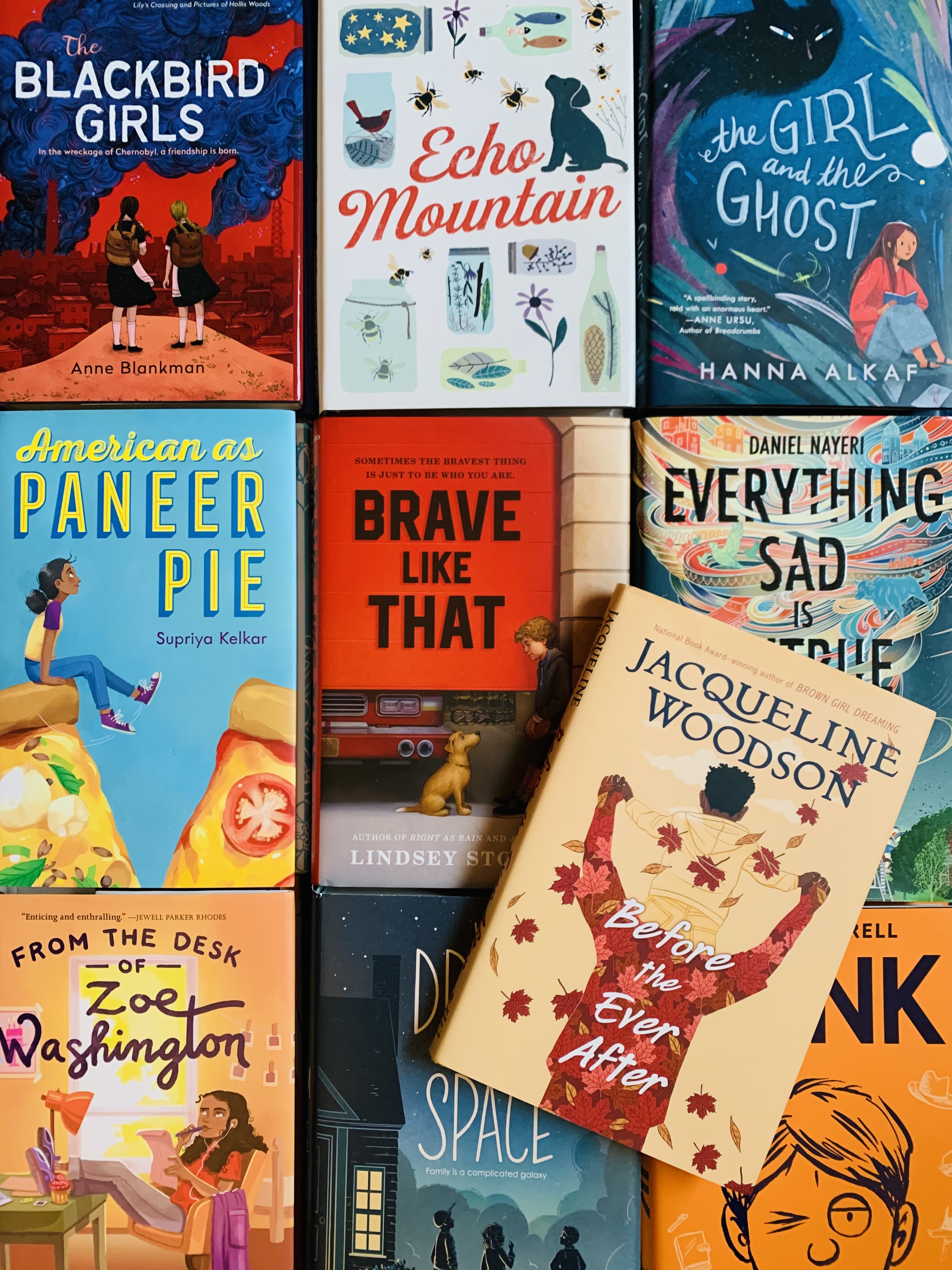
Today, I’m back with my other ten 2020 favorites for the middle-grade audience. As with part one, I’ve taken care to hit a range of interests, styles, and reading levels, while never sacrificing beautiful writing or complex character development (my motto remains: childhood’s too short for mediocre books).
This year’s middle-grade list was compiled with the intimate involvement of my daughter (10) and son (13). While you can always count on my having read any book I review on this blog, nearly every one of the books in today’s and yesterday’s post was also read and loved by one or both my kids. While we’re in that glorious window of sharing books, I’m milking it.
Another friendly reminder that you won’t find graphic novels here, because they got their own post earlier. And if the twenty titles between today and yesterday aren’t enough, check out 2019’s Middle-Grade Gift Guide post, filled with other treasures (many of which are now out in paperback), or my Summer Reading Round Up from earlier this year. And, of course, as soon as I publish this, the fates guarantee I’ll read something I wish I’d included here, so keep your eyes peeled on Instagram, where I’m regularly posting middle-grade updates.
« Read the rest of this entry » What to Read to Your Kids