June’s Birthday Pick
June 5, 2013 § 1 Comment
 Last Friday, after a long week of 90 degree days, the kids and I were driving around struggling to fill the few hours between school and dinner. I suddenly remembered that earlier that day, I’d picked up a stack of just-published books at the store, and so I proposed that we head home to read in the AC. “Reading Party! Reading Party!” my son immediately began chanting, a phrase left over from when his sister was a baby and I would coax him into lying down with me while she took her morning nap in the other room, under the pretense that he could load up the bed with books and we’d have a “Reading Party” (true, my motivation was entirely selfish—must lay head down—but I’m also a big believer that, as parents, our excitement around reading rubs off on our kids).
So, as we sat down to read last Friday, I thought I’d use my kids’ reactions to decide which title to make my birthday pick for the month. I had all my money on Mini Grey’s new Toys in Space, because it’s hard to go wrong with a story involving a fleet of misplaced toys, a spaceship, a conflicted alien, a Wonderdoll blessed with storytelling prowess, and Grey’s hilarious (if occasionally crass) speech bubbles. (Incidentally, I chose another Mini Grey book for last July’s birthday pick, so there must be something about warm temperatures that puts me in the mind of Toys Coming Alive). As expected, Toys in Space captivated my kids and elicited no shortage of laughs. But when all was said and done, it was the final book in our pile that they asked to read a second and a third time—and which they both chose as their favorite.
Emily Jenkins and Stephanie Graegin’s Water in the Park: A Book About Water & the Times of the Day is a quiet, unassuming, lyrical portrait of the transformations that take place in a city park over the course of a typical hot summer day, from the early-morning canine visitors to the tottering babies putting their hands in sprinklers to the adults taking their lunch breaks on shady benches to the evening strollers that get caught in the cooling rain. Of course, there are lots of obvious reasons why my kids (and your kids) would like this book, most especially because it fits entirely into their frame of reference (dogs! swings! parents! nannies! boo-boos! containers of apple slices! tears over leaving the park!). In a season where the heat can make being outside feel oppressive, it’s nice to celebrate that water can be poured into sandboxes to make moats or drizzled down scorching metal slides; that a stray cat can enjoy a sip in a lingering puddle; and that a timid dog might finally decide to wade into the pond. One also can’t ignore the widespread and very natural representation of diversity among the children and adults at the park (Jenkins took her inspiration from weeks spent observing Prospect Park in Brooklyn).
But I think the biggest reason why my kids love this book (and why you shouldn’t hesitate to give it for your next birthday gift) is the sheer comfort that comes from reading a story that’s grounded in the natural progression of a day, whose very text echoes a predictable rhythm of dawn, morning, noon, afternoon, dusk, and night. Very early on, children develop a fascination for time, but it’s not for many years that they truly grasp the meaning of “ten o’clock” or “noon,” that they recognize patterns not only in their own day but in the strangers and animals around them (gasp: the park has a life even when I’m not there?!). There’s a wonderful calm that comes from reading a story that helps to make sense of the order of things. And when the rainstorm descends to cool us all off, there’s comfort in knowing that the sun will shine again.

“Around one o’clock, grown-ups wander in, squinting from their shops and office buildings…Two old people stand [near the pond] with a bag of bread crumbs…On very hot days, the ice cream truck comes early…Children get soft-serve cones and bright Popsicles…Sticky fingers and faces are rinsed in the sprinkler.”
Learning From History’s Many Heroes
May 30, 2013 § 3 Comments
 Just because the school year ends shortly doesn’t mean that our children’s minds have to shrivel up like apples left out too long in the sun. Last week, I gave some ideas for great read-aloud novels to share with your kids. Now, I’m going to encourage you to add some non-fiction into the mix—specifically, historical biographies posing as picture books. In previous posts about Martin Luther King Jr. and Abraham Lincoln, I’ve hailed the rise of today’s picture book biographies, which (unlike the static, black-and-white books of our school days) read like interesting, action-packed stories accompanied by vibrant paintings and intriguing designs. But I’m not merely talking about the Most Obvious Historical Figures; there are lesser known but equally captivating true stories of ordinary boys and girls, men and women, who shaped the world with extraordinary acts of courage, defiance, or creativity.
Where picture book biographies are concerned, contemporary illustrator Melissa Sweet has been on a roll, creating the art for several of my favorite non-fiction books in recent years. Although these biographies are written by different authors, they are unified by Sweet’s signature style—at once instantly recognizable but also entirely unexpected for the historical genre. In place of photographic-like paintings in somber tones, Sweet uses fun colors, whimsical patterns, and collage elements specific to the person whose story she is bringing to life. In Jen Bryant’s A River of Words: The Story of William Carlos Williams (Ages 7-12), Sweet peppers her background collages with excerpts from Williams’ poems, opening up kids’ eyes to these words and thoughts as an art form unto itself. In Alicia Potter’s Mrs. Harkness and the Panda (Ages 5-8), an account of the first person to capture a wild panda in China and bring it to an American zoo for study, Sweet creates frames for her watercolors out of authentic Chinese decorative papers, lending an other-wordly, almost mystical charm to this already fascinating story.
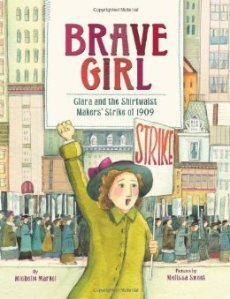
One of Sweet’s most recent triumphs is even more captivating for its portrayal not of an adult but of a young girl. Michelle Markel’s Brave Girl: Clara and the Shirtwaist Makers’ Strike of 1909 (Ages 6-10) tells the mind-boggling story of a Jewish immigrant girl, forced to endure long hours, harsh treatment, and poor pay, while sewing alongside hundreds of other girls in factories (her family’s only hope of putting food on the table.) Clara Lemlich’s “got grit,” and she “knows in her bones what is right and what is wrong”; ultimately, she leads the largest walkout of women workers in American history, inspiring thousands of male and female workers across the country to strike for better working conditions and the right to organize unions. « Read the rest of this entry »
A Story to Grow Up On
May 7, 2013 Comments Off on A Story to Grow Up On
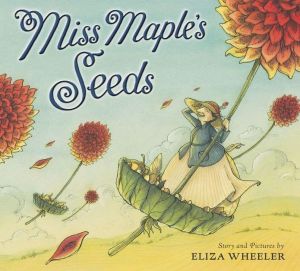 If you’re big into symbolism (or if you, like me, tear up when inscribing books for gifts), then you’re going to want to give Miss Maple’s Seeds to all the young seedlings celebrating birthdays this spring. There are lots of wonderful picture books about seeds (Jean Richards’ A Fruit is a Suitcase for Seeds and Bonnie Christensen’s Plant a Little Seed are two favorites), but none have the magical realism of Miss Maple’s Seeds (Ages 3-7), written and illustrated by newcomer Eliza Wheeler.
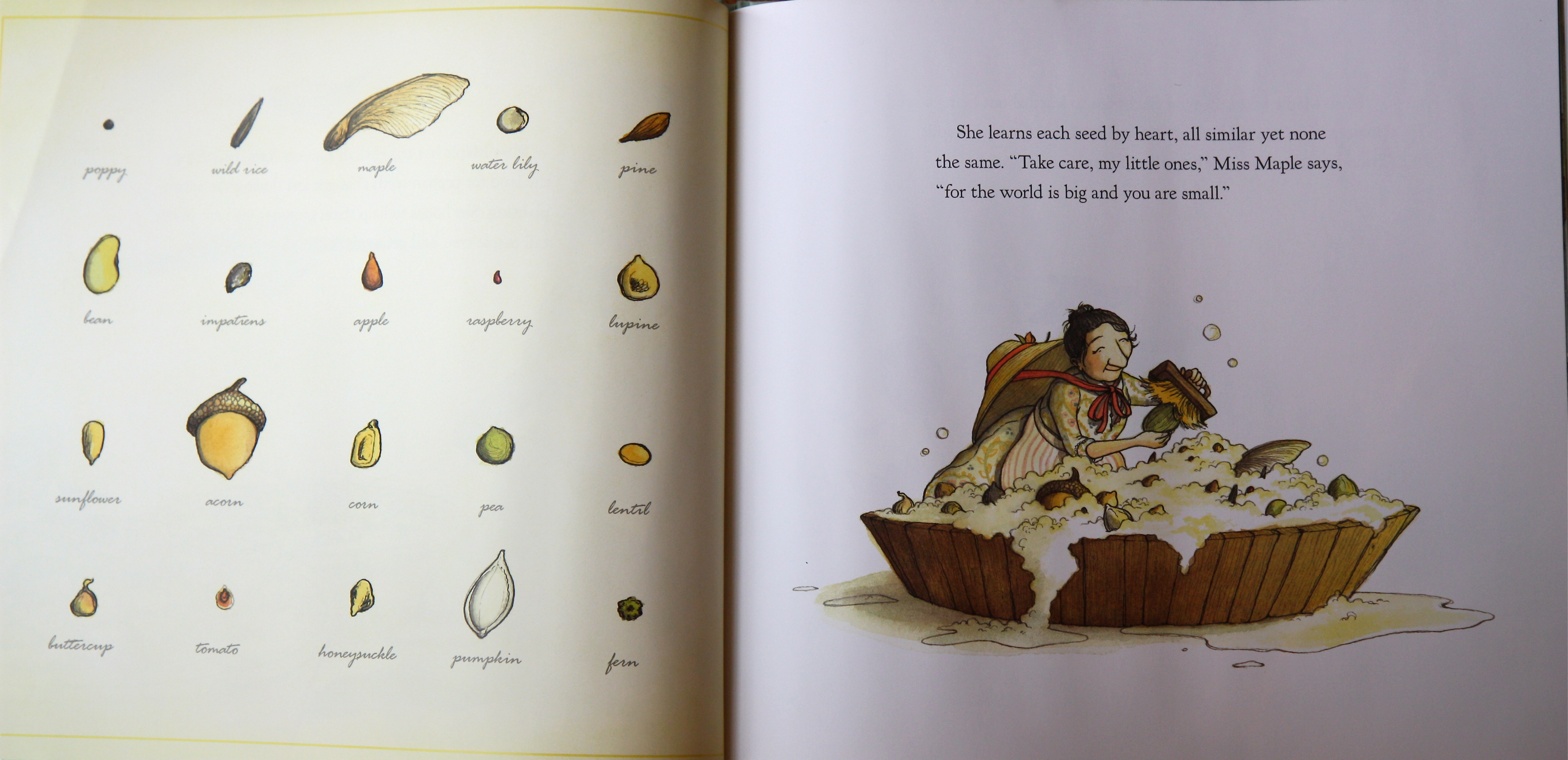
Miss Maple is an eccentric, not-quite-of-this-world sort (a bit like my neighbor, who converses with chipmunks in her backyard). Out of her home inside a hundred-year-old Maple tree, she runs a kind of orphanage for lost seeds, dividing her time between searching for “seeds that got lost during the spring planting” and caring for those seeds until they’re strong enough to lay down roots of their own. “‘Take care, my little ones…for the world is big and you are small,’” she continually reminds her seeds—all the while bathing them, taking them on educational outings to learn about different soil types, reading to them “by firefly light,” and giving them chances to practice “burrowing down into the muddy ground” during thunderstorms. “She’s taking care of them like they’re her babies!” my son was quick to point out, an observation that quickly captured the attention of his younger, doll-obsessed sister.
The story’s prose is unquestionably beautiful: lyrical, concise, and easy to connect back to our own children and the figures (parents, relatives, teachers) who so lovingly and carefully nurture their growth. But it is Wheeler’s ink-and-watercolor illustrations, light and airy and with just a touch of whimsy, which make this gem soar. Sporting a willow weed hat, pointed nose, and delicate slit eyes, Miss Maple epitomizes tenderness in all that she does, whether sweeping her hearth to welcome new seeds or bidding each one farewell as she sends them down the river in lantern-lit leaf boats to find new homes.
One of our favorite illustrations looks like something out of a naturalist’s guide, depicting twenty seeds with their species’ names captioned below in cursive writing (presumably from the hand of Miss Maple). From the fat acorn to the oval pumpkin seed to the single grain of wild rice, the page exhibits not only the visual diversity of nature’s seeds but also the magic which seems to lie within (a giant sunflower grows out of THAT minuscule thing?).
We could all use some of Miss Maple’s tenderness in our own relationship with the Earth, just like our own children need the reassurance that “even the grandest of trees once had to grow up from the smallest of seeds.” I dare you not to tear up when you copy that quote inside the cover of this book for your next gift.
Rethinking Mother Goose
April 30, 2013 § 3 Comments
 A customer once said to me, “Nursery rhymes are what parents used to have to read before better books were written.” A bit harsh, maybe, but there was a time when I could very much relate to this sentiment. With my firstborn, I quickly passed up Mother Goose in favor of reading him plot-driven stories featuring animals (my choice) or construction vehicles (his choice) or Richard Scarry (our compromise).
But then my daughter was born and my opinion of these verses—albeit old-fashioned, nonsensical, and odd—changed. Emily was born with an ear for music; she hears a song once and weeks later she’s belting out a bastardized version from her bed. Early on, her musical predisposition translated to reading material. The two Mother Goose board books on our shelves, whose spines were barely cracked by her brother, became Emily’s prized possessions (the better of the two being Tomie dePaola’s Tomie’s Little Mother Goose).
Saving the Trees
April 22, 2013 § 2 Comments
 Earlier today, in honor of Earth Day, I shared Dr. Seuss’ The Lorax (Ages 5-10) with the elementary children at my son’s Montessori school. While most people associate Dr. Seuss with the nonsensical but catchy I-Can-Read titles, like Green Eggs and Ham, I would argue that his narrative poems—his longer, more complex, often moralistic stories—were actually his greatest gift to children. Not only do these stories showcase a mastery of rhyme that is virtually unmatched in contemporary children’s literature, but many of them also serve as cautionary tales, introducing children to the dangers of things like running away from your problems (I Had Trouble in Getting to Solla Sollew), or prejudice (The Sneetches), or, as in the case of The Lorax, industrialization at the expense of natural resources.
The Lorax, a “brownish,” “mossy,” raspy-voiced creature, who famously utters, “I speak for the trees for the trees have no tongues,” may have been conjured up by Dr. Seuss in 1971, but his environmental message resonates just as clearly today. And yet, there’s a second hero in this story, one with greater power than The Lorax himself. I’m referring to the unnamed child, who appears at the beginning and the end of the story—the one to whom the Once-ler relates (and repents) his decision to knit every last Truffula Tree into an ambiguous but allegedly multipurpose Thneed, “which everyone, EVERYONE, EVERYONE needs.” This child, to whom the Once-ler entrusts the very last Truffula seed, along with instructions to nurture it with water and clean air, literally holds the future of the planet in his hands; he is the reader’s hope for a happy ending. « Read the rest of this entry »
Beholding the Trees
April 17, 2013 § 1 Comment
 “I’m thankful for the trees,” my five year old blurted out last Thanksgiving, as we were going around the table giving thanks for the usual holiday stuff (togetherness, food, health, etc.). His comment was so unexpected that I’ll admit we all burst out laughing (being a child must feel like a thankless job at times). But for all its randomness, I believe his comment was 100% genuine. JP has always had a special place in his heart for trees (plus his favorite color has been green since he could talk—see last year’s post in honor of Earth Day).
I like to think that a tiny bit of his appreciation for these living, breathing, magnificent things, which line our streets and fill our forests, is owing to me. You see, as much as I want my children to grow up with the deepest love and appreciation for their planet, as much as I believe that the future of this planet lies heavily in the choices their generation will make, I can be lazy. I would like to be the kind of mom who plants a vegetable garden every summer with her children, who participates in volunteer days picking up litter at inner-city parks, who turns banana peels into compost. Instead, my kids get a single tomato plant and some herbs in planters on our deck.
April’s Birthday Pick
April 14, 2013 § 1 Comment
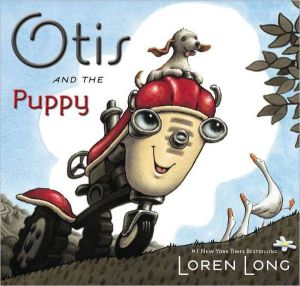 Spring is a time of rebirth: a time of budding trees, sprouting seeds, and birthday parties. As for the last, you’re in luck, because there is a brand new Otis story on the shelves! Whether or not you’re familiar with Loren Long’s stunningly illustrated and action-packed picture books about Otis (see previous posts here), a happy-go-lucky tractor who always comes through for his friends, the new Otis and the Puppy (Ages 3-6) is a slam-dunk. Get your local bookstore to wrap up a copy for every one of your spring birthday parties; and don’t worry about whether the recipient has read the original Otis or Otis and the Tornado because, like its predecessors, Otis and the Puppy stands alone.
This new book has it all: heart, empathy, heroism, and a doe-eyed, playful-eared puppy. When the puppy arrives on the farm, he develops an immediate fondness for the tractor; he eagerly joins in Otis’ games of Hide and Seek and sleeps each night against the purring tractor. Otis quickly learns that the puppy and him have something in common: they’re both afraid of the dark. So when the puppy strays too far from the farm one afternoon and is not recovered by bedtime, Otis’ “heart ached deep inside his engine. He knew how scared of the dark his new friend was and…he knew his friend needed him.” But can Otis muster up the courage to leave the safety of the barn to search for his friend in the dark?
Seeing the World in Color
March 23, 2013 § 3 Comments
 “It’s bud season! It’s bud season!” chanted my children earlier this week, after some long-awaited warm sunshine had beckoned us into the backyard. Thankfully, they were referring not to the beer (although my son’s soccer team does call themselves the Silver Bullets), but rather to the discovery of tiny little green bursts on the ends of our hydrangea bushes and crape myrtles. Since this is the first spring in our new house, our backyard is full of surprises, including yellow daffodils and purple crocuses and little red berries, all of which the children were delighted to point out to me as they raced back and forth across the lawn.
This springtime exuberance is exactly why I love Ashley Wolff’s Baby Bear Sees Blue (Ages 1-4), about a baby bear venturing forth from his den to discover the colors of the world. “Who is warming me, Mama?” asks Baby Bear. “That is the sun,” Mama says, as Baby Bear steps into a pool of brilliant yellow; “Baby Bear sees yellow.” And so begins a series of introductions to different colors, from the blue of the jays to the red of the strawberries to the grey of an approaching storm cloud. For months now, I have been trying (and failing) to teach my two year old her colors; at two and a half, she knows the names of all the colors and loves to exclaim “that’s purple!” or “that’s red!” for things that are, in fact, green or blue. I’m not obsessing about this, having drunk the Montessori Kool-Aid that she’ll learn on her own time (either that or someone will eventually tell me she’s color blind). But I figured it couldn’t hurt to start reading her books about colors, a rich topic in children’s literature (see my complete list of favorites at the end of this post).
Sometimes Reality Trumps Fiction
March 19, 2013 Comments Off on Sometimes Reality Trumps Fiction
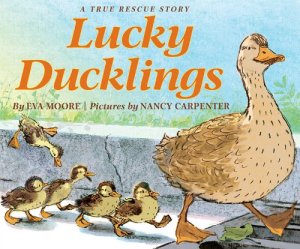 For the past year, my five year old has been obsessed with sorting out fiction from fact. “But did that really happen?” is a common question when we are reading stories, delivered with a furrowed brow and a skeptical tone (as if we as parents are deliberately trying to dupe him with our choice of fictitious books). “Swans can’t really talk and that’s how I know that this story did not really happen,” he announced with confidence at the dinner table one night, after fervently recounting the chapter his class had read that afternoon from The Trumpet of the Swan.
More and more, it would seem, JP has decided that stories are synonymous with make-believe. So, in an effort to challenge his thinking (and because it’s fun to blow his mind), I have been on the hunt for seemingly far-fetched stories that are actually based on real events. Lucky for us—and for our daughter who is obsessed with ducks right now—Eva Moore and Nancy Carpenter’s new Lucky Ducklings (Ages 2.5-6) is just such a story—and an actual rescue story at that.
Making A Mess of the Alphabet
March 11, 2013 § 3 Comments
 I was wrong. Occasionally, this happens. (My husband would probably debate the word “occasionally,” but this isn’t his blog and, besides, I am usually right when it comes to books.) Shortly after Kelly Bingham and Paul O. Zelinsky’s Z is for Moose (Ages 4-8) was published last year, I hastily thumbed through it at a bookstore and thought, “Another alphabet book…rudimentary drawings…simplistic-seeming text…a Bullwinkle-style moose…I’ll pass.”
Then, in January, right after the Caldecott winners were announced, the Internet was suddenly abuzz about this book: top children’s book critics were outraged that Zelinsky’s book got passed up for an award, and some went so far as to argue that it was the most revolutionary book published in 2012. “Huh?” I thought.
So ,when I happened to come across the book a second time (this time at our local library), I picked it up, brought it home, and read it to my kids. I’ll say it again: I was wrong. In my haste to judge a book by its cover, I completely blew past its cleverness, its hilarity, and its brilliant way of turning conventional alphabet books on their head.
March’s Hot-Off-the-Press Birthday Pick
March 6, 2013 Comments Off on March’s Hot-Off-the-Press Birthday Pick
 This one goes out to all the little girls out there—or rather, to their little friends who have spring birthdays. Debut author-illustrator You Byun’s brand new Dream Friends (Ages 2.5-6) is full of the stuff of little girls’ dreams. I’m talking about sugar and spice and everything nice—or, more specifically, bunny rabbits and tea parties and baby chicks and Santa Claus and cupcakes and flowers and, of course, friendship.
Melody has a friend, a best friend, only he’s not your typical friend: for starters, he’s big and white and furry (an ambiguous but lovable dog-cat-raccoon looking thing that my daughter has taken to kissing on the nose each time he makes an appearance). The bigger problem is that this magical friend only visits the little girl in her dreams (although these dreams are filled with such delights as dancing on flower-shaped clouds or watching fireworks explode in the shape of ice cream cones and lollipops).
Year of the Snake
February 21, 2013 § 4 Comments
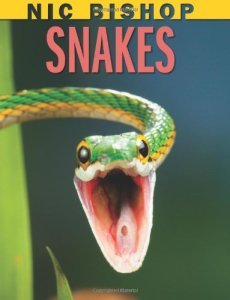 Let me be clear: I am not a snake person. Just ask my husband about the time our former neighbor’s grandson misplaced his yellow and black striped rubber snake in our driveway. My hysteria, combined with the Internet, had half the street convinced that a rare and deadly species of snake (I believe we had landed on the Eastern King Snake) had invaded our DC suburb. My husband finds this an enlightening story about my disposition to overreact (I prefer to think of it as strong survival instincts).
All this is to say that if I am telling you that Nic Bishop’s Snakes (Ages 5-12) is not only A-MA-ZING but that I have been volunteering to read this book to my son, then you should take me very, very seriously. You should march straight out to your local bookstore and buy this book (actually, you should buy all the books in Bishop’s series, even those about tamer animals like butterflies and frogs).
Eyes on Abraham Lincoln
February 12, 2013 Comments Off on Eyes on Abraham Lincoln
 You might expect that my children, living so close to Washington DC, have many opportunities to learn about our nation’s history. But mere proximity does not a future scholar make. The Lincoln Memorial, for example, is consistently celebrated by my five year old as “the place where we picnic in the summer!” If you ask him the name of the president that sits in stone behind him during said picnics, he is likely to throw you a disinterested look and recommence staring out the car window, pointing out other landmarks whose names he boasts correctly but whose significance he understands not. Which begs the question: How do we get our kids to care about the past presidents that have shaped our country?
The biographies we read as kids were filled with dry facts and black-and-white photographs that made their content feel all too disconnected from our daily lives; too often we were encouraged to memorize names and dates for tests, only to forget them a week later. Thankfully, our own kids have access to a whole new generation of fresh reading material, including picture books that breathe colorful new life into historic periods and events.
Thinking Outside the Box This Valentine’s Day
February 5, 2013 § 4 Comments
 Is there a better way to shower our children with love this Valentine’s Day than by snuggling under a blanket with them and sharing a new story? And yet, I’m never thrilled with the list of books that the media typically puts forth as gift ideas for V-Day. Chances are you already have your fair share of books about parental affection (the Guess How Much I love You? sort). If I’m being totally honest, I feel a tad exploited by these lovey-dovey books about hugging and kissing and eternal love; too often they’re lacking in imagination and art and feel instead like a cheap move by publishers to go after our vulnerability as parents (I’ll get off my soapbox now). There are some wonderful classics, like Judith Viorst’s Rosie and Michael and Sandal Stoddard Warbug’s I Like You, but their content is arguably more appropriate for grown-ups to give one another.
So when it comes to Valentine’s Day, I like to think outside the box. In the past, I’ve given my son the glorious Red Sings from the Treetops (hey, there’s red in the title) and The Jolly Postman (Valentines are like letters, right?). But this year, I have an especially good one pegged for my two-year-old daughter; I’ve been hiding it under my bed since it came out last fall and biding my time to spring it on her.
Snow Days
January 24, 2013 Comments Off on Snow Days
 Last night, as I was falling asleep, I wished for snow. Not for the parent in me (who dreads school closures); not for the adult in me (who has never been terribly coordinated at navigating icy pathways); but for my children. In the two and a half years since our family moved to Virginia from the Midwest (land of bountiful blizzards), snow has been something that my kids talk about, dream about, but rarely, if ever, experience. I must admit I find it a bit alarming that my son, so nostalgic for the snow of his earliest years, has taken to listing shoveling among his top five favorite activities. It just doesn’t seem fair that my kids have to go through the daily chore of putting on puffy coats and woolen hats and fleece mittens—without the reward of some billowy white stuff to play in.
So last night, oddly without even realizing snow was in the forecast, I wished for it. And when I woke up this morning, the quiet hush outside (where was the garbage truck?) and a flurry of school emails on my phone sent me flying to my window, where I could hardly wait to broadcast my discovery.
As Cynthia Rylant’s beautiful and celebratory Snow (ages 3-8) begins, “The best snow is the snow that comes softly in the night, like a shy friend, afraid to knock, so she thinks she’ll just wait in the yard until you see her.”
“Use Your Words” (MLK Jr. Style)
January 17, 2013 § 1 Comment
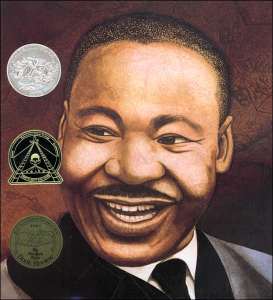 In a few days, our country will celebrate Martin Luther King, Jr.’s birthday and a presidential inauguration. Whatever our political views, whatever our race or gender or religion or socioeconomic background, we can do our children a great service by talking to them about Dr. King’s vision of justice and peace, his commitment to respecting the dignity of every human being.
I’ve found that parents, especially us white Americans, are reluctant to broach the subject of race relations with preschoolers or even young elementary students. Ashamed of our country’s past afflictions, it’s as if we can pretend they never existed if we don’t talk about them. But child development specialists and sociologists (like Po Bronson and Ashley Merryman, authors of NurtureShock) have pointed out that children naturally notice differences in appearances, and that if we don’t have these conversations with them from an early age, they will begin to draw their own conclusions—and, even worse, begin to view the subject as taboo—which does nothing to advance our nation’s long and still arduous progression toward equality. And, let’s be honest, have you ever met a five or seven or ten year old that isn’t obsessed with the notion of fairness? For that matter, how many times a day do we as parents plead with our children, “Use your words!” (say, when said children yank something out of their sibling’s hands or push a peer on the school playground)?
January’s Birthday Pick
January 8, 2013 § 1 Comment
 For this month’s birthday pick, I’m doing something a little different: 1) I’m focusing on the youngest ages for a change; 2) I’ve chosen not one but two books (which make a perfect pairing); and 3) I’m encouraging you to throw caution to the wind and take a chance on books that aren’t brand new but are commonly unknown.
In short, the next time you are headed to a birthday party for a one or two year old, you’re in luck. I Took the Moon for a Walk (Ages 1-4) and Listen, Listen (Ages 1-4) are both illustrated by the supremely talented Alison Jay, whose praises I have sung here before. With their over-sized 9” by 9” format, these hefty board books mirror another favorite by Jay, her ABC: A Child’s First Alphabet Book (which tends to be well known and for good reason: it may just be the best alphabet book ever illustrated).
Alison Jay’s books are the ultimate gift. Packed with hidden surprises, layered with detail, and shimmering in vivid colors underneath a “crackle” finish, Jay’s paintings beg to be poured over again and again.
The Year That Lies Ahead
January 3, 2013 § 2 Comments
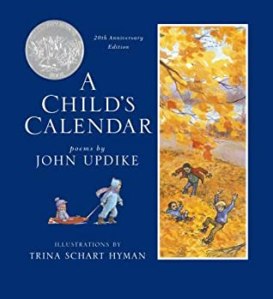
On the morning of January 1, my five year old crawled into our bed and asked with great solemnity, “Is the year of Christmas over?” I’m not entirely sure what he was getting at; did he mean to say month? or season? or was he actually inquiring as to whether the Year of the Great Christmas of 2012 had ended? I’ll never know exactly what was ruminating in his little head, but it was a sweet reminder of how bewildering the concept of time is to children—even to a five year old who has plenty of memories of past years.
We as adults take for granted our assurance about the cyclical nature of time: that all seasons, all holidays, all of nature’s dramatic transformations, will occur again and again with each passing year. It will probably come as no surprise that my instinctual reaction to JP’s question on New Year’s morning was to send him downstairs to fetch some relevant reading material. One of my all-time favorite children’s books (a book so precious to me that it actually resides on the “adult” shelves of our living room library) is A Child’s Calendar (Ages 5-10), a 1965 treasure of poems by John Updike that was later given a ’90s makeover with the addition of award-winning illustrations by Trina Schart Hyman.
« Read the rest of this entry »Holiday Gift Guide 2012 (No. 4): Books For the Hero Within
December 18, 2012 § 1 Comment
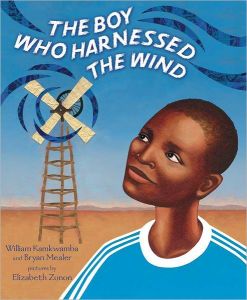 Benjamin Franklin once penned: “If you would not be forgotten/ As soon as you are dead and rotten,/ Either write things worth reading,/ Or do things worth the writing.” OK, that might not be a quote we need to read aloud to our young children, but its sentiment can and should inform the books we choose to share with them.
The genre of biographies written for children is taking off like never before; it seems not only are parents and educators seizing the chance to inspire our young ones with tales of historical figures, but kids themselves are embracing these literary opportunities to inform their own choices, to pave their own paths worth living. And it’s no accident that many of this past year’s biographies are picture books: against a backdrop of beautiful art and poetic text, stories about scientists, writers, inventors, artists, and peacemakers become that much more gripping. The books listed at the end of this post are treasures worth giving and owning; their artistic caliber alone makes them a far cry from the dry, fact-filled paperbacks that we once suffered through for school reports.
Holiday Gift Guide 2012 (No. 3): Books for Future Zoologists
December 13, 2012 § 1 Comment
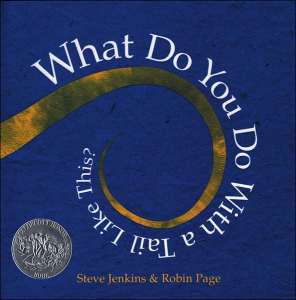 If you have an animal lover in your life, allow me to introduce you to the amazing Steve Jenkins, whose stunning paper collages are the basis for highly engaging and informative books about animals. Why do these books make great gifts? For starters, most parents don’t know about them! Jenkins’ books are more likely to end up on the non-fiction shelves of bookstores and libraries than in places where parents would be likely to bump into them; and while they are technically non-fiction, these gems read like picture books.
The other reason they make great gifts is because they play directly into children’s inherent curiosity about the world around them. Jenkins uses the animal kingdom as a vehicle through which to introduce all kinds of scientific topics—and he does so while keeping kids as absorbed as if they were listening to stories featuring animal characters. He tackles all the obvious themes, like anatomy, food chains, adaptations, symbiotic relationships, and basic survival. But he also tackles more abstract concepts, like time, proportion, and scale—all through gorgeous spreads of animals and fascinating tidbits (see my complete list of favorite Jenkins titles below, including some for younger and older audiences).
 What to Read to Your Kids