A Master Class in Art History (Without Leaving Your House)
June 16, 2014 § 2 Comments
 I don’t know how the rest of you are planning to get through a hot and steamy summer, but I am counting on a lot of time at the craft table. Especially good news for today’s parents is that we don’t have to live next door to an art museum to teach our kids about the great artists and artistic movements of the past. Last June, I kicked off a “summer school” series with a post about some of my favorite picture book biographies for elementary-aged children, a rich and growing subset of children’s literature. Nowhere is the picture book format better utilized than in biographies of famous artists. These aren’t the books of our past, which reproduce notable paintings aside dry critical analysis; rather, they are true and entertaining stories about formative artists who, beginning as children, overcame struggles, searched for inspiration, and broke down conventional barriers to define their unique artistic styles. As your child sits before a blank piece of paper, wouldn’t you love for him or her to channel the stories of Henri Matisse, Jackson Pollock, Henri Rousseau, and Vasily Kandinsky? (See my list of favorite books at the end.)
The latest of these gems, Barb Rosenstock’s The Noisy Paint Box: The Colors and Sounds of Kandinsky’s Abstract Art (Ages 6-12), strikes a particular chord with my family. At almost seven, JP loves to draw and paint, but while his peers are steering more and more towards realistic creations, JP still prefers abstraction. Some might call it scribbling, although to imply that it is rushed or without meaning would be misguided. JP (and now Emily, following in his footsteps) never stops talking—not for one second—while he draws. He narrates the action as it takes shape before him: comets blasting through the sky, submarines bursting into flames, houses pitched airborne towards a burning sun (the theme of explosion is strong with this one). I’m not exactly sure what he is working out on that paper—because there is clearly something cathartic going on—but when he is finished, his entire body is relaxed, his mind at peace. « Read the rest of this entry »
Let’s Hear it for the Birds
May 15, 2014 § 1 Comment
 We’re all about birds this spring. Well, to be fair, I’m all about birds, but I’m filling my kids’ baskets with bird-related books, in hopes that they will catch on, too. I can’t help myself. There’s something about Spring Fever that drives me to obsess about some natural wonder alive and transforming outside my window (see past years’ obsessions with trees and worms). And what better way to drag my children along on this journey than through non-fiction picture books, which pair beautiful illustrations and poetic text with fascinating information?
I didn’t exactly choose birds as this year’s subject matter. They chose me. They chose me by waking me up at 4:30am with their frantic, high-pitched chirping. They chose me by making a nest between our roof and my bedroom ceiling, fast and furious work that sounded as if a much larger animal was ripping down sheets of metal. They chose me by distracting my children over breakfast, encouraging bowls of oatmeal to sit half-eaten, in favor of watching a pair of cardinals dancing in the dogwood outside our dining room window (my children are convinced that “Buddy” and “Lady Buddy” followed us two years ago when we moved up the hill to our current house). Let’s just say that the time seemed ripe to learn a thing or ten about the busy birds around us.
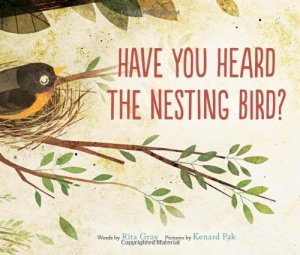
What I discovered was a treasure trove of non-fiction picture books starring birds, many published in recent years. I’ve shared my complete list of favorites at the end (with picks through age 10), but I had so much trouble choosing one to focus on here, that I have to expound on two. The first is Rita Gray’s Have You Heard the Nesting Bird? (Ages 3-6), illustrated by Kenard Pak. This is one of those deceptively simple picture books that educates as it delights. « Read the rest of this entry »
“Life, Liberty, and the Pursuit of Happiness”
February 17, 2014 § 1 Comment
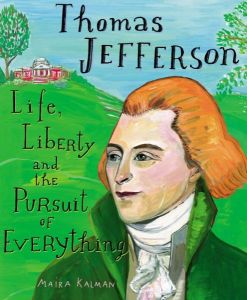 My wish has come true: the exquisite Maira Kalman has graced us with another presidential picture book! Last year, she gave us Looking at Lincoln, which I’ve gifted to more people than I can count (read why here). This year, she introduces our children to Monticello, the Declaration of Independence, and the brilliant, curious, and at times hypocritical Thomas Jefferson, in her just-published Thomas Jefferson: Life, Liberty, and the Pursuit of Everything (Ages 6-12).
Instead of beginning, as we might expect, with chronological details of Jefferson’s life, Kalman’s biography takes us straight to the heart of her subject—or, rather, to his mind. The book opens with Jefferson’s love of books (“I cannot live without books,” he said—a man after my own heart); manners (he could say “please” in seven languages); vegetables (his gardens sported nine varieties of peas, his favorite); and “light and air” (he constantly changed Monticello’s architecture to let in both). « Read the rest of this entry »
Groundhog Day (& Other Books About the Weather)
January 29, 2014 § 3 Comments
 My six year old doesn’t understand why Groundhog Day isn’t a school holiday. I tried to explain that, with February 2 being a Sunday this year, it’s sort of a moot point. “But it’s not always on a weekend, Mommy.” So then I tried to explain that the government only picks a few of the most important people in our history (ahem, George Washington, Martin Luther King Jr.) to honor with a school holiday—and that contrary to what he might think with ALL THESE SNOW DAYS, kids are supposed to be IN SCHOOL, learning stuff that their parents don’t have the patience to teach them. “Well, Punxsutawney Phil IS very important because he can PREDICT THE WEATHER.” This is a fair, if debatable, point.
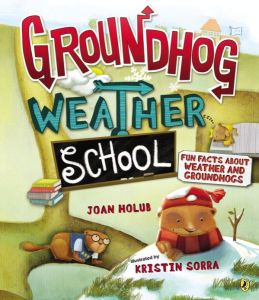
The children’s books on the subject of this Very Important Holiday tend to be either factually straightforward (Gail Gibbons’ Groundhog Day! is usually the teacher’s favorite) or purely fictional (read: silly and unhelpful). But this year, I stumbled upon a find that combines fact, fiction, and An All-Around Good Time: a book titled Groundhog Weather School: Fun Facts About Weather and Groundhogs (Ages 5-9), by Joan Holub, with illustrations by Kristin Sorra. This is precisely the type of book I knew JP would enjoy reading by himself (and, as parents of newly independent readers know, we’re always on the hunt for “that book”). « Read the rest of this entry »
Changing the World Through Song: A Post for MLK Jr. Day
January 19, 2014 § 1 Comment
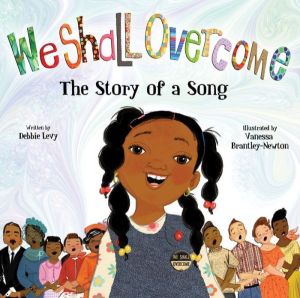 Last year’s post, in honor of Martin Luther King Jr’s birthday, continues to be one of my most read and shared posts. I don’t think there’s any way to top Kadir Nelson’s moving picture book biography of King, so I thought I’d talk this year, not about the leader of the Civil Rights Movement, but about his followers—the ones who marched, the ones who stood up for what they believed, the ones who sang. I was giddy with excitement to discover Debbie Levy’s new picture book, We Shall Overcome: The Story of a Song (Ages 5-10)—one, because I have always loved that song (it crops up at surprising times, like when I’m hiding in the bathroom in an attempt to keep from screaming at my children); and two, because music has recently taken our house by a storm. « Read the rest of this entry »
Digging for Mummies
January 15, 2014 § 1 Comment
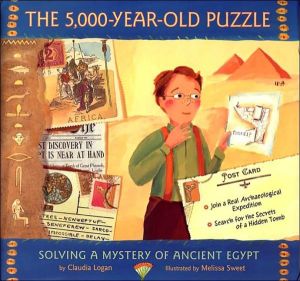 While my son and I were on the subject of excavating fossils, it seemed it might be logical to jump from paleontology to archaeology. It didn’t hurt that, over winter break, JP’s teacher had emailed me about tracking down some good books about Ancient Egypt (see list at the end). And so, one snowy night, JP and I sat down on the couch to read the Treasure Trove that is The 5,000-Year-Puzzle-Old Puzzle: Solving a Mystery of Ancient Egypt (Ages 6-12), by Claudia Logan, illustrated by Melissa Sweet.
An hour later, we were still reading it, my daughter and husband had joined us, and I almost couldn’t tear myself away to meet my girlfriends for a scheduled drink. Almost. I can’t think of a better introduction, not only to Ancient Egypt, but also to the painstaking role that archaeologists play in unearthing clues about ancient life. While the American boy and his father in the book are fictitious, they join an actual historic dig, led by a Harvard team of scientists, which occurred in 1924 at the Egyptian site of Giza 7000X, where a secret and unusually well-preserved tomb was discovered. Through a combination of actual historic records and the young boy’s first-person narrative, we learn about the team’s efforts to excavate this ancient site over the course of a year—including their continual revisions to hypotheses over whose tomb it was and why it was constructed in such a way. « Read the rest of this entry »
Digging for Dinosaurs
January 6, 2014 § 4 Comments
 The last week of my winter break was spent in a cloud of plaster dust. No, we’re not putting an addition on our house; and no, my husband did not finally repair our bedroom ceiling. I’m referring to the Excavation Kits that my son received for Christmas, the kind that come with kid-sized tools for chipping away at blocks of pink plaster, in an attempt to unearth miniature replicas of prehistoric bones. We are talking about a six year old engaged in hours upon hours of independent, uninterrupted work. Are you hearing this, my fellow parents? You need to get Santa to come back. Right now. And you won’t even mind the mess—in fact, you’ll never be happier to clean plaster dust off the floor.
There are kids so obsessed with dinosaurs that they not only know the names of them, but they can pronounce them correctly, tell you in which periods they lived, and rattle off lists of what they ate. JP is not one of those kids. He might be able to identify 15 dinosaurs, despite our reading extensively about them over the years (and I wouldn’t fare much better). For him, the lure lies in the process of dinosaur discovery, the means by which fossilized bones get from some remote dusty location to the pristine museum halls. I’ve mentioned before how much we love Jessie Hartland’s How the Dinosaur Got to the Museum (Ages 4-8), arguably one of the simplest and best introductions to the science of paleontology. And don’t even get me started on the downright fascinating portrayal of field work in Barnum’s Bones: How Barnum Brown Discovered the Most Famous Dinosaur in the World (Ages 5-10), by Tracey Fern and Boris Kulikov.
But (and I do apologize for this) I’ve been holding out on telling you about another of our favorites: the Pièce de Résistance of Dinosaur Books. I’m talking about National Geographic’s The Dinosaur Museum: An Unforgettable, Interactive, Virtual Tour Through Dinosaur History (Ages 5-10). « Read the rest of this entry »
Holiday Gift Guide 2013: Compelling Non-Fiction For the Animal Lover
December 16, 2013 § 1 Comment
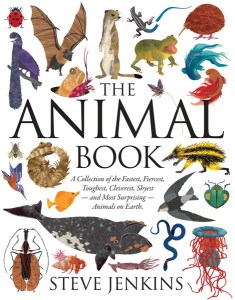 Last year around this time (equally last minute), I did a post about “books worth their weight” (great-looking reference books), as well as one about picture books by Steve Jenkins, a.k.a. Children’s Master of All Things Animal. This year, we can kill two birds with one stone when we buy Steve Jenkins’ new, overstuffed, and absolutely phenomenal The Animal Book: A Collection of the Fastest, Fiercest, Toughest, Cleverest, Shyest—and Most Surprising—Animals on Earth (Ages 6-12).
Over 300 fascinating animals are presented in sections like Family (chapters include “The Mating Dance” and “Bringing Up Baby”); Defenses (e.g. “Copycats” and “Bodily Fluids”); and The Story of Life (yes, Jenkins tackles evolution and, boy, does he succeed). I’m normally not a big fan of fact-centered non-fiction, preferring a more narrative approach that strengthens children’s attention spans and reading comprehension. But I make a BIG exception for Jenkins, whose presentation is as visually enticing (brilliant paper collages amidst an extraordinary use of white space) as it is factually addictive. I could look at this book for hours. I have looked at this book for hours (yes, I am hoarding it from my kids). « Read the rest of this entry »
Bang! Crash! Interstellar Collisions!
October 18, 2013 § 2 Comments
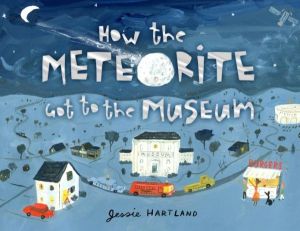 I may have given an audible little yelp the other day when I discovered that Jessie Hartland had published a new title in her “museum” series, but it was nothing like the squeal of joy that my six year old emitted when I brought it home and gave it to him. You see, How the Dinosaur Got to the Museum (Ages 4-8) and How the Sphinx Got to the Museum (Ages 5-10) are among our All Time Favorites, rivaled only by Hartland’s newest addition to the series, How the Meteorite Got to the Museum (Ages 5-10). All three books are brilliantly simple slices of science and history; they introduce children to paleontology, Egyptology, and now astronomy by following a specific artifact from its discovery in the field to its place in the exhibition hall of a museum.
Most great science books take their inspiration from true historical events. Here’s an especially awesome one: on a clear night in October of 1992, a meteor that had been predictably orbiting the sun for four billion years suddenly and inexplicably changed course, entered the Earth’s atmosphere, flew over Kentucky, West Virginia, and Pennsylvania, and crashed into the trunk of a Chevy Malibu parked outside a house in Peekskill, New York (that’s right, crashed—as in, totaled the back of the car and sprung a leak in the fuel tank and precipitated a 911 call to police and fire fighters—pretty much the coolest thing my six year old has ever conceived of). « Read the rest of this entry »
Digging in the Backyard: Summer School Wraps Up!
August 22, 2013 § 1 Comment
 Earlier this summer, the kids and I were on a morning walk—JP in the lead on foot, Emily trailing on her scooter, and me bringing up the rear. It had rained most of the night before, and the sidewalks were still damp. Abruptly, JP let out one of his characteristic ear-splitting screeches (at almost six, the boy still has no regard for volume control): “STOOOOOOP, EMILY!” Before I could launch into my characteristic lecture about not screaming into people’s faces, especially when that sweet face belongs to your little sister, JP followed it up with, “MOMMY, EMILY WAS ABOUT TO RUN OVER A WORM!” I looked down and, sure enough, the sidewalk was covered in worms, evidently displaced from the previous night’s storm. Is it wrong that I immediately assumed JP’s reaction was based on the grossness factor of squashing a worm between one’s scooter’s wheels? I’ll admit I felt slightly guilty when, once everyone calmed down (by now Emily was screaming nonsensically about worms as well), JP explained, “We have to be so, so careful not to hurt these worms. They need to go back into the dirt to make the plants grow!” I wasn’t going to tell him that these worms didn’t look like they were going anywhere ever again; Emily and I simply followed in tow as he went first and pointed out any worms that we should steer around.
It’s moments like these—rare, fleeting moments—when I wonder if maybe I’ve done something right as a parent. That somehow in all my blabbing on about trees and seeds and caterpillars, my kids have begun to develop an appreciation for the natural world that surrounds them. I would have to credit any success I’ve had to books like Yucky Worms (Ages 4-8), by Vivian French and Jessica Ahlberg, which is part of a fantastic Read and Wonder Series published by Candlewick Press. This is natural science for young kids at its best: fictional stories packed with scientific facts that are woven accessibly into the narrative. In Yucky Worms, a boy gets a lesson in Wormology from his green-thumbed grandmother (perhaps it’s no coincidence that I was first introduced to spiders and butterflies by my two grandmothers?).
Quick to exclaim “Yuck! Throw it away!” when his grandmother digs up a “slimy, slithery, wiggly worm,” the boy in the story gets schooled on the different parts of the worm, how it tunnels through the ground, what it eats, and how its poop enriches the soil. It turns out that worm poop—white curly forms called “casts”—are very plentiful in our backyard. It also turns out that most earthworms do not regenerate when accidentally cut in half by a gardening spade (I now get schooled regularly on this by my “backseat gardeners”). There is much to love about this book, from the sweet relationship between grandmother and grandson, to the hand-drawn diagrams of the worm’s anatomy, to the answers to questions kids don’t even know they have, like what happens to worms in the winter. But perhaps the biggest appeal for kids are the word bubbles that occasionally come out of the mouths of the worms themselves, reinforcing the lessons in the book while adding some enticing humor. What is it about worms that seem to invite speech bubbles? Doreen Cronin and Harry Bliss incorporate a similar technique in their hilarious series, Diary of a Worm (more fun than fact but still surprisingly illuminating about these creatures). Worms have a lot to say, evidently, as they dodge predators or feast on moldy fruit.

Here, the story continues on the side, while the worms take front stage with their tunnels and word bubbles.
I have tried my darndest this summer to get my kids out into nature. When it comes time to make dinner, it’s all I can do to resist the temptation to turn on the TV, shooing them instead into the backyard. Inevitably, I am called out moments later to settle some dispute over an ancient half-broken toy that has been unearthed from the shed and is suddenly the Only Thing Worth Playing With. But, in time, they settle into the rhythm of things and begin to take closer notice of their surroundings. Once again, my dinner making is interrupted by yelling: “Mommy, come out here RIGHT NOW!” I trudge outside more than a little exasperated, only to find the kids, not fighting over toys, but instead huddled over a corner of the deck. I bend down to see a spider’s web glistening from drops of water that have fallen out of the just-watered planters above. “It’s just like the one in the book!” JP exclaims, referring to Helen Frost’s stunning photograph of a dew-covered spider’s web in Step Gently Out, which we had just been reading that morning. “Only it’s even more beautiful,” he adds. “Yes,” Emily pipes in. “It’s sooooo boootiful.”
Other Favorites About Backyard Critters:
Step Gently Out, by Helen Frost (Ages 3-6)
Where Butterflies Grow and The Snail’s Spell by Joanne Ryder & Lynne Cherry (Ages 3-6)
The Honeybee Man, by Lela Nargi (Ages 4-8)
Diary of a Worm, Diary of a Spider, & Diary of a Fly, by Doreen Cronin & Harry Bliss (Ages 4-8)
Insect Detective: Read and Wonder, by Steve Voake & Charlotte Voake (Ages 4-8)
Seeds, Bees, Butterflies & More: Poems for Two Voices, by Carole Gerber & Eugene Yelchin (Ages 5-10)
Plus these favs mentioned in a previous post about Young Naturalists!
Keeping Cool Under the Sea
July 26, 2013 Comments Off on Keeping Cool Under the Sea
 I know, I know, I’ve left you high and dry without reading material for nearly a month (vacation will do that); plus, I neglected to give you a birthday pick for July’s parties. So, in order to make it up to you, I am not only going to recommend a fabulous, brand-spanking-new book that you can give to everyone celebrating a birthday this summer, but I’m going to end with an EXTRA-LONG LIST OF THEMATICALLY SIMILAR BOOKS for you to read to your own kids (heck, you could even bundle some for an extra-special gift, like I did for a friend earlier this month). Are you ready?
Much like reading about snow in the winter, one of my favorite things about summertime reading is the excuse to read books about the sea (it’s no coincidence that I featured an octopus story for last summer’s birthday pick as well). Whether you’re spending time on the beach or simply looking for a mental escape from the heat, summer is the perfect time to introduce children to underwater worlds: landscapes so different from ours that they have their own inhabitants and laws, their own colors and sounds, their own unique set of experiences and problems. And yet, much of the best sea-themed fiction immerses kids in these foreign worlds while at the same time drawing parallels between their own emotional lives and the lives of the fishy dwellers within.
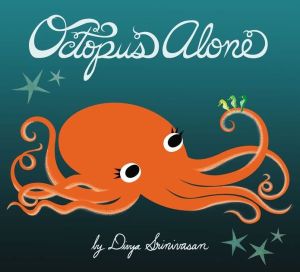
Trust me, you will want to dive straight into the pages of Divya Srinivasan’s Octopus Alone (Ages 3-6), where a bright orange octopus is set against an enticing palette of turquoise, seafoam green, and bright pink. I first fell in love with Srinivasan’s unique stylized graphics in Little Owl’s Night (reviewed here). Now, in the much longer Octopus Alone, we are treated to a more involved plot alongside her vivid art. I can’t say that Srinivasan’s narrative voice is as strong or coherent as her illustrations; and yet, the story’s theme—venturing outside one’s comfort level and finding the reward of new friendships—resonated loudly with both my kids. Any child who has felt overwhelmed walking into a preschool classroom or has stood on the periphery watching older kids at the playground will see a little of herself in the bashful octopus, who is so uncomfortable around the outgoing seahorses that she initially retreats from the coral reef into the deeper, darker, lonelier waters. Any child who often stands silently amidst others (but doesn’t shut up at home) will see a little of herself in the octopus, who imitates the dancing moves of the seahorses in private before allowing herself to see how much fun it might be to dance with others.
Like any great sea-themed book, there are countless opportunities for underwater discovery in Octopus Alone. Our family’s favorite would have to be the indisputably charming endpapers, which label (in cursive!) each of the sea creatures that make an appearance in the book (my son is prone to the “puffer fish,” while my daughter’s finger goes straight to the “butterfly fish”). My kids giggle every time Octopus releases her ink to “hide her blushing” or to escape the hungry eel, a nice reminder of aquatic adaptation. The book even makes some (albeit subtle) references to the complex ecosystem of coral reefs, like cleaner shrimp eating algae off the back of a nurse shark or baby dominoes playing hide and seek in the “swaying anemones.” (Older kids can build on these with Jason Chin’s equally stunning and richly informative non-fiction picture book, Coral Reefs…sorry, couldn’t wait until the end to plug that one.)
Our oceans and lakes, our sandy tide pools and rocky bluffs, can be a source of endless fascination for our kids. We have the power to channel this fascination into imagination, education, and hopefully even conservation. So go ahead: dip their toes in the water and start reading.
Other Favorite Under-the-Sea Stories (from youngest to oldest ages):
Over in the Ocean: In a Coral Reef, by Marianne Berkes & Jeanette Canyon (Ages 1-3; board book)
I’m the Biggest Thing in the Ocean! by Kevin Sherry (Ages 1-4)
The Snail and the Whale, by Julia Donaldson & Axel Scheffler (Ages 3-6; ONE OF MY ALL TIME FAVS)
The Pout Pout Fish, by Deborah Diesen & Daniel X. Hanna (Ages 3-6; best read in the style of the blues!)
Swimmy, by Leo Lionni (Ages 3-6)
Big Al, by Andrew Clements & Yoshi (Ages 4-7)
If You Want to See a Whale, by Julie Fogliano & Erin Stead (Ages 4-7; also brand new)
Kermit the Hermit, by Bill Peet (Ages 4-8)
Jangles: A Fish Story, by David Shannon (Ages 4-8)
Some Favorite Sea-Themed Non-Fiction Picture Books:
The Voyage of Turtle Rex, by Kurt Cyrus (Ages 4-8)
Coral Reefs, by Jason Chin (Ages 5-10)
Island: A Story of the Galapagos, by Jason Chin (Ages 6-12)
Life in the Ocean: The Story of Oceanographer Sylvia Earle, by Claire A. Nivola (Ages 5-10)
Manfish: A Story of Jacques Cousteau, by Jennifer Berne (Ages 5-10)
Ocean Sunlight: How Tiny Plants Feed the Seas, by Molly Bang (Ages 6-12)
Learning from the Big Thinkers (Summer School Continues!)
June 30, 2013 § 2 Comments
 Albert Einstein said, “The important thing is not to stop questioning. Curiosity has its own reason for existing.” Then by this account, should we embrace the endless string of questions by our children throughout the day? A recent British study found that children ask on average 300 questions a day. I’m pretty sure that my almost six year old has this daily average beat by the thousands; and while there are many moments when I relish his curiosity, there are also times when I long for an “off” button. These last instances most frequently occur when we’re in the car, because there’s nothing like being locked in a metal box with your children to bring out their obsessions with a full, unadulterated intensity. “Why are the clouds moving that way? Is there going to be a storm? How do the weather people know there’s going to be a storm? What happens if lightning hits our car? Why does red have to mean stop?” (This last one as we pull up to a stoplight and I realize that I can’t expect his brain to pause just because the car does.)
I was driving back from the pool the other day (having been turned away by the threat of storm clouds), and I may or may not have erupted with “I can’t take it anymore!” But then, I had a rare flash of brilliance, and I declared, “It’s Mommy’s turn to ask questions.” I began my own litany of questions, only to discover that JP had answers waiting just as quickly as I could rattle them off. ‘”What are clouds made of?” (“Water droplets!”) “Why does a ball fall if you drop if in the air?” (“Gravity!”) “Why am I not hungry?” (“Because you probably ate enough lunch!”) “Wow,” I said, “you are just as good as answering questions as you are at asking them.” “That’s because I ask so many questions!” he roared, and he and his sister laughed their heads off for the next two minutes (I’ll take my breaks where I can get them).
I recently posted about the value of sharing picture book biographies with children, and I included a list focused on true stories of the Ordinary Doing Extraordinary. But, of course, we mustn’t neglect the born geniuses, the legendary minds, the Great Thinkers that are responsible for shaping our very understanding of the world. In recent years, a slew of exceptional artistic and richly informative picture books have emerged (see my list at the end of this post) to celebrate such minds as Leonardo da Vinci, Benjamin Franklin, and, most recently, Mr. Curiosity Himself: Albert Einstein.
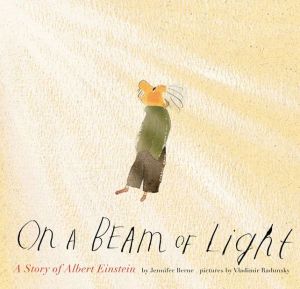
Jennifer Berne’s On a Beam of Light: A Story of Albert Einstein (Ages 5-10) is the kind of book you’ll want to share with your kids when they’re five, six, seven, eight, nine, and ten. Berne’s highly approachable narrative voice speaks directly to children (she first won me over in Manfish: A Story of Jacques Cousteau). In Einstein’s case, she brings to life, not only Albert’s awe at the mysteries of the world, but also his many personality quirks—from his disruptive questioning in elementary school to the saggy, baggy clothes he always wore as an adult (“My feet are happier without socks!”). These quirks are further emphasized by Vladimir Radunksky’s loosely drawn pen, ink, and gouache drawings, at once frenetic and playful, serene and innocent, like little windows into Albert’s own ever-shifting imagination. In JP’s favorite spread, Albert imagines what it would be like to ride his bike up the beam of sunlight that’s shining down on the sidewalk in front of him. “And in his mind, right then and there, Albert was no longer on his bicycle, no longer on the country road…he was racing through space on a beam of light. It was the biggest, most exciting thought Albert had ever had. And it filled his mind with questions.”
I’m no physicist. In fact, I somehow managed to avoid taking a Physics class in both high school and college (I regret this now). I have never felt terribly confident talking about energy and heat and magnetism and motion with my children, and goodness knows what I’ll do when I have to help them with equations involving E = mc2. But here I am, reading this book—this beautiful literary depiction of these scientific concepts—and I think, “Why have I never realized that physics is everything?!” Like the searching, wondering eyes of our little ones, Albert sees everything as a question. How could “a lump of sugar dissolve and disappear into his hot tea?” How could the “smoke from his pipe…disappear into the air?” And, of course, what would happen if he traveled near the speed of light? (The answer: “Only minutes would pass for Albert, while years and years went by for the rest of us!”)
Albert “asked questions never asked before. Found answers never found before. And dreamed up ideas never dreamt before.” Because of him, we were able to build spaceships and travel to the moon (there’s a great afterward that gets into more detail about the repercussions of Einstein’s discoveries, along with a list of additional reading material). Naturally, there are many questions still at large about how the universe works—and, fittingly, the book’s dedication reads, “To the next Einstein, who is probably a child now.” If my son and his peers are any indication, there’s likely a whole crop of future Big Thinkers out there. Children who won’t let a mere stoplight slow them down from asking their questions, questions, questions.
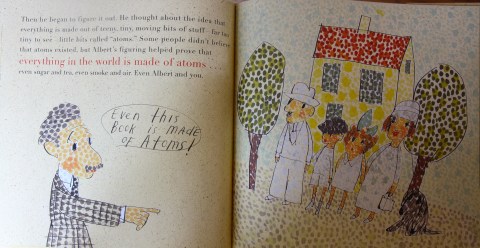
Here, kids are introduced to the idea that everything is made up of “teeny, tiny, moving bits of stuff—far too tiny to see—little bits called ‘atoms'” In a perfect marriage of text and illustration, Radunksky’s corresponding picture is broken up into hundreds of tiny dots (“Even this book is made of atoms!”).
Other Favorite Picture Books About Great Scientific Minds:
Odd Boy Out: Young Albert Einstein, by Don Brown (Ages 5-10)
Electric Ben: The Amazing Life and Times of Benjamin Franklin by Robert Byrd (Ages 6-12)
Noah Webster and His Words, by Jeri Chase Ferris (Ages 6-10)
I, Galileo, by Bonnie Christensen (Ages 7-12)
Leonardo: Beautiful Dreamer, by Robert Byrd (Ages 8-12)
The Tree of Life: Charles Darwin, by Peter Sis (Ages 8-12)
The Human Body (Summer School Continues!)
June 12, 2013 § 1 Comment
 Summer is naturally a time for children to sharpen their senses and take notice of their bodies. Running barefoot through the freshly cut grass; relishing the pure silence underwater at the pool; feeling the sweat beads on the back of their necks; hearing the crack of thunder that sends them tearing for the house; stretching out on the earth’s back to gaze at a sky full of stars: this is what summer looks, sounds, and feels like to our children. So why not turn these grass-stained knees into a chance to study the human body? And what if we take these bodily lessons further; what if we create an awareness in our children that their bodies aren’t just little planets unto themselves but are connected to the mysteries of the greater universe?
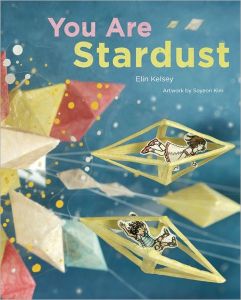
I have long been puzzled by the lack of children’s books that bridge the scientific and natural worlds, so I was thrilled to discover a little gem published last year, written by Elin Kelsey. You Are Stardust (Ages 4-8) is that rare blend of scientific fact and poetic wonder. Beginning with the premise that “every tiny atom in your body came from a star that exploded long before you were born,” the book goes on to draw parallels between humans, animals, the earth, and the universe, from the salt water that flows through our tears like it flows through the ocean to the electricity that powers our thoughts like it powers the lightning in the sky. Every fact and connection is intended to shock and awe (and is backed up by scientific evidence). Did you know that the water we drink today is the same water that the dinosaurs drank? Or that “each time you blow a kiss to the world, you spread pollen that might grow to be a new plant?” (Both of these questions got an audible response from my son: “Is that seriously true?”)
One of my favorite things about sharing books with children is that you can never predict exactly what will rock their world. I would never have supposed that the fact which made the greatest impression upon JP was one having to do with continual renewal—specifically, that “you’ll replace your skin 100 times by the time you turn ten.” When he first heard this, JP threw back his head and roared, “I’m not a snake! Kids don’t shed their skin; that’s ridiculous!” “Not all in one piece like a snake, but in little bits at a time,” I told him, and we went on to discuss things like scrapes, sunburn, and dry skin. For the past week, he has now taken to brushing his hand across his arm 10 times a day, while declaring to his sister that “you can’t see it, but my skin is shedding RIGHT NOW!”
Prior to discovering You Are Stardust, my favorite “metaphysical” book for kids, although on a much simpler, toddler-targeted level, has been Molly Bang’s All of Me: A Book of Thanks (Ages 2-4). With loving, economical text, Bang pays tribute first to a child’s body (“thank you, hands, for gripping and throwing and patting and holding”); then to his senses (“my mouth tastes all my food before it slides down here, into my tummy”); then to his feelings (“today I felt curious, and excited, and angry, and brave…”); and, finally, to the way in which he is part of “this whole wide world…and this whole universe is inside…all of me!”).
What All of Me starts, You Are Stardust expands on for the older child, grounding wondrous observations about the body-universe connection with scientific data (the book’s afterward also cites a website for those who want to learn more about the science behind the book). Perhaps not just coincidentally, both Bang and Kelsey’s books are illustrated with collage, a fitting medium for a lesson on how we are greater than the sum of our parts. The collages in You Are Stardust, done by Soyeon Kim, are actually dioramas, combining rocks, dried flowers, painted leaves, string, tissue paper, and watercolor cut-outs to create a tactile, three-dimensional effect. The illustrations feel youthful and free-form, and I think my son immediately connected with them as something he could approximate with materials gathered from our backyard. I would love for my children (as the author similarly wishes in her afterward) to cart this book outside all summer long, to read it by flashlight in their tee-pee or while propped up on their elbows in the grass. I would like for them to look at the trees and the birds and the snails and the clouds—and to feel their own heartbeat answering back.

“You, me, birds flying through the rainforest. We are all connected. We are all nature.”
Other Favorites for a More In-Depth Study of the Human Body (and with a more traditionally fact-based presentation):
The Skeleton Inside You; Why I Sneeze, Shiver, Hiccup and Yawn; A Drop of Blood; Hear Your Heart; My Five Senses, all part of the wonderful Let’s-Read-And-Find-Out Science Series (Ages 4-8)
See Inside Your Body, by Usborne Publishing (Ages 5-10)
First Human Body Encyclopedia, by DK Pubishing (Ages 6-12)
Bones: Skeletons and How They Work, by Steve Jenkins (Ages 6-12)
Picture This! Human Body, by Margaret Hynes (Ages 8-14)
Learning From History’s Many Heroes
May 30, 2013 § 3 Comments
 Just because the school year ends shortly doesn’t mean that our children’s minds have to shrivel up like apples left out too long in the sun. Last week, I gave some ideas for great read-aloud novels to share with your kids. Now, I’m going to encourage you to add some non-fiction into the mix—specifically, historical biographies posing as picture books. In previous posts about Martin Luther King Jr. and Abraham Lincoln, I’ve hailed the rise of today’s picture book biographies, which (unlike the static, black-and-white books of our school days) read like interesting, action-packed stories accompanied by vibrant paintings and intriguing designs. But I’m not merely talking about the Most Obvious Historical Figures; there are lesser known but equally captivating true stories of ordinary boys and girls, men and women, who shaped the world with extraordinary acts of courage, defiance, or creativity.
Where picture book biographies are concerned, contemporary illustrator Melissa Sweet has been on a roll, creating the art for several of my favorite non-fiction books in recent years. Although these biographies are written by different authors, they are unified by Sweet’s signature style—at once instantly recognizable but also entirely unexpected for the historical genre. In place of photographic-like paintings in somber tones, Sweet uses fun colors, whimsical patterns, and collage elements specific to the person whose story she is bringing to life. In Jen Bryant’s A River of Words: The Story of William Carlos Williams (Ages 7-12), Sweet peppers her background collages with excerpts from Williams’ poems, opening up kids’ eyes to these words and thoughts as an art form unto itself. In Alicia Potter’s Mrs. Harkness and the Panda (Ages 5-8), an account of the first person to capture a wild panda in China and bring it to an American zoo for study, Sweet creates frames for her watercolors out of authentic Chinese decorative papers, lending an other-wordly, almost mystical charm to this already fascinating story.
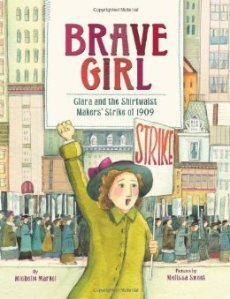
One of Sweet’s most recent triumphs is even more captivating for its portrayal not of an adult but of a young girl. Michelle Markel’s Brave Girl: Clara and the Shirtwaist Makers’ Strike of 1909 (Ages 6-10) tells the mind-boggling story of a Jewish immigrant girl, forced to endure long hours, harsh treatment, and poor pay, while sewing alongside hundreds of other girls in factories (her family’s only hope of putting food on the table.) Clara Lemlich’s “got grit,” and she “knows in her bones what is right and what is wrong”; ultimately, she leads the largest walkout of women workers in American history, inspiring thousands of male and female workers across the country to strike for better working conditions and the right to organize unions. « Read the rest of this entry »
Year of the Snake
February 21, 2013 § 4 Comments
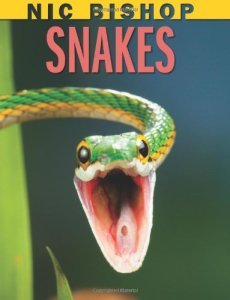 Let me be clear: I am not a snake person. Just ask my husband about the time our former neighbor’s grandson misplaced his yellow and black striped rubber snake in our driveway. My hysteria, combined with the Internet, had half the street convinced that a rare and deadly species of snake (I believe we had landed on the Eastern King Snake) had invaded our DC suburb. My husband finds this an enlightening story about my disposition to overreact (I prefer to think of it as strong survival instincts).
All this is to say that if I am telling you that Nic Bishop’s Snakes (Ages 5-12) is not only A-MA-ZING but that I have been volunteering to read this book to my son, then you should take me very, very seriously. You should march straight out to your local bookstore and buy this book (actually, you should buy all the books in Bishop’s series, even those about tamer animals like butterflies and frogs).
Eyes on Abraham Lincoln
February 12, 2013 Comments Off on Eyes on Abraham Lincoln
 You might expect that my children, living so close to Washington DC, have many opportunities to learn about our nation’s history. But mere proximity does not a future scholar make. The Lincoln Memorial, for example, is consistently celebrated by my five year old as “the place where we picnic in the summer!” If you ask him the name of the president that sits in stone behind him during said picnics, he is likely to throw you a disinterested look and recommence staring out the car window, pointing out other landmarks whose names he boasts correctly but whose significance he understands not. Which begs the question: How do we get our kids to care about the past presidents that have shaped our country?
The biographies we read as kids were filled with dry facts and black-and-white photographs that made their content feel all too disconnected from our daily lives; too often we were encouraged to memorize names and dates for tests, only to forget them a week later. Thankfully, our own kids have access to a whole new generation of fresh reading material, including picture books that breathe colorful new life into historic periods and events.
“Use Your Words” (MLK Jr. Style)
January 17, 2013 § 1 Comment
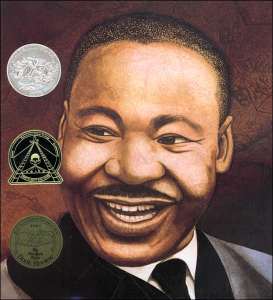 In a few days, our country will celebrate Martin Luther King, Jr.’s birthday and a presidential inauguration. Whatever our political views, whatever our race or gender or religion or socioeconomic background, we can do our children a great service by talking to them about Dr. King’s vision of justice and peace, his commitment to respecting the dignity of every human being.
I’ve found that parents, especially us white Americans, are reluctant to broach the subject of race relations with preschoolers or even young elementary students. Ashamed of our country’s past afflictions, it’s as if we can pretend they never existed if we don’t talk about them. But child development specialists and sociologists (like Po Bronson and Ashley Merryman, authors of NurtureShock) have pointed out that children naturally notice differences in appearances, and that if we don’t have these conversations with them from an early age, they will begin to draw their own conclusions—and, even worse, begin to view the subject as taboo—which does nothing to advance our nation’s long and still arduous progression toward equality. And, let’s be honest, have you ever met a five or seven or ten year old that isn’t obsessed with the notion of fairness? For that matter, how many times a day do we as parents plead with our children, “Use your words!” (say, when said children yank something out of their sibling’s hands or push a peer on the school playground)?
Holiday Gift Guide 2012 (No. 4): Books For the Hero Within
December 18, 2012 § 1 Comment
 Benjamin Franklin once penned: “If you would not be forgotten/ As soon as you are dead and rotten,/ Either write things worth reading,/ Or do things worth the writing.” OK, that might not be a quote we need to read aloud to our young children, but its sentiment can and should inform the books we choose to share with them.
The genre of biographies written for children is taking off like never before; it seems not only are parents and educators seizing the chance to inspire our young ones with tales of historical figures, but kids themselves are embracing these literary opportunities to inform their own choices, to pave their own paths worth living. And it’s no accident that many of this past year’s biographies are picture books: against a backdrop of beautiful art and poetic text, stories about scientists, writers, inventors, artists, and peacemakers become that much more gripping. The books listed at the end of this post are treasures worth giving and owning; their artistic caliber alone makes them a far cry from the dry, fact-filled paperbacks that we once suffered through for school reports.
Holiday Gift Guide 2012 (No. 3): Books for Future Zoologists
December 13, 2012 § 1 Comment
 If you have an animal lover in your life, allow me to introduce you to the amazing Steve Jenkins, whose stunning paper collages are the basis for highly engaging and informative books about animals. Why do these books make great gifts? For starters, most parents don’t know about them! Jenkins’ books are more likely to end up on the non-fiction shelves of bookstores and libraries than in places where parents would be likely to bump into them; and while they are technically non-fiction, these gems read like picture books.
The other reason they make great gifts is because they play directly into children’s inherent curiosity about the world around them. Jenkins uses the animal kingdom as a vehicle through which to introduce all kinds of scientific topics—and he does so while keeping kids as absorbed as if they were listening to stories featuring animal characters. He tackles all the obvious themes, like anatomy, food chains, adaptations, symbiotic relationships, and basic survival. But he also tackles more abstract concepts, like time, proportion, and scale—all through gorgeous spreads of animals and fascinating tidbits (see my complete list of favorite Jenkins titles below, including some for younger and older audiences).
Holiday Gift Guide 2012 (No. 2): Books Cleared for Take Off
December 10, 2012 § 1 Comment
 There are days, OK months, OK years, when it feels like everything is about airplanes and rockets in our house. Last year, JP chose a space-themed birthday party; this year he chose an airplane-themed one. We’ve been to air shows. I chop vegetables in the kitchen while large LEGO creations go whizzing by on little pattering feet. I have even been known to spend rainy days hanging out at Reagan National Airport, just so my kids can watch airplanes take off and land (a.k.a. Richard Scarry’s A Day at the Airport, minus the bratwurst balloon). For my five year old, it seems, life above ground is infinitely more fascinating than terra firma. And his enthusiasm is contagious: even my two-year-old daughter can’t resist squealing when she spots an airplane in the sky. Children’s bookstores aren’t lacking in books about air or space travel, but the trick is to choose ones that don’t compromise on art or narrative. At the end of this post, I’ve listed some fantastic fiction and non-fiction picture books guaranteed to wow any young aviator.
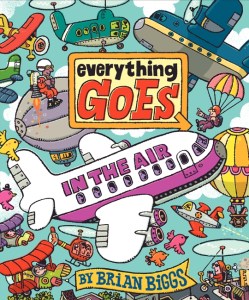
This fall, Brian Biggs came out with Everything Goes: In the Air (Ages 3-6), a follow-up to last year’s successful Everything Goes: On Land (which we also have at our house, for when we get tired of reading about planes). This is young non-fiction at its best, a perfect combo of action and information. Blending a kind of comic book layout with bright cartoon-like illustrations (think Schoolhouse Rock), the simple storyline of a father and son navigating a busy airport is jazzed up by zillions of sub-plots, from the mom of quintuplets whose babies have escaped (lots of seek-and-find opportunities here) to the pirate who’s trying to take his sword through security.
 What to Read to Your Kids