Embracing Ordinariness
February 26, 2014 § 6 Comments
 The lovely new picture book, ExtraOrdinary Jane (Ages 3-100), by first time author-illustrator Hannah E. Harrison, has me all fired up—but in a good way. Jane, a fluffy little white circus dog, “was ordinary, in a world that was extraordinary.” She isn’t “mighty” like her elephant-lifting father, or “graceful” like her ballerina mother. She isn’t “daring” enough to be shot out of a cannon like her six canine brothers. Try as she does to “find her special talent,” she encounters either mediocrity (her paintings lack “pizzazz”) or failure (her musical renditions send others running).
While the book may be set in a circus, its poignant, carefully worded message is clearly intended to transcend the Big Top. Recently, I’ve been thinking a lot about what it means to be ordinary in our increasingly supercharged, achievement-obsessed society. Bringing up kids today means confronting talent at seemingly every turn: the athlete that tears down the soccer field; the six year old who is already in her third year of violin; the kid who reads at three grade levels above her peers. It’s not enough for children to be good at something; they are expected to be the best. When I was growing up, it wasn’t until I was applying to college that I was asked to think about the concept of “expertise.” Today, the question is on preschool applications: “What special skills/talents does your child have?” « Read the rest of this entry »
Friends Make Everything Better (A Pick for Valentine’s Day)
February 10, 2014 § 2 Comments
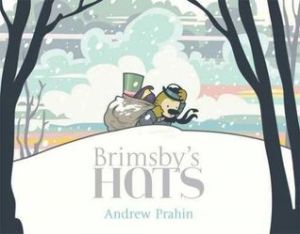
My family spent this past weekend holed up in the snowy hills of West Virginia with three other families. Once we adults began to block out the chatter and squeals of nine (mostly) happy children running circles around us, we were able to entertain some blissful grown-up time. And as I watched my children mature and transform across three full days of kid-on-kid time, I found myself feeling immensely grateful for friendships of both the tall and short kind. In this winter that has gone on too long, it is our friends that have put smiles on our faces, ideas in our head, and glasses of wine in our (adult) hands.
With Valentine’s Day shortly upon us, I’ve once again chosen a bit of a non-traditional path for my children’s gifts (and, gasp, I’ve even cheated and given the gifts early!). This new picture book—by a first-time author-illustrator—rises above the saccharine-sweet-mushy-gushy-dime-a-dozen stories out there by celebrating friendship in a unique, quirky, unforgettable way.
In Andrew Prahin’s Brimsby’s Hats (Ages 4-8), Brimsby, a hat maker by trade, already knows what it is like to have a best friend: someone with whom he shares his creations over tea, and “together, they have the most wonderful conversations.” But when the friend follows his dream to become a sea captain and sails away, Brimsby is left to pass the months away alone in his quiet cottage in the country, without so much as a single visitor.
Groundhog Day (& Other Books About the Weather)
January 29, 2014 § 3 Comments
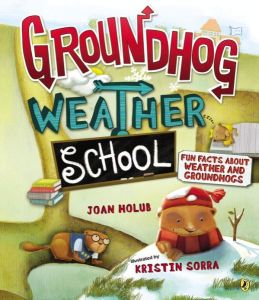 My six year old doesn’t understand why Groundhog Day isn’t a school holiday. I tried to explain that, with February 2 being a Sunday this year, it’s sort of a moot point. “But it’s not always on a weekend, Mommy.” So then I tried to explain that the government only picks a few of the most important people in our history (ahem, George Washington, Martin Luther King Jr.) to honor with a school holiday—and that contrary to what he might think with ALL THESE SNOW DAYS, kids are supposed to be IN SCHOOL, learning stuff that their parents don’t have the patience to teach them. “Well, Punxsutawney Phil IS very important because he can PREDICT THE WEATHER.” This is a fair, if debatable, point.
The children’s books on the subject of this Very Important Holiday tend to be either factually straightforward (Gail Gibbons’ Groundhog Day! is usually the teacher’s favorite) or purely fictional (read: silly and unhelpful). But this year, I stumbled upon a find that combines fact, fiction, and An All-Around Good Time: a book titled Groundhog Weather School: Fun Facts About Weather and Groundhogs (Ages 5-9), by Joan Holub, with illustrations by Kristin Sorra. This is precisely the type of book I knew JP would enjoy reading by himself (and, as parents of newly independent readers know, we’re always on the hunt for “that book”). « Read the rest of this entry »
Eye Candy in the Polar Vortex
January 25, 2014 § 1 Comment
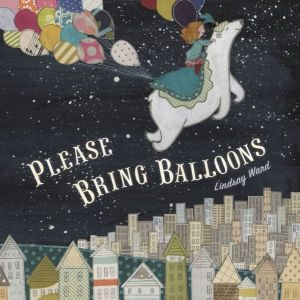 I’m a romantic when it comes to snow. Meaning that the idea of snow (fat, juicy snowflakes blanketing the world in white) is more appealing to me than the reality (school is closed AGAIN?!). The notion of snow days (flying down hills on sleds and decorating snowmen with friends) is always a bit different than the actuality (wait, it’s freezing out, and wait, did my daughter just pee through four layers of clothing and need to be changed on the side of this hill?). Don’t get me wrong: I love snow. It’s the very anticipation of snow that makes the dawning of winter bearable; that breaks up the monotony of short-lived, bare-branched days; that puts a glimmer of excitement in our children’s eyes when they think of what’s to come. But that’s why—more than anything—I love reading about snow. Because the snow in books is always billowy, soft, and pristine white. The snow in books is always perfect.
Last January, I wrote about my favorite snow books, each one conjuring up a romantic notion of snow. But this winter, in addition to having more snow on the ground, we’re living in a so-called Polar Vortex, a little thing that’s threatening the very core of our “we can handle winter” attitude (suddenly, our lives seem right out of the pages of Eileen Spinelli’s Cold Snap). Let’s say we could all use a dose of Eye Candy right now. I’m referring to Lindsay Ward’s Please Bring Balloons (Ages 2-5), which came out at the end of last year, and which I pulled out of my Secret Stash earlier this week (a secret stash which is rapidly dwindling in light of these snow days). Three of my daughter’s Favorite Things make an appearance in this book: carousels, balloons, and furry animals. Reminiscent of another 2013 favorite, Dream Friends, both books are about a make-believe adventure starring a girl and her four-legged friend. In Please Bring Balloons, this adventure is polar-bound. « Read the rest of this entry »
Holiday Gift Guide 2013: Illustrated Chapter Books for the Adventure Seeker
December 19, 2013 § 5 Comments
 Many of us remember the first novels we read, the ones that instilled in us a love of reading (off the top of my head: A Secret Garden, A Wrinkle in Time, anything written by Ruth Chew…). Earlier this year, the prolific writer, Neil Gaiman, wrote a beautiful defense of fiction, which I absolutely love. Fiction, he claims, is not only our best entry into literacy (the what-will-happen-next phenomenon being utterly addictive), but it teaches, above all, the power of empathy:
“When you watch TV or see a film, you are looking at things happening to other people. Prose fiction is something you build up from 26 letters and a handful of punctuation marks, and you, and you alone, using your imagination, create a world and people in it and look out through other eyes. You get to feel things, visit places and worlds you would never otherwise know. You learn that everyone else out there is a me, as well. You’re being someone else, and when you return to your own world, you’re going to be slightly changed.”
I’ve thought a lot about Gaiman’s words, as my six year old and I have been devouring some of the year’s newest chapter books. I’m hoping some of our favorites will find a way into your bedtime routines as well, beginning with Gaiman’s newest novel, Fortunately, the Milk (Ages 7-10, younger if reading aloud). This fantastically over-the-top book begs to be read aloud and is itself a kind of commentary on the power of storytelling. In an attempt to entertain his rambunctious children during their mother’s business trip, a father spins a fantastical tall tale (think pirates, piranhas, aliens, and singing dinosaurs all in the same breathlessly-paced story) about what happens when he goes to the store for a simple carton of milk. « Read the rest of this entry »
Holiday Gift Guide 2013: Bedtime Stories for the “Goodnight Gorilla”-Obsessed
December 12, 2013 § 1 Comment
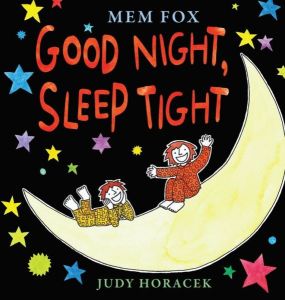 “How do I break the addiction to Goodnight Gorilla?!” a friend texted me the other day. Whether it’s Goodnight Gorilla, Goodnight Moon, or (my preference) Time for Bed, the lulling, reassuring refrains in these books become quick obsessions with little ones getting ready to tuck in for the night. And, let’s be honest, it can grow a wee bit tedious for the one doing the actual reading.
The good news is that, as your child’s attention span develops, you can start incorporating more involved bedtime stories into the mix. I’m not promising it will be love at first sight, and you may have to be a little sneaky (I’ve had great success with the “you pick one and I’ll pick one” approach as a way to introduce new titles). But help is on the way. 2013 has been a rich year for bedtime stories, beginning with Mem Fox’s Good Night, Sleep Tight (Ages 1-4), a small square hardcover illustrated by Judy Horacek—and an instant, no-tricks-necessary favorite with my Emily (the same team created the equally fabulous Where is the Green Sheep?). « Read the rest of this entry »
Holiday Gift Guide 2013: Stories of Perseverance for the Engineer
December 10, 2013 § 1 Comment
 If at first you don’t succeed, try, try again. That might be easy to say as a parent, but we have only to remember our own childhoods to know how hard it is to hear. Just the other night, my son was attempting to draw a human profile by following one of those step-by-step guidebooks. Diligently huddled over his paper, he suddenly threw the pencil across the room and yelled, “This isn’t working at all! It doesn’t even look like a person!” Actually, I thought, it does look like a person—just not like the one in the book. Oftentimes, we cannot see our triumphs for what they are.
The creative process—its ups, its downs, its just plain hard work—is wonderfully captured in Rosie Revere, Engineer (Ages 5-8), the newest venture by Andrea Beaty and David Roberts, the team that created one of my favorite picture books of all time: Iggy Peck Architect. What black-turtleneck-sporting Iggy Peck did for building designs, red-scarf-sporting Rosie Revere (yes, her namesake is Rosie the Riveter) does for engineering. She makes it look—well—cool. « Read the rest of this entry »
What Was Santa Like as a Kid? (Two Favorite New Christmas Books)
December 4, 2013 § 4 Comments
 With every holiday season, there is a kind of magic in rediscovering old friends, old traditions, old stories. I have only to see the ecstasy on my children’s faces as we unpack our box of Christmas books each December to remember why I go through the trouble of packing them away in January, as opposed to stuffing them into our already stuffed bookshelves. As a parent, it’s magical for me as well: last night my eldest left us at the dinner table, voluntarily bathed himself, got into his PJs, brushed his teeth, and called downstairs, “I’m ready 20 minutes early so I can get some extra Christmas stories!” No wonder they call it the most wonderful time of the year.
Just because we only read them for one month a year doesn’t mean I can resist the temptation to add to our collection every single year (there are worse addictions, I’ve assured my husband). Last year was Alison Jay’s exquisite Christmastime, where clues of Christmas carols are embedded into a seek-and-find masterpiece. Previous years’ favorites are mentioned here and here. This year’s acquisitions include two new picture books, utterly different in style, but forever entwined in my mind, since my kids and I had the pleasure of meeting both author/illustrators at Hooray for Books (our fabulous independent bookstore) a few weeks ago. « Read the rest of this entry »
November’s Birthday Pick Battle
November 8, 2013 § 2 Comments
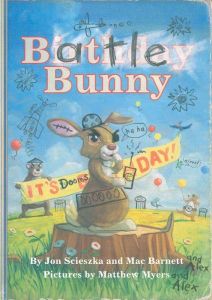 Six year old boys live in a world of their own. Often, the only people who understand them are other six year old boys. Take this recent conversation I witnessed as I was driving JP and his buddy home from school:
Friend: “I think I just saw a box of dynamite on the side of the street.”
JP: “Cool! Imagine if you took an inflatable bouncy house and blasted dynamite underneath it, and the bouncy house exploded into Outer Space and caught fire to the moon!”
Friend: “Yes! And then the bouncy house would blast the moon to the sun where it would explode into a thousand pieces and turn to gas!”
JP: “And then that gas would get into the Earth’s atmosphere and poison the guts out of all the bad people!”
Friend: “And they’d all become zombies and their eyes would fall out of their heads!”
JP: “Look, my cheese stick is pooping!”
Friend: “Cool!”
We as parents might not be able to compete with this level of engrossing conversation, but I’ll tell you who can: Jon Scieszka and Mac Barnett, whose Battle Bunny (Ages 5-9), is going to rock the world of every boy in the universe, guaranteed. « Read the rest of this entry »
The Rules of Play
October 10, 2013 § 2 Comments
 As parents, we are continually hounded by parenting experts about the importance of getting down on the floor and playing with our children. I’m fairly easily wooed when it comes to playing Candy Land or doing a giant floor puzzle or even painting alongside my kids; but when it comes to imaginative play, a little part of me wants to scream, “Please don’t make me do it!!!!” Why, you ask? Or maybe you don’t need to ask, because you already know about ALL THE RULES that our children arbitrarily force upon us from start to finish during these games. And nowhere is this more evident than when my daughter wants to play tea party.
E: “Mommy, let’s have a tea party!”
Me: “OK, where should I sit?” (I’ve learned better than to presume.)
E: “Right here”
Me. “OK’ (Sitting down.)
E: “No, you don’t sit like that! You have to cross your leg.”
Me: (making adjustments) “OK, I’m ready for my tea now.”
E: “No! First we are having a snack.”
Me: “OK, what’s for snack?”
E: “You don’t ask the question! You wait and I bring you the snack.”
Me (minutes later after being served a wooden egg and a plastic cucumber) “Mmmmm, thank you, this is so tasty!”
E: “MOMMY! It’s not time to eat yet! You have to wait for your tea!”
Me (an eternity later, when pretend tea is finally served): “Mmmmm, this tea is toasty warm.”
E: “It’s COLD tea!”
Me: “This tea is nice and refreshing. I think I’ll put some sugar in it.”
E: “That’s honey!”
Me: “I’m putting in some honey.”
E: “NO! You don’t pour it in, you have to use a SPPPOOOOOON!”
Thank you, but I will stick with Candy Land. « Read the rest of this entry »
Party Planning Angst
September 24, 2013 § 2 Comments
 JP turned six today. As you may recall, we are All About Birthdays this month, having just celebrated my daughter’s third birthday two weeks ago. At some point over the summer, my kids realized that their birthdays were (sort of) approaching, and many of their conversations turned to what kind of parties they wanted to have (“Snakes and a pinata!” from JP; “Balloons and flowers!” from Emily) and whom they wanted to invite.
This latter debate became increasingly complicated for my youngest, because in addition to her now having a few similarly aged friends, she still claims most of her brother’s friends as her own (having been toted around to his play dates for three years). Back when JP turned three, we had exactly three children over for a nice, contained party. When Emily turned three, we found ourselves with 25 kids running around our backyard. Throw in a giant inflatable bounce house, a craft station, and soccer goals, and it would appear that my husband and I have finally embraced this moving-to-the-‘burbs thing. But I digress. « Read the rest of this entry »
Permission to Go a Little Wild
September 18, 2013 § 2 Comments
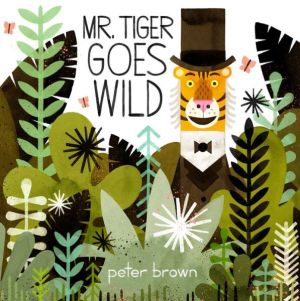 The routines of back to school are upon us. I am slowly adjusting to weekday mornings without the kids (meaning that I’m nearly home from drop off before I realize that I’m still humming along to the Music Together CD in the car; before I realize, Wait. I don’t have to listen to this. Wait! I can listen to anything I want!).
At the same time that I’m shedding a little responsibility, my children are being asked to assume more. They have traded the creative liberty of summer dressing (JP pairing bright green shirts with bright green shorts) for the navy and khaki of school uniforms. Our leisurely mornings of PJs and drawn-out breakfasts have been traded for early wake up calls and a litany of come on, let’s move along, did you pack your lunch bag, please take off that cape, why on earth are you getting out the play dough, for crying out loud hurry up (yes, I have read the articles about how we’re ruining our children by saying “hurry up” all the time, and I’ve made a mental note to work on that in my next life). « Read the rest of this entry »
Growing Pains
September 10, 2013 § 3 Comments
 My youngest turns three today. Lately, everywhere I turn, I am reminded of how fast she is growing. “Mommy, Mommy, my toes are sticking out of my sandals!” she cried jubilantly one morning a few weeks ago; “I growed into a big girl!”
It’s no wonder, then, that she immediately fell in love with Alison Murray’s precious new picture book, Little Mouse (Ages 18 mos-4 yrs), where a little girl proclaims that she is no longer her Mommy’s “little mouse”; on the contrary, she is tall (like a giraffe), strong (like a bull), hungry (like a horse), and brave (in the face of a lion). On top of that, she can make her voice and her body do amazing things, from trumpeting (like an elephant) to pumping high on the big girl swing (like a bird). « Read the rest of this entry »
Digging in the Backyard: Summer School Wraps Up!
August 22, 2013 § 1 Comment
 Earlier this summer, the kids and I were on a morning walk—JP in the lead on foot, Emily trailing on her scooter, and me bringing up the rear. It had rained most of the night before, and the sidewalks were still damp. Abruptly, JP let out one of his characteristic ear-splitting screeches (at almost six, the boy still has no regard for volume control): “STOOOOOOP, EMILY!” Before I could launch into my characteristic lecture about not screaming into people’s faces, especially when that sweet face belongs to your little sister, JP followed it up with, “MOMMY, EMILY WAS ABOUT TO RUN OVER A WORM!” I looked down and, sure enough, the sidewalk was covered in worms, evidently displaced from the previous night’s storm. Is it wrong that I immediately assumed JP’s reaction was based on the grossness factor of squashing a worm between one’s scooter’s wheels? I’ll admit I felt slightly guilty when, once everyone calmed down (by now Emily was screaming nonsensically about worms as well), JP explained, “We have to be so, so careful not to hurt these worms. They need to go back into the dirt to make the plants grow!” I wasn’t going to tell him that these worms didn’t look like they were going anywhere ever again; Emily and I simply followed in tow as he went first and pointed out any worms that we should steer around.
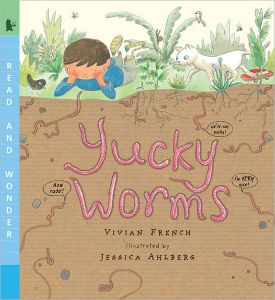
It’s moments like these—rare, fleeting moments—when I wonder if maybe I’ve done something right as a parent. That somehow in all my blabbing on about trees and seeds and caterpillars, my kids have begun to develop an appreciation for the natural world that surrounds them. I would have to credit any success I’ve had to books like Yucky Worms (Ages 4-8), by Vivian French and Jessica Ahlberg, which is part of a fantastic Read and Wonder Series published by Candlewick Press. This is natural science for young kids at its best: fictional stories packed with scientific facts that are woven accessibly into the narrative. In Yucky Worms, a boy gets a lesson in Wormology from his green-thumbed grandmother (perhaps it’s no coincidence that I was first introduced to spiders and butterflies by my two grandmothers?).
Quick to exclaim “Yuck! Throw it away!” when his grandmother digs up a “slimy, slithery, wiggly worm,” the boy in the story gets schooled on the different parts of the worm, how it tunnels through the ground, what it eats, and how its poop enriches the soil. It turns out that worm poop—white curly forms called “casts”—are very plentiful in our backyard. It also turns out that most earthworms do not regenerate when accidentally cut in half by a gardening spade (I now get schooled regularly on this by my “backseat gardeners”). There is much to love about this book, from the sweet relationship between grandmother and grandson, to the hand-drawn diagrams of the worm’s anatomy, to the answers to questions kids don’t even know they have, like what happens to worms in the winter. But perhaps the biggest appeal for kids are the word bubbles that occasionally come out of the mouths of the worms themselves, reinforcing the lessons in the book while adding some enticing humor. What is it about worms that seem to invite speech bubbles? Doreen Cronin and Harry Bliss incorporate a similar technique in their hilarious series, Diary of a Worm (more fun than fact but still surprisingly illuminating about these creatures). Worms have a lot to say, evidently, as they dodge predators or feast on moldy fruit.

Here, the story continues on the side, while the worms take front stage with their tunnels and word bubbles.
I have tried my darndest this summer to get my kids out into nature. When it comes time to make dinner, it’s all I can do to resist the temptation to turn on the TV, shooing them instead into the backyard. Inevitably, I am called out moments later to settle some dispute over an ancient half-broken toy that has been unearthed from the shed and is suddenly the Only Thing Worth Playing With. But, in time, they settle into the rhythm of things and begin to take closer notice of their surroundings. Once again, my dinner making is interrupted by yelling: “Mommy, come out here RIGHT NOW!” I trudge outside more than a little exasperated, only to find the kids, not fighting over toys, but instead huddled over a corner of the deck. I bend down to see a spider’s web glistening from drops of water that have fallen out of the just-watered planters above. “It’s just like the one in the book!” JP exclaims, referring to Helen Frost’s stunning photograph of a dew-covered spider’s web in Step Gently Out, which we had just been reading that morning. “Only it’s even more beautiful,” he adds. “Yes,” Emily pipes in. “It’s sooooo boootiful.”
Other Favorites About Backyard Critters:
Step Gently Out, by Helen Frost (Ages 3-6)
Where Butterflies Grow and The Snail’s Spell by Joanne Ryder & Lynne Cherry (Ages 3-6)
The Honeybee Man, by Lela Nargi (Ages 4-8)
Diary of a Worm, Diary of a Spider, & Diary of a Fly, by Doreen Cronin & Harry Bliss (Ages 4-8)
Insect Detective: Read and Wonder, by Steve Voake & Charlotte Voake (Ages 4-8)
Seeds, Bees, Butterflies & More: Poems for Two Voices, by Carole Gerber & Eugene Yelchin (Ages 5-10)
Plus these favs mentioned in a previous post about Young Naturalists!
August’s Birthday Pick
August 8, 2013 Comments Off on August’s Birthday Pick
 Sometimes we need a Crowd Pleaser. How many times have we rushed to the store (on the morning of the birthday party, no less) and stared at the shelves, thinking “What do I even know about this child, this person in my daughter’s class whose name I’d never heard until last week?” Our children are often no help: “Ummm, I don’t know, he likes Star Wars, I think…” And then there’s the latest trend in birthday parties—the book exchange—which, naturally, I find charming and all, except that now we have the additional challenge of finding a book that will appeal to any one of the number of children at the party. Enter the Crowd Pleaser: a book that’s guaranteed to make boy, girl, preschooler, first grader laugh; a book they can listen to or read themselves or read to their siblings; and, of course, a book that’s Brand New and Off the Beaten Path and all that good stuff.
Now enter Monkeys. Because if there’s any animal that’s universally loved by children (and their parents) it’s the monkey. We all call our children monkeys; we all think of them as little monkeys (incidentally, we also think that this comparison is an entirely novel notion). Anyway, monkeys are good. Monkeys are safe.
Now enter Mac Barnett, one of the most original and—conveniently, in our quest for a Crowd Pleaser—one of the funniest picture book creators around. Last year, along with the talented Adam Rex, he wrote Chloe and the Lion (Ages 4-8), a hilarious (and surprisingly educational) look at the process of writing and illustrating a picture book, whereby Barnett and Rex essentially “argue” the book into creation. This year, he teams up with Kevin Cornell to lend his deconstructionist approach to Count the Monkeys (Ages 3-7), another book that appears to take form right before our eyes. The book begins with a simple premise: “Hey, kids! Time to count the monkeys! It’s fun. It’s easy. All you have to do is turn the page…” Except that the monkeys are nowhere to be found, scared away by a king cobra, who in turn is scared away by two mongooses (“or is that 2 mongeese?”), who in turn are scared away by three crocodiles…and you get the picture.
The genius of Count the Monkeys, apart from Cornell’s irresistibly mischievous drawings of gluttonous grizzly bears and “polka-dotted rhinoceroses with bagpipes and bad breath,” is the invitation for children to interact with every page. If you’ve ever read Herve Tullet’s groundbreaking Press Here to your children (and if you haven’t, please proceed immediately to your nearest independent bookstore), you are already familiar with this now trendy trick of modern picture book artists. These are books that invite children, not only into the reading process, but into the creation process as well. They make children feel like they themselves are driving the direction of the story. On every page in Count the Monkeys, the narrator (still obsessed with getting back those elusive monkeys) asks us to perform various tasks to get rid of the imposter: tell the lumberjacks to “scram” (“Say it even louder!”); don’t look the wolves in the eyes (“In fact, cover your eyes while you turn the page”); move your hand in a zigzag to “confuse” the crocodiles; etc. I triple dare any child (heck, I dare any parent) to refrain from doing any of the things Barnett demands; it’s simply too much fun to take a backseat on this one. And that, ladies and gentlemen, is a Crowd Pleaser.
Potty Break
August 1, 2013 § 2 Comments
 Once again, I find myself singing the praises of Mo Willems, whose Time to Pee! (Ages 1-4) proved just what my daughter needed to get her potty training on. For those of you who have navigated these murky waters before, you will agree that there are VERY FEW decent potty-related books for kids. There are useless books about princesses sitting on potties. There are patronizing books that suggest you’re only a big kid if you use the potty. But there are far too few that are clever and helpful, fun and functional. But that’s OK. Because all you really need is one great book—and, lucky for us, there’s Time to Pee!
Truth be told, I had been dreading potty training my youngest. I had it too easy with my firstborn. If I told you about how he emphatically decided upon turning two that he wanted to poop on the potty and never looked back, you would hate me. Except that you can’t hate me, because I literally had nothing to do with it (JP has always been a child to take matters into his own hands, skeptical that his parents don’t really know what they are doing and not entirely incorrect much of the time). So when my daughter turned two and showed ZERO interest in anything having to do with the potty, I simply told myself that she wasn’t ready. But then, yikes, almost an entire year passed, and here we are just a few short weeks from her joining her brother in Montessori, where she’ll be expected to do things like wear underwear and wipe her own butt; suddenly, “I no interested in the potty!” seemed like a recipe for disaster. So we took the plunge, gave away all remaining diapers (this tip from the parenting book, Diaper-Free Before 3, a fantastic recommendation from our Montessori director), and casually placed Time to Pee! on the top of a reading pile in the bathroom.
Now, I’m obviously not going to tell you that a children’s book (even one by the brilliant Mo Willems) was the single factor in Emily’s fairly quick and painless transition to the potty (much of the heavy lifting was in fact done by Big Brother). But what I can tell you is that the language in Time to Pee! repeatedly crops up when Em is talking about using the potty. At face value, the book reads like a straightforward (never patronizing) instruction manual, illustrated with Mo’s signature black-outlined doodles: you get “that funny feeling” while playing; you tell a grown-up that you have to go; you march yourself down the hall and into the bathroom, where you pull down your undies, do the deed, and get back to playing. Done. No problem. All the important logistics are covered, like waiting until you are done before grabbing for toilet paper (thank you, Mo) and washing hands afterwards. But then, because it’s Mo Willems, and because he is so darn perceptive about how kids’ minds work and what they are thinking (and obsessing and worrying) about, the book is loaded with humorous touches. “Please don’t ignore it!” (next to a boy with crossed eyes and legs). “Now is your chance to show how BIG you are!” And my favorite: “Everything will still be right where it was” (as the child returns to her tea party).
But the real unsung heroes here are the mice. Yes, that’s right, the hundreds of enthusiastic mice delivering each message, rolling out the red carpet and hoisting up the flags, serenading the potty goer and giving the thumbs up with a coy, “Go for it dude.” Three days into potty training, I tried to follow Emily into the bathroom after she announced that she had to pee. “No, Mommy! You don’t come in! I’m having a party with the mice.” And just like that, I found myself once again singing the praises of Mo Willems.
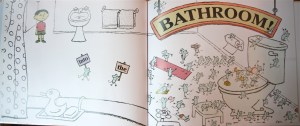
The aforementioned mouse party in the bathroom!
Other Favorite Potty Stories for Kids:
Even Firefighters Go to the Potty: A Potty Training Lift-the-Flap Story, by Wendy A. Wax, Naomi Wax, & Stephen Gilpin (long after JP was potty trained he still requested this book 10 times a day for two years)
Everyone Poops, by Taro Gomi (yes it’s weird, yes it’s kinda gross, but it’s actually quite effective (and my kids love the camel’s “two hump poop”))
A Potty for Me, by Karen Katz
Pip and Posy: The Little Puddle, by Axel Scheffler (my daughter loves this sweet, simple series about two friends—and, lo and behold, they have a potty story about an accident during a playdate)
Keeping Cool Under the Sea
July 26, 2013 Comments Off on Keeping Cool Under the Sea
 I know, I know, I’ve left you high and dry without reading material for nearly a month (vacation will do that); plus, I neglected to give you a birthday pick for July’s parties. So, in order to make it up to you, I am not only going to recommend a fabulous, brand-spanking-new book that you can give to everyone celebrating a birthday this summer, but I’m going to end with an EXTRA-LONG LIST OF THEMATICALLY SIMILAR BOOKS for you to read to your own kids (heck, you could even bundle some for an extra-special gift, like I did for a friend earlier this month). Are you ready?
Much like reading about snow in the winter, one of my favorite things about summertime reading is the excuse to read books about the sea (it’s no coincidence that I featured an octopus story for last summer’s birthday pick as well). Whether you’re spending time on the beach or simply looking for a mental escape from the heat, summer is the perfect time to introduce children to underwater worlds: landscapes so different from ours that they have their own inhabitants and laws, their own colors and sounds, their own unique set of experiences and problems. And yet, much of the best sea-themed fiction immerses kids in these foreign worlds while at the same time drawing parallels between their own emotional lives and the lives of the fishy dwellers within.
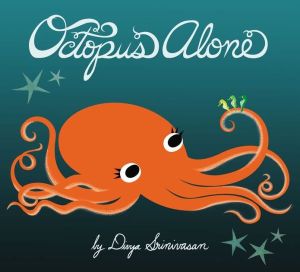
Trust me, you will want to dive straight into the pages of Divya Srinivasan’s Octopus Alone (Ages 3-6), where a bright orange octopus is set against an enticing palette of turquoise, seafoam green, and bright pink. I first fell in love with Srinivasan’s unique stylized graphics in Little Owl’s Night (reviewed here). Now, in the much longer Octopus Alone, we are treated to a more involved plot alongside her vivid art. I can’t say that Srinivasan’s narrative voice is as strong or coherent as her illustrations; and yet, the story’s theme—venturing outside one’s comfort level and finding the reward of new friendships—resonated loudly with both my kids. Any child who has felt overwhelmed walking into a preschool classroom or has stood on the periphery watching older kids at the playground will see a little of herself in the bashful octopus, who is so uncomfortable around the outgoing seahorses that she initially retreats from the coral reef into the deeper, darker, lonelier waters. Any child who often stands silently amidst others (but doesn’t shut up at home) will see a little of herself in the octopus, who imitates the dancing moves of the seahorses in private before allowing herself to see how much fun it might be to dance with others.
Like any great sea-themed book, there are countless opportunities for underwater discovery in Octopus Alone. Our family’s favorite would have to be the indisputably charming endpapers, which label (in cursive!) each of the sea creatures that make an appearance in the book (my son is prone to the “puffer fish,” while my daughter’s finger goes straight to the “butterfly fish”). My kids giggle every time Octopus releases her ink to “hide her blushing” or to escape the hungry eel, a nice reminder of aquatic adaptation. The book even makes some (albeit subtle) references to the complex ecosystem of coral reefs, like cleaner shrimp eating algae off the back of a nurse shark or baby dominoes playing hide and seek in the “swaying anemones.” (Older kids can build on these with Jason Chin’s equally stunning and richly informative non-fiction picture book, Coral Reefs…sorry, couldn’t wait until the end to plug that one.)
Our oceans and lakes, our sandy tide pools and rocky bluffs, can be a source of endless fascination for our kids. We have the power to channel this fascination into imagination, education, and hopefully even conservation. So go ahead: dip their toes in the water and start reading.
Other Favorite Under-the-Sea Stories (from youngest to oldest ages):
Over in the Ocean: In a Coral Reef, by Marianne Berkes & Jeanette Canyon (Ages 1-3; board book)
I’m the Biggest Thing in the Ocean! by Kevin Sherry (Ages 1-4)
The Snail and the Whale, by Julia Donaldson & Axel Scheffler (Ages 3-6; ONE OF MY ALL TIME FAVS)
The Pout Pout Fish, by Deborah Diesen & Daniel X. Hanna (Ages 3-6; best read in the style of the blues!)
Swimmy, by Leo Lionni (Ages 3-6)
Big Al, by Andrew Clements & Yoshi (Ages 4-7)
If You Want to See a Whale, by Julie Fogliano & Erin Stead (Ages 4-7; also brand new)
Kermit the Hermit, by Bill Peet (Ages 4-8)
Jangles: A Fish Story, by David Shannon (Ages 4-8)
Some Favorite Sea-Themed Non-Fiction Picture Books:
The Voyage of Turtle Rex, by Kurt Cyrus (Ages 4-8)
Coral Reefs, by Jason Chin (Ages 5-10)
Island: A Story of the Galapagos, by Jason Chin (Ages 6-12)
Life in the Ocean: The Story of Oceanographer Sylvia Earle, by Claire A. Nivola (Ages 5-10)
Manfish: A Story of Jacques Cousteau, by Jennifer Berne (Ages 5-10)
Ocean Sunlight: How Tiny Plants Feed the Seas, by Molly Bang (Ages 6-12)
The Best Chapter Books Talk to the Heart
May 17, 2013 § 3 Comments
 I’m often asked to recommend chapter books that lend themselves to reading aloud, either for a classroom setting or for a parent reading to an elementary-aged child. This is no small order: you need something where the subject matter isn’t too frightening or mature for the 5-8 year old set; you need something that’s going to engage the adult reader as much as the child (there’s no law that says this can’t be enjoyable for us!); and you need something that transcends the plot-driven, early-reader books that kids are reading on their own and helps them develop a taste for the kind of diverse language and emotionally-rich storytelling that will hopefully influence their reading choices in the future. This past winter, we read to my son the classic Little House on the Prairie series, which I adored as a child and whose themes feel just as timeless and important as ever (family values, the rewards of hard work, celebrating the non-material joys in life). But Laura Ingalls Wilder’s writing can also be quite tedious to read aloud, packed with lengthy explanations (twenty pages devoted to smoking a pig?) and repetitive sentence structures. There were moments when I could feel JP’s attention wandering, despite his avid assurance each night that he wanted to read more, more, more.
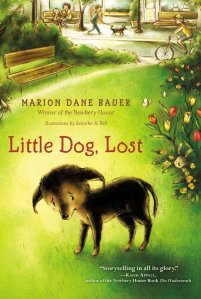
But then we finished that series and began Marion Dane Bauer’s stand-alone novel Little Dog, Lost (Ages 8-12, younger if reading aloud), published just last year, and it felt like a breath of fresh air. Here’s a book where not a single word is wasted, a book whose text flows off the tongue with such buttery smoothness that most of the time I couldn’t bring myself to stop when I got to the end of a chapter (that’s right, I was actually choosing in those moments to delay bedtime). Bauer achieves this incredible richness of language by breaking with a major narrative tradition: she writes her novel in free verse, creating chapters out of short, staccato poems, which loosely string together and sometimes even repeat words and phrases, all the while telling a very clear and cohesive story. There are 44 of these untitled poem-chapters; and they switch off narrating from the viewpoints of children, adults, and animals—all of whom live in a small contemporary town called Erthly and whose lives are forever touched by an incident involving a lost dog searching for someone to love him.
Freed from the confines of conventional narration, Bauer is able to cut straight to the emotional core of her characters—and the result is a story that children will feel deep in their hearts. Animal stories inherently engender sympathy from children (not coincidentally, some of JP’s favorite moments in the Little House books revolve around the Ingalls’ faithful dog, Jack). At the center of Little Dog, Lost is Buddy, an orphaned dog with “ears like airplane wings,” who “dances” along the sidewalk, longing for a home with “chasing balls,/ ear scratches,/ kisses.” Children will easily relate to Mark, a young boy “who had wanted a dog for as long as he could remember./ He had asked for a dog./ He had begged for a dog./ He had pleaded and prayed and whined for a dog./ Once he’d even tried barking for a dog.” And who wouldn’t be intrigued by a mysterious old man named Charles Larue, who lives alone in a pointy-towered mansion and never speaks to anyone? Throughout the story’s suspenseful twists and turns, even amidst the humorous touches (many coming from a bossy tabby cat who thinks he’s a dog), the story never strays from the hopes and dreams of its relatable, big-hearted characters. It’s fair to say that my son had a full-body experience while listening to this book. He chuckled, gasped, and emitted little exasperated grunts; he covered his eyes and held his breath; he beat his fists on the bed; he cheered; he hugged my arm to pieces; and he shed more than a tear or two (as he says, “I have a little water in my eyes right now because I’m so happy.”). Now that’s a chapter book.
Other Favorite Read-Aloud Chapter Books With Animals & Lots of Heart:
The Cricket in Times Square, by George Selden (Ages 5 & up*)
Charlotte’s Web, by E.B. White (Ages 5 & up)
The Trumpet of the Swan, by E.B. White (Ages 5 & up)
Mr. Popper’s Penguins, by Richard Atwater (Ages 5 & up)
Ginger Pye, by Eleanor Estes (Ages 6 & up)
The One and Only Ivan, by Katherine Applegate & Patricia Castelao (Ages 6 & up)
*Please note that these ages are assuming the reading is being done by an adult. For a child reading independently, the age range would be closer to eight and up.
April’s Birthday Pick
April 14, 2013 § 1 Comment
 Spring is a time of rebirth: a time of budding trees, sprouting seeds, and birthday parties. As for the last, you’re in luck, because there is a brand new Otis story on the shelves! Whether or not you’re familiar with Loren Long’s stunningly illustrated and action-packed picture books about Otis (see previous posts here), a happy-go-lucky tractor who always comes through for his friends, the new Otis and the Puppy (Ages 3-6) is a slam-dunk. Get your local bookstore to wrap up a copy for every one of your spring birthday parties; and don’t worry about whether the recipient has read the original Otis or Otis and the Tornado because, like its predecessors, Otis and the Puppy stands alone.
This new book has it all: heart, empathy, heroism, and a doe-eyed, playful-eared puppy. When the puppy arrives on the farm, he develops an immediate fondness for the tractor; he eagerly joins in Otis’ games of Hide and Seek and sleeps each night against the purring tractor. Otis quickly learns that the puppy and him have something in common: they’re both afraid of the dark. So when the puppy strays too far from the farm one afternoon and is not recovered by bedtime, Otis’ “heart ached deep inside his engine. He knew how scared of the dark his new friend was and…he knew his friend needed him.” But can Otis muster up the courage to leave the safety of the barn to search for his friend in the dark?
Seeing the World in Color
March 23, 2013 § 3 Comments
 “It’s bud season! It’s bud season!” chanted my children earlier this week, after some long-awaited warm sunshine had beckoned us into the backyard. Thankfully, they were referring not to the beer (although my son’s soccer team does call themselves the Silver Bullets), but rather to the discovery of tiny little green bursts on the ends of our hydrangea bushes and crape myrtles. Since this is the first spring in our new house, our backyard is full of surprises, including yellow daffodils and purple crocuses and little red berries, all of which the children were delighted to point out to me as they raced back and forth across the lawn.
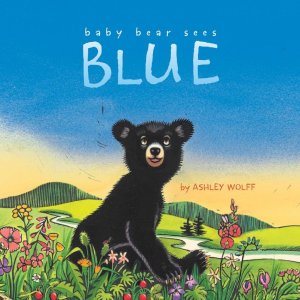
This springtime exuberance is exactly why I love Ashley Wolff’s Baby Bear Sees Blue (Ages 1-4), about a baby bear venturing forth from his den to discover the colors of the world. “Who is warming me, Mama?” asks Baby Bear. “That is the sun,” Mama says, as Baby Bear steps into a pool of brilliant yellow; “Baby Bear sees yellow.” And so begins a series of introductions to different colors, from the blue of the jays to the red of the strawberries to the grey of an approaching storm cloud. For months now, I have been trying (and failing) to teach my two year old her colors; at two and a half, she knows the names of all the colors and loves to exclaim “that’s purple!” or “that’s red!” for things that are, in fact, green or blue. I’m not obsessing about this, having drunk the Montessori Kool-Aid that she’ll learn on her own time (either that or someone will eventually tell me she’s color blind). But I figured it couldn’t hurt to start reading her books about colors, a rich topic in children’s literature (see my complete list of favorites at the end of this post).
 What to Read to Your Kids