Let’s Hear it for the Birds
May 15, 2014 § 1 Comment
 We’re all about birds this spring. Well, to be fair, I’m all about birds, but I’m filling my kids’ baskets with bird-related books, in hopes that they will catch on, too. I can’t help myself. There’s something about Spring Fever that drives me to obsess about some natural wonder alive and transforming outside my window (see past years’ obsessions with trees and worms). And what better way to drag my children along on this journey than through non-fiction picture books, which pair beautiful illustrations and poetic text with fascinating information?
I didn’t exactly choose birds as this year’s subject matter. They chose me. They chose me by waking me up at 4:30am with their frantic, high-pitched chirping. They chose me by making a nest between our roof and my bedroom ceiling, fast and furious work that sounded as if a much larger animal was ripping down sheets of metal. They chose me by distracting my children over breakfast, encouraging bowls of oatmeal to sit half-eaten, in favor of watching a pair of cardinals dancing in the dogwood outside our dining room window (my children are convinced that “Buddy” and “Lady Buddy” followed us two years ago when we moved up the hill to our current house). Let’s just say that the time seemed ripe to learn a thing or ten about the busy birds around us.
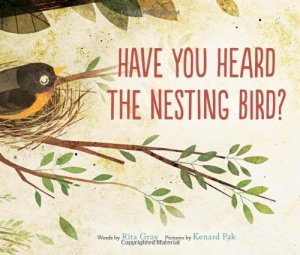
What I discovered was a treasure trove of non-fiction picture books starring birds, many published in recent years. I’ve shared my complete list of favorites at the end (with picks through age 10), but I had so much trouble choosing one to focus on here, that I have to expound on two. The first is Rita Gray’s Have You Heard the Nesting Bird? (Ages 3-6), illustrated by Kenard Pak. This is one of those deceptively simple picture books that educates as it delights. « Read the rest of this entry »
Seasonal Inspiration from a Zen Master
March 7, 2014 § 3 Comments
 Normally, I’m all for aspiring to live in the moment. But not right now. Not this week. Because, it’s March, people, and the ground is once again covered in snow; we’ve lost another two days of school; it’s grey and cold and, frankly, there’s nothing to be gained from living in this moment.
Instead, our family is busy making plans for the future—and living in the delicious anticipation of those plans. My kids are dreaming up the giant sandcastles they intend to make on our upcoming trip to Florida (I am dreaming up the cocktails I intend to make). We are gazing out the window at the trees we planted last fall, wondering what they are going to look like with new, green leaves. JP is plotting how much money he might make selling freshly-squeezed lemonade on the hottest of summer days. And, because September is only six months away, both kids are beginning the daily debate about what their birthday parties should entail. Normally, I might interject a dismissive, “well, we’ll have lots of time to discuss that when it’s closer to the date”; but, right now, what else do I have to do? Sure, let’s talk about how the cake needs to have your name on it (“so everyone knows it’s my birthday”) and how the balloons need to be tied down just right so that they don’t blow away (“like that one time”). Bring it.
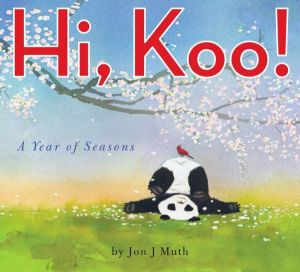
I’m betting that others are in the same boat. And that’s why I’m betting that Jon J. Muth’s brand new Hi, Koo!: A Year of Seasons (Ages 3-8) will be a sure bet for anyone in need of some assurance that spring (and summer) are just around the corner. « Read the rest of this entry »
Friends Make Everything Better (A Pick for Valentine’s Day)
February 10, 2014 § 2 Comments
My family spent this past weekend holed up in the snowy hills of West Virginia with three other families. Once we adults began to block out the chatter and squeals of nine (mostly) happy children running circles around us, we were able to entertain some blissful grown-up time. And as I watched my children mature and transform across three full days of kid-on-kid time, I found myself feeling immensely grateful for friendships of both the tall and short kind. In this winter that has gone on too long, it is our friends that have put smiles on our faces, ideas in our head, and glasses of wine in our (adult) hands.
With Valentine’s Day shortly upon us, I’ve once again chosen a bit of a non-traditional path for my children’s gifts (and, gasp, I’ve even cheated and given the gifts early!). This new picture book—by a first-time author-illustrator—rises above the saccharine-sweet-mushy-gushy-dime-a-dozen stories out there by celebrating friendship in a unique, quirky, unforgettable way.
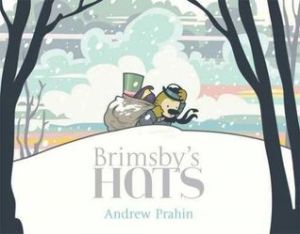
In Andrew Prahin’s Brimsby’s Hats (Ages 4-8), Brimsby, a hat maker by trade, already knows what it is like to have a best friend: someone with whom he shares his creations over tea, and “together, they have the most wonderful conversations.” But when the friend follows his dream to become a sea captain and sails away, Brimsby is left to pass the months away alone in his quiet cottage in the country, without so much as a single visitor.
Groundhog Day (& Other Books About the Weather)
January 29, 2014 § 3 Comments
 My six year old doesn’t understand why Groundhog Day isn’t a school holiday. I tried to explain that, with February 2 being a Sunday this year, it’s sort of a moot point. “But it’s not always on a weekend, Mommy.” So then I tried to explain that the government only picks a few of the most important people in our history (ahem, George Washington, Martin Luther King Jr.) to honor with a school holiday—and that contrary to what he might think with ALL THESE SNOW DAYS, kids are supposed to be IN SCHOOL, learning stuff that their parents don’t have the patience to teach them. “Well, Punxsutawney Phil IS very important because he can PREDICT THE WEATHER.” This is a fair, if debatable, point.
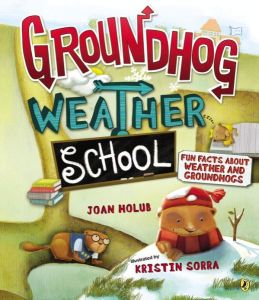
The children’s books on the subject of this Very Important Holiday tend to be either factually straightforward (Gail Gibbons’ Groundhog Day! is usually the teacher’s favorite) or purely fictional (read: silly and unhelpful). But this year, I stumbled upon a find that combines fact, fiction, and An All-Around Good Time: a book titled Groundhog Weather School: Fun Facts About Weather and Groundhogs (Ages 5-9), by Joan Holub, with illustrations by Kristin Sorra. This is precisely the type of book I knew JP would enjoy reading by himself (and, as parents of newly independent readers know, we’re always on the hunt for “that book”). « Read the rest of this entry »
Holiday Gift Guide 2013: Illustrated Chapter Books for the Adventure Seeker
December 19, 2013 § 5 Comments
 Many of us remember the first novels we read, the ones that instilled in us a love of reading (off the top of my head: A Secret Garden, A Wrinkle in Time, anything written by Ruth Chew…). Earlier this year, the prolific writer, Neil Gaiman, wrote a beautiful defense of fiction, which I absolutely love. Fiction, he claims, is not only our best entry into literacy (the what-will-happen-next phenomenon being utterly addictive), but it teaches, above all, the power of empathy:
“When you watch TV or see a film, you are looking at things happening to other people. Prose fiction is something you build up from 26 letters and a handful of punctuation marks, and you, and you alone, using your imagination, create a world and people in it and look out through other eyes. You get to feel things, visit places and worlds you would never otherwise know. You learn that everyone else out there is a me, as well. You’re being someone else, and when you return to your own world, you’re going to be slightly changed.”
I’ve thought a lot about Gaiman’s words, as my six year old and I have been devouring some of the year’s newest chapter books. I’m hoping some of our favorites will find a way into your bedtime routines as well, beginning with Gaiman’s newest novel, Fortunately, the Milk (Ages 7-10, younger if reading aloud). This fantastically over-the-top book begs to be read aloud and is itself a kind of commentary on the power of storytelling. In an attempt to entertain his rambunctious children during their mother’s business trip, a father spins a fantastical tall tale (think pirates, piranhas, aliens, and singing dinosaurs all in the same breathlessly-paced story) about what happens when he goes to the store for a simple carton of milk. « Read the rest of this entry »
Holiday Gift Guide 2013: Compelling Non-Fiction For the Animal Lover
December 16, 2013 § 1 Comment
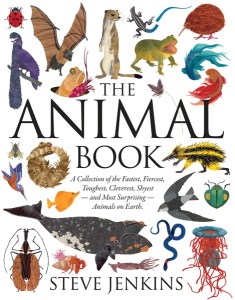 Last year around this time (equally last minute), I did a post about “books worth their weight” (great-looking reference books), as well as one about picture books by Steve Jenkins, a.k.a. Children’s Master of All Things Animal. This year, we can kill two birds with one stone when we buy Steve Jenkins’ new, overstuffed, and absolutely phenomenal The Animal Book: A Collection of the Fastest, Fiercest, Toughest, Cleverest, Shyest—and Most Surprising—Animals on Earth (Ages 6-12).
Over 300 fascinating animals are presented in sections like Family (chapters include “The Mating Dance” and “Bringing Up Baby”); Defenses (e.g. “Copycats” and “Bodily Fluids”); and The Story of Life (yes, Jenkins tackles evolution and, boy, does he succeed). I’m normally not a big fan of fact-centered non-fiction, preferring a more narrative approach that strengthens children’s attention spans and reading comprehension. But I make a BIG exception for Jenkins, whose presentation is as visually enticing (brilliant paper collages amidst an extraordinary use of white space) as it is factually addictive. I could look at this book for hours. I have looked at this book for hours (yes, I am hoarding it from my kids). « Read the rest of this entry »
Holiday Gift Guide 2013: Bedtime Stories for the “Goodnight Gorilla”-Obsessed
December 12, 2013 § 1 Comment
 “How do I break the addiction to Goodnight Gorilla?!” a friend texted me the other day. Whether it’s Goodnight Gorilla, Goodnight Moon, or (my preference) Time for Bed, the lulling, reassuring refrains in these books become quick obsessions with little ones getting ready to tuck in for the night. And, let’s be honest, it can grow a wee bit tedious for the one doing the actual reading.
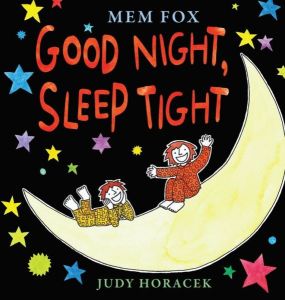
The good news is that, as your child’s attention span develops, you can start incorporating more involved bedtime stories into the mix. I’m not promising it will be love at first sight, and you may have to be a little sneaky (I’ve had great success with the “you pick one and I’ll pick one” approach as a way to introduce new titles). But help is on the way. 2013 has been a rich year for bedtime stories, beginning with Mem Fox’s Good Night, Sleep Tight (Ages 1-4), a small square hardcover illustrated by Judy Horacek—and an instant, no-tricks-necessary favorite with my Emily (the same team created the equally fabulous Where is the Green Sheep?). « Read the rest of this entry »
“Our Trees are Coming!” “Our Trees are Coming!”
November 21, 2013 Comments Off on “Our Trees are Coming!” “Our Trees are Coming!”
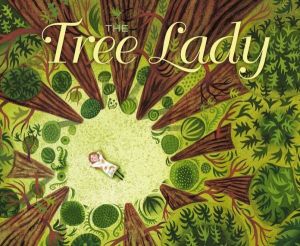 I’m completely obsessed with trees right now. I know what you’re thinking: this is not news. And, you’re right, I’ve written about my love for trees (and stories featuring trees) here, here, here and here. But I’m really, really obsessed with trees right now—and that’s because I have recently been tree shopping. When my kids were baptized last spring, their grandmother offered to buy each of them a tree to grow up alongside. So, earlier this fall, the kids and I did what we do best: we walked, we scooted, and we drove around our neighborhood looking at trees. How had we missed so many of these beauties before? “How about we get one of each?” my son ventured.
Eventually, we narrowed down our choices, but then there was the question of how and where to buy the trees. I initially thought, I’ll look for a deal on the Internet. But then my gardening friend reproached me: you need to see a tree before you buy it, need to study its form, need to find one that speaks to you. This is why, one crystal clear November morning, I found myself standing in a wholesale nursery an hour away in Maryland, surrounded by 600 different varieties of trees. I was walking up and down rows of trees, examining curves of trunks and canopy shapes, paying way too many people to follow me around offering their opinions, and starting to feel like I was going to have a hard time explaining to my husband how this simple decision to buy two trees had gotten totally out of hand. Did I mention how much fun I was having? « Read the rest of this entry »
Permission to Go a Little Wild
September 18, 2013 § 2 Comments
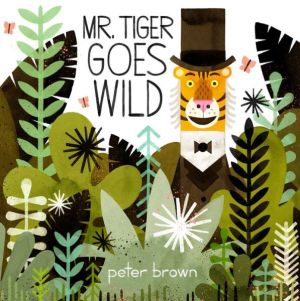 The routines of back to school are upon us. I am slowly adjusting to weekday mornings without the kids (meaning that I’m nearly home from drop off before I realize that I’m still humming along to the Music Together CD in the car; before I realize, Wait. I don’t have to listen to this. Wait! I can listen to anything I want!).
At the same time that I’m shedding a little responsibility, my children are being asked to assume more. They have traded the creative liberty of summer dressing (JP pairing bright green shirts with bright green shorts) for the navy and khaki of school uniforms. Our leisurely mornings of PJs and drawn-out breakfasts have been traded for early wake up calls and a litany of come on, let’s move along, did you pack your lunch bag, please take off that cape, why on earth are you getting out the play dough, for crying out loud hurry up (yes, I have read the articles about how we’re ruining our children by saying “hurry up” all the time, and I’ve made a mental note to work on that in my next life). « Read the rest of this entry »
Digging in the Backyard: Summer School Wraps Up!
August 22, 2013 § 1 Comment
 Earlier this summer, the kids and I were on a morning walk—JP in the lead on foot, Emily trailing on her scooter, and me bringing up the rear. It had rained most of the night before, and the sidewalks were still damp. Abruptly, JP let out one of his characteristic ear-splitting screeches (at almost six, the boy still has no regard for volume control): “STOOOOOOP, EMILY!” Before I could launch into my characteristic lecture about not screaming into people’s faces, especially when that sweet face belongs to your little sister, JP followed it up with, “MOMMY, EMILY WAS ABOUT TO RUN OVER A WORM!” I looked down and, sure enough, the sidewalk was covered in worms, evidently displaced from the previous night’s storm. Is it wrong that I immediately assumed JP’s reaction was based on the grossness factor of squashing a worm between one’s scooter’s wheels? I’ll admit I felt slightly guilty when, once everyone calmed down (by now Emily was screaming nonsensically about worms as well), JP explained, “We have to be so, so careful not to hurt these worms. They need to go back into the dirt to make the plants grow!” I wasn’t going to tell him that these worms didn’t look like they were going anywhere ever again; Emily and I simply followed in tow as he went first and pointed out any worms that we should steer around.
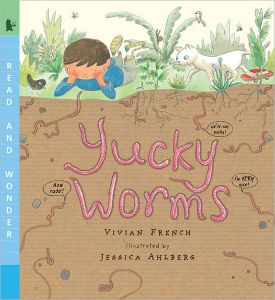
It’s moments like these—rare, fleeting moments—when I wonder if maybe I’ve done something right as a parent. That somehow in all my blabbing on about trees and seeds and caterpillars, my kids have begun to develop an appreciation for the natural world that surrounds them. I would have to credit any success I’ve had to books like Yucky Worms (Ages 4-8), by Vivian French and Jessica Ahlberg, which is part of a fantastic Read and Wonder Series published by Candlewick Press. This is natural science for young kids at its best: fictional stories packed with scientific facts that are woven accessibly into the narrative. In Yucky Worms, a boy gets a lesson in Wormology from his green-thumbed grandmother (perhaps it’s no coincidence that I was first introduced to spiders and butterflies by my two grandmothers?).
Quick to exclaim “Yuck! Throw it away!” when his grandmother digs up a “slimy, slithery, wiggly worm,” the boy in the story gets schooled on the different parts of the worm, how it tunnels through the ground, what it eats, and how its poop enriches the soil. It turns out that worm poop—white curly forms called “casts”—are very plentiful in our backyard. It also turns out that most earthworms do not regenerate when accidentally cut in half by a gardening spade (I now get schooled regularly on this by my “backseat gardeners”). There is much to love about this book, from the sweet relationship between grandmother and grandson, to the hand-drawn diagrams of the worm’s anatomy, to the answers to questions kids don’t even know they have, like what happens to worms in the winter. But perhaps the biggest appeal for kids are the word bubbles that occasionally come out of the mouths of the worms themselves, reinforcing the lessons in the book while adding some enticing humor. What is it about worms that seem to invite speech bubbles? Doreen Cronin and Harry Bliss incorporate a similar technique in their hilarious series, Diary of a Worm (more fun than fact but still surprisingly illuminating about these creatures). Worms have a lot to say, evidently, as they dodge predators or feast on moldy fruit.

Here, the story continues on the side, while the worms take front stage with their tunnels and word bubbles.
I have tried my darndest this summer to get my kids out into nature. When it comes time to make dinner, it’s all I can do to resist the temptation to turn on the TV, shooing them instead into the backyard. Inevitably, I am called out moments later to settle some dispute over an ancient half-broken toy that has been unearthed from the shed and is suddenly the Only Thing Worth Playing With. But, in time, they settle into the rhythm of things and begin to take closer notice of their surroundings. Once again, my dinner making is interrupted by yelling: “Mommy, come out here RIGHT NOW!” I trudge outside more than a little exasperated, only to find the kids, not fighting over toys, but instead huddled over a corner of the deck. I bend down to see a spider’s web glistening from drops of water that have fallen out of the just-watered planters above. “It’s just like the one in the book!” JP exclaims, referring to Helen Frost’s stunning photograph of a dew-covered spider’s web in Step Gently Out, which we had just been reading that morning. “Only it’s even more beautiful,” he adds. “Yes,” Emily pipes in. “It’s sooooo boootiful.”
Other Favorites About Backyard Critters:
Step Gently Out, by Helen Frost (Ages 3-6)
Where Butterflies Grow and The Snail’s Spell by Joanne Ryder & Lynne Cherry (Ages 3-6)
The Honeybee Man, by Lela Nargi (Ages 4-8)
Diary of a Worm, Diary of a Spider, & Diary of a Fly, by Doreen Cronin & Harry Bliss (Ages 4-8)
Insect Detective: Read and Wonder, by Steve Voake & Charlotte Voake (Ages 4-8)
Seeds, Bees, Butterflies & More: Poems for Two Voices, by Carole Gerber & Eugene Yelchin (Ages 5-10)
Plus these favs mentioned in a previous post about Young Naturalists!
Keeping Cool Under the Sea
July 26, 2013 Comments Off on Keeping Cool Under the Sea
 I know, I know, I’ve left you high and dry without reading material for nearly a month (vacation will do that); plus, I neglected to give you a birthday pick for July’s parties. So, in order to make it up to you, I am not only going to recommend a fabulous, brand-spanking-new book that you can give to everyone celebrating a birthday this summer, but I’m going to end with an EXTRA-LONG LIST OF THEMATICALLY SIMILAR BOOKS for you to read to your own kids (heck, you could even bundle some for an extra-special gift, like I did for a friend earlier this month). Are you ready?
Much like reading about snow in the winter, one of my favorite things about summertime reading is the excuse to read books about the sea (it’s no coincidence that I featured an octopus story for last summer’s birthday pick as well). Whether you’re spending time on the beach or simply looking for a mental escape from the heat, summer is the perfect time to introduce children to underwater worlds: landscapes so different from ours that they have their own inhabitants and laws, their own colors and sounds, their own unique set of experiences and problems. And yet, much of the best sea-themed fiction immerses kids in these foreign worlds while at the same time drawing parallels between their own emotional lives and the lives of the fishy dwellers within.
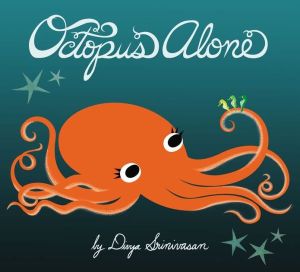
Trust me, you will want to dive straight into the pages of Divya Srinivasan’s Octopus Alone (Ages 3-6), where a bright orange octopus is set against an enticing palette of turquoise, seafoam green, and bright pink. I first fell in love with Srinivasan’s unique stylized graphics in Little Owl’s Night (reviewed here). Now, in the much longer Octopus Alone, we are treated to a more involved plot alongside her vivid art. I can’t say that Srinivasan’s narrative voice is as strong or coherent as her illustrations; and yet, the story’s theme—venturing outside one’s comfort level and finding the reward of new friendships—resonated loudly with both my kids. Any child who has felt overwhelmed walking into a preschool classroom or has stood on the periphery watching older kids at the playground will see a little of herself in the bashful octopus, who is so uncomfortable around the outgoing seahorses that she initially retreats from the coral reef into the deeper, darker, lonelier waters. Any child who often stands silently amidst others (but doesn’t shut up at home) will see a little of herself in the octopus, who imitates the dancing moves of the seahorses in private before allowing herself to see how much fun it might be to dance with others.
Like any great sea-themed book, there are countless opportunities for underwater discovery in Octopus Alone. Our family’s favorite would have to be the indisputably charming endpapers, which label (in cursive!) each of the sea creatures that make an appearance in the book (my son is prone to the “puffer fish,” while my daughter’s finger goes straight to the “butterfly fish”). My kids giggle every time Octopus releases her ink to “hide her blushing” or to escape the hungry eel, a nice reminder of aquatic adaptation. The book even makes some (albeit subtle) references to the complex ecosystem of coral reefs, like cleaner shrimp eating algae off the back of a nurse shark or baby dominoes playing hide and seek in the “swaying anemones.” (Older kids can build on these with Jason Chin’s equally stunning and richly informative non-fiction picture book, Coral Reefs…sorry, couldn’t wait until the end to plug that one.)
Our oceans and lakes, our sandy tide pools and rocky bluffs, can be a source of endless fascination for our kids. We have the power to channel this fascination into imagination, education, and hopefully even conservation. So go ahead: dip their toes in the water and start reading.
Other Favorite Under-the-Sea Stories (from youngest to oldest ages):
Over in the Ocean: In a Coral Reef, by Marianne Berkes & Jeanette Canyon (Ages 1-3; board book)
I’m the Biggest Thing in the Ocean! by Kevin Sherry (Ages 1-4)
The Snail and the Whale, by Julia Donaldson & Axel Scheffler (Ages 3-6; ONE OF MY ALL TIME FAVS)
The Pout Pout Fish, by Deborah Diesen & Daniel X. Hanna (Ages 3-6; best read in the style of the blues!)
Swimmy, by Leo Lionni (Ages 3-6)
Big Al, by Andrew Clements & Yoshi (Ages 4-7)
If You Want to See a Whale, by Julie Fogliano & Erin Stead (Ages 4-7; also brand new)
Kermit the Hermit, by Bill Peet (Ages 4-8)
Jangles: A Fish Story, by David Shannon (Ages 4-8)
Some Favorite Sea-Themed Non-Fiction Picture Books:
The Voyage of Turtle Rex, by Kurt Cyrus (Ages 4-8)
Coral Reefs, by Jason Chin (Ages 5-10)
Island: A Story of the Galapagos, by Jason Chin (Ages 6-12)
Life in the Ocean: The Story of Oceanographer Sylvia Earle, by Claire A. Nivola (Ages 5-10)
Manfish: A Story of Jacques Cousteau, by Jennifer Berne (Ages 5-10)
Ocean Sunlight: How Tiny Plants Feed the Seas, by Molly Bang (Ages 6-12)
The Human Body (Summer School Continues!)
June 12, 2013 § 1 Comment
 Summer is naturally a time for children to sharpen their senses and take notice of their bodies. Running barefoot through the freshly cut grass; relishing the pure silence underwater at the pool; feeling the sweat beads on the back of their necks; hearing the crack of thunder that sends them tearing for the house; stretching out on the earth’s back to gaze at a sky full of stars: this is what summer looks, sounds, and feels like to our children. So why not turn these grass-stained knees into a chance to study the human body? And what if we take these bodily lessons further; what if we create an awareness in our children that their bodies aren’t just little planets unto themselves but are connected to the mysteries of the greater universe?
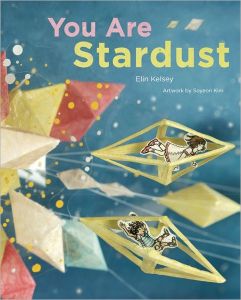
I have long been puzzled by the lack of children’s books that bridge the scientific and natural worlds, so I was thrilled to discover a little gem published last year, written by Elin Kelsey. You Are Stardust (Ages 4-8) is that rare blend of scientific fact and poetic wonder. Beginning with the premise that “every tiny atom in your body came from a star that exploded long before you were born,” the book goes on to draw parallels between humans, animals, the earth, and the universe, from the salt water that flows through our tears like it flows through the ocean to the electricity that powers our thoughts like it powers the lightning in the sky. Every fact and connection is intended to shock and awe (and is backed up by scientific evidence). Did you know that the water we drink today is the same water that the dinosaurs drank? Or that “each time you blow a kiss to the world, you spread pollen that might grow to be a new plant?” (Both of these questions got an audible response from my son: “Is that seriously true?”)
One of my favorite things about sharing books with children is that you can never predict exactly what will rock their world. I would never have supposed that the fact which made the greatest impression upon JP was one having to do with continual renewal—specifically, that “you’ll replace your skin 100 times by the time you turn ten.” When he first heard this, JP threw back his head and roared, “I’m not a snake! Kids don’t shed their skin; that’s ridiculous!” “Not all in one piece like a snake, but in little bits at a time,” I told him, and we went on to discuss things like scrapes, sunburn, and dry skin. For the past week, he has now taken to brushing his hand across his arm 10 times a day, while declaring to his sister that “you can’t see it, but my skin is shedding RIGHT NOW!”
Prior to discovering You Are Stardust, my favorite “metaphysical” book for kids, although on a much simpler, toddler-targeted level, has been Molly Bang’s All of Me: A Book of Thanks (Ages 2-4). With loving, economical text, Bang pays tribute first to a child’s body (“thank you, hands, for gripping and throwing and patting and holding”); then to his senses (“my mouth tastes all my food before it slides down here, into my tummy”); then to his feelings (“today I felt curious, and excited, and angry, and brave…”); and, finally, to the way in which he is part of “this whole wide world…and this whole universe is inside…all of me!”).
What All of Me starts, You Are Stardust expands on for the older child, grounding wondrous observations about the body-universe connection with scientific data (the book’s afterward also cites a website for those who want to learn more about the science behind the book). Perhaps not just coincidentally, both Bang and Kelsey’s books are illustrated with collage, a fitting medium for a lesson on how we are greater than the sum of our parts. The collages in You Are Stardust, done by Soyeon Kim, are actually dioramas, combining rocks, dried flowers, painted leaves, string, tissue paper, and watercolor cut-outs to create a tactile, three-dimensional effect. The illustrations feel youthful and free-form, and I think my son immediately connected with them as something he could approximate with materials gathered from our backyard. I would love for my children (as the author similarly wishes in her afterward) to cart this book outside all summer long, to read it by flashlight in their tee-pee or while propped up on their elbows in the grass. I would like for them to look at the trees and the birds and the snails and the clouds—and to feel their own heartbeat answering back.

“You, me, birds flying through the rainforest. We are all connected. We are all nature.”
Other Favorites for a More In-Depth Study of the Human Body (and with a more traditionally fact-based presentation):
The Skeleton Inside You; Why I Sneeze, Shiver, Hiccup and Yawn; A Drop of Blood; Hear Your Heart; My Five Senses, all part of the wonderful Let’s-Read-And-Find-Out Science Series (Ages 4-8)
See Inside Your Body, by Usborne Publishing (Ages 5-10)
First Human Body Encyclopedia, by DK Pubishing (Ages 6-12)
Bones: Skeletons and How They Work, by Steve Jenkins (Ages 6-12)
Picture This! Human Body, by Margaret Hynes (Ages 8-14)
June’s Birthday Pick
June 5, 2013 § 1 Comment
 Last Friday, after a long week of 90 degree days, the kids and I were driving around struggling to fill the few hours between school and dinner. I suddenly remembered that earlier that day, I’d picked up a stack of just-published books at the store, and so I proposed that we head home to read in the AC. “Reading Party! Reading Party!” my son immediately began chanting, a phrase left over from when his sister was a baby and I would coax him into lying down with me while she took her morning nap in the other room, under the pretense that he could load up the bed with books and we’d have a “Reading Party” (true, my motivation was entirely selfish—must lay head down—but I’m also a big believer that, as parents, our excitement around reading rubs off on our kids).
So, as we sat down to read last Friday, I thought I’d use my kids’ reactions to decide which title to make my birthday pick for the month. I had all my money on Mini Grey’s new Toys in Space, because it’s hard to go wrong with a story involving a fleet of misplaced toys, a spaceship, a conflicted alien, a Wonderdoll blessed with storytelling prowess, and Grey’s hilarious (if occasionally crass) speech bubbles. (Incidentally, I chose another Mini Grey book for last July’s birthday pick, so there must be something about warm temperatures that puts me in the mind of Toys Coming Alive). As expected, Toys in Space captivated my kids and elicited no shortage of laughs. But when all was said and done, it was the final book in our pile that they asked to read a second and a third time—and which they both chose as their favorite.
Emily Jenkins and Stephanie Graegin’s Water in the Park: A Book About Water & the Times of the Day is a quiet, unassuming, lyrical portrait of the transformations that take place in a city park over the course of a typical hot summer day, from the early-morning canine visitors to the tottering babies putting their hands in sprinklers to the adults taking their lunch breaks on shady benches to the evening strollers that get caught in the cooling rain. Of course, there are lots of obvious reasons why my kids (and your kids) would like this book, most especially because it fits entirely into their frame of reference (dogs! swings! parents! nannies! boo-boos! containers of apple slices! tears over leaving the park!). In a season where the heat can make being outside feel oppressive, it’s nice to celebrate that water can be poured into sandboxes to make moats or drizzled down scorching metal slides; that a stray cat can enjoy a sip in a lingering puddle; and that a timid dog might finally decide to wade into the pond. One also can’t ignore the widespread and very natural representation of diversity among the children and adults at the park (Jenkins took her inspiration from weeks spent observing Prospect Park in Brooklyn).
But I think the biggest reason why my kids love this book (and why you shouldn’t hesitate to give it for your next birthday gift) is the sheer comfort that comes from reading a story that’s grounded in the natural progression of a day, whose very text echoes a predictable rhythm of dawn, morning, noon, afternoon, dusk, and night. Very early on, children develop a fascination for time, but it’s not for many years that they truly grasp the meaning of “ten o’clock” or “noon,” that they recognize patterns not only in their own day but in the strangers and animals around them (gasp: the park has a life even when I’m not there?!). There’s a wonderful calm that comes from reading a story that helps to make sense of the order of things. And when the rainstorm descends to cool us all off, there’s comfort in knowing that the sun will shine again.

“Around one o’clock, grown-ups wander in, squinting from their shops and office buildings…Two old people stand [near the pond] with a bag of bread crumbs…On very hot days, the ice cream truck comes early…Children get soft-serve cones and bright Popsicles…Sticky fingers and faces are rinsed in the sprinkler.”
A Story to Grow Up On
May 7, 2013 Comments Off on A Story to Grow Up On
 If you’re big into symbolism (or if you, like me, tear up when inscribing books for gifts), then you’re going to want to give Miss Maple’s Seeds to all the young seedlings celebrating birthdays this spring. There are lots of wonderful picture books about seeds (Jean Richards’ A Fruit is a Suitcase for Seeds and Bonnie Christensen’s Plant a Little Seed are two favorites), but none have the magical realism of Miss Maple’s Seeds (Ages 3-7), written and illustrated by newcomer Eliza Wheeler.
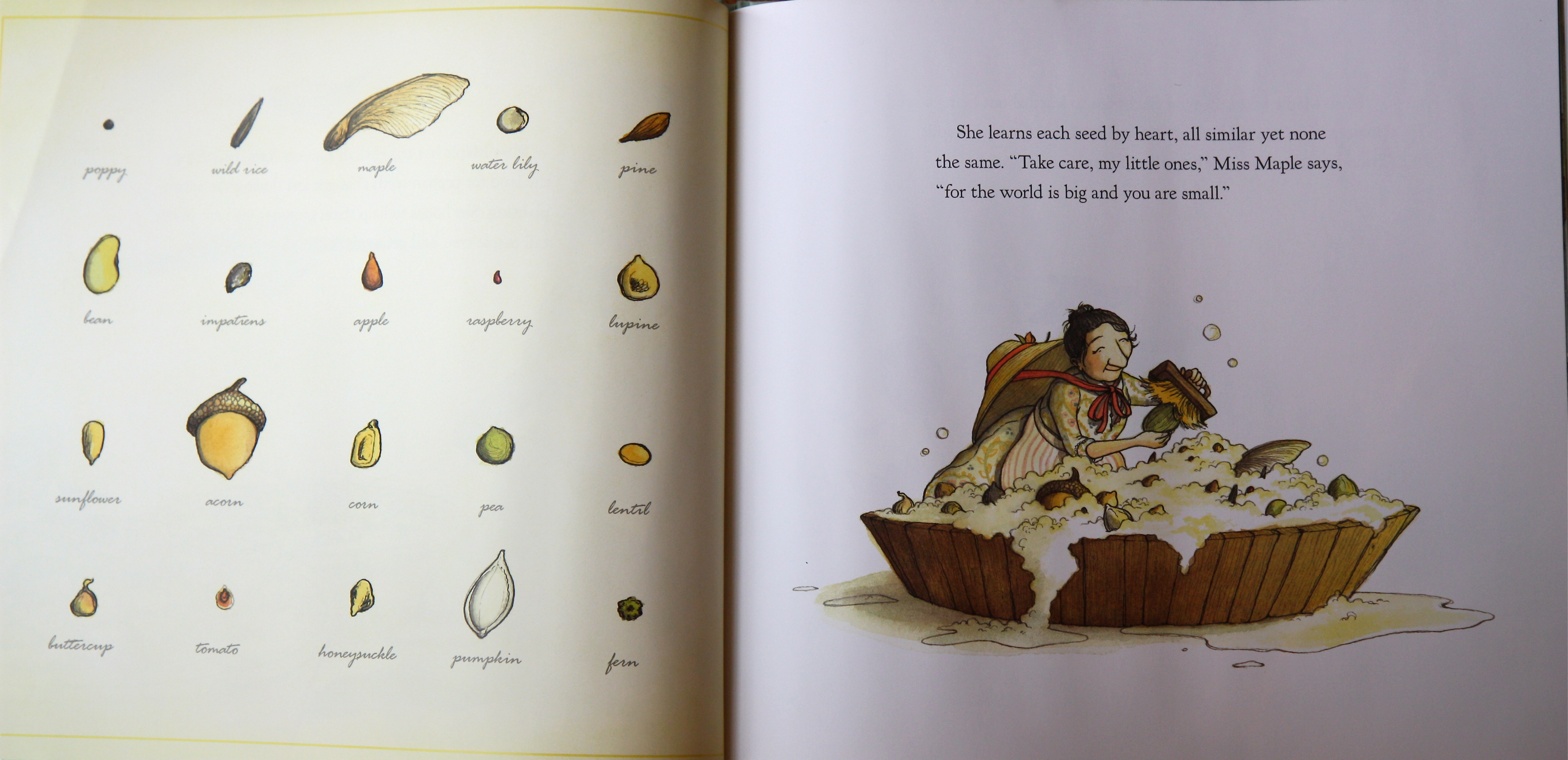
Miss Maple is an eccentric, not-quite-of-this-world sort (a bit like my neighbor, who converses with chipmunks in her backyard). Out of her home inside a hundred-year-old Maple tree, she runs a kind of orphanage for lost seeds, dividing her time between searching for “seeds that got lost during the spring planting” and caring for those seeds until they’re strong enough to lay down roots of their own. “‘Take care, my little ones…for the world is big and you are small,’” she continually reminds her seeds—all the while bathing them, taking them on educational outings to learn about different soil types, reading to them “by firefly light,” and giving them chances to practice “burrowing down into the muddy ground” during thunderstorms. “She’s taking care of them like they’re her babies!” my son was quick to point out, an observation that quickly captured the attention of his younger, doll-obsessed sister.
The story’s prose is unquestionably beautiful: lyrical, concise, and easy to connect back to our own children and the figures (parents, relatives, teachers) who so lovingly and carefully nurture their growth. But it is Wheeler’s ink-and-watercolor illustrations, light and airy and with just a touch of whimsy, which make this gem soar. Sporting a willow weed hat, pointed nose, and delicate slit eyes, Miss Maple epitomizes tenderness in all that she does, whether sweeping her hearth to welcome new seeds or bidding each one farewell as she sends them down the river in lantern-lit leaf boats to find new homes.
One of our favorite illustrations looks like something out of a naturalist’s guide, depicting twenty seeds with their species’ names captioned below in cursive writing (presumably from the hand of Miss Maple). From the fat acorn to the oval pumpkin seed to the single grain of wild rice, the page exhibits not only the visual diversity of nature’s seeds but also the magic which seems to lie within (a giant sunflower grows out of THAT minuscule thing?).
We could all use some of Miss Maple’s tenderness in our own relationship with the Earth, just like our own children need the reassurance that “even the grandest of trees once had to grow up from the smallest of seeds.” I dare you not to tear up when you copy that quote inside the cover of this book for your next gift.
Saving the Trees
April 22, 2013 § 2 Comments
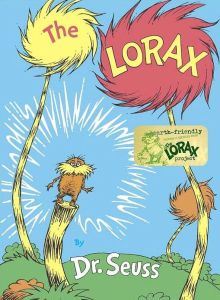 Earlier today, in honor of Earth Day, I shared Dr. Seuss’ The Lorax (Ages 5-10) with the elementary children at my son’s Montessori school. While most people associate Dr. Seuss with the nonsensical but catchy I-Can-Read titles, like Green Eggs and Ham, I would argue that his narrative poems—his longer, more complex, often moralistic stories—were actually his greatest gift to children. Not only do these stories showcase a mastery of rhyme that is virtually unmatched in contemporary children’s literature, but many of them also serve as cautionary tales, introducing children to the dangers of things like running away from your problems (I Had Trouble in Getting to Solla Sollew), or prejudice (The Sneetches), or, as in the case of The Lorax, industrialization at the expense of natural resources.
The Lorax, a “brownish,” “mossy,” raspy-voiced creature, who famously utters, “I speak for the trees for the trees have no tongues,” may have been conjured up by Dr. Seuss in 1971, but his environmental message resonates just as clearly today. And yet, there’s a second hero in this story, one with greater power than The Lorax himself. I’m referring to the unnamed child, who appears at the beginning and the end of the story—the one to whom the Once-ler relates (and repents) his decision to knit every last Truffula Tree into an ambiguous but allegedly multipurpose Thneed, “which everyone, EVERYONE, EVERYONE needs.” This child, to whom the Once-ler entrusts the very last Truffula seed, along with instructions to nurture it with water and clean air, literally holds the future of the planet in his hands; he is the reader’s hope for a happy ending. « Read the rest of this entry »
Beholding the Trees
April 17, 2013 § 1 Comment
 “I’m thankful for the trees,” my five year old blurted out last Thanksgiving, as we were going around the table giving thanks for the usual holiday stuff (togetherness, food, health, etc.). His comment was so unexpected that I’ll admit we all burst out laughing (being a child must feel like a thankless job at times). But for all its randomness, I believe his comment was 100% genuine. JP has always had a special place in his heart for trees (plus his favorite color has been green since he could talk—see last year’s post in honor of Earth Day).
I like to think that a tiny bit of his appreciation for these living, breathing, magnificent things, which line our streets and fill our forests, is owing to me. You see, as much as I want my children to grow up with the deepest love and appreciation for their planet, as much as I believe that the future of this planet lies heavily in the choices their generation will make, I can be lazy. I would like to be the kind of mom who plants a vegetable garden every summer with her children, who participates in volunteer days picking up litter at inner-city parks, who turns banana peels into compost. Instead, my kids get a single tomato plant and some herbs in planters on our deck.
Seeing the World in Color
March 23, 2013 § 3 Comments
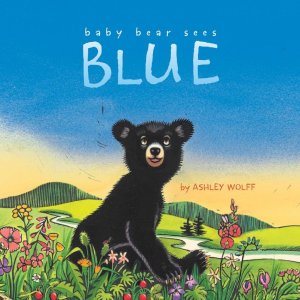 “It’s bud season! It’s bud season!” chanted my children earlier this week, after some long-awaited warm sunshine had beckoned us into the backyard. Thankfully, they were referring not to the beer (although my son’s soccer team does call themselves the Silver Bullets), but rather to the discovery of tiny little green bursts on the ends of our hydrangea bushes and crape myrtles. Since this is the first spring in our new house, our backyard is full of surprises, including yellow daffodils and purple crocuses and little red berries, all of which the children were delighted to point out to me as they raced back and forth across the lawn.
This springtime exuberance is exactly why I love Ashley Wolff’s Baby Bear Sees Blue (Ages 1-4), about a baby bear venturing forth from his den to discover the colors of the world. “Who is warming me, Mama?” asks Baby Bear. “That is the sun,” Mama says, as Baby Bear steps into a pool of brilliant yellow; “Baby Bear sees yellow.” And so begins a series of introductions to different colors, from the blue of the jays to the red of the strawberries to the grey of an approaching storm cloud. For months now, I have been trying (and failing) to teach my two year old her colors; at two and a half, she knows the names of all the colors and loves to exclaim “that’s purple!” or “that’s red!” for things that are, in fact, green or blue. I’m not obsessing about this, having drunk the Montessori Kool-Aid that she’ll learn on her own time (either that or someone will eventually tell me she’s color blind). But I figured it couldn’t hurt to start reading her books about colors, a rich topic in children’s literature (see my complete list of favorites at the end of this post).
Sometimes Reality Trumps Fiction
March 19, 2013 Comments Off on Sometimes Reality Trumps Fiction
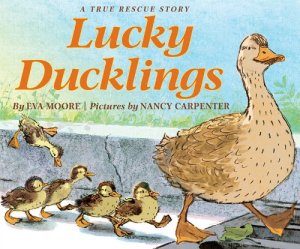 For the past year, my five year old has been obsessed with sorting out fiction from fact. “But did that really happen?” is a common question when we are reading stories, delivered with a furrowed brow and a skeptical tone (as if we as parents are deliberately trying to dupe him with our choice of fictitious books). “Swans can’t really talk and that’s how I know that this story did not really happen,” he announced with confidence at the dinner table one night, after fervently recounting the chapter his class had read that afternoon from The Trumpet of the Swan.
More and more, it would seem, JP has decided that stories are synonymous with make-believe. So, in an effort to challenge his thinking (and because it’s fun to blow his mind), I have been on the hunt for seemingly far-fetched stories that are actually based on real events. Lucky for us—and for our daughter who is obsessed with ducks right now—Eva Moore and Nancy Carpenter’s new Lucky Ducklings (Ages 2.5-6) is just such a story—and an actual rescue story at that.
Year of the Snake
February 21, 2013 § 4 Comments
 Let me be clear: I am not a snake person. Just ask my husband about the time our former neighbor’s grandson misplaced his yellow and black striped rubber snake in our driveway. My hysteria, combined with the Internet, had half the street convinced that a rare and deadly species of snake (I believe we had landed on the Eastern King Snake) had invaded our DC suburb. My husband finds this an enlightening story about my disposition to overreact (I prefer to think of it as strong survival instincts).
All this is to say that if I am telling you that Nic Bishop’s Snakes (Ages 5-12) is not only A-MA-ZING but that I have been volunteering to read this book to my son, then you should take me very, very seriously. You should march straight out to your local bookstore and buy this book (actually, you should buy all the books in Bishop’s series, even those about tamer animals like butterflies and frogs).
Snow Days
January 24, 2013 Comments Off on Snow Days
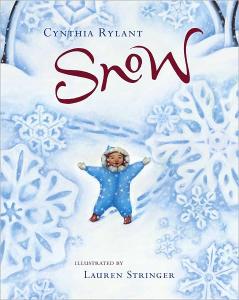 Last night, as I was falling asleep, I wished for snow. Not for the parent in me (who dreads school closures); not for the adult in me (who has never been terribly coordinated at navigating icy pathways); but for my children. In the two and a half years since our family moved to Virginia from the Midwest (land of bountiful blizzards), snow has been something that my kids talk about, dream about, but rarely, if ever, experience. I must admit I find it a bit alarming that my son, so nostalgic for the snow of his earliest years, has taken to listing shoveling among his top five favorite activities. It just doesn’t seem fair that my kids have to go through the daily chore of putting on puffy coats and woolen hats and fleece mittens—without the reward of some billowy white stuff to play in.
So last night, oddly without even realizing snow was in the forecast, I wished for it. And when I woke up this morning, the quiet hush outside (where was the garbage truck?) and a flurry of school emails on my phone sent me flying to my window, where I could hardly wait to broadcast my discovery.
As Cynthia Rylant’s beautiful and celebratory Snow (ages 3-8) begins, “The best snow is the snow that comes softly in the night, like a shy friend, afraid to knock, so she thinks she’ll just wait in the yard until you see her.”
 What to Read to Your Kids