2023 Gift Guide: The Picture Books
November 14, 2023 § 1 Comment

Welcome to the second installment of this year’s Gift Guide, a collection of the giftiest picture books of the year! (If you missed the first installment on Browsable Non-Fiction & Novelty Books, you can catch up here. And stay tuned for lots more posts, including graphic novels and older kid favorites, coming soon!)
It has been another banner year for picture books, and I didn’t have to work hard to find a wide array of memorable stories, unique executions, and beautiful art. The challenge was how to narrow them down! (And then on Instagram y’all pleaded with me not to leave any out…which is why this list includes a few additional titles beyond what I’ve curated for Old Town Books.) I don’t envy you your decisions!
Most of these books are newly published, though there are a handful that came out earlier in the year, without my giving them proper due on the blog. Suggested age ranges are included in every headline, and for those hankering for more photos of interior spreads, my Instagram feed is always good for that.
If you’re near Alexandria, Virginia, I’d love to see you at Old Town Books, where I’ve got all of these picks stocked. And if you have a wonderful indie near you, I’d love for you to support them, too.
Happy reading, happy gifting, happy golden age of picture books! (OUR CHILDREN ARE SO LUCKY.)
« Read the rest of this entry »Back-to-School: Meltdown Edition
September 7, 2023 Comments Off on Back-to-School: Meltdown Edition

After sleeping on different beds, bunks, or floors for most of August, one of my kids was desperate to get back on a routine (barely holding it together, if we’re being honest) and the other would have gladly accepted an invitation to extend her Bohemian lifestyle. Still, regardless of age or temperament, one thing’s for sure: neither will be exempt from the back-to-school meltdowns. I’m talking complaints about the lunch they packed themselves (are we really still talking about mushy grapes?), falling to the floor when they’re reminded (again) to set the table, and accusations that nothing I say or do is right, especially if it relates to getting a good night’s sleep or finding a quiet space to do homework or daring to suggest they reconsider their jeans and hoodie since it’s 98 degrees. As I’m typing this, one is raging about the absence of graph paper and can I order it RIGHT NOW.
You might remember that in our house, thanks to Jory John and Lane Smith, we refer to these gripes as Penguin Problems.
The magical solution to back-to-school meltdowns? There is none, of course. We can delude ourselves that the perfect snack or perfectly-timed bath will stave off implosion, but we’re not fooling our kids. Short of a complete ban on speaking or making eye contact, about the only thing that approximates a balm for a back-to-school meltdown is to pull out a book…or two. Our children want us, but they do not want our questions about their day. Our children’s bodies are depleted, but they do not want suggestions for how to refuel. But nestling into our side (yes, even in 98 degrees) and listening to our voice, knowing they’re getting our full selves in that moment without any demands on them? That they can do. That’s the reset.
Usually. Sometimes.
And if those books can simultaneously validate that our children’s world has just been turned upside down, that instead of running around like feral beings they have to sit their bums in a chair and USE AN ACTUAL PENCIL, even better. Which is why, today, I’m showcasing two picture books with fantastic social-emotional content. One directly addresses school drop-off separation, while the other talks about the woes of nothing, not one single thing, going right across a school day. Both of them aren’t quick to offer fixes; rather, their power lies in the way they normalize and empathize, while also reassuring the listener that these feelings will pass.
As a bonus, both books are illustrated by one of my favorites, Hyewon Yum, whose whimsical, warm-toned pencil drawings never fail to bring a smile to my face, even (and especially) as she nails the different stages of a meltdown.
How does that saying go? If you can’t beat ‘em, you might as well laugh at ‘em? (Something like that.)
« Read the rest of this entry »For the Sensitive Souls (A Post for Mental Health Awareness Month)
May 12, 2022 § 4 Comments
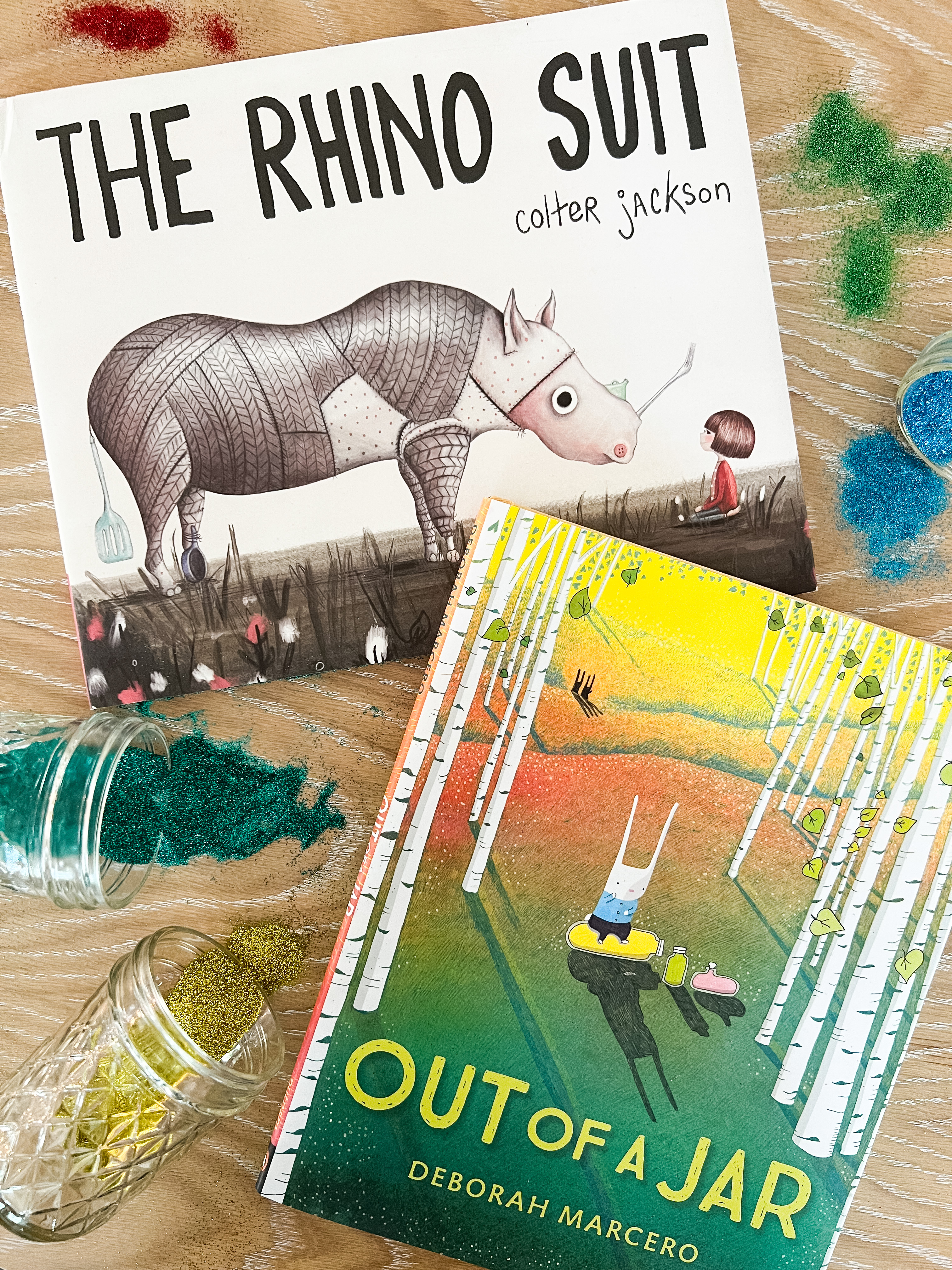
All the time I get asked, What’s a good book for my [insert: nervous, fearful, shy, super sensitive] kid? With everything this crazy world has been dishing out, even kids who aren’t naturally wired towards sensitivity are struggling under the weight of big, heavy, messy emotions. And, as parents, it’s hard to resist the temptation to make the discomfort go away.
My firstborn is an immensely sensitive child. My husband and I joke that he’s a raw nerve walking around on two legs, and the whiplash from highs to lows and back again is not always easy to witness.
Five years ago—I would remember it like it was yesterday, even if I hadn’t journaled about it at the time—my son looked on as garbage workers hauled away our twenty-year-old sofa. We had spent a few weeks trying to donate the sofa, but with a frayed slipcover and sunken cushions, no one seemed to want it.
The hysteria peaked as the garbage truck drove away. The garbage men didn’t treat it well! he wailed. They broke it apart! They tore off the slipcover! It went into the truck in PIECES! They treated it no differently than a container of moldy food! I know it was ripped and didn’t look very good, but it was so comfortable. It made us happy for so long. It should have gone to a good home! It still had life left to give! It could have made people happy! Now, IT’S RUINED!
For a long time, my maternal response to such spectacles was, MAKE. IT. STOP. You’re fine. Here are all the ways that what you’re losing your mind over isn’t actually that bad. Just please stop suffering because my heart cannot take it and also I feel very out of control right now.
But if my son’s extreme responses to everyday life were hard on me, they were a million times harder on him—and often brought with them feelings of shame and loneliness.
I’d like to tell you there was a single turning point for me, but I think it was probably lots of little signs along the way that pointed towards re-framing this sensitivity for both him and me. We began to regard it, not as a condition to overcome, but as a superpower of sorts. You won’t find a more empathetic kid than my son. A more grateful one, too. I could never add up the number of times he has hugged us before bed and said, “Today was the best day of my life.” (Lots more have been the “worst,” of course.)
If, in these turbulent moments, I don’t let his emotions hijack mine—easier said than done, of course—there is usually a nugget of truth telling that can inform my life, our life, for the better. “We did try and donate the sofa,” I reminded him. “Well, maybe someone was afraid to come forward, afraid for us to see their poverty,” he said. “We could have done more, Mommy.” I haven’t forgotten this exchange. Because he’s not wrong. He keeps me honest to the plight of others. He keeps me honest to the plight of himself.
Today, I’m sharing two important new picture books that I wish I’d had when my son was younger. That I wish I’d had for my daughter, too, who sits on the opposite end of the spectrum from her brother, keeping her feelings close to the breast, wary of betraying vulnerability, wary of losing control (can’t imagine who she gets that from). Embedded in their charming, gorgeously illustrated stories, Deborah Marcero’s Out of a Jar (Ages 4-8) and Colter Jackson’s The Rhino Suit (Ages 4-8) employ creative, effective metaphors to explore the temptation to bottle up big, messy emotions and shelve them out of sight. To trap them on the other side of a coat of armor. Both stories ask their young readers to consider the good that might come from leaning into, not away from, uncomfortable emotions. Leaning into sensitivity, rather than fearing or disguising it.
There’s plenty of truth telling in these books for the parents and caregivers of sensitive kids, too.
« Read the rest of this entry »What Our Heart Needs, Today and Everyday
January 24, 2019 § 4 Comments
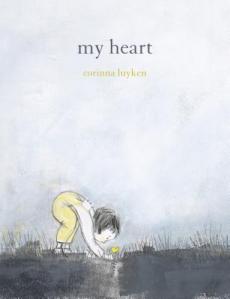 On the morning of Christmas Eve, I drove down to the river to watch the sun rise. I hadn’t been able to sleep, my heart bruised from the words of a loved one the night before. As an adult, I have found the holidays to be such an intermingling of joy and sadness: a time of excitement and celebration, but also a time when the losses in my life assert themselves and leave me vulnerable.
I stood alone in the brisk-but-not-intolerable air, at the same spot along the Potomac where my son had taken me this past summer. A place he had picnicked with his sailing camp. A place he told me, while we were walking there, had “a bench perfect for you to sit on.” I wanted a place where I would feel love. « Read the rest of this entry »
My New Year’s Resolution
January 11, 2019 § 4 Comments
 A few days after New Year’s, I asked each family member to come to the dinner table ready to share a New Year’s Resolution. My husband’s resolution was to find a new hobby; my daughter (never one to stop at just one) said she wanted to make new friends and get better at basketball; and my son said he wanted to read books faster, so he could “keep up” with all my recommendations (and the award for the person who stole my heart goes to…).
When it was my turn, I pulled out Cori Doerrfeld’s 2018 picture book, The Rabbit Listened (“I love that book!” my daughter exclaimed), and announced my intention to become a better listener. « Read the rest of this entry »
Toys as Neurotic as Us
January 20, 2016 § 3 Comments
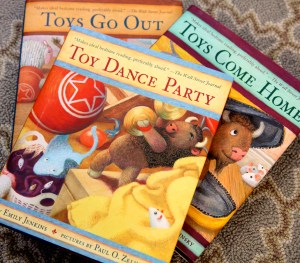 If my children are playing nicely together (sound the trumpets!), chances are high that they’re in the company of stuffed animals. Once a stuffed animal enters our house and is given a name, it assumes an infallible place in JP and Emily’s communal imagination, albeit in an ever-changing litany of roles, from pet to circus performer. My kids crochet leashes for their animals; they bury them in boxes of peanuts and push them around the house; they string them from ceiling fans. They emerge from their respective bedrooms on weekend mornings, eyes partly open, with half a dozen animals tucked under their arms, ready for action.
Two tigers (Hobbies and Hobbies Jr.), a giant panda in a bellman uniform (Cookie), two doughnuts (Sprinkles and Sprinkles 2), and a monogrammed pillow (named, for whatever nonsensical reason when JP was two, Bag of Worms) are just a few of the soft friends that make frequent appearances in my children’s play. Still, as JP and Emily are quick to remind me, the life of a stuffed animal doesn’t begin and end at the hands of a child. The more exciting question is: what shenanigans do these toys get up to when their children are asleep or away? « Read the rest of this entry »
Full Mailbox, Full Heart: A Valentine’s Day Post
February 10, 2015 § 13 Comments
 Our weekend was a flurry of Valentine-making, as my children colored, traced, and cut out hearts for the kids in their classes. While my four year old has to make 20 Valentines, one for each person in her class, my seven year old’s class is doing “Secret Valentine,” where each child draws a name at random and then makes and does things for that person over the course of two weeks. Both kids are giddy with pride in their work and excitement over the upcoming celebrations. (It turns out that my daughter cuts at the speed at which she chews, which is to say that next year we need to start this project three months earlier.)
For the past two years, in honor of V-Day, I’ve given you gift suggestions of friendship books: sweet, beautifully illustrated stories, like Lovabye Dragon, Paul Meets Bernadette, and Brimsby’s Hats, where loneliness dissolves in unexpected arrivals and generous acts. This year, I was going to break with this tradition. « Read the rest of this entry »
Gift Guide 2014 (No. 6): For the Future World Leader
December 22, 2014 Comments Off on Gift Guide 2014 (No. 6): For the Future World Leader
 I have been waiting all year to tell you about this book. Then, last week, terrorists stormed a school in Pakistan and savagely butchered innocent children. My heart broke as I watched the news coverage; and suddenly, I didn’t want to wait a second longer to discuss this special book. Let’s all hold hands and agree to share this book with our children early and often. Please.
Amidst its powerful message of familial relationships and responsibilities, set against the historical backdrop of one of the greatest leaders our world has ever seen, Grandfather Gandhi (Ages 6-12) is also about the very real, very universal feeling of anger. What the book reminds us is that, however inevitable our anger may be, we always, always have a choice in how we express it.
But let me back up. Let me start by saying that Grandfather Gandhi is not a traditional biography of Mahatma Gandhi (in fact, the book assumes the reader has some basic biographical knowledge—a feat easily accomplished by a parent elaborating as he or she shares this book aloud).
Rather, this picture book is a deeply personal account of Gandhi as an old man—as seen through the eyes of his adolescent grandson. « Read the rest of this entry »
The Human Body (Summer School Continues!)
June 12, 2013 § 1 Comment
 Summer is naturally a time for children to sharpen their senses and take notice of their bodies. Running barefoot through the freshly cut grass; relishing the pure silence underwater at the pool; feeling the sweat beads on the back of their necks; hearing the crack of thunder that sends them tearing for the house; stretching out on the earth’s back to gaze at a sky full of stars: this is what summer looks, sounds, and feels like to our children. So why not turn these grass-stained knees into a chance to study the human body? And what if we take these bodily lessons further; what if we create an awareness in our children that their bodies aren’t just little planets unto themselves but are connected to the mysteries of the greater universe?
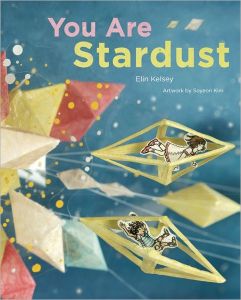
I have long been puzzled by the lack of children’s books that bridge the scientific and natural worlds, so I was thrilled to discover a little gem published last year, written by Elin Kelsey. You Are Stardust (Ages 4-8) is that rare blend of scientific fact and poetic wonder. Beginning with the premise that “every tiny atom in your body came from a star that exploded long before you were born,” the book goes on to draw parallels between humans, animals, the earth, and the universe, from the salt water that flows through our tears like it flows through the ocean to the electricity that powers our thoughts like it powers the lightning in the sky. Every fact and connection is intended to shock and awe (and is backed up by scientific evidence). Did you know that the water we drink today is the same water that the dinosaurs drank? Or that “each time you blow a kiss to the world, you spread pollen that might grow to be a new plant?” (Both of these questions got an audible response from my son: “Is that seriously true?”)
One of my favorite things about sharing books with children is that you can never predict exactly what will rock their world. I would never have supposed that the fact which made the greatest impression upon JP was one having to do with continual renewal—specifically, that “you’ll replace your skin 100 times by the time you turn ten.” When he first heard this, JP threw back his head and roared, “I’m not a snake! Kids don’t shed their skin; that’s ridiculous!” “Not all in one piece like a snake, but in little bits at a time,” I told him, and we went on to discuss things like scrapes, sunburn, and dry skin. For the past week, he has now taken to brushing his hand across his arm 10 times a day, while declaring to his sister that “you can’t see it, but my skin is shedding RIGHT NOW!”
Prior to discovering You Are Stardust, my favorite “metaphysical” book for kids, although on a much simpler, toddler-targeted level, has been Molly Bang’s All of Me: A Book of Thanks (Ages 2-4). With loving, economical text, Bang pays tribute first to a child’s body (“thank you, hands, for gripping and throwing and patting and holding”); then to his senses (“my mouth tastes all my food before it slides down here, into my tummy”); then to his feelings (“today I felt curious, and excited, and angry, and brave…”); and, finally, to the way in which he is part of “this whole wide world…and this whole universe is inside…all of me!”).
What All of Me starts, You Are Stardust expands on for the older child, grounding wondrous observations about the body-universe connection with scientific data (the book’s afterward also cites a website for those who want to learn more about the science behind the book). Perhaps not just coincidentally, both Bang and Kelsey’s books are illustrated with collage, a fitting medium for a lesson on how we are greater than the sum of our parts. The collages in You Are Stardust, done by Soyeon Kim, are actually dioramas, combining rocks, dried flowers, painted leaves, string, tissue paper, and watercolor cut-outs to create a tactile, three-dimensional effect. The illustrations feel youthful and free-form, and I think my son immediately connected with them as something he could approximate with materials gathered from our backyard. I would love for my children (as the author similarly wishes in her afterward) to cart this book outside all summer long, to read it by flashlight in their tee-pee or while propped up on their elbows in the grass. I would like for them to look at the trees and the birds and the snails and the clouds—and to feel their own heartbeat answering back.

“You, me, birds flying through the rainforest. We are all connected. We are all nature.”
Other Favorites for a More In-Depth Study of the Human Body (and with a more traditionally fact-based presentation):
The Skeleton Inside You; Why I Sneeze, Shiver, Hiccup and Yawn; A Drop of Blood; Hear Your Heart; My Five Senses, all part of the wonderful Let’s-Read-And-Find-Out Science Series (Ages 4-8)
See Inside Your Body, by Usborne Publishing (Ages 5-10)
First Human Body Encyclopedia, by DK Pubishing (Ages 6-12)
Bones: Skeletons and How They Work, by Steve Jenkins (Ages 6-12)
Picture This! Human Body, by Margaret Hynes (Ages 8-14)
The Best Chapter Books Talk to the Heart
May 17, 2013 § 3 Comments
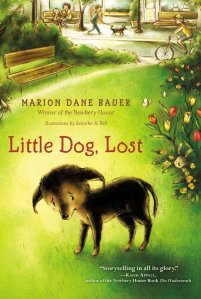 I’m often asked to recommend chapter books that lend themselves to reading aloud, either for a classroom setting or for a parent reading to an elementary-aged child. This is no small order: you need something where the subject matter isn’t too frightening or mature for the 5-8 year old set; you need something that’s going to engage the adult reader as much as the child (there’s no law that says this can’t be enjoyable for us!); and you need something that transcends the plot-driven, early-reader books that kids are reading on their own and helps them develop a taste for the kind of diverse language and emotionally-rich storytelling that will hopefully influence their reading choices in the future. This past winter, we read to my son the classic Little House on the Prairie series, which I adored as a child and whose themes feel just as timeless and important as ever (family values, the rewards of hard work, celebrating the non-material joys in life). But Laura Ingalls Wilder’s writing can also be quite tedious to read aloud, packed with lengthy explanations (twenty pages devoted to smoking a pig?) and repetitive sentence structures. There were moments when I could feel JP’s attention wandering, despite his avid assurance each night that he wanted to read more, more, more.
But then we finished that series and began Marion Dane Bauer’s stand-alone novel Little Dog, Lost (Ages 8-12, younger if reading aloud), published just last year, and it felt like a breath of fresh air. Here’s a book where not a single word is wasted, a book whose text flows off the tongue with such buttery smoothness that most of the time I couldn’t bring myself to stop when I got to the end of a chapter (that’s right, I was actually choosing in those moments to delay bedtime). Bauer achieves this incredible richness of language by breaking with a major narrative tradition: she writes her novel in free verse, creating chapters out of short, staccato poems, which loosely string together and sometimes even repeat words and phrases, all the while telling a very clear and cohesive story. There are 44 of these untitled poem-chapters; and they switch off narrating from the viewpoints of children, adults, and animals—all of whom live in a small contemporary town called Erthly and whose lives are forever touched by an incident involving a lost dog searching for someone to love him.
Freed from the confines of conventional narration, Bauer is able to cut straight to the emotional core of her characters—and the result is a story that children will feel deep in their hearts. Animal stories inherently engender sympathy from children (not coincidentally, some of JP’s favorite moments in the Little House books revolve around the Ingalls’ faithful dog, Jack). At the center of Little Dog, Lost is Buddy, an orphaned dog with “ears like airplane wings,” who “dances” along the sidewalk, longing for a home with “chasing balls,/ ear scratches,/ kisses.” Children will easily relate to Mark, a young boy “who had wanted a dog for as long as he could remember./ He had asked for a dog./ He had begged for a dog./ He had pleaded and prayed and whined for a dog./ Once he’d even tried barking for a dog.” And who wouldn’t be intrigued by a mysterious old man named Charles Larue, who lives alone in a pointy-towered mansion and never speaks to anyone? Throughout the story’s suspenseful twists and turns, even amidst the humorous touches (many coming from a bossy tabby cat who thinks he’s a dog), the story never strays from the hopes and dreams of its relatable, big-hearted characters. It’s fair to say that my son had a full-body experience while listening to this book. He chuckled, gasped, and emitted little exasperated grunts; he covered his eyes and held his breath; he beat his fists on the bed; he cheered; he hugged my arm to pieces; and he shed more than a tear or two (as he says, “I have a little water in my eyes right now because I’m so happy.”). Now that’s a chapter book.
Other Favorite Read-Aloud Chapter Books With Animals & Lots of Heart:
The Cricket in Times Square, by George Selden (Ages 5 & up*)
Charlotte’s Web, by E.B. White (Ages 5 & up)
The Trumpet of the Swan, by E.B. White (Ages 5 & up)
Mr. Popper’s Penguins, by Richard Atwater (Ages 5 & up)
Ginger Pye, by Eleanor Estes (Ages 6 & up)
The One and Only Ivan, by Katherine Applegate & Patricia Castelao (Ages 6 & up)
*Please note that these ages are assuming the reading is being done by an adult. For a child reading independently, the age range would be closer to eight and up.
The Lure of the Balloon
June 3, 2012 Comments Off on The Lure of the Balloon
 At 20 months, my daughter is starting to move away from board books and into short, simple picture books; consequently, she (and I) have fallen in love with Emily’s Balloon (Ages 18 mos-3 yrs), by Japanese author-artist Komako Sakai. I know, I know, you’re thinking that we’re partial to this book because my daughter’s name also happens to be Emily. But before I even had kids, I used to sell gobs of this book when it first came out in 2006; customers would only have to page through the gorgeous charcoal-and-wash pages to fall in love.
Some of my favorite children’s books have been imported from Japan; their illustrative style so beautifully transports us back to the carefree days of our own youth, when making dandelion crowns for a balloon might easily occupy an afternoon. What is it with toddlers and balloons? Balloons have a buoyancy that seems fascinating in its unpredictability, yet non-threatening in its softness; but, most significantly, its perfect sphere-like shape is just the right size for little eyes to track.
 What to Read to Your Kids