Let’s Hear it for the Birds
May 15, 2014 § 1 Comment
 We’re all about birds this spring. Well, to be fair, I’m all about birds, but I’m filling my kids’ baskets with bird-related books, in hopes that they will catch on, too. I can’t help myself. There’s something about Spring Fever that drives me to obsess about some natural wonder alive and transforming outside my window (see past years’ obsessions with trees and worms). And what better way to drag my children along on this journey than through non-fiction picture books, which pair beautiful illustrations and poetic text with fascinating information?
I didn’t exactly choose birds as this year’s subject matter. They chose me. They chose me by waking me up at 4:30am with their frantic, high-pitched chirping. They chose me by making a nest between our roof and my bedroom ceiling, fast and furious work that sounded as if a much larger animal was ripping down sheets of metal. They chose me by distracting my children over breakfast, encouraging bowls of oatmeal to sit half-eaten, in favor of watching a pair of cardinals dancing in the dogwood outside our dining room window (my children are convinced that “Buddy” and “Lady Buddy” followed us two years ago when we moved up the hill to our current house). Let’s just say that the time seemed ripe to learn a thing or ten about the busy birds around us.
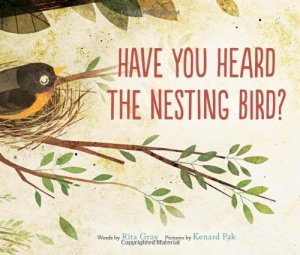
What I discovered was a treasure trove of non-fiction picture books starring birds, many published in recent years. I’ve shared my complete list of favorites at the end (with picks through age 10), but I had so much trouble choosing one to focus on here, that I have to expound on two. The first is Rita Gray’s Have You Heard the Nesting Bird? (Ages 3-6), illustrated by Kenard Pak. This is one of those deceptively simple picture books that educates as it delights. « Read the rest of this entry »
Seasonal Inspiration from a Zen Master
March 7, 2014 § 3 Comments
 Normally, I’m all for aspiring to live in the moment. But not right now. Not this week. Because, it’s March, people, and the ground is once again covered in snow; we’ve lost another two days of school; it’s grey and cold and, frankly, there’s nothing to be gained from living in this moment.
Instead, our family is busy making plans for the future—and living in the delicious anticipation of those plans. My kids are dreaming up the giant sandcastles they intend to make on our upcoming trip to Florida (I am dreaming up the cocktails I intend to make). We are gazing out the window at the trees we planted last fall, wondering what they are going to look like with new, green leaves. JP is plotting how much money he might make selling freshly-squeezed lemonade on the hottest of summer days. And, because September is only six months away, both kids are beginning the daily debate about what their birthday parties should entail. Normally, I might interject a dismissive, “well, we’ll have lots of time to discuss that when it’s closer to the date”; but, right now, what else do I have to do? Sure, let’s talk about how the cake needs to have your name on it (“so everyone knows it’s my birthday”) and how the balloons need to be tied down just right so that they don’t blow away (“like that one time”). Bring it.
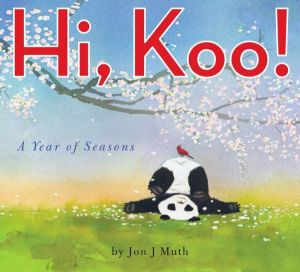
I’m betting that others are in the same boat. And that’s why I’m betting that Jon J. Muth’s brand new Hi, Koo!: A Year of Seasons (Ages 3-8) will be a sure bet for anyone in need of some assurance that spring (and summer) are just around the corner. « Read the rest of this entry »
Friends Make Everything Better (A Pick for Valentine’s Day)
February 10, 2014 § 2 Comments
My family spent this past weekend holed up in the snowy hills of West Virginia with three other families. Once we adults began to block out the chatter and squeals of nine (mostly) happy children running circles around us, we were able to entertain some blissful grown-up time. And as I watched my children mature and transform across three full days of kid-on-kid time, I found myself feeling immensely grateful for friendships of both the tall and short kind. In this winter that has gone on too long, it is our friends that have put smiles on our faces, ideas in our head, and glasses of wine in our (adult) hands.
With Valentine’s Day shortly upon us, I’ve once again chosen a bit of a non-traditional path for my children’s gifts (and, gasp, I’ve even cheated and given the gifts early!). This new picture book—by a first-time author-illustrator—rises above the saccharine-sweet-mushy-gushy-dime-a-dozen stories out there by celebrating friendship in a unique, quirky, unforgettable way.
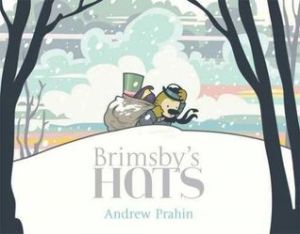
In Andrew Prahin’s Brimsby’s Hats (Ages 4-8), Brimsby, a hat maker by trade, already knows what it is like to have a best friend: someone with whom he shares his creations over tea, and “together, they have the most wonderful conversations.” But when the friend follows his dream to become a sea captain and sails away, Brimsby is left to pass the months away alone in his quiet cottage in the country, without so much as a single visitor.
Groundhog Day (& Other Books About the Weather)
January 29, 2014 § 3 Comments
 My six year old doesn’t understand why Groundhog Day isn’t a school holiday. I tried to explain that, with February 2 being a Sunday this year, it’s sort of a moot point. “But it’s not always on a weekend, Mommy.” So then I tried to explain that the government only picks a few of the most important people in our history (ahem, George Washington, Martin Luther King Jr.) to honor with a school holiday—and that contrary to what he might think with ALL THESE SNOW DAYS, kids are supposed to be IN SCHOOL, learning stuff that their parents don’t have the patience to teach them. “Well, Punxsutawney Phil IS very important because he can PREDICT THE WEATHER.” This is a fair, if debatable, point.
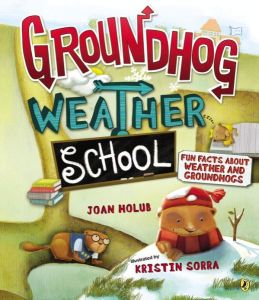
The children’s books on the subject of this Very Important Holiday tend to be either factually straightforward (Gail Gibbons’ Groundhog Day! is usually the teacher’s favorite) or purely fictional (read: silly and unhelpful). But this year, I stumbled upon a find that combines fact, fiction, and An All-Around Good Time: a book titled Groundhog Weather School: Fun Facts About Weather and Groundhogs (Ages 5-9), by Joan Holub, with illustrations by Kristin Sorra. This is precisely the type of book I knew JP would enjoy reading by himself (and, as parents of newly independent readers know, we’re always on the hunt for “that book”). « Read the rest of this entry »
Eye Candy in the Polar Vortex
January 25, 2014 § 1 Comment
 I’m a romantic when it comes to snow. Meaning that the idea of snow (fat, juicy snowflakes blanketing the world in white) is more appealing to me than the reality (school is closed AGAIN?!). The notion of snow days (flying down hills on sleds and decorating snowmen with friends) is always a bit different than the actuality (wait, it’s freezing out, and wait, did my daughter just pee through four layers of clothing and need to be changed on the side of this hill?). Don’t get me wrong: I love snow. It’s the very anticipation of snow that makes the dawning of winter bearable; that breaks up the monotony of short-lived, bare-branched days; that puts a glimmer of excitement in our children’s eyes when they think of what’s to come. But that’s why—more than anything—I love reading about snow. Because the snow in books is always billowy, soft, and pristine white. The snow in books is always perfect.
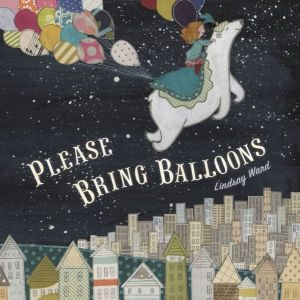
Last January, I wrote about my favorite snow books, each one conjuring up a romantic notion of snow. But this winter, in addition to having more snow on the ground, we’re living in a so-called Polar Vortex, a little thing that’s threatening the very core of our “we can handle winter” attitude (suddenly, our lives seem right out of the pages of Eileen Spinelli’s Cold Snap). Let’s say we could all use a dose of Eye Candy right now. I’m referring to Lindsay Ward’s Please Bring Balloons (Ages 2-5), which came out at the end of last year, and which I pulled out of my Secret Stash earlier this week (a secret stash which is rapidly dwindling in light of these snow days). Three of my daughter’s Favorite Things make an appearance in this book: carousels, balloons, and furry animals. Reminiscent of another 2013 favorite, Dream Friends, both books are about a make-believe adventure starring a girl and her four-legged friend. In Please Bring Balloons, this adventure is polar-bound. « Read the rest of this entry »
What Was Santa Like as a Kid? (Two Favorite New Christmas Books)
December 4, 2013 § 4 Comments
 With every holiday season, there is a kind of magic in rediscovering old friends, old traditions, old stories. I have only to see the ecstasy on my children’s faces as we unpack our box of Christmas books each December to remember why I go through the trouble of packing them away in January, as opposed to stuffing them into our already stuffed bookshelves. As a parent, it’s magical for me as well: last night my eldest left us at the dinner table, voluntarily bathed himself, got into his PJs, brushed his teeth, and called downstairs, “I’m ready 20 minutes early so I can get some extra Christmas stories!” No wonder they call it the most wonderful time of the year.
Just because we only read them for one month a year doesn’t mean I can resist the temptation to add to our collection every single year (there are worse addictions, I’ve assured my husband). Last year was Alison Jay’s exquisite Christmastime, where clues of Christmas carols are embedded into a seek-and-find masterpiece. Previous years’ favorites are mentioned here and here. This year’s acquisitions include two new picture books, utterly different in style, but forever entwined in my mind, since my kids and I had the pleasure of meeting both author/illustrators at Hooray for Books (our fabulous independent bookstore) a few weeks ago. « Read the rest of this entry »
Counting Down to Halloween
October 12, 2013 Comments Off on Counting Down to Halloween
 Our decorations are up, the kids’ costumes are ordered, and earlier this week, right on cue, a streak of stormy weather moved in. All in all, the perfect time for getting out our Halloween-themed books and sharing tales of ghosts and goblins with my revved up trick-or-treaters (it’s not just about the sugar, my sugars). Honestly, I’ve been a bit underwhelmed by this year’s Halloween offerings. Of course, last year was particularly exceptional: we were treated to Creepy Carrots, The Monsters’ Monster, and Vampirina Ballerina—all three brilliant and all three enjoyed (since none actually mention Halloween) long past pumpkin-carving season. But speaking of pumpkins, it has been a long time since a great pumpkin book has entered the scene, and this year of slim pickings has at least given us that.
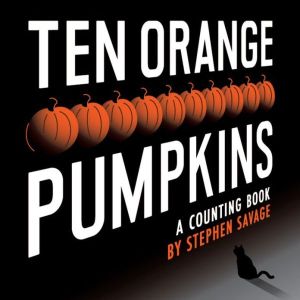
Stephen Savage’s Ten Orange Pumpkins (Ages 2-6) is billed as a counting book—and it’s true that there are opportunities to count on every page, as ten pumpkins become nine, become eight, and so on. But the “trick” of the book lies in how each pumpkin disappears, and the answers are (often quite subtly) revealed in the striking illustrations. « Read the rest of this entry »
June’s Birthday Pick
June 5, 2013 § 1 Comment
 Last Friday, after a long week of 90 degree days, the kids and I were driving around struggling to fill the few hours between school and dinner. I suddenly remembered that earlier that day, I’d picked up a stack of just-published books at the store, and so I proposed that we head home to read in the AC. “Reading Party! Reading Party!” my son immediately began chanting, a phrase left over from when his sister was a baby and I would coax him into lying down with me while she took her morning nap in the other room, under the pretense that he could load up the bed with books and we’d have a “Reading Party” (true, my motivation was entirely selfish—must lay head down—but I’m also a big believer that, as parents, our excitement around reading rubs off on our kids).
So, as we sat down to read last Friday, I thought I’d use my kids’ reactions to decide which title to make my birthday pick for the month. I had all my money on Mini Grey’s new Toys in Space, because it’s hard to go wrong with a story involving a fleet of misplaced toys, a spaceship, a conflicted alien, a Wonderdoll blessed with storytelling prowess, and Grey’s hilarious (if occasionally crass) speech bubbles. (Incidentally, I chose another Mini Grey book for last July’s birthday pick, so there must be something about warm temperatures that puts me in the mind of Toys Coming Alive). As expected, Toys in Space captivated my kids and elicited no shortage of laughs. But when all was said and done, it was the final book in our pile that they asked to read a second and a third time—and which they both chose as their favorite.
Emily Jenkins and Stephanie Graegin’s Water in the Park: A Book About Water & the Times of the Day is a quiet, unassuming, lyrical portrait of the transformations that take place in a city park over the course of a typical hot summer day, from the early-morning canine visitors to the tottering babies putting their hands in sprinklers to the adults taking their lunch breaks on shady benches to the evening strollers that get caught in the cooling rain. Of course, there are lots of obvious reasons why my kids (and your kids) would like this book, most especially because it fits entirely into their frame of reference (dogs! swings! parents! nannies! boo-boos! containers of apple slices! tears over leaving the park!). In a season where the heat can make being outside feel oppressive, it’s nice to celebrate that water can be poured into sandboxes to make moats or drizzled down scorching metal slides; that a stray cat can enjoy a sip in a lingering puddle; and that a timid dog might finally decide to wade into the pond. One also can’t ignore the widespread and very natural representation of diversity among the children and adults at the park (Jenkins took her inspiration from weeks spent observing Prospect Park in Brooklyn).
But I think the biggest reason why my kids love this book (and why you shouldn’t hesitate to give it for your next birthday gift) is the sheer comfort that comes from reading a story that’s grounded in the natural progression of a day, whose very text echoes a predictable rhythm of dawn, morning, noon, afternoon, dusk, and night. Very early on, children develop a fascination for time, but it’s not for many years that they truly grasp the meaning of “ten o’clock” or “noon,” that they recognize patterns not only in their own day but in the strangers and animals around them (gasp: the park has a life even when I’m not there?!). There’s a wonderful calm that comes from reading a story that helps to make sense of the order of things. And when the rainstorm descends to cool us all off, there’s comfort in knowing that the sun will shine again.

“Around one o’clock, grown-ups wander in, squinting from their shops and office buildings…Two old people stand [near the pond] with a bag of bread crumbs…On very hot days, the ice cream truck comes early…Children get soft-serve cones and bright Popsicles…Sticky fingers and faces are rinsed in the sprinkler.”
A Story to Grow Up On
May 7, 2013 Comments Off on A Story to Grow Up On
 If you’re big into symbolism (or if you, like me, tear up when inscribing books for gifts), then you’re going to want to give Miss Maple’s Seeds to all the young seedlings celebrating birthdays this spring. There are lots of wonderful picture books about seeds (Jean Richards’ A Fruit is a Suitcase for Seeds and Bonnie Christensen’s Plant a Little Seed are two favorites), but none have the magical realism of Miss Maple’s Seeds (Ages 3-7), written and illustrated by newcomer Eliza Wheeler.
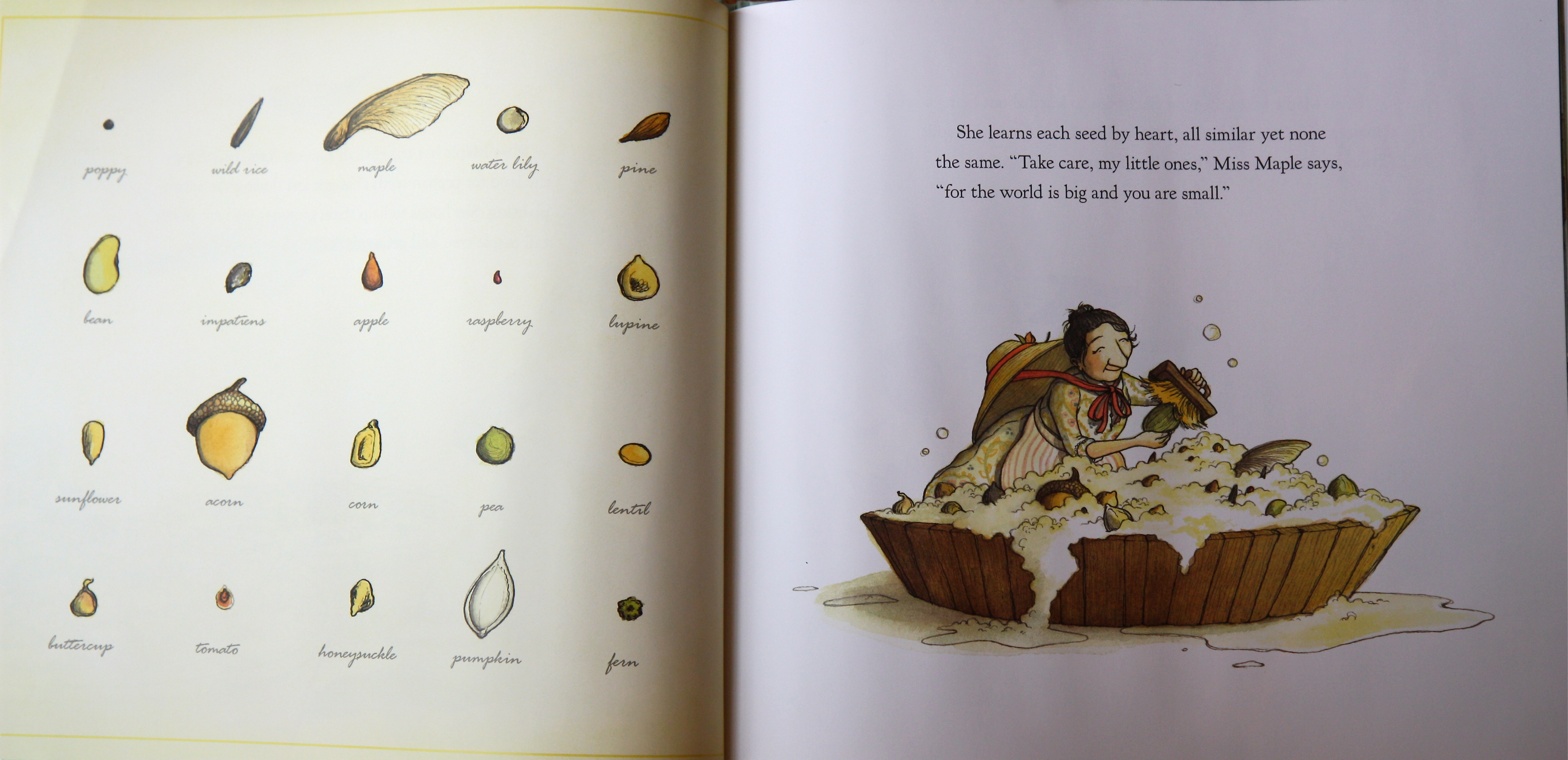
Miss Maple is an eccentric, not-quite-of-this-world sort (a bit like my neighbor, who converses with chipmunks in her backyard). Out of her home inside a hundred-year-old Maple tree, she runs a kind of orphanage for lost seeds, dividing her time between searching for “seeds that got lost during the spring planting” and caring for those seeds until they’re strong enough to lay down roots of their own. “‘Take care, my little ones…for the world is big and you are small,’” she continually reminds her seeds—all the while bathing them, taking them on educational outings to learn about different soil types, reading to them “by firefly light,” and giving them chances to practice “burrowing down into the muddy ground” during thunderstorms. “She’s taking care of them like they’re her babies!” my son was quick to point out, an observation that quickly captured the attention of his younger, doll-obsessed sister.
The story’s prose is unquestionably beautiful: lyrical, concise, and easy to connect back to our own children and the figures (parents, relatives, teachers) who so lovingly and carefully nurture their growth. But it is Wheeler’s ink-and-watercolor illustrations, light and airy and with just a touch of whimsy, which make this gem soar. Sporting a willow weed hat, pointed nose, and delicate slit eyes, Miss Maple epitomizes tenderness in all that she does, whether sweeping her hearth to welcome new seeds or bidding each one farewell as she sends them down the river in lantern-lit leaf boats to find new homes.
One of our favorite illustrations looks like something out of a naturalist’s guide, depicting twenty seeds with their species’ names captioned below in cursive writing (presumably from the hand of Miss Maple). From the fat acorn to the oval pumpkin seed to the single grain of wild rice, the page exhibits not only the visual diversity of nature’s seeds but also the magic which seems to lie within (a giant sunflower grows out of THAT minuscule thing?).
We could all use some of Miss Maple’s tenderness in our own relationship with the Earth, just like our own children need the reassurance that “even the grandest of trees once had to grow up from the smallest of seeds.” I dare you not to tear up when you copy that quote inside the cover of this book for your next gift.
Beholding the Trees
April 17, 2013 § 1 Comment
 “I’m thankful for the trees,” my five year old blurted out last Thanksgiving, as we were going around the table giving thanks for the usual holiday stuff (togetherness, food, health, etc.). His comment was so unexpected that I’ll admit we all burst out laughing (being a child must feel like a thankless job at times). But for all its randomness, I believe his comment was 100% genuine. JP has always had a special place in his heart for trees (plus his favorite color has been green since he could talk—see last year’s post in honor of Earth Day).
I like to think that a tiny bit of his appreciation for these living, breathing, magnificent things, which line our streets and fill our forests, is owing to me. You see, as much as I want my children to grow up with the deepest love and appreciation for their planet, as much as I believe that the future of this planet lies heavily in the choices their generation will make, I can be lazy. I would like to be the kind of mom who plants a vegetable garden every summer with her children, who participates in volunteer days picking up litter at inner-city parks, who turns banana peels into compost. Instead, my kids get a single tomato plant and some herbs in planters on our deck.
Seeing the World in Color
March 23, 2013 § 3 Comments
 “It’s bud season! It’s bud season!” chanted my children earlier this week, after some long-awaited warm sunshine had beckoned us into the backyard. Thankfully, they were referring not to the beer (although my son’s soccer team does call themselves the Silver Bullets), but rather to the discovery of tiny little green bursts on the ends of our hydrangea bushes and crape myrtles. Since this is the first spring in our new house, our backyard is full of surprises, including yellow daffodils and purple crocuses and little red berries, all of which the children were delighted to point out to me as they raced back and forth across the lawn.
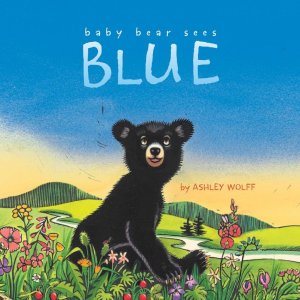
This springtime exuberance is exactly why I love Ashley Wolff’s Baby Bear Sees Blue (Ages 1-4), about a baby bear venturing forth from his den to discover the colors of the world. “Who is warming me, Mama?” asks Baby Bear. “That is the sun,” Mama says, as Baby Bear steps into a pool of brilliant yellow; “Baby Bear sees yellow.” And so begins a series of introductions to different colors, from the blue of the jays to the red of the strawberries to the grey of an approaching storm cloud. For months now, I have been trying (and failing) to teach my two year old her colors; at two and a half, she knows the names of all the colors and loves to exclaim “that’s purple!” or “that’s red!” for things that are, in fact, green or blue. I’m not obsessing about this, having drunk the Montessori Kool-Aid that she’ll learn on her own time (either that or someone will eventually tell me she’s color blind). But I figured it couldn’t hurt to start reading her books about colors, a rich topic in children’s literature (see my complete list of favorites at the end of this post).
Snow Days
January 24, 2013 Comments Off on Snow Days
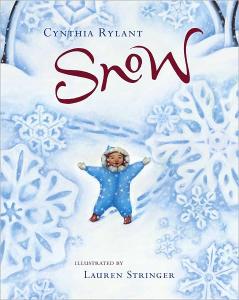 Last night, as I was falling asleep, I wished for snow. Not for the parent in me (who dreads school closures); not for the adult in me (who has never been terribly coordinated at navigating icy pathways); but for my children. In the two and a half years since our family moved to Virginia from the Midwest (land of bountiful blizzards), snow has been something that my kids talk about, dream about, but rarely, if ever, experience. I must admit I find it a bit alarming that my son, so nostalgic for the snow of his earliest years, has taken to listing shoveling among his top five favorite activities. It just doesn’t seem fair that my kids have to go through the daily chore of putting on puffy coats and woolen hats and fleece mittens—without the reward of some billowy white stuff to play in.
So last night, oddly without even realizing snow was in the forecast, I wished for it. And when I woke up this morning, the quiet hush outside (where was the garbage truck?) and a flurry of school emails on my phone sent me flying to my window, where I could hardly wait to broadcast my discovery.
As Cynthia Rylant’s beautiful and celebratory Snow (ages 3-8) begins, “The best snow is the snow that comes softly in the night, like a shy friend, afraid to knock, so she thinks she’ll just wait in the yard until you see her.”
January’s Birthday Pick
January 8, 2013 § 1 Comment
 For this month’s birthday pick, I’m doing something a little different: 1) I’m focusing on the youngest ages for a change; 2) I’ve chosen not one but two books (which make a perfect pairing); and 3) I’m encouraging you to throw caution to the wind and take a chance on books that aren’t brand new but are commonly unknown.
In short, the next time you are headed to a birthday party for a one or two year old, you’re in luck. I Took the Moon for a Walk (Ages 1-4) and Listen, Listen (Ages 1-4) are both illustrated by the supremely talented Alison Jay, whose praises I have sung here before. With their over-sized 9” by 9” format, these hefty board books mirror another favorite by Jay, her ABC: A Child’s First Alphabet Book (which tends to be well known and for good reason: it may just be the best alphabet book ever illustrated).
Alison Jay’s books are the ultimate gift. Packed with hidden surprises, layered with detail, and shimmering in vivid colors underneath a “crackle” finish, Jay’s paintings beg to be poured over again and again.
The Year That Lies Ahead
January 3, 2013 § 2 Comments
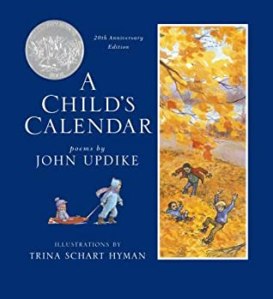
On the morning of January 1, my five year old crawled into our bed and asked with great solemnity, “Is the year of Christmas over?” I’m not entirely sure what he was getting at; did he mean to say month? or season? or was he actually inquiring as to whether the Year of the Great Christmas of 2012 had ended? I’ll never know exactly what was ruminating in his little head, but it was a sweet reminder of how bewildering the concept of time is to children—even to a five year old who has plenty of memories of past years.
We as adults take for granted our assurance about the cyclical nature of time: that all seasons, all holidays, all of nature’s dramatic transformations, will occur again and again with each passing year. It will probably come as no surprise that my instinctual reaction to JP’s question on New Year’s morning was to send him downstairs to fetch some relevant reading material. One of my all-time favorite children’s books (a book so precious to me that it actually resides on the “adult” shelves of our living room library) is A Child’s Calendar (Ages 5-10), a 1965 treasure of poems by John Updike that was later given a ’90s makeover with the addition of award-winning illustrations by Trina Schart Hyman.
« Read the rest of this entry »“Mommy, you know what? You know what? You know what?”
November 20, 2012 § 1 Comment
 My five year old loves to tell stories. Most of the time, his stories are a blend of autobiographical truth and nonsensical make-believe, and most of the time they are his way of working through whatever he’s trying to make sense of in the world (“There was this hurricane, and the winds were swirling around outside like a tornado, and then the roofs of the houses blasted off to Outerspace, and then…). As a parent, I know that I’m supposed to dedicate my ears to him when he’s narrating life’s inexplicable phenomena, but golly if his stories don’t always seem to come at a time when I’m desperately trying to corral him into putting on his coat or swallowing a few bites of food (the fork goes up, then stops, millimeters from the mouth, then comes down again: “Mommy, you know what?”). But I get it. I do. We all want to narrate our lives, and we all want an appreciative audience.
That’s why I’m not surprised that JP’s sister, now a full-fledged two year old, has decided that she too has verbal musings of her own to share. Suddenly, our family dinners are filled with Emily’s terrorizing screams—“I talking here!”—followed by JP’s despairing moans, “Emil-ee, I haven’t finished my story yet!”
Alas, tonight seemed like a good time to introduce my clan to the latest treasure from Philip and Erin Stead, the husband and wife duo that wrote and illustrated two of my all-time favorites, A Sick Day for Amos McGee and And Then It’s Spring. Their newest gem, Bear Has a Story to Tell (Ages 2-6), has all of the subtle charm, all of the understated quietness, of their earlier works, and this makes it perfectly suited for the subject at hand: hibernation.
The Leaves, They Are a-Falling
October 24, 2012 Comments Off on The Leaves, They Are a-Falling
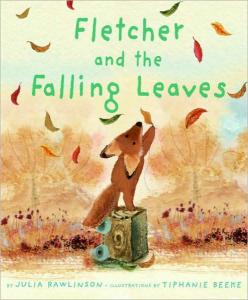 To young children, fall can be a time of bewilderment (what is happening to the leaves on my trees?!). As they get older and can remember previous falls, some of that mystery transforms into magic: soon fall becomes a season to embrace for the very changeability that was once so puzzling.
My two children are on opposite ends of this spectrum of discovery. On the one hand, there’s two-year-old Emily, who at times can’t refrain from picking up and examining every leaf she comes across. On our walks to school, I’ll point out a magnificent crimson maple leaf lying on the ground, freshly fallen and perfectly preserved in its flatness and shape: “Look at that huge red leaf—let’s grab it!” I’ll encourage. But she’ll stop short and pick up part of a shriveled brown leaf, holey from bugs and tinged with black spots. She’ll gaze at it with a furrowed brow before proudly handing it to me and demanding that I put it in her backpack. On the other hand, there’s five-year-old JP, whose seasoned eye searches out only the most unusual spectacles: “Whoa, that tree is totally orange! It looks like fire exploding out of a rocket ship!”
Regardless of where they fall on the spectrum, their excitement about fall is contagious. Tonight, the kids and I curled up together in our jammies to read my all-time favorite picture book about fall: Fletcher and the Falling Leaves (Ages 2.5-6), with text by Julia Rawlinson and watercolors by Tiphanie Beeke (side note: if you fall deeply in love with this book, as I know you will, make sure to get your hands on the sequels, Fletcher and the Snowflake Christmas and Fletcher and the Springtime Blossoms, which are equally captivating).
Advanced Apple Picking: Part Two of Two
September 14, 2012 § 1 Comment
 In addition to making little botanists out of your children (see my previous post), apple picking can inspire some fascinating historical and cultural discussions, especially for the older set. As a quintessentially American pastime dating back to frontier life, apple picking speaks to some of our country’s core values.
Enter Johnny Appleseed, that larger-than-life figure who was allegedly responsible for planting and distributing the seeds for many of our country’s apple trees (that’s right, boys and girls, that apple you’re eating might have descended from a seed this guy planted!). September 26 marks the birth of Johnny Appleseed (whose real name was John Chapman). Last year at this time, I searched the libraries for a book about Chapman to bring to JP’s school; but while there are no shortage of kids books written on this topic, most struck me as inaccessible—a portrait of an historical figure presented without any meaningful context.
This fall, however, the topic has gotten a facelift by Esme Raji Codell and Lynne Rae Perkins, in their newly published and utterly captivating Seed by Seed: The Legend and Legacy of John “Appleseed” Chapman (Ages 5-10). What Seed by Seed does that no one has thought to do before is to set the stage by giving kids an up-close-and-personal account of the sights, smells, and sounds of early frontier life.
Apple Picking for Beginners: Part One of Two
September 11, 2012 § 3 Comments
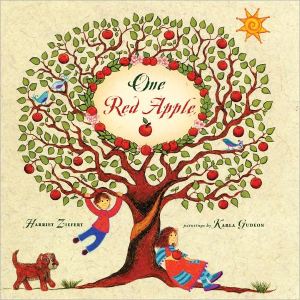 In our family—more than back-to-school, more than lightweight jackets, even more than colorful leaves—fall means apple picking! I’ve already established my obsession with using farms as a classroom for my children. Now add to that curriculum some apple picking (complete with wagon rides, ladders, and pie), and you’ve got a hands-on opportunity for kids to participate in the selection of their own food—while at the same time learning where that food comes from.
When JP turned one, we had his birthday party at an apple orchard outside Chicago. I can still envision him gripping the top of our full basket on his wobbly little legs, removing one apple at a time, taking a bite, returning it to the basket with a single set of teeth marks, and then picking up another and another—until he’d put his teeth on nearly every apple he could reach. We lost a lot of apples that year, but it seemed a small price to pay for a love of apples that has stayed with him since.
For the youngest apple pickers, my favorite introduction to the topic is One Red Apple (Ages 2-4), by Harriet Ziefert, with evocative paintings by Karla Gudeon. The book begins with a single red apple, ripe on the branch of the fall apple tree; it goes on to trace its life cycle, as it’s picked, eaten, dropped, and released back into the earth to sprout a new tree. Children are drawn into the action, as each of the single sentences comprising each page begins with an active verb: “Pick a red apple from a tree.” “Leave an apple core for the birds to eat.” “Watch tiny apple seeds scatter in the wind.” “See small sprouts peek out from the earth.”
Quiet Time Was Never So Quiet
June 10, 2012 § 5 Comments
 Let’s face it: there are times when you can’t submit to the chants of “Read to me! Read to me!” Perhaps you’ve just had a second baby and you’re looking for something to occupy the first. Maybe you’ve got a preschooler who is starting to give up her nap, but you’re still (desperately) hoping to institute Quiet Time. Or maybe your child is not quite reading but wants to feel like he is.
Whatever your motive, there is hope: it is possible to get your non-reader to engage in quiet, independent time with books. Of course, there are some books that are more likely to succeed than others. And, as a bonus, these also tend to be the books that bore you to tears if you do have to read them aloud. You know the type: books whose illustrations are jam-packed with detail; books whose pages your child wants to pour over at such length that it seems like you’ll be stuck in his room reading to him forever. Take yourself out of the equation, and these books become—not your worst enemy—but your greatest asset.
Rain, Rain, Here for a Day (Or Two…)
May 14, 2012 § 1 Comment
 As a mom of young children, I will admit to feeling a little dread, even a touch of panic, when I wake up and it’s raining. Trapped inside with my kids? Anything but that! Naturally, my kids think it is a treat, since they have activities reserved for rainy days (“Pillows off the couch! Pillows off the couch!”). Over time, I’ve discovered that if I can live in the moment and give in to the calm and quiet of a rainy day (and, yes, the subsequent moments of cooped-up mania), then there is much to be gained for me as well.
And if not, well, there are always rainy day books to read inside our blanket forts! A good rain book should make you feel wet and cozy at the same time. Uri Shulevitz does this to perfection in his 1969 gem Rain Rain Rivers (Ages 2-6), where pen and ink drawings mix with watercolors in an almost haunting monochromatic exhibit of rain, first falling outside a little girl’s bedroom window, then (as she imagines it) trailing through the city streets, out into the countryside, and into the open, swelling oceans.
 What to Read to Your Kids