GOOOOOOAAAAAAAALLLLLLLL!
July 2, 2014 § 1 Comment
 We are not a sports-watching family (my husband jokes that he lost TV sports in marriage). But then came the World Cup. All four of us are possessed over the World Cup, and I can’t entirely explain it. I mean, it can’t just be the hotness of the players, the incredible headers that out of nowhere tip a speeding ball into the net; the non-stop, pinball-like passing. We scream at the TV (“Mommy, you are using your outside voice!” I’ve been reprimanded more than once); we jump up and down and hug each other over goals; we run into the backyard and kick the ball at halftime; and we despair when the US team fights the fight of its life and comes up short.
The World Cup will end, but I hope our family’s new love of soccer will not. Both kids are more excited than ever for their own soccer season this fall (although JP reports that he does not think he would like to be as good as the World Cup players, because “it looks very dangerous out there”). In the meantime, we will be reading some of the fantastic soccer-themed books that have popped up this year. Our favorite of these is Soccer Star (Ages 4-8), by Mina Javaherbin (illustrations by Renalto Alarcao), a picture book which not only exudes the excitement of soccer, but places it in a valuable cultural context. « Read the rest of this entry »
Connecting Through Diversity
March 25, 2014 § 1 Comment
 A rousing op-ed piece by acclaimed children’s author Walter Dean Myers, recently appearing in The New York Times, poses the uncomfortable question: “Where Are the People of Color in Children’s Books?” The startling statistic cited at the beginning reveals that of the 3,200 children’s books published in 2013, only 93 were about black people. Myers later compares this statistic to the 40% of public school students nationwide who are black or Latino. As a black boy growing up in Harlem, Myers’ initial love affair with reading quickly turned to disinterest, as he discovered the glaring lack of literary characters who looked and lived like him. As an adult, Myers has dedicated his career to writing prolifically about inner-city youth, calling his novels “a validation of their existence as human beings.” But it’s about more than providing validation to people with color, he notes. It’s also about how these individuals are seen by the rest of us:
Books transmit values. They explore our common humanity. What is the message when some children are not represented in those books?
As someone who sold picture books for many years, what often strikes me about today’s offerings for young people is not the lack of books featuring people of color (that is clearly a fact), but how quickly a book with a black figure on its cover almost always signifies a story about a “race issue,” be it a story about a slave traversing the Underground Railroad or one about a contemporary black girl overcoming her classmates’ prejudice to star in the school play. Many of these are beautiful, powerful picture books—but they are also ones that, too often, only end up seeing the light of day during calendar events like Black History Month. Especially among white families, they are treated more like “teaching tools” for the classroom and less like the books we purchase and leave strewn around our house, hoping for our children to discover and devour them. « Read the rest of this entry »
Changing the World Through Song: A Post for MLK Jr. Day
January 19, 2014 § 1 Comment
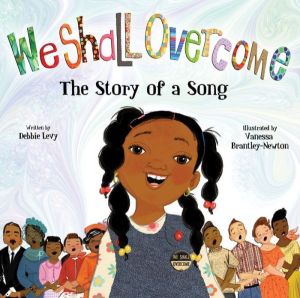 Last year’s post, in honor of Martin Luther King Jr’s birthday, continues to be one of my most read and shared posts. I don’t think there’s any way to top Kadir Nelson’s moving picture book biography of King, so I thought I’d talk this year, not about the leader of the Civil Rights Movement, but about his followers—the ones who marched, the ones who stood up for what they believed, the ones who sang. I was giddy with excitement to discover Debbie Levy’s new picture book, We Shall Overcome: The Story of a Song (Ages 5-10)—one, because I have always loved that song (it crops up at surprising times, like when I’m hiding in the bathroom in an attempt to keep from screaming at my children); and two, because music has recently taken our house by a storm. « Read the rest of this entry »
Holiday Gift Guide 2013: Other-Worldly Encounters For the Young Artist
December 8, 2013 § 4 Comments
 When I was young, one of my favorite picture books was Harold and the Purple Crayon, where a little boy makes his own adventures with the help of a single purple crayon. As a child, I loved to draw, but I think the greater appeal for me lay in Harold’s vivid imagination—an imagination that empowers him with an inner resourcefulness, that entertains him when he can’t fall asleep, that gets him out of any sticky situation (drowning? simply draw a boat).
This same spirit echoes across Aaron Becker’s Journey (Ages 4-8), easily the most stunning picture book of 2013 and an inspiration for young artists and adventure-seekers alike. Unlike Harold, a simple visual presentation of purple and white, Journey makes use of a broad palette, although weighted emphasis is given to red, the color of the crayon with which a girl begins her escape by drawing a door (after all, what else can you do when your mom is cooking, your dad is working, and your big sister is too busy?). « Read the rest of this entry »
Would Your Life Story Fit In a Box? What We Learn From Our Ancestors
October 3, 2013 § 1 Comment
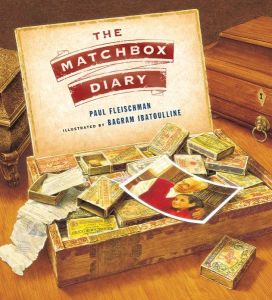 Our month of Birthday Mania was bound to have some fall out. Last night, after a particularly exhausting day for my kids (school followed by swim lessons followed by dinner out with friends), I finished putting Emily down and walked into JP’s room to begin his story time. I found my newly-turned six year old curled up in a ball on his bed, sobbing into the deflated husk of his bright green birthday balloon, a remnant from last weekend’s party. “My buh-buh-buh-buh-llllooooon!” he convulsed. “It’s all I have left from my bestest day evvvvvvv-errrrrrrr!” And then he looked at me with lion eyes: “I want a new balloon RIGHT NOW!”
As parents, we’ve all been here. Missed that window to leave the park, to leave the restaurant, to get into bed. So. Far. Gone. I tried the parenting-with-empathy approach: “It’s hard when something so fun comes to an end, huh?” But the wailing continued, accompanied now by a strange rocking of the shriveled green mass. I need to get this poor kid in bed. “Wait! I know!” I offered. “We can save it and put it in your memory box!” JP eyed me suspiciously. “Not that box that you keep, Mommy. I’m going to start my own memory box and make a special pillow in it for my balloon stub.”
Just a few weeks earlier, JP and I had been discussing the concept of “memory boxes,” after reading Paul Fleischman’s extraordinary and deeply moving new picture book, The Matchbox Diary (Ages 6-10). The book chronicles the life story of an Italian-American boy, who sailed with his family to Ellis Island in search of a better life. « Read the rest of this entry »
June’s Birthday Pick
June 5, 2013 § 1 Comment
 Last Friday, after a long week of 90 degree days, the kids and I were driving around struggling to fill the few hours between school and dinner. I suddenly remembered that earlier that day, I’d picked up a stack of just-published books at the store, and so I proposed that we head home to read in the AC. “Reading Party! Reading Party!” my son immediately began chanting, a phrase left over from when his sister was a baby and I would coax him into lying down with me while she took her morning nap in the other room, under the pretense that he could load up the bed with books and we’d have a “Reading Party” (true, my motivation was entirely selfish—must lay head down—but I’m also a big believer that, as parents, our excitement around reading rubs off on our kids).
So, as we sat down to read last Friday, I thought I’d use my kids’ reactions to decide which title to make my birthday pick for the month. I had all my money on Mini Grey’s new Toys in Space, because it’s hard to go wrong with a story involving a fleet of misplaced toys, a spaceship, a conflicted alien, a Wonderdoll blessed with storytelling prowess, and Grey’s hilarious (if occasionally crass) speech bubbles. (Incidentally, I chose another Mini Grey book for last July’s birthday pick, so there must be something about warm temperatures that puts me in the mind of Toys Coming Alive). As expected, Toys in Space captivated my kids and elicited no shortage of laughs. But when all was said and done, it was the final book in our pile that they asked to read a second and a third time—and which they both chose as their favorite.
Emily Jenkins and Stephanie Graegin’s Water in the Park: A Book About Water & the Times of the Day is a quiet, unassuming, lyrical portrait of the transformations that take place in a city park over the course of a typical hot summer day, from the early-morning canine visitors to the tottering babies putting their hands in sprinklers to the adults taking their lunch breaks on shady benches to the evening strollers that get caught in the cooling rain. Of course, there are lots of obvious reasons why my kids (and your kids) would like this book, most especially because it fits entirely into their frame of reference (dogs! swings! parents! nannies! boo-boos! containers of apple slices! tears over leaving the park!). In a season where the heat can make being outside feel oppressive, it’s nice to celebrate that water can be poured into sandboxes to make moats or drizzled down scorching metal slides; that a stray cat can enjoy a sip in a lingering puddle; and that a timid dog might finally decide to wade into the pond. One also can’t ignore the widespread and very natural representation of diversity among the children and adults at the park (Jenkins took her inspiration from weeks spent observing Prospect Park in Brooklyn).
But I think the biggest reason why my kids love this book (and why you shouldn’t hesitate to give it for your next birthday gift) is the sheer comfort that comes from reading a story that’s grounded in the natural progression of a day, whose very text echoes a predictable rhythm of dawn, morning, noon, afternoon, dusk, and night. Very early on, children develop a fascination for time, but it’s not for many years that they truly grasp the meaning of “ten o’clock” or “noon,” that they recognize patterns not only in their own day but in the strangers and animals around them (gasp: the park has a life even when I’m not there?!). There’s a wonderful calm that comes from reading a story that helps to make sense of the order of things. And when the rainstorm descends to cool us all off, there’s comfort in knowing that the sun will shine again.

“Around one o’clock, grown-ups wander in, squinting from their shops and office buildings…Two old people stand [near the pond] with a bag of bread crumbs…On very hot days, the ice cream truck comes early…Children get soft-serve cones and bright Popsicles…Sticky fingers and faces are rinsed in the sprinkler.”
“Use Your Words” (MLK Jr. Style)
January 17, 2013 § 1 Comment
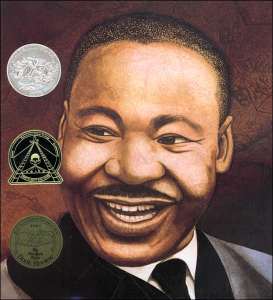 In a few days, our country will celebrate Martin Luther King, Jr.’s birthday and a presidential inauguration. Whatever our political views, whatever our race or gender or religion or socioeconomic background, we can do our children a great service by talking to them about Dr. King’s vision of justice and peace, his commitment to respecting the dignity of every human being.
I’ve found that parents, especially us white Americans, are reluctant to broach the subject of race relations with preschoolers or even young elementary students. Ashamed of our country’s past afflictions, it’s as if we can pretend they never existed if we don’t talk about them. But child development specialists and sociologists (like Po Bronson and Ashley Merryman, authors of NurtureShock) have pointed out that children naturally notice differences in appearances, and that if we don’t have these conversations with them from an early age, they will begin to draw their own conclusions—and, even worse, begin to view the subject as taboo—which does nothing to advance our nation’s long and still arduous progression toward equality. And, let’s be honest, have you ever met a five or seven or ten year old that isn’t obsessed with the notion of fairness? For that matter, how many times a day do we as parents plead with our children, “Use your words!” (say, when said children yank something out of their sibling’s hands or push a peer on the school playground)?
The Year That Lies Ahead
January 3, 2013 § 2 Comments
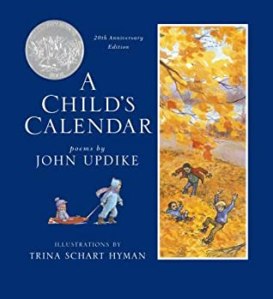
On the morning of January 1, my five year old crawled into our bed and asked with great solemnity, “Is the year of Christmas over?” I’m not entirely sure what he was getting at; did he mean to say month? or season? or was he actually inquiring as to whether the Year of the Great Christmas of 2012 had ended? I’ll never know exactly what was ruminating in his little head, but it was a sweet reminder of how bewildering the concept of time is to children—even to a five year old who has plenty of memories of past years.
We as adults take for granted our assurance about the cyclical nature of time: that all seasons, all holidays, all of nature’s dramatic transformations, will occur again and again with each passing year. It will probably come as no surprise that my instinctual reaction to JP’s question on New Year’s morning was to send him downstairs to fetch some relevant reading material. One of my all-time favorite children’s books (a book so precious to me that it actually resides on the “adult” shelves of our living room library) is A Child’s Calendar (Ages 5-10), a 1965 treasure of poems by John Updike that was later given a ’90s makeover with the addition of award-winning illustrations by Trina Schart Hyman.
« Read the rest of this entry »Holiday Gift Guide 2012 (No. 4): Books For the Hero Within
December 18, 2012 § 1 Comment
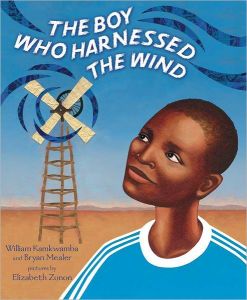 Benjamin Franklin once penned: “If you would not be forgotten/ As soon as you are dead and rotten,/ Either write things worth reading,/ Or do things worth the writing.” OK, that might not be a quote we need to read aloud to our young children, but its sentiment can and should inform the books we choose to share with them.
The genre of biographies written for children is taking off like never before; it seems not only are parents and educators seizing the chance to inspire our young ones with tales of historical figures, but kids themselves are embracing these literary opportunities to inform their own choices, to pave their own paths worth living. And it’s no accident that many of this past year’s biographies are picture books: against a backdrop of beautiful art and poetic text, stories about scientists, writers, inventors, artists, and peacemakers become that much more gripping. The books listed at the end of this post are treasures worth giving and owning; their artistic caliber alone makes them a far cry from the dry, fact-filled paperbacks that we once suffered through for school reports.
Every Day is Pizza Day
August 26, 2012 § 1 Comment
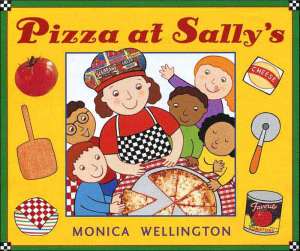 My having eaten a slice of pizza every day for lunch while I was pregnant may have something to do with the fact that my nearly two-year-old daughter is very, very obsessed with Pizza at Sally’s (Ages 2-4), by Monica Wellington. But given that my son was equally obsessed at age two with Truck Driver Tom, by the same author, it’s perhaps more probable that Wellington knows a thing or two about how to talk to kids.
At first glance, Wellington’s books might be quickly dismissed: the gouache, brightly-colored, and largely two-dimensional paintings could come off as a bit juvenile, perhaps not of the same artistic caliber as what I normally review here. But it would be a mistake to pass up these books. At closer inspection, the illustrations are packed with visual gems, including (in the case of Pizza at Sally’s) tiny photographs pasted in for fresh ingredients and even for the finished slices of pizza themselves.
Quiet Time Was Never So Quiet
June 10, 2012 § 5 Comments
 Let’s face it: there are times when you can’t submit to the chants of “Read to me! Read to me!” Perhaps you’ve just had a second baby and you’re looking for something to occupy the first. Maybe you’ve got a preschooler who is starting to give up her nap, but you’re still (desperately) hoping to institute Quiet Time. Or maybe your child is not quite reading but wants to feel like he is.
Whatever your motive, there is hope: it is possible to get your non-reader to engage in quiet, independent time with books. Of course, there are some books that are more likely to succeed than others. And, as a bonus, these also tend to be the books that bore you to tears if you do have to read them aloud. You know the type: books whose illustrations are jam-packed with detail; books whose pages your child wants to pour over at such length that it seems like you’ll be stuck in his room reading to him forever. Take yourself out of the equation, and these books become—not your worst enemy—but your greatest asset.
 What to Read to Your Kids