Early Reader and Early Chapter Book Round Up
February 25, 2021 § 3 Comments

As you, my dear readers, have rightfully pointed out, it has been far too long since I addressed the herculean endeavor of learning to read. And it’s true: while I’ve been busy telling you about picture books and middle-grade books, the number of fabulous early reading titles has been mounting. So, we’re going to get to those today in my largest round up ever. But first, a story.
When my eldest was learning to read, we rode the Amtrak on our yearly mother-son pilgrimage to New York City to visit family. I normally spent those three-plus hours reading aloud a NYC-themed chapter book I’d chosen for the occasion (like this). But this trip, I was desperate to push my kid along the continuum of independent reading that his peers seemed further along, so I packed a stack of early readers instead. He stumbled through reading them to me, while I made flashcards of the phonics that tripped him up. When the train pulled into Penn Station, as I stood to remove our suitcase from the overhead rack, the gentleman in the seat behind us said, “Wow, I never appreciated how crazy difficult the English language is to read.”
It was a wake-up call. I had been stubbornly operating under the assumption that my little guy could and should be advancing faster. When, if we’re being honest, English breaks about as many rules as it follows. It’s inconsistent, it’s weird, and, for most kids—even those without brain-based learning challenges—it’s really, really hard. I feel like this doesn’t get stated enough. Certainly, we parents forget it in our revisionist history of how we took to the pastime so naturally.
Add to that the reality that kids today have a whole host of distractions competing for their time, from screens to high-tech toys to extra-curricular offerings on any sport or hobby they can dream up. Let’s just say most children aren’t as motivated to master reading as we were, when the alternative was a long, boring afternoon.
By the time my second began to learn to read, I had worked out a different approach. I followed her lead, having her read to me only when she wanted to, and never, never in lieu of the precious time in which I read to her. My principal role remained what it had been when she was younger: to model the fruits of reading, introducing her to the rich language and spellbinding storytelling she would someday sample by herself. As parents, reading aloud is how we dangle the carrot.
Once I was back in my lane of parent not teacher, I also spent time seeking out early reading material that would inspire my early reader. I’m sure I don’t have to tell you that there is a lot of blah out there. I once heard Mo Willems hail P.D. Eastman’s Go Dog Go as his favorite early reader as a kid—and my childhood would agree—but anyone who tries handing that to a kid today will realize that its length has little place in these attention-deficient times. When we are meant to be building our kids’ momentum, a 72-page book is just too long. But Mo Willems also recognized that Go Dog Go was onto something with its playful silliness; and out of this he created the Elephant & Piggie series, which were some of the first books my son picked up to read aloud of his own volition.
Never underestimate the motivation of humor. For years, the Elephant & Piggie books (and the spin-off titles penned by different author-illustrators under Mo’s imprint) were the gold standard, with their emphasis on hilarious banter across speech balloons. Today, the market is rapidly broadening, and while humor is still alive and well, early reader titles are taking all sorts of forms.
Today’s post lauds fourteen (!) books or series published in the past two years. I’ve presented them in ascending reading level, beginning with early-reading primers and concluding with early chapter books. What sets these books apart is that children will delight in reading them multiple times. Most early readers offer the satisfaction of completion with the assurance that the story is too boring to bother with again. Not the case here. These stories do their educational part brilliantly, but they also offer ingenuity, visual enticement, and lots and lots of chuckles. They’re a key ingredient in learning to love reading.
« Read the rest of this entry »Losing a Dog
February 18, 2021 § 2 Comments
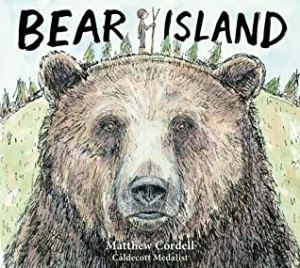
When my son was four and our dog died, I checked out a pile of themed picture books from the library and we read them over and over for two weeks. Every time I asked my son how he was feeling, or whether he wanted to talk about what had happened, he walked over to the pile, grabbed a book off the top, and climbed into my lap. It shouldn’t have surprised me—after all, I have always turned to books to process life experiences—but it did. Before my eyes, I watched this small boy silently work out stuff right there on the page.
One of the most common requests I get from parents is for books about losing a dog or cat. There is no lack of picture books on the subject, but most of them are only OK. Some are beautiful, even profound, acknowledgments of loss—like this and this—and even though I love them, they tend towards the abstract. Others fall into the same trap that we parents do when our children are in pain: they are quick to reassure, to provide distraction, to provide replacement (The dog is happy in heaven! Let’s go pick out a new puppy!). Many pay lip service to the emotional upheaval that is grief, but few model what it means to make space for it.
In my personal experience, grief does not abate without time. Time can’t work alone, it won’t solve all things, but it creates distance, and with distance comes perspective and growth and opportunity. But in the wake of pain, time is at best uncomfortable; at worst it is infuriating, terrifying, and unfathomable. It’s no wonder we don’t like to acknowledge it, much less encourage our children to sit in it.
And yet, here’s a new picture book that does just that—and does it brilliantly. In Matthew Cordell’s Bear Island (Ages 4-8), a full year passes from the moment a girl loses her dog to the time her family welcomes a new one. In Cordell’s expert hands, this year unfolds slowly across every page turn. It unfolds while a girl spends her days on an island with a stick and a bear for company. It unfolds in the physical and mental space of the girl’s anger, sadness, boredom, regret, and fear.
« Read the rest of this entry »A Baby Unicorn for Valentine’s Day
February 11, 2021 § 4 Comments
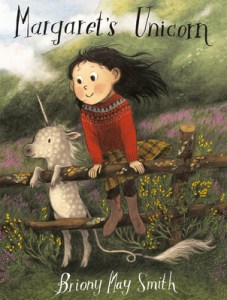
Valentine’s Day approaches, so consider this your annual reminder that the only acceptable Valentine is a new book. You may recall I’m not a traditionalist when it comes to recommending books for Valentine’s Day. If a heart on a cover is what you’re after, you won’t do better than this. But I like a timeless story about friendship that can be read any time of year, which is why in past Valentine’s posts I’ve been about this, this, this, and this. This year, you’re in for an added treat if you head over to Instagram, where I’ve been running a mini gift guide all week, with selects from babies to teens.
Sometimes a book comes along, and even though it’s not breaking any ground, even though it won’t win any awards, it’s so insanely adorable you want to give it to everyone you know.
Let’s be clear. My daughter cannot abide the unicorn craze. She has never tolerated it for one minute. What did unicorns ever do to her? I don’t know. But I’ll tell you this: one year for her birthday, I bought her a pair of horse pajamas, only when she opened them, her eyes immediately locked onto a detail I had failed to notice; each of the horses had, in fact, teeny tiny silvery horns on their forehead. I watched her attempt to disguise her horror and choke out a thank you, but she never wears those PJs.
Now imagine that this same daughter should fall in love with Briony May Smith’s Margaret’s Unicorn (Ages 3-7), about a girl, recently relocated to the wild English countryside, who keeps watch over the CUTEST baby unicorn for two seasons until his mother returns for him. Imagine that this daughter was so taken by the book that she begged me to purchase our own copy, despite being well outside the target age. And then you’ll understand why it would be impossible for a book to receive a higher endorsement.
There is so much joy, so much heart, so much good will in this story that it’s destined to put the biggest smile on children’s faces. If that doesn’t make it perfect for Valentine’s Day, perhaps you ought to collect some moonlit water for your baby unicorn and then come back and we’ll talk.
« Read the rest of this entry »Seizing His Shot: A Black History Month Post
February 4, 2021 § 1 Comment

(Check out previous years’ picks for Black History Month here, here, and here. I’ll also be sharing other new titles celebrating Black history all month long over on Instagram.)
I’ve said it before, and I’ll say it ‘till the cows come home: picture books aren’t just for little kids! Keeping picture books alive and well at home, even after our kids are reading independently, means not only continuing to expose them to arresting art and sensational storytelling, it means piquing their interest about a range of subjects they might not seek out on their own. After all, it can be much less intimidating to pick up a picture book than a chapter book, especially on a subject you don’t know much about.
I love a picture book that sneaks in a history lesson without ever feeling instructional. One of my favorite picture book biographies published last year, Above the Rim: How Elgin Baylor Changed Basketball (Ages 6-10), also happens to be an excellent primer on the Civil Rights Movement. But you’d expect nothing left from the all-star team of Sibert Medalist, Jen Bryant, and two-time Coretta Scott King Medalist, Frank Morrison.
Jen Bryant is best known for her picture book biographies of artists and writers (A River of Words: The Story of William Carlos Williams is a favorite), but she was drawn to NBA Hall of Famer, Elgin Baylor, because in addition to his undeniable talent on the court, he also fundamentally changed the game itself. “Artists change how we see things, how we perceive human limits, and how we define ourselves and our culture,” Bryant writes in the Author’s Note at the end of the book. By this definition, Elgin Baylor—who as one of the first professional African-American players broke nearly every tradition in the sport—was every bit the artist. And Bryant uses her love of language to make his story leap off the page.
In that vein, too, it seems fitting that Frank Morrison should illustrate the basketball icon, using his signature unconventional style of oil painting that distorts and elongates the human figure, giving it both elasticity and a larger-than-life aura. (Morrison illustrates one of my other favorite 2020 picture book biographies, R-E-S-P-E-C-T: Aretha Franklin, the Queen of Soul.) Morrison’s art in Above the Rim is kinetic; it buzzes like the energy on a court. But it’s also dramatic, moving from shadow into light, much like the broader social movement in which Elgin Baylor found himself a quiet but powerful participant.
Should I mention my ten-year-old daughter (mourning the loss of basketball in this pandemic) adores this book and reaches for it often?
« Read the rest of this entry » What to Read to Your Kids