When is a Stone a Story?
September 12, 2019 § 5 Comments
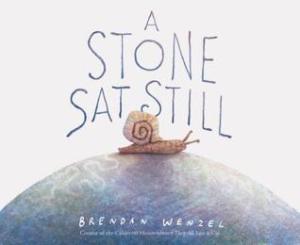 If we want our children to entertain different perspectives when they get to middle or high school—to become critical thinkers and contributors—then they should have opportunities from an early age to consider that there is more than one way to see the world.
Picture book author-illustrator Brendan Wenzel is making something of a name for himself when it comes to creating books for young children about perspective and perception (his groundbreaking debut, They All Saw a Cat, received a Caldecott honor). His newest, A Stone Sat Still (Ages 4-7), similarly rendered with richly textured, mixed-media art and spare, poetic language, stole my heart from the moment I opened it (do yourself a favor and remove the jacket cover, because WOW). Even my children, well outside the target age, were captivated. This is visual storytelling at its best, where every page asks the reader to engage: to wonder, question, and understand. « Read the rest of this entry »
When They Want the Truth
September 5, 2019 § 2 Comments
 When I was eight, I led my father into our coat closet, pushed aside the coats to make a small opening, closed the door, and sat him opposite me on the floor. As we both hunched uncomfortably, I handed him a piece of torn notebook paper and a pencil. On the paper was a list of every swear word I had ever heard. “I want you to write down what each of these words mean,” I said. “Please,” I added, so as not to sound bossy.
I’ll never forget the way my dad didn’t miss a beat. As if this was a natural ask from a firstborn. He didn’t speak, just wrote down a word or two beside each of mine. When he was finished, he handed me the list, and that was that. We stood up, opened the door, and went our separate ways.
In the safety of my bedroom, I got up the nerve to look at what my father had written. It may have been the most anticlimactic moment of my life to date. Female dog. Human feces. I’m sure there were others, but I can’t remember the complete list. I stared in disbelief. I wasn’t entirely sure what all of them meant (what the heck was feces?), but I did know they didn’t sound particularly harmful, certainly not worth the drama which ensued each time someone used one of them at school.
In that moment, I also knew I wasn’t getting the whole truth. I thought the answer was in my father’s pencil strokes, but what I failed to realize was that I actually craved a conversation with him. I wanted to understand what was so terrible about these words. I wanted to understand why they were used the way they were. Looking back, I even wish he had explained some of the gender politics behind them. But I didn’t know how to make any of that happen.
In an effort to demystify these words for me, my father stood in the way of my more fully understanding the world I was sharing with him. « Read the rest of this entry »
 What to Read to Your Kids